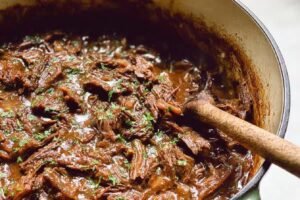
Why You’ll Love This Pot Roast Recipe
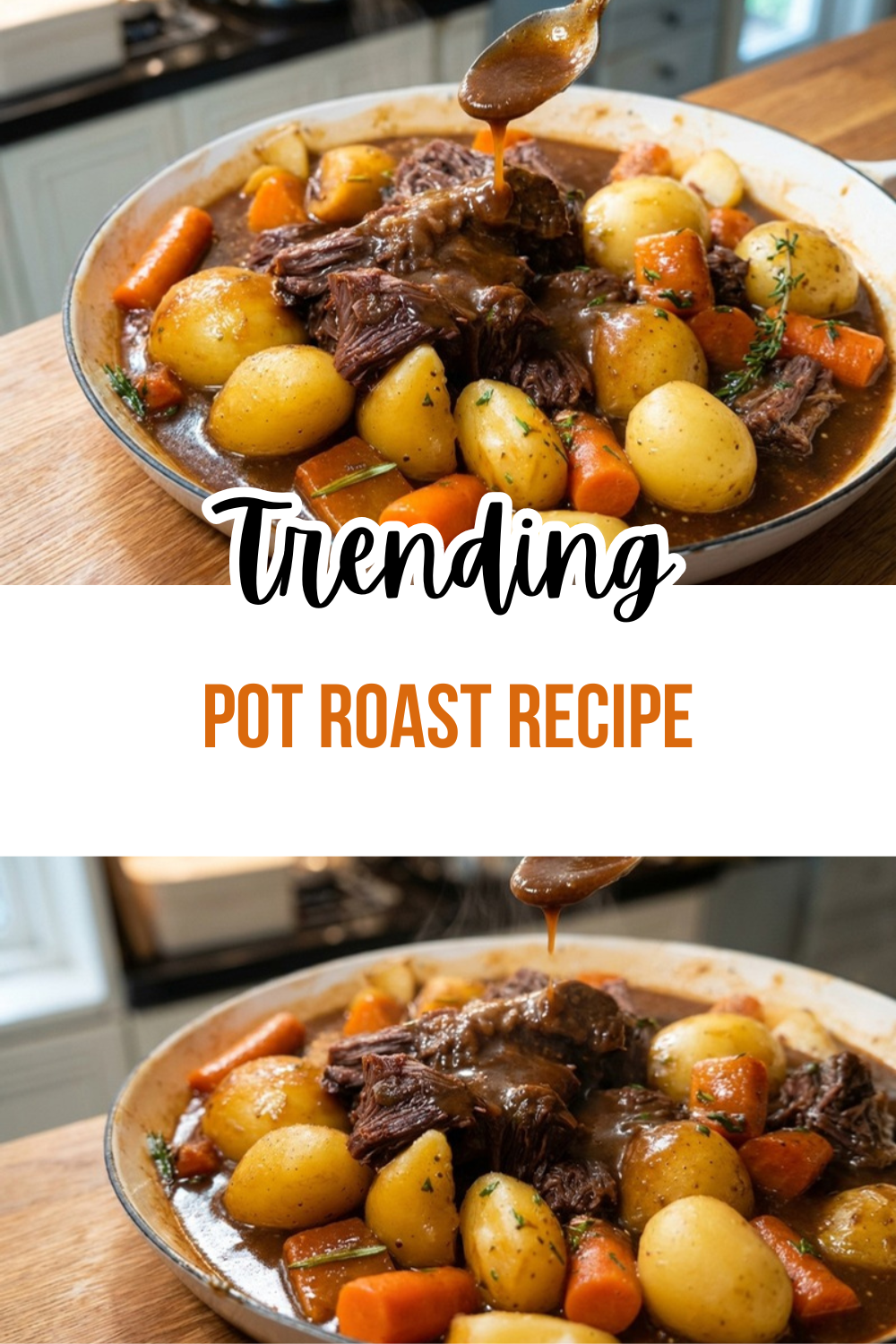
Imagine coming home to the warm, comforting aroma of a perfectly cooked pot roast that melts in your mouth. This classic pot roast recipe brings together simple ingredients to create a dish that’s both hearty and satisfying, making it a go-to for family dinners. You’ll find it easy to whip up, packed with nutrition, and flexible for different tastes, which is why it stands out among homemade pot roast recipes.
- Ease of preparation: This pot roast recipe simplifies cooking with straightforward steps that even beginners can follow, thanks to minimal prep and mostly hands-off oven time. It takes about 30 minutes to get started before the oven does the work, allowing you to relax while it cooks. You’ll appreciate how quick the initial setup is compared to other pot roast options, making it ideal for busy weeknights.
- Health benefits: Loaded with vegetables like carrots, potatoes, and parsnips, this recipe offers a nutritious meal rich in vitamins and minerals, such as vitamin C and iron, promoting overall wellness. Each serving delivers a balanced mix of protein from the beef and fiber from the veggies, supporting energy levels and digestion without sacrificing flavor. It’s a wholesome choice that helps you enjoy a pot roast while sticking to health-conscious eating.
- Versatility: Adapt this pot roast to fit various dietary needs, from swapping beef for other proteins to adjusting veggies based on what’s in season. You can easily make it gluten-free or lighten it up, providing options for everyone at the table. This flexibility makes the pot roast recipe a reliable favorite for different groups, like families or those exploring new cooking styles.
- Distinctive flavor: The combination of red wine, herbs, and slow-cooking brings out deep, rich tastes that elevate a simple pot roast into something special. Ingredients like thyme and tomato paste add layers of sweetness and acidity, creating a savory gravy that’s hard to resist. What sets this pot roast apart is how the flavors meld together over time, turning everyday ingredients into a memorable meal.
Jump To
- 1. Why You’ll Love This Pot Roast Recipe
- 2. Essential Ingredients for Pot Roast Recipe
- 3. How to Prepare the Perfect Pot Roast Recipe: Step-by-Step Guide
- 4. Dietary Substitutions to Customize Your Pot Roast Recipe
- 5. Mastering Pot Roast Recipe: Advanced Tips and Variations
- 6. How to Store Pot Roast Recipe: Best Practices
- 7. FAQs: Frequently Asked Questions About Pot Roast Recipe
- 8. Pot Roast Recipe
Essential Ingredients for Pot Roast Recipe
Gathering the right ingredients is key to a successful pot roast recipe, as they build the foundation of flavor and texture. Below is a complete list of everything you’ll need, with precise measurements and a quick explanation of each one’s role to help you understand why they matter.
Main Ingredients
- 3 ½ to 4 pounds beef chuck roast – This cut provides tender, juicy results due to its marbling, which breaks down during slow cooking for flavorful meat.
- 2 tablespoons olive oil – Used for searing the beef, it adds a nice crust and enhances the overall taste with its healthy fats.
- 1 peeled julienne yellow onion – Adds sweetness and depth, forming the base of the flavorful broth as it caramelizes.
- 2 thinly sliced and rinsed leeks, white and yellow parts only – Brings a mild onion-like flavor that complements the other veggies without overpowering.
- 6 thinly sliced garlic cloves – Infuses the dish with aromatic notes, boosting the savory profile and health benefits like immune support.
- 1 cup red wine – Deglazes the pot and adds acidity and complexity, helping to tenderize the meat.
- 3 tablespoons tomato paste – Contributes sweetness and acidity, thickening the sauce and balancing the richness of the beef.
- 6 cups beef stock (can substitute with water or broth variations) – Creates the braising liquid, infusing moisture and flavor into the roast.
- 2 bay leaves – Provide subtle herbal notes that enhance the broth without dominating other flavors.
- 8 to 10 sprigs fresh thyme – Adds earthy, fresh taste; if unavailable, use dried herbs for a similar effect.
- 8 to 10 fresh parsley stems with leaves – Offers bright, fresh flavor and a garnish option for added visual appeal.
- 2 pounds baby Yukon potatoes – Absorb flavors while adding heartiness; they cook to a soft texture that pairs well with the meat.
- 6 peeled regular or 10 baby tri-colored carrots cut into 2-inch pieces – Bring natural sweetness and vitamins, roasting to a tender consistency.
- 4 ribs of celery cut into 2-inch pieces – Add crunch and a fresh element, helping to balance the dish’s richness.
- 2 peeled parsnips, cut into 2-inch pieces – Contribute a nutty sweetness and extra nutrients, enhancing the vegetable mix.
- 1 peeled rutabaga cut into 1-inch cubes – Provides earthy flavor and texture, making the pot roast more filling and nutritious.
- ½ cup Worcestershire sauce to taste – Adds umami and tang, elevating the gravy’s flavor profile.
- 1 tablespoon red wine vinegar – Brightens the sauce with acidity, cutting through the richness for a well-rounded taste.
- Coarse salt and fresh cracked pepper to taste – Essential for seasoning, they enhance all flavors and tenderize the meat.
- Optional finely minced parsley for garnish – Finishes the dish with a pop of color and fresh taste.
Special Dietary Options
- Vegan: Swap the beef chuck roast with a plant-based alternative like seitan or jackfruit, and use vegetable stock instead of beef stock to maintain the recipe’s hearty feel.
- Gluten-free: Ensure all ingredients, especially Worcestershire sauce, are certified gluten-free; the rest of the items naturally fit this diet.
- Low-calorie: Reduce portions of oil and use leaner cuts or more veggies to lighten the meal while keeping it satisfying.
For more ideas on creative sauces, check out our fresh cherry BBQ sauce recipe that could inspire variations.
How to Prepare the Perfect Pot Roast Recipe: Step-by-Step Guide
Creating a delicious pot roast recipe starts with careful preparation and follows a simple sequence for the best results. Begin by assembling all your ingredients and tools, like a large Dutch oven, to ensure a smooth cooking process. For more on Dutch oven techniques, visit The Art of Dutch Oven Cooking.
First Step: Prepare the Beef
Generously season the beef on all sides with coarse salt. Place it on a rack over a sheet tray and refrigerate uncovered for 12 to 48 hours to enhance flavor and texture. This step allows the salt to penetrate deeply, making the meat more tender when cooked.
Second Step: Season and Sear the Beef
Remove the beef from the fridge and season all sides with fresh cracked pepper. Heat 2 tablespoons of olive oil in a large Dutch oven over high heat until it’s lightly smoking, then sear the beef on all sides for about 3 to 4 minutes per side until it’s golden brown. Set the beef aside once done to lock in juices and build flavor.
Third Step: Sauté the Vegetables
Add the julienne yellow onion and thinly sliced leeks to the pot, seasoning them with a bit of salt. Sauté for 4 to 6 minutes, then lower the heat to medium-low and cook for another 10 minutes until the onions are well browned. Stir in the 6 thinly sliced garlic cloves and cook for 30 to 45 seconds until fragrant, releasing their aroma.
Fourth Step: Build the Sauce Base
Deglaze the pot with ¼ cup of red wine, cooking until it’s absorbed to scrape up the flavorful bits. Stir in 3 tablespoons of tomato paste and cook for 2 to 3 minutes until it’s fully incorporated, adding sweetness and depth. Pour in the remaining ¾ cup red wine, 6 cups beef stock, 2 bay leaves, 8 to 10 sprigs fresh thyme, 8 to 10 fresh parsley stems, salt, and pepper; stir everything together for a rich base.
Fifth Step: Braise the Roast
Add the seared beef back to the pot and bring the mixture to a boil. Cover the pot and place it in a preheated 325°F oven on the lower rack. Cook for 3 ½ to 4 hours until the beef is fork-tender and reaches an internal temperature of 200°F to 210°F, allowing flavors to develop fully.
Sixth Step: Add Vegetables
With 70 minutes left in cooking, add 2 pounds baby Yukon potatoes, 6 peeled carrots cut into 2-inch pieces, 4 ribs of celery cut into 2-inch pieces, 2 peeled parsnips cut into 2-inch pieces, and 1 peeled rutabaga cut into 1-inch cubes. Continue cooking to ensure the veggies are tender but not mushy, absorbing the savory broth.
Final Step: Finish and Serve
Remove the pot from the oven and set the beef aside. Mix softened butter and flour to make a beurre manié, then stir it into the pot and cook over low to medium heat for 3 to 5 minutes until the sauce thickens to a gravy consistency. Stir in 1 tablespoon red wine vinegar and ½ cup Worcestershire sauce to taste, then return the beef to the pot. Serve hot, optionally garnished with minced parsley, for a complete meal. For beef nutrition details, check Beef Nutrition Guide.
| Nutrient | Amount per Serving |
|---|---|
| Calories | 821 kcal |
| Carbohydrates | 59 g |
| Protein | 62 g |
| Fat | 36 g |
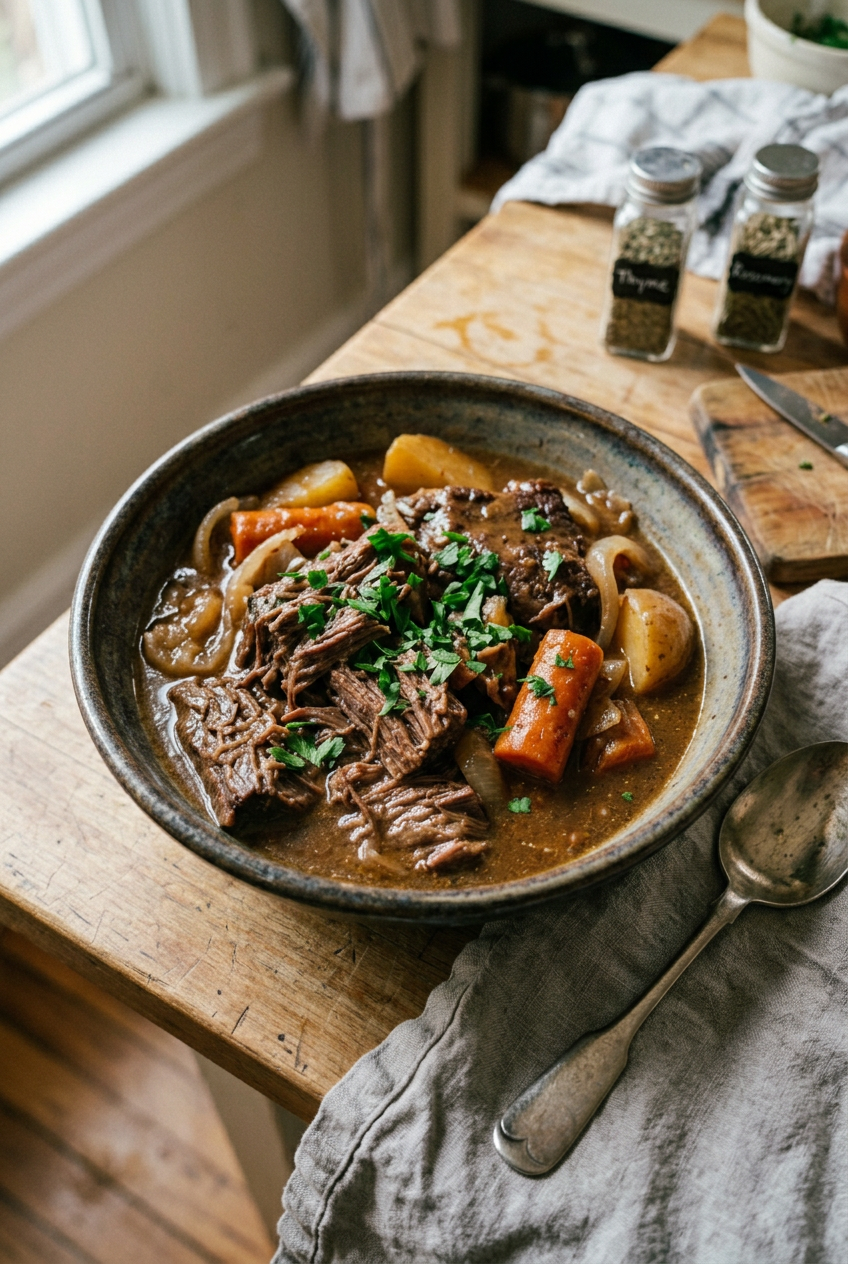
Dietary Substitutions to Customize Your Pot Roast Recipe
Protein and Main Component Alternatives
If beef isn’t your preference, try brisket or sirloin as swaps for the chuck roast to keep things tender and flavorful. For a lighter option, use turkey or chicken, adjusting cook time to prevent drying out. These changes allow the pot roast recipe to fit various dietary needs while maintaining its core appeal.
Vegetable, Sauce, and Seasoning Modifications
Swap in mushrooms or turnips for parsnips and rutabaga to add variety based on seasonal availability. For sauces, replace red wine with dark beer like Guinness for a richer taste, or use vegetable broth in the stock. Seasonings can be tweaked with herbs like rosemary for a fresh twist, making the pot roast adaptable for different palates.
Mastering Pot Roast Recipe: Advanced Tips and Variations
Pro Cooking Techniques
To elevate your pot roast, focus on searing for a deep flavor base, and consider using a larger pot for even heat distribution. Our beef bourguignon recipe offers similar techniques for comparison.
Flavor Variations
Experiment with different wines or add spices for unique tastes in your pot roast recipe.
How to Store Pot Roast Recipe: Best Practices
Proper storage keeps your pot roast fresh and safe to eat later, extending its enjoyment. Cool the dish completely before storing to prevent bacterial growth.
FAQs: Frequently Asked Questions About Pot Roast Recipe
What is the best cut of beef for pot roast?
The best cut for pot roast is beef chuck roast because it has plenty of marbling and connective tissue that breaks down during slow cooking, resulting in tender, flavorful meat. Other good options include brisket, top round, bottom round, or sirloin tip roast. Aim for a 3-4 pound piece for a standard family meal serving 6-8 people. Before cooking, pat the meat dry, season generously with salt and pepper, and sear it on all sides in a hot Dutch oven for better flavor through the Maillard reaction. Avoid lean cuts like eye of round, as they can turn tough. This choice ensures fork-tender results after 3-4 hours of braising.
How long do you cook pot roast in the oven?
Cook pot roast in a preheated 325°F oven for 3½ to 4 hours, or until the meat is fork-tender and reaches an internal temperature of 200°F to 210°F. Place the seared roast in a Dutch oven with vegetables, herbs like thyme and rosemary, and 2-3 cups of liquid (broth or wine). Cover tightly with a lid or foil to trap steam. Check doneness by inserting a fork—it should slide in easily with no resistance. If not tender, cook 30 minutes more. Rest the meat for 15 minutes before slicing against the grain. This low-and-slow method melts collagen into gelatin for juicy texture, perfect for classic pot roast recipes.
What vegetables are best for pot roast?
Classic pot roast vegetables include carrots, celery, onions, and potatoes, added around the roast for even cooking. Cut carrots and celery into 2-inch chunks, use quartered yellow onions, and add peeled potatoes in the last hour to avoid mushiness. For variety, include parsnips, turnips, rutabaga, celeriac root, or mushrooms—they absorb flavors and add earthiness. Arrange veggies around the meat without fully submerging them; partial exposure roasts them slightly for better texture. Season with salt before cooking. These root veggies release natural sugars, complementing the beef’s richness and providing a complete one-pot meal for 6-8 servings.
How do you store and reheat leftover pot roast?
Store leftover pot roast by cooling it completely, then covering tightly in an airtight container in the fridge for up to 4 days, or freeze in portions for up to 2 months. Thaw frozen leftovers overnight in the fridge before reheating. For best results, reheat slices or shredded meat with some gravy or broth in a covered pot over low heat on the stovetop, stirring occasionally until steaming hot (at least 165°F internal temp). Avoid microwaving large pieces to prevent drying out—use short bursts if needed. This keeps the meat moist and flavors intact, turning leftovers into sandwiches, tacos, or soups.
Can you make pot roast in a slow cooker?
Yes, adapt your pot roast recipe for a slow cooker easily. Sear the chuck roast first in a skillet for flavor, then transfer to the cooker with chopped carrots, celery, onions, potatoes, garlic, broth, and wine or beer. Cook on low for 8-10 hours or high for 4-6 hours until fork-tender (200°F-210°F internal). No need to stir—add denser veggies first. Thicken the gravy at the end by removing 1 cup liquid, whisking in a slurry of 2 tbsp cornstarch and 2 tbsp water, then stirring back in on high for 15 minutes. This hands-off method yields tender results comparable to oven-braising, ideal for busy days.
Pot Roast Recipe
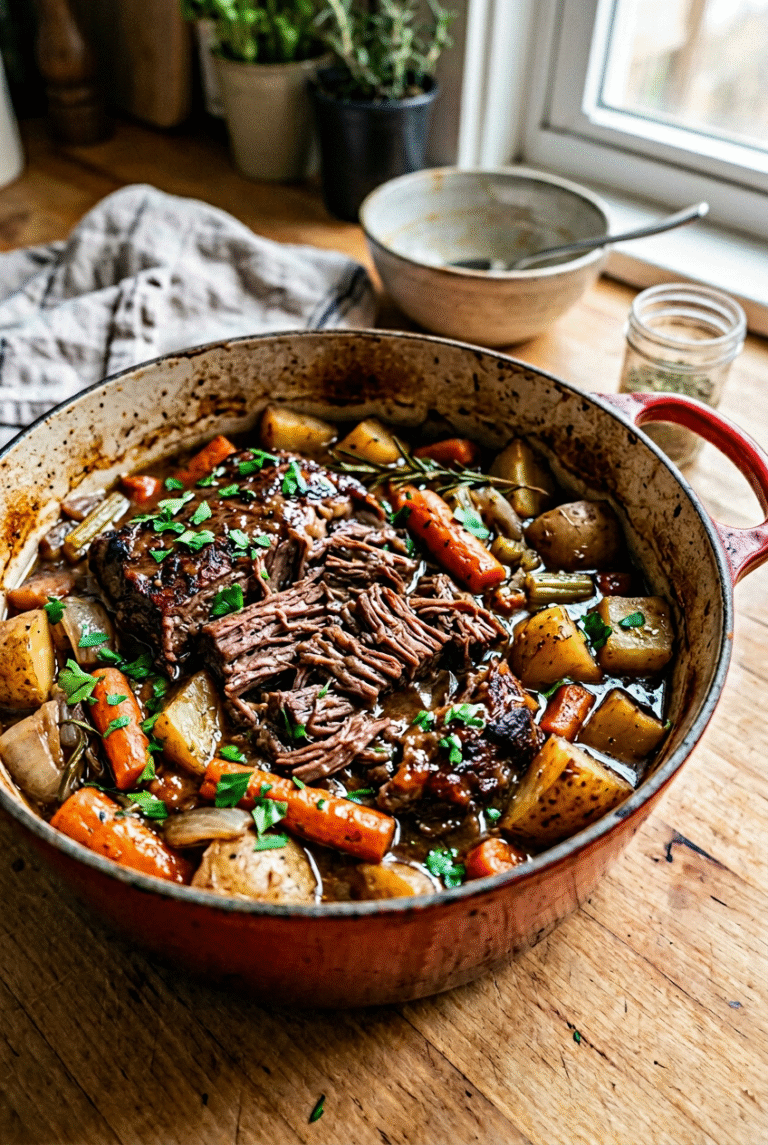
🍲 Experience melt-in-your-mouth tenderness with this slow-cooked pot roast, delivering rich flavors and nutrients from hearty root vegetables.
🥘 Perfect for cozy family dinners, this classic recipe builds deep, savory taste through low-and-slow braising for ultimate comfort.
- Total Time: 5 hours
- Yield: 8 servings
Ingredients
– 3 ½ to 4 pounds beef chuck roast
– 2 tablespoons olive oil
– 1 peeled julienne yellow onion
– 2 thinly sliced and rinsed leeks, white and yellow parts only
– 6 thinly sliced garlic cloves
– 1 cup red wine
– 3 tablespoons tomato paste
– 6 cups beef stock (can substitute with water or broth variations)
– 2 bay leaves
– 8 to 10 sprigs fresh thyme
– 8 to 10 fresh parsley stems with leaves
– 2 pounds baby Yukon potatoes
– 6 peeled regular or 10 baby tri-colored carrots cut into 2-inch pieces
– 4 ribs of celery cut into 2-inch pieces
– 2 peeled parsnips, cut into 2-inch pieces
– 1 peeled rutabaga cut into 1-inch cubes
– ½ cup Worcestershire sauce to taste
– 1 tablespoon red wine vinegar
– Coarse salt and fresh cracked pepper to taste
– Optional finely minced parsley for garnish
Instructions
1-First Step: Prepare the Beef Generously season the beef on all sides with coarse salt. Place it on a rack over a sheet tray and refrigerate uncovered for 12 to 48 hours to enhance flavor and texture. This step allows the salt to penetrate deeply, making the meat more tender when cooked.
2-Second Step: Season and Sear the Beef Remove the beef from the fridge and season all sides with fresh cracked pepper. Heat 2 tablespoons of olive oil in a large Dutch oven over high heat until it’s lightly smoking, then sear the beef on all sides for about 3 to 4 minutes per side until it’s golden brown. Set the beef aside once done to lock in juices and build flavor.
3-Third Step: Sauté the Vegetables Add the julienne yellow onion and thinly sliced leeks to the pot, seasoning them with a bit of salt. Sauté for 4 to 6 minutes, then lower the heat to medium-low and cook for another 10 minutes until the onions are well browned. Stir in the 6 thinly sliced garlic cloves and cook for 30 to 45 seconds until fragrant, releasing their aroma.
4-Fourth Step: Build the Sauce Base Deglaze the pot with ¼ cup of red wine, cooking until it’s absorbed to scrape up the flavorful bits. Stir in 3 tablespoons of tomato paste and cook for 2 to 3 minutes until it’s fully incorporated, adding sweetness and depth. Pour in the remaining ¾ cup red wine, 6 cups beef stock, 2 bay leaves, 8 to 10 sprigs fresh thyme, 8 to 10 fresh parsley stems, salt, and pepper; stir everything together for a rich base.
5-Fifth Step: Braise the Roast Add the seared beef back to the pot and bring the mixture to a boil. Cover the pot and place it in a preheated 325°F oven on the lower rack. Cook for 3 ½ to 4 hours until the beef is fork-tender and reaches an internal temperature of 200°F to 210°F, allowing flavors to develop fully.
6-Sixth Step: Add Vegetables With 70 minutes left in cooking, add 2 pounds baby Yukon potatoes, 6 peeled carrots cut into 2-inch pieces, 4 ribs of celery cut into 2-inch pieces, 2 peeled parsnips cut into 2-inch pieces, and 1 peeled rutabaga cut into 1-inch cubes. Continue cooking to ensure the veggies are tender but not mushy, absorbing the savory broth.
7-Final Step: Finish and Serve Remove the pot from the oven and set the beef aside. Mix softened butter and flour to make a beurre manié, then stir it into the pot and cook over low to medium heat for 3 to 5 minutes until the sauce thickens to a gravy consistency. Stir in 1 tablespoon red wine vinegar and ½ cup Worcestershire sauce to taste, then return the beef to the pot. Serve hot, optionally garnished with minced parsley, for a complete meal. For beef nutrition details, check Beef Nutrition Guide.
Last Step:
Please leave a rating and comment letting us know how you liked this recipe! This helps our business to thrive and continue providing free, high-quality recipes for you.Notes
🔥 Use a large Dutch oven (at least 2 ½ gallons) to allow space for even cooking and easy stirring.
🕒 Add the vegetables 70 minutes before the end to prevent overcooking and maintain their vibrant texture and flavor.
🌿 Dry brining the beef overnight enhances its seasoning penetration and creates a superior sear for better taste.
- Prep Time: 30 minutes
- Dry Brining Time: 12 to 48 hours
- Cook Time: 4 hours 30 minutes
- Category: Main Dish
- Method: Braising
- Cuisine: American
Nutrition
- Serving Size: 1 serving
- Calories: 821 kcal
- Sugar: 13 g
- Sodium: 828 mg
- Fat: 36 g
- Saturated Fat: 14 g
- Unsaturated Fat: 22 g
- Trans Fat: 2 g
- Carbohydrates: 59 g
- Fiber: 10 g
- Protein: 62 g
- Cholesterol: 183 mg