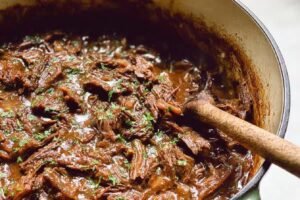
Why You’ll Love This Pot Roast Recipe
As a home cook, finding a recipe that delivers big on flavor without taking up your whole day is a real win. This pot roast recipe stands out because it turns tough cuts of meat into tender, juicy bites that everyone will crave. Let us break down some key reasons why this dish has become a go-to favorite in many kitchens, from busy parents to food enthusiasts looking for something hearty and satisfying.
- Ease of preparation: One of the biggest perks of this pot roast recipe is how simple it is to put together, even on a weeknight. With just about 30 minutes of prep time, you can have everything ready before letting the oven do the rest for 4 to 4.5 hours. This hands-off cooking style makes it perfect for busy schedules, allowing you to focus on other tasks while the meal simmers away.
- Health benefits: Packed with nutrient-rich vegetables like carrots, potatoes, and parsnips, this recipe offers a balanced meal that’s both filling and nutritious. Each serving provides essential vitamins such as Vitamin C from the veggies and iron from the beef, supporting overall wellness without skimping on taste. It’s a smart choice for diet-conscious folks, delivering 62 grams of protein per serving to help keep you energized throughout the day.
- Versatility: This pot roast recipe adapts easily to different needs, whether you’re tweaking for dietary preferences or using what’s in your fridge. You can swap ingredients like red wine for beef stock or adjust veggies based on the season, making it ideal for various lifestyles from students to seniors. Plus, leftovers store well, turning into new meals like sandwiches the next day.
- Distinctive flavor: What really sets this pot roast recipe apart is the deep, rich taste from slow-cooking with herbs, aromatics, and a touch of red wine. The combination of seared beef, caramelized onions, and fresh thyme creates layers of flavor that feel comforting yet elevated, satisfying even the pickiest eaters at family dinners.
Whether you’re cooking for a crowd or just a quiet night in, this pot roast recipe brings warmth and satisfaction to the table. It’s not just about the food; it’s about creating those memorable moments that make home cooking so rewarding. With its straightforward steps and delicious results, you’ll find yourself returning to this recipe time and again.
Jump To
- 1. Why You’ll Love This Pot Roast Recipe
- 2. Essential Ingredients for Pot Roast Recipe
- 3. How to Prepare the Perfect Pot Roast Recipe: Step-by-Step Guide
- 4. Dietary Substitutions to Customize Your Pot Roast Recipe
- 5. Mastering Pot Roast Recipe: Advanced Tips and Variations
- 6. How to Store Pot Roast Recipe: Best Practices
- 7. FAQs: Frequently Asked Questions About Pot Roast Recipe
- 8. Pot Roast Recipe
Essential Ingredients for Pot Roast Recipe
Gathering the right ingredients is the first step to making a great pot roast. Each one plays a key role in building flavor and texture, from the tender beef to the hearty vegetables. Below, you’ll find a detailed list of everything needed, with exact measurements and a quick note on why they’re important.
Main Ingredients
- 3 ½ to 4 pounds beef chuck roast – This cut provides the base of the dish, offering rich marbling that melts into tender meat during cooking.
- 2 tablespoons olive oil – Used for searing the beef, it helps create a golden crust that locks in juices and adds depth to the flavor.
- 1 peeled julienne yellow onion – Adds sweetness and aroma as it caramelizes, forming the foundation of the savory base.
- 2 thinly sliced and rinsed leeks, white and yellow parts only – These bring a mild onion-like taste that enhances the overall broth without overpowering it.
- 6 thinly sliced garlic cloves – Infuses a pungent, aromatic note that elevates the dish’s profile right before deglazing.
- 1 cup red wine – Provides acidity and complexity; it deglazes the pot and helps tenderize the meat while enriching the gravy.
- 3 tablespoons tomato paste – Thickens the sauce and adds a subtle tanginess that balances the richness of the beef.
- 6 cups beef stock – Forms the braising liquid, ensuring the roast stays moist and flavorful as it cooks low and slow.
- 2 bay leaves – These herbs release subtle earthy flavors that complement the meats and veggies without dominating.
- 8 to 10 sprigs fresh thyme – Offers a fresh, herbal touch that infuses the entire pot with bright, aromatic notes.
- 8 to 10 fresh parsley stems with leaves – Adds a hint of freshness and color, enhancing the dish’s overall appeal.
- 2 pounds baby Yukon potatoes – These hold their shape during cooking, providing a creamy texture that soaks up the gravy.
- 6 peeled regular or 10 baby tri-colored carrots cut into 2-inch pieces – Bring natural sweetness and vitamins, adding crunch and color to the mix.
- 4 ribs of celery cut into 2-inch pieces – Contribute a fresh, crisp element and help build a robust vegetable base.
- 2 peeled parsnips, cut into 2-inch pieces – Add a nutty sweetness that pairs well with the other roots, boosting the dish’s heartiness.
- 1 peeled rutabaga cut into 1-inch cubes – Provides a earthy, slightly sweet flavor that absorbs the sauces beautifully.
- 1/2 teaspoon Worcestershire sauce to taste – A dash of this enhances the umami and depth, adjusting the seasoning at the end.
- 1 tablespoon red wine vinegar – Brightens the gravy with a touch of acidity, balancing the richness just before serving.
- Coarse salt and fresh cracked pepper to taste – Essential for seasoning, they draw out flavors and ensure every bite is just right.
- Optional finely minced parsley for garnish – Sprinkled on top, it adds a pop of color and a fresh finish to the plated meal.
Special Dietary Options
- Vegan: Swap the beef chuck roast for a plant-based alternative like seitan or large chunks of portobello mushrooms, and use vegetable stock instead of beef stock to keep the hearty feel while making it fully plant-based.
- Gluten-free: This recipe is naturally gluten-free as long as you verify that your Worcestershire sauce and other additions are certified gluten-free; no changes needed for the core ingredients.
- Low-calorie: Reduce portions of oil and opt for leaner cuts or more veggies to lower calories, or use low-sodium stock to manage intake without losing flavor.
For more ideas on adapting recipes, check out our Beef Bourguignon Recipe for similar techniques with a French twist.
How to Prepare the Perfect Pot Roast Recipe: Step-by-Step Guide
Making a pot roast is all about patience and a few key steps that turn simple ingredients into a comforting meal. Start by getting your workspace ready, which means chopping veggies and measuring out everything ahead of time for smooth sailing. This recipe takes about 30 minutes to prep and around 4.5 hours to cook, but the results are worth every minute.
First Step: Prepare the Beef
Begin by seasoning the 3 ½ to 4 pounds beef chuck roast generously with coarse salt on all sides. Place it on a rack over a sheet tray and refrigerate it uncovered for 12 to 48 hours to dry-brine, which helps enhance flavor and texture. Once ready, remove it from the fridge, season with fresh cracked pepper, and let it sit at room temperature for about 30 minutes before cooking.
Second Step: Sear the Beef
Heat 2 tablespoons olive oil in a large Dutch oven over high heat until it starts to smoke lightly. Add the beef and sear it on all sides for 3 to 4 minutes per side until it’s golden brown. This step locks in the juices and builds a flavorful base through browning. Once done, set the beef aside on a plate.
Third Step: Cook the Aromatics
Add the 1 peeled julienne yellow onion and 2 thinly sliced and rinsed leeks to the pot, seasoning them with a pinch of salt. Sauté for 4 to 6 minutes over medium heat, then reduce to low-medium and cook for another 10 minutes until they turn well browned. Next, stir in the 6 thinly sliced garlic cloves and cook for 30 to 45 seconds until fragrant, filling your kitchen with amazing smells.
Fourth Step: Build the Base
Deglaze the pot with ¼ cup of the 1 cup red wine, scraping up any browned bits from the bottom, and cook until it’s absorbed. Stir in 3 tablespoons tomato paste and cook for 2 to 3 minutes to deepen the flavors. Add the remaining ¾ cup red wine, 6 cups beef stock, 2 bay leaves, 8 to 10 sprigs fresh thyme, 8 to 10 fresh parsley stems with leaves, and more salt and pepper to taste; stir everything together to combine.
Fifth Step: Braise the Roast
Return the seared beef to the pot and bring the liquid to a boil over high heat. Once boiling, cover the pot and place it in the lower third of a preheated 325°F oven. Let it cook for 3 ½ to 4 hours until the meat is fork-tender and reaches an internal temperature of 200 to 210°F. About 70 minutes before it’s done, add the 2 pounds baby Yukon potatoes, 6 peeled carrots cut into 2-inch pieces, 4 ribs of celery cut into 2-inch pieces, 2 peeled parsnips cut into 2-inch pieces, and 1 peeled rutabaga cut into 1-inch cubes to the pot.
Final Step: Finish and Serve
Remove the pot from the oven and transfer the beef to a cutting board to rest. In a small bowl, mix softened butter and flour into a paste called beurre manié, then stir it into the pot with the liquids and vegetables over low-medium heat for 3 to 5 minutes until the gravy thickens. Add 1 tablespoon red wine vinegar and 1/2 teaspoon Worcestershire sauce to taste for extra flavor. Slice the beef against the grain, return it to the pot, and serve it hot, garnished with optional finely minced parsley. For more beefy inspiration, try our Baby Back Ribs Recipe for another crowd-pleaser. Here is the full nutritional breakdown per serving in a simple table for easy reference:
| Nutrient | Amount |
|---|---|
| Calories | 821 kcal |
| Carbohydrates | 59 g |
| Protein | 62 g |
| Fat | 36 g |
| Vitamin C | 67 mg |
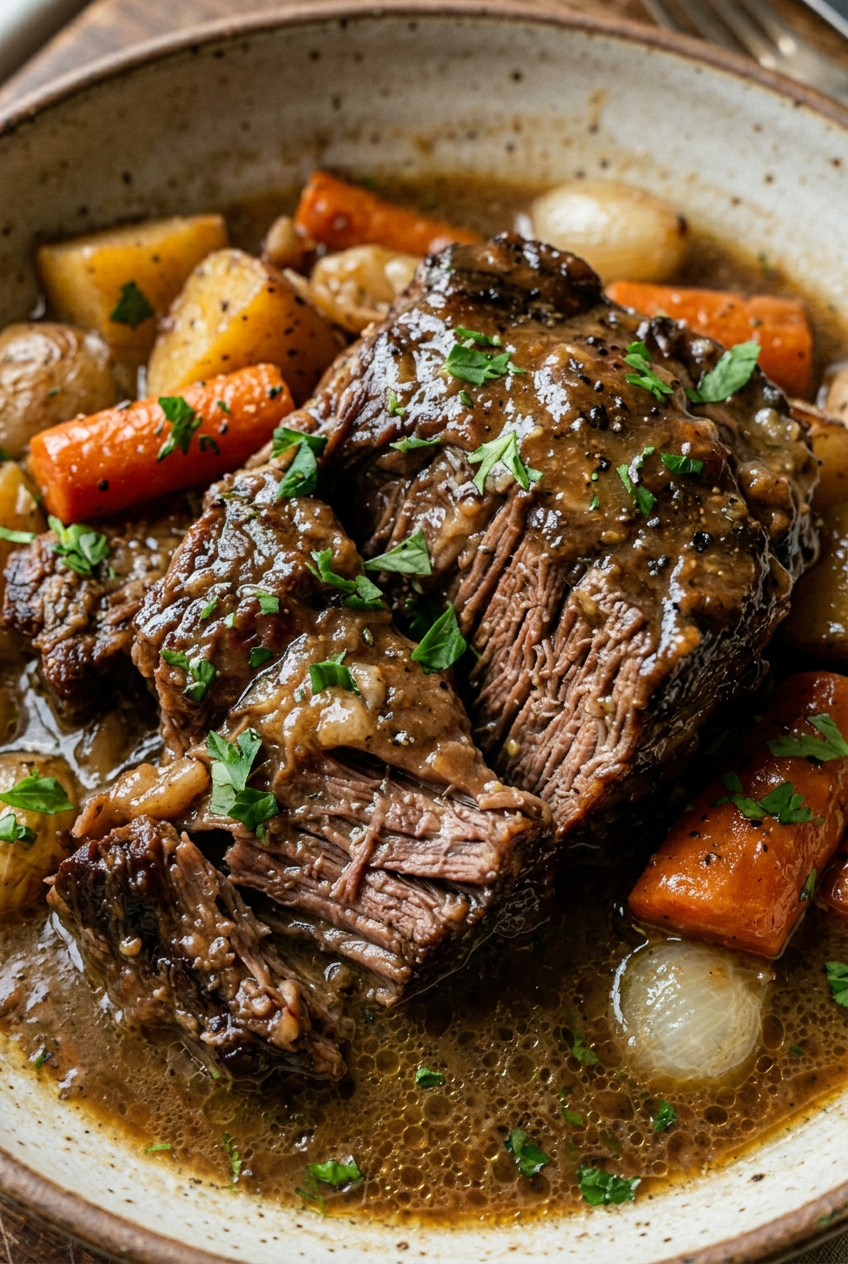
Dietary Substitutions to Customize Your Pot Roast Recipe
Protein and Main Component Alternatives
If beef isn’t your thing, you can switch things up while keeping the heart of the recipe intact. For instance, replace the beef chuck roast with brisket or sirloin for a different texture that’s still tender after braising. If you’re going plant-based, try large chunks of mushrooms or seitan to mimic that meaty bite, which works well for vegan diets and keeps the dish filling.
Vegetable, Sauce, and Seasoning Modifications
Feel free to swap veggies based on what’s fresh or what you have on hand, like using turnips instead of rutabaga for a similar earthy taste. For sauces, opt for a different wine or even apple cider vinegar if red wine isn’t available, and adjust seasonings with dried herbs if fresh ones are out of reach. These tweaks make the pot roast recipe adaptable for low-calorie preferences by cutting back on oil or using low-sodium stock. For more healthy tweaks, visit Benefits of Beef to learn about nutritional options.
Mastering Pot Roast Recipe: Advanced Tips and Variations
Pro Cooking Techniques
To get the best results, always use a 2 ½ gallon Dutch oven for even heat distribution, as it allows the flavors to meld without needing full submersion of veggies. Adding vegetables later, like in the last hour, prevents them from becoming too soft, following a classic Yankee pot roast style for perfect doneness.
Flavor Variations
Experiment with herbs or even swap red wine for white for a lighter twist, and try stock substitutes like vegetable broth for a fresher take. These changes make the recipe flexible for different tastes, enhancing it with options like adding a bit more garlic for extra zing.
Dive into The Art of Dutch Oven Cooking for more pro tips on using your pot effectively.
How to Store Pot Roast Recipe: Best Practices
- Refrigeration: Store cooled pot roast in an airtight container with its juices and veggies in the fridge for up to 4 days to keep it fresh and flavorful.
- Freezing: Freeze portions in freezer-safe bags for up to 2 months, making sure to label them with the date for easy meal prep later.
- Reheating: Warm it gently on the stovetop over low heat, adding a splash of stock if needed, until it reaches 165°F internally to maintain that tender texture.
- Meal Prep Considerations: This recipe is great for batch cooking, so divide it into servings ahead of time for quick weekday meals without much fuss.
FAQs: Frequently Asked Questions About Pot Roast Recipe
What cut of beef is best for pot roast?
Beef chuck roast is the top choice for pot roast because it has plenty of marbling and connective tissue that breaks down into tender, flavorful meat during slow cooking. Aim for a 3-4 pound roast for a family-sized meal. Other good options include brisket, bottom round, top round, or sirloin tip roast, which also become fork-tender after braising. Avoid lean cuts like eye of round, as they can turn dry. Pat the meat dry, season generously with salt and pepper, and sear it first in a hot Dutch oven for the best results. This simple step locks in juices and builds flavor through the Maillard reaction. (78 words)
How long does pot roast take to cook in the oven?
For a classic oven-braised pot roast, preheat to 325°F and cook a 3-4 pound chuck roast for 3.5 to 4 hours, covered, until it reaches an internal temperature of 200-210°F and shreds easily with a fork. Start by searing the meat, then add aromatics, liquids, and cover tightly. Check tenderness at 3 hours—factors like roast size and oven variations can affect timing. Rest it 15-20 minutes before slicing against the grain. This low-and-slow method melts collagen into gelatin for melt-in-your-mouth texture. (92 words)
What vegetables work best in pot roast?
Stick to hearty root vegetables that hold up to long cooking: carrots, celery, potatoes (Yukon gold, red, fingerling, or russet), parsnips, turnips, rutabaga, celeriac, and mushrooms. Yellow onions, leeks, and garlic add depth—swap for red, white, or sweet onions if preferred. Add veggies 60-90 minutes before the roast finishes to avoid mushiness; chunk them large for even cooking. For example, cut carrots into 2-inch pieces and halve potatoes. This timing ensures everything is perfectly tender when served together in the rich gravy. (94 words)
What liquid should I use for pot roast?
Beef stock is ideal for the deepest flavor, using about 2-3 cups to partially submerge the roast in a Dutch oven. For variety, swap with chicken stock, water, dry red or white wine, or dark beer like Guinness, which adds malty richness. Deglaze the pan after searing with your liquid to scrape up browned bits for better taste. Keep the total liquid low to concentrate flavors into a gravy you can thicken later with a cornstarch slurry. Taste and adjust seasoning before covering and braising. (89 words)
How do you store and reheat pot roast?
Cool the pot roast completely, then store in an airtight container with its juices and veggies in the fridge for up to 4 days or freeze for 2 months. Thaw frozen portions overnight in the fridge. Reheat gently on the stovetop over low heat in a covered pot, adding a splash of stock if needed, stirring occasionally until hot (about 165°F internal). Microwave in short bursts works for singles, covered with a damp paper towel. Flavors often improve after a day, making leftovers great for sandwiches. (92 words)
Pot Roast Recipe
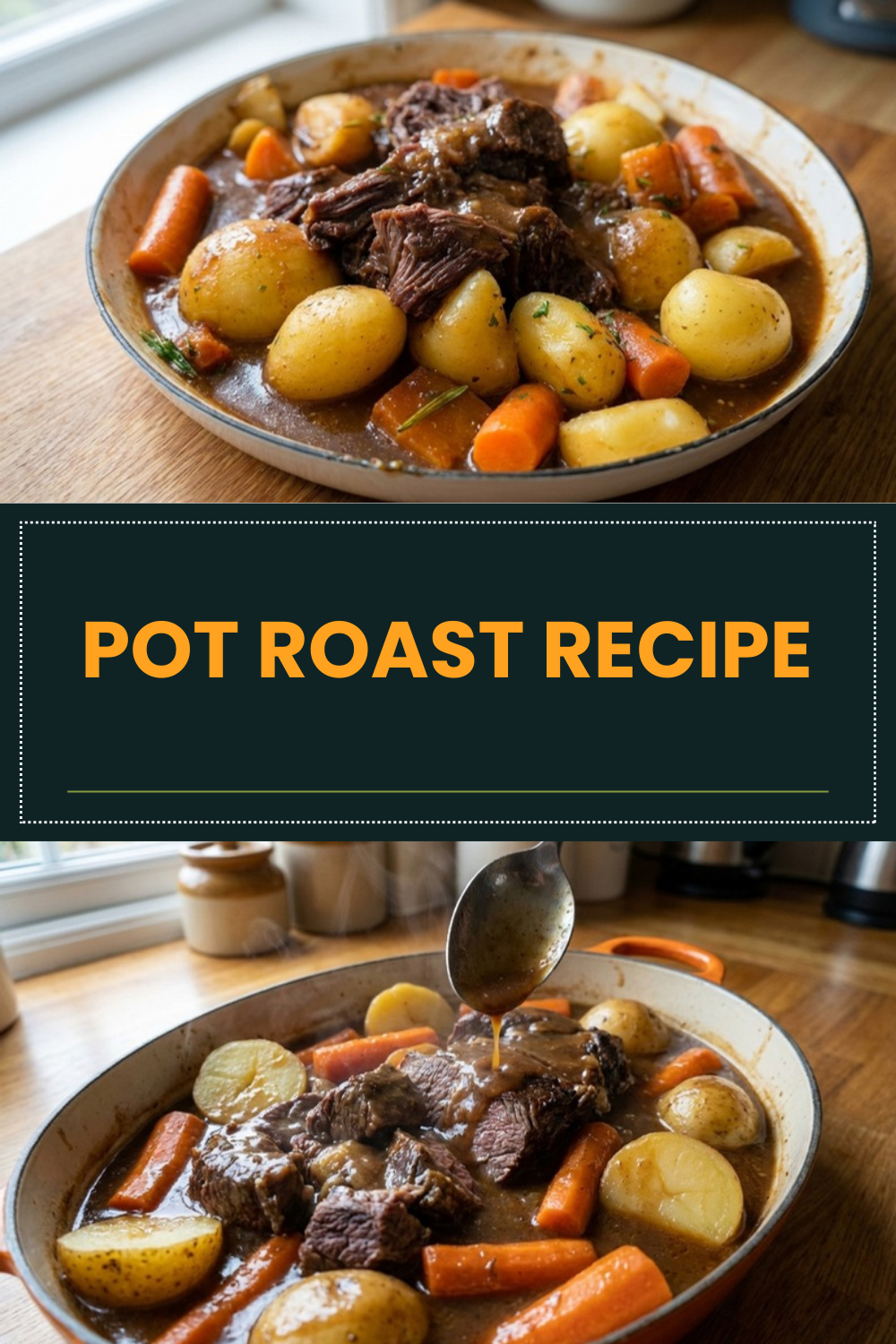
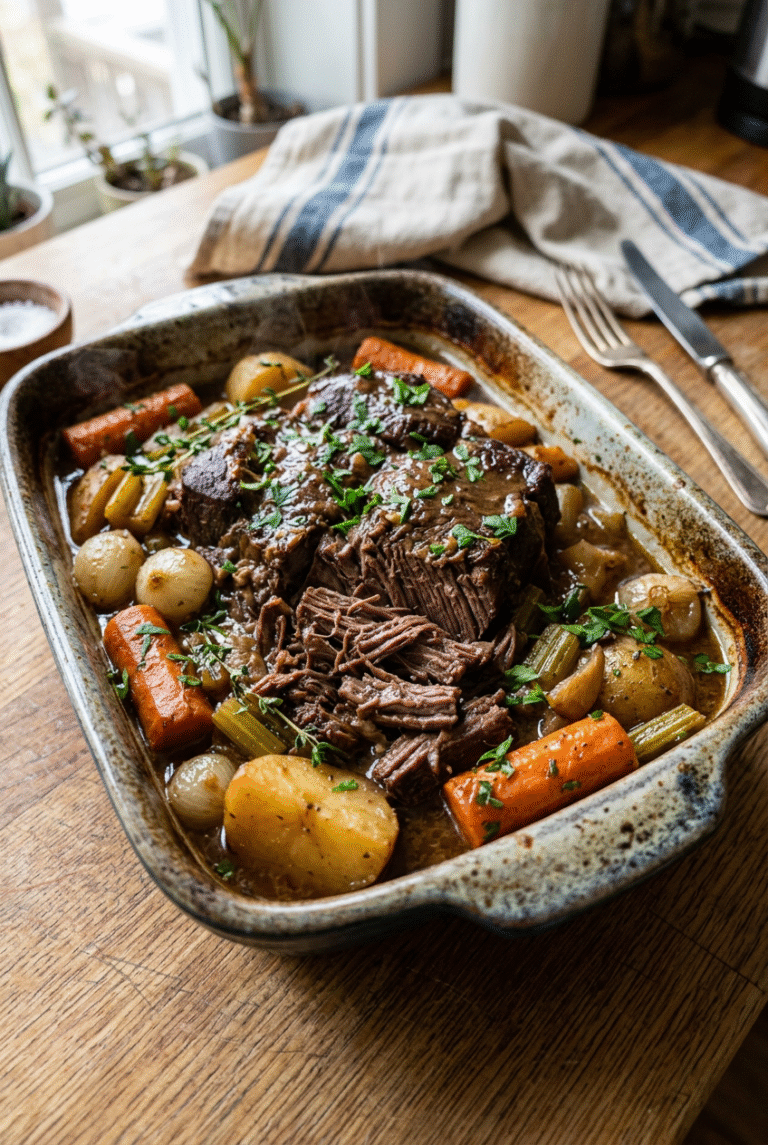
🍲 Indulge in the comforting flavors of tender beef and root vegetables in this classic pot roast, ideal for family gatherings.
🥗 Packed with nutrients like protein and vitamins from fresh veggies, it’s a wholesome meal that slow-cooks to perfection.
- Total Time: 5 hours
- Yield: 8 servings
Ingredients
– 3 ½ to 4 pounds beef chuck roast for base
– 2 tablespoons olive oil for searing the beef
– 1 peeled julienne yellow onion for sweetness and aroma
– 2 thinly sliced and rinsed leeks, white and yellow parts only for mild onion-like taste
– 6 thinly sliced garlic cloves for pungent aromatic note
– 1 cup red wine for deglazing and tenderizing
– 3 tablespoons tomato paste for thickening and tanginess
– 6 cups beef stock for braising liquid
– 2 bay leaves for earthy flavors
– 8 to 10 sprigs fresh thyme for herbal touch
– 8 to 10 fresh parsley stems with leaves for freshness and color
– 2 pounds baby Yukon potatoes for creamy texture
– 6 peeled regular or 10 baby tri-colored carrots cut into 2-inch pieces for sweetness and crunch
– 4 ribs of celery cut into 2-inch pieces for crisp element
– 2 peeled parsnips, cut into 2-inch pieces for nutty sweetness
– 1 peeled rutabaga cut into 1-inch cubes for earthy flavor
– 1/2 teaspoon Worcestershire sauce to taste for umami
– 1 tablespoon red wine vinegar for brightening gravy
– Coarse salt and fresh cracked pepper to taste for seasoning
– Optional finely minced parsley for garnish
Instructions
1-First Step: Prepare the Beef Begin by seasoning the 3 ½ to 4 pounds beef chuck roast generously with coarse salt on all sides. Place it on a rack over a sheet tray and refrigerate it uncovered for 12 to 48 hours to dry-brine, which helps enhance flavor and texture. Once ready, remove it from the fridge, season with fresh cracked pepper, and let it sit at room temperature for about 30 minutes before cooking.
2-Second Step: Sear the Beef Heat 2 tablespoons olive oil in a large Dutch oven over high heat until it starts to smoke lightly. Add the beef and sear it on all sides for 3 to 4 minutes per side until it’s golden brown. This step locks in the juices and builds a flavorful base through browning. Once done, set the beef aside on a plate.
3-Third Step: Cook the Aromatics Add the 1 peeled julienne yellow onion and 2 thinly sliced and rinsed leeks to the pot, seasoning them with a pinch of salt. Sauté for 4 to 6 minutes over medium heat, then reduce to low-medium and cook for another 10 minutes until they turn well browned. Next, stir in the 6 thinly sliced garlic cloves and cook for 30 to 45 seconds until fragrant, filling your kitchen with amazing smells.
4-Fourth Step: Build the Base Deglaze the pot with ¼ cup of the 1 cup red wine, scraping up any browned bits from the bottom, and cook until it’s absorbed. Stir in 3 tablespoons tomato paste and cook for 2 to 3 minutes to deepen the flavors. Add the remaining ¾ cup red wine, 6 cups beef stock, 2 bay leaves, 8 to 10 sprigs fresh thyme, 8 to 10 fresh parsley stems with leaves, and more salt and pepper to taste; stir everything together to combine.
5-Fifth Step: Braise the Roast Return the seared beef to the pot and bring the liquid to a boil over high heat. Once boiling, cover the pot and place it in the lower third of a preheated 325°F oven. Let it cook for 3 ½ to 4 hours until the meat is fork-tender and reaches an internal temperature of 200 to 210°F. About 70 minutes before it’s done, add the 2 pounds baby Yukon potatoes, 6 peeled carrots cut into 2-inch pieces, 4 ribs of celery cut into 2-inch pieces, 2 peeled parsnips cut into 2-inch pieces, and 1 peeled rutabaga cut into 1-inch cubes to the pot.
6-Final Step: Finish and Serve Remove the pot from the oven and transfer the beef to a cutting board to rest. In a small bowl, mix softened butter and flour into a paste called beurre manié, then stir it into the pot with the liquids and vegetables over low-medium heat for 3 to 5 minutes until the gravy thickens. Add 1 tablespoon red wine vinegar and 1/2 teaspoon Worcestershire sauce to taste for extra flavor. Slice the beef against the grain, return it to the pot, and serve it hot, garnished with optional finely minced parsley.
Last Step:
Please leave a rating and comment letting us know how you liked this recipe! This helps our business to thrive and continue providing free, high-quality recipes for you.Notes
🔥 Dry-brine the beef for at least 12 hours to enhance flavor and create a better sear.
🕒 Add vegetables late in the cooking process to prevent them from becoming mushy.
🍷 Feel free to substitute brisket for chuck roast or use chicken stock instead of beef for a lighter version.
- Prep Time: 30 minutes
- Dry Brining: 12 to 48 hours
- Cook Time: 4 hours 30 minutes
- Category: Main Course
- Method: Oven Braising
- Cuisine: American
Nutrition
- Serving Size: 1 portion
- Calories: 821 kcal
- Sugar: 13 g
- Sodium: 828 mg
- Fat: 36 g
- Saturated Fat: 14 g
- Unsaturated Fat: 22 g
- Trans Fat: 2 g
- Carbohydrates: 59 g
- Fiber: 10 g
- Protein: 62 g
- Cholesterol: 183 mg