

Why You’ll Love This Gochujang Eggs
Looking to spice up your breakfast routine? Gochujang Eggs bring a delightful Korean-inspired twist to your table that will wake up your taste buds and keep you coming back for more. This creamy, spicy egg salad strikes the perfect balance between comfort food and exciting flavors, making it a versatile addition to your meal rotation.
- Ease of preparation: Ready in just 15 minutes, this recipe comes together quickly with simple steps and readily available ingredients. The minimal prep time makes it perfect for busy weekdays when you want something delicious without spending hours in the kitchen.
- Health benefits: Eggs are packed with high-quality protein and essential nutrients, while gochujang offers beneficial probiotics from fermentation. Each serving delivers 23g of protein to help you feel full and energized throughout your morning.
- Versatility: This recipe adapts beautifully to different meals and dietary needs. Enjoy it for breakfast on toast, as a light dinner with rice, or even as a unique appetizer for your next gathering. It works equally well for keto, low-carb, and gluten-free eating plans.
- Distinctive flavor: The combination of creamy egg salad with spicy, slightly sweet gochujang creates a complex taste profile that stands out from typical egg dishes. The nuttiness of sesame oil and tanginess of kimchi add layers of flavor that make this dish truly memorable.
What makes Gochujang Eggs particularly special is how the Korean chili paste transforms ordinary boiled eggs into something extraordinary. If you’re new to Korean flavors, this recipe offers an accessible entry point that delivers impressive results without requiring specialized cooking techniques.
Jump To
- 1. Why You’ll Love This Gochujang Eggs
- 2. Essential Ingredients for Gochujang Eggs
- 3. How to Prepare the Perfect Gochujang Eggs: Step-by-Step Guide
- 4. Dietary Substitutions to Customize Your Gochujang Eggs
- 5. Mastering Gochujang Eggs: Advanced Tips and Variations
- 6. How to Store Gochujang Eggs: Best Practices
- 7. FAQs: Frequently Asked Questions About Gochujang Eggs
- 8. Gochujang Eggs
Essential Ingredients for Gochujang Eggs
The beauty of this recipe lies in its simple yet impactful ingredients. Each component plays a specific role in creating the perfect balance of flavors and textures:
Main Ingredients:
- 4 large eggs – These form the protein base of our dish, providing structure and creaminess when mashed
- ½ tablespoon gochujang paste – The star ingredient that brings spicy, slightly sweet, and savory Korean flavors
- 2 tablespoons mayonnaise – Adds creaminess and helps bind the ingredients together
- ½ teaspoon toasted sesame oil – Provides a nutty, aromatic flavor that enhances the overall taste
- ¼ teaspoon brown sugar (optional) – Balances the heat from the gochujang with a touch of sweetness
- Salt and freshly ground black pepper to taste – Essential seasonings to enhance all the flavors
Optional Serving Components:
- 2 thick slices of sourdough bread – Perfect vessel for toasting and serving the egg salad
- Butter – Adds richness when spread on toasted bread
- 4 tablespoons kimchi (roughly chopped) – Provides tangy crunch and authentic Korean flavor
- 1 teaspoon toasted sesame seeds – Adds texture and visual appeal as a garnish
- 1 teaspoon thinly sliced chives or green onions – Fresh element to brighten the final dish
Special Dietary Options:
- Vegan: Substitute eggs with firm tofu and use vegan mayonnaise. The resulting texture will be slightly different but still satisfying.
- Gluten-free: Ensure your gochujang paste is gluten-free (some varieties contain wheat) and serve with gluten-free bread or over rice.
- Low-calorie: Use Greek yogurt instead of mayonnaise and reduce the amount of sesame oil while maintaining flavor with additional herbs and spices.
For those interested in the health benefits of gochujang specifically, research indicates that fermented chili pastes may offer antioxidant properties and digestive benefits due to their probiotic content. You can learn more about the health benefits of gochujang from reputable health sources.
How to Prepare the Perfect Gochujang Eggs: Step-by-Step Guide
Creating this delicious Korean-inspired dish is simpler than you might think. Follow these detailed steps to achieve perfect results every time:
Step 1: Prepare the Eggs
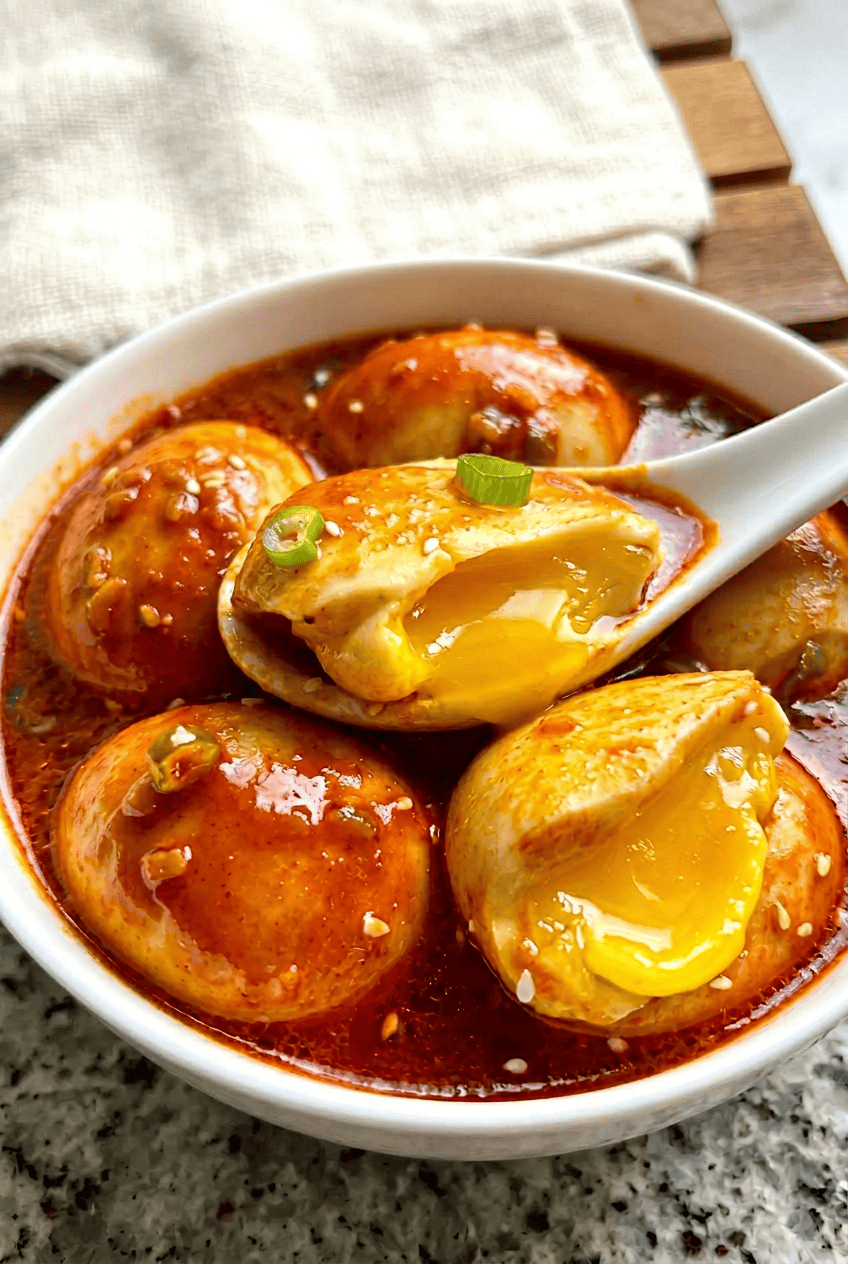
Start by bringing a pot of water to a boil. You want enough water to completely cover the eggs by at least an inch. Once the water reaches a rolling boil, carefully lower the eggs into the water using a spoon to prevent cracking. Set your timer for exactly 7½ minutes to achieve the ideal jammy consistency creamy but not runny yolks that blend perfectly with the spicy sauce.
While the eggs cook, prepare an ice bath by filling a bowl with cold water and ice cubes. This will be crucial for stopping the cooking process immediately after boiling. If you prefer firmer yolks, you can extend the cooking time to 10 minutes, but the 7½-minute mark strikes the perfect balance for this recipe.
Step 2: Cool and Peel the Eggs
Once the timer goes off, quickly transfer the eggs to the ice bath using a slotted spoon. Let them cool completely for about 5 minutes. The rapid temperature change not only stops the cooking process but also makes peeling significantly easier by separating the membrane from the white.
Gently tap each egg on the counter to create cracks all over the shell. Start peeling from the wider end, where there’s typically a small air pocket that makes it easier to get under the membrane. Rinse the peeled eggs under cool water to remove any small shell fragments, then pat them dry with paper towels.
Step 3: Create the Spicy Sauce
While the eggs cool, prepare the flavorful sauce that makes this dish special. In a small bowl, combine ½ tablespoon of gochujang paste with 2 tablespoons of mayonnaise. The mayonnaise helps tame the heat of the gochujang while adding creaminess to the final dish.
Add ½ teaspoon of toasted sesame oil for that distinctive nutty flavor that characterizes many Korean dishes. If you prefer a slightly sweeter balance to the heat, incorporate ¼ teaspoon of brown sugar. Whisk everything together until you have a smooth, vibrant orange-red sauce. Taste and adjust the seasoning if needed, keeping in mind that the flavor will meld beautifully with the eggs.
Step 4: Mash and Combine
Place the cooled, peeled eggs in a mixing bowl and use a fork to mash them to your desired consistency. Some people prefer their egg salad with larger chunks for more texture, while others like it completely smooth. For this recipe, aim for a slightly chunky mash that still holds together well.
Pour the gochujang sauce over the mashed eggs and fold it in gently until everything is evenly combined. The mixture should turn a lovely orange hue as the sauce coats the eggs. Season with salt and freshly ground black pepper to taste, being mindful that both the gochujang and mayonnaise already contain sodium.
Step 5: Assemble and Serve
For the classic presentation, toast 2 thick slices of sourdough bread until golden brown and crispy. Spread a thin layer of butter on each slice while still warm, then top with roughly chopped kimchi the tangy, fermented flavor of the kimchi perfectly complements the spicy, creamy egg salad.
Spoon the gochujang egg mixture over the kimchi-topped toast, allowing it to mound slightly for an attractive presentation. Finish with a sprinkle of toasted sesame seeds for extra crunch and visual appeal, along with thinly sliced chives or green onions for a fresh pop of color and mild onion flavor.
For alternative serving methods, try serving the egg salad alongside steamed rice and additional kimchi for a more traditional Korean meal, or use it as a filling for sandwiches and wraps. The recipe also makes an excellent appetizer when served on crackers or cucumber slices.
From start to finish, this entire process takes just 15 minutes, making it perfect for busy mornings or quick weeknight dinners. The combination of creamy eggs, spicy gochujang, and tangy kimchi creates a satisfying meal that feels indulgent while still being nutritious.
Dietary Substitutions to Customize Your Gochujang Eggs
Protein and Main Component Alternatives
While this recipe traditionally uses chicken eggs, there are several alternatives if you have dietary restrictions or preferences:
- Quail eggs: Use approximately 8-10 quail eggs for a similar yield. Their delicate flavor works wonderfully with the bold gochujang sauce, and they create a more delicate texture.
- Duck eggs: Replace with 3 duck eggs for a richer, creamier result. Duck eggs have larger yolks and higher fat content, which creates an even more luxurious egg salad.
- Firm tofu: For a vegan option, use 1 block (about 14 oz) of extra-firm tofu, pressed to remove excess water. Crumble it to mimic the texture of mashed eggs before mixing with the sauce.
- Chickpeas: Mash 1 cup of cooked chickpeas with 2 tablespoons of olive oil or vegan yogurt for a plant-based protein alternative that still provides satisfying texture.
Vegetable, Sauce, and Seasoning Modifications
Customize the flavor profile of your Gochujang Eggs with these creative modifications:
- Sauce variations: If you find gochujang too spicy, substitute with a milder Korean chili paste or reduce the amount and compensate with additional seasonings like garlic powder and a touch of soy sauce.
- Additional vegetables: Fold in diced cucumber, shredded carrots, or finely chopped bell peppers for extra crunch and nutrition. These additions also make the dish more colorful.
- Seasoning tweaks: Add minced fresh garlic, grated ginger, or a splash of rice vinegar to deepen the flavor profile. A pinch of Chinese five-spice powder can also add intriguing complexity.
- Creaminess alternatives: Replace some or all of the mayonnaise with Greek yogurt, sour cream, or mashed avocado for different flavor notes and nutritional profiles.
These substitutions allow you to adapt the recipe to what you have on hand or to accommodate specific dietary needs while maintaining the essence of what makes Gochujang Eggs so delicious. Don’t be afraid to experiment and find your perfect combination!
Mastering Gochujang Eggs: Advanced Tips and Variations
Once you’ve mastered the basic recipe, try these expert techniques and creative variations to take your Gochujang Eggs to the next level:
Pro Cooking Techniques
For consistently perfect eggs every time, use these professional tips:
- Start with eggs at room temperature to prevent cracking when boiling. Cold eggs are more likely to develop cracks when exposed to rapidly boiling water.
- Add a teaspoon of vinegar to the boiling water to help make peeling easier by slightly softening the shell.
- For the most precise timing, use a kitchen timer rather than guessing. Even 30 seconds can make a noticeable difference in yolk consistency.
- When mashing the eggs, use the back of your fork against the bowl’s side for better control over the texture.
Flavor Variations
Experiment with these exciting flavor combinations:
- Smoky version: Add a teaspoon of smoked paprika or a small amount of chipotle powder for a deeper, smoky flavor profile.
- Herb-forward: Incorporate fresh herbs like cilantro, Thai basil, or perilla leaves for additional layers of flavor that complement the Korean-inspired base.
- Citrus twist: Add a splash of fresh lime or yuzu juice to brighten the flavors and cut through the richness.
- Extra spicy: Include finely diced Korean chili peppers or a drizzle of chili oil for those who enjoy more heat.
Presentation Tips
Make your dish visually appealing with these plating suggestions:
- Use an offset spatula to spread the egg mixture evenly on toast for a restaurant-quality presentation.
- Arrange kimchi in a decorative pattern rather than simply spreading it across the toast.
- Garnish with additional toasted sesame seeds and finely sliced scallions for professional-looking results.
- Consider serving on a wooden board or slate platter for an Instagram-worthy presentation.
Make-Ahead Options
Save time with these preparation strategies:
- Hard-boil and peel eggs up to 2 days in advance, storing them in water in the refrigerator until ready to use.
- Prepare the sauce separately and store it in an airtight container for up to 5 days.
- Mix the egg salad up to 3 days before serving, but wait to add delicate garnishes like fresh herbs until just before serving.
- Portion individual servings in small containers for easy grab-and-go meals throughout the week.
For those looking to expand their breakfast repertoire, be sure to check out our egg and avocado breakfast sandwich recipe, which pairs perfectly with these spicy eggs for a weekend brunch spread.
How to Store Gochujang Eggs: Best Practices
Proper storage ensures your Gochujang Eggs remain safe to eat and maintain their delicious quality. Follow these guidelines for the best results:
Refrigeration
Store your prepared Gochujang egg salad in an airtight container in the refrigerator for up to 3 days. Glass containers work particularly well as they don’t absorb odors and allow you to see the contents clearly. Press a piece of plastic wrap directly onto the surface of the egg salad before sealing the container to prevent air exposure and maintain freshness.
Freezing
While you can technically freeze Gochujang Eggs, it’s not recommended. The texture changes significantly when frozen and thawed, becoming watery and grainy as the eggs release moisture. The sauce may also separate, resulting in an unpleasant consistency. For best results, enjoy this dish fresh or within the recommended refrigeration timeframe.
Reheating
Unlike many egg dishes, Gochujang egg salad is typically enjoyed cold or at room temperature rather than reheated. If you prefer a warmer version, consider serving the egg salad atop freshly toasted warm bread or with hot steamed rice. This approach maintains the salad’s texture while providing temperature contrast that many find appealing.
Meal Prep Considerations
For efficient meal prep, consider preparing components separately and combining them just before serving. Boil and peel eggs in advance, prepare the sauce separately, and chop your garnishes. This approach gives you greater flexibility and helps maintain the best texture and flavor. When ready to eat, simply mash the eggs, combine with sauce, and assemble with your chosen toppings.
Remember to always use clean utensils when serving to prevent introducing bacteria that could reduce the shelf life of your egg salad. If the mixture develops an off smell, unusual texture, or visible mold, discard it immediately regardless of how many days have passed.
FAQs: Frequently Asked Questions About Gochujang Eggs
What is gochujang paste?
Gochujang paste is a thick, fermented Korean red chili paste made from chili peppers, sticky rice, soybeans, and salt, offering deep umami, sweetness, and heat (usually 1,000-2,500 Scoville units depending on variety). In gochujang eggs, it’s blended with mayonnaise, sesame oil, garlic, and vinegar into a creamy sauce that coats boiled eggs for a spicy salad or topping. Find it in tubes or jars at Asian grocery stores, major supermarkets like Whole Foods, or online via Amazon. Start with mild if sensitive to spice, as flavors build. One tablespoon typically seasons 6 eggs—stir well for even distribution and let sit 10 minutes for best taste fusion. This paste lasts 1-2 years unopened in the pantry.
How long to boil eggs for gochujang eggs?
Boil large eggs for 7-8 minutes from when water reaches a rolling boil for creamy, jammy yolks ideal for gochujang eggs—soft enough to mix into sauce without crumbling. Shock in ice water 5 minutes for easy peeling and to halt cooking. Adjust to 5 minutes for runny yolks (great drizzled), or 10-12 minutes for firm hard-boiled. Use eggs at room temperature to avoid cracks; add vinegar to water for cleaner shells. Pat dry before tossing in sauce. This method yields perfect texture for salads, toast, or bowls. Test one egg first to match your stove’s heat.
What can I substitute for gochujang in eggs?
Substitute gochujang paste with 1 part Sriracha + 1 part white miso + ½ part honey, mixed smooth, for close spicy-umami results (adjust heat to taste). Or blend gochugaru flakes, soy sauce, rice vinegar, and sugar for a fresh version. Harissa paste works for North African twist, or chipotle in adobo for smokiness—thin with mayo. These mimic the profile but lack full fermentation depth, so taste and tweak. Avoid straight hot sauce; it misses sweetness. Homemade lasts 1 week in fridge. Ideal for spice-averse eaters or quick recipes—serves 6 eggs with 2 tablespoons sub.
How to store gochujang egg salad?
Keep gochujang egg salad in an airtight glass or plastic container in the fridge up to 3 days—press plastic wrap directly on surface to prevent drying. Mayo and vinegar act as preservatives, but discard if it smells sour or looks separated (stir if minor). Don’t freeze; eggs turn rubbery and watery. Portion into meal-prep jars for lunches with rice or greens. Safe at room temp max 2 hours. For longer storage, make sauce separate and assemble fresh. Yields 4 servings; nutrition per serving: ~250 calories, 20g protein, healthy fats from sesame oil.
How to serve gochujang eggs?
Serve gochujang eggs on toasted sourdough buttered with kimchi and sesame seeds for breakfast. Pair with steamed rice and stir-fried bok choy for dinner bowls. Layer in spicy sandwiches with cucumber and lettuce. Use as Korean banchan side for grilled meats. Top crackers or bruschetta for apps. Drizzle sauce over scrambled, poached, fried, or air-fried eggs too. Add scallions, nori, or avocado for balance. Versatile for ramen topping or salads. One recipe (6 eggs) feeds 2-4; pairs with our kimchi recipe or veggie stir-fry posts for full meals. Keeps spice exciting without overpowering.

Gochujang Eggs
🌶️🥚 Indulge in creamy, spicy gochujang eggs bursting with Korean umami and heat, packed with protein for a satisfying, quick meal any time.
🥚🌶️ Ready in just 15 minutes, this versatile dish shines on toast with kimchi or rice – a game-changer for breakfast, lunch, or snacks!
- Total Time: 15 minutes
- Yield: 2 servings
Ingredients
– 4 large eggs for protein base and creaminess
– ½ tablespoon gochujang paste for spicy, slightly sweet, and savory Korean flavors
– 2 tablespoons mayonnaise for creaminess and binding
– ½ teaspoon toasted sesame oil for nutty, aromatic flavor
– ¼ teaspoon brown sugar (optional) for balancing heat
– Salt and freshly ground black pepper to taste for essential seasonings
– 2 thick slices of sourdough bread for toasting and serving
– Butter for richness
– 4 tablespoons kimchi (roughly chopped) for tangy crunch and Korean flavor
– 1 teaspoon toasted sesame seeds for texture and garnish
– 1 teaspoon thinly sliced chives or green onions for fresh element
Instructions
1-Step 1: Prepare the Eggs Start by bringing a pot of water to a boil. You want enough water to completely cover the eggs by at least an inch. Once the water reaches a rolling boil, carefully lower the eggs into the water using a spoon to prevent cracking. Set your timer for exactly 7½ minutes to achieve the ideal jammy consistency creamy but not runny yolks that blend perfectly with the spicy sauce. While the eggs cook, prepare an ice bath by filling a bowl with cold water and ice cubes. This will be crucial for stopping the cooking process immediately after boiling. If you prefer firmer yolks, you can extend the cooking time to 10 minutes, but the 7½-minute mark strikes the perfect balance for this recipe.
2-Step 2: Cool and Peel the Eggs Once the timer goes off, quickly transfer the eggs to the ice bath using a slotted spoon. Let them cool completely for about 5 minutes. The rapid temperature change not only stops the cooking process but also makes peeling significantly easier by separating the membrane from the white. Gently tap each egg on the counter to create cracks all over the shell. Start peeling from the wider end, where there’s typically a small air pocket that makes it easier to get under the membrane. Rinse the peeled eggs under cool water to remove any small shell fragments, then pat them dry with paper towels.
3-Step 3: Create the Spicy Sauce While the eggs cool, prepare the flavorful sauce that makes this dish special. In a small bowl, combine ½ tablespoon of gochujang paste with 2 tablespoons of mayonnaise. The mayonnaise helps tame the heat of the gochujang while adding creaminess to the final dish. Add ½ teaspoon of toasted sesame oil for that distinctive nutty flavor that characterizes many Korean dishes. If you prefer a slightly sweeter balance to the heat, incorporate ¼ teaspoon of brown sugar. Whisk everything together until you have a smooth, vibrant orange-red sauce. Taste and adjust the seasoning if needed, keeping in mind that the flavor will meld beautifully with the eggs.
4-Step 4: Mash and Combine Place the cooled, peeled eggs in a mixing bowl and use a fork to mash them to your desired consistency. Some people prefer their egg salad with larger chunks for more texture, while others like it completely smooth. For this recipe, aim for a slightly chunky mash that still holds together well. Pour the gochujang sauce over the mashed eggs and fold it in gently until everything is evenly combined. The mixture should turn a lovely orange hue as the sauce coats the eggs. Season with salt and freshly ground black pepper to taste, being mindful that both the gochujang and mayonnaise already contain sodium.
5-Step 5: Assemble and Serve For the classic presentation, toast 2 thick slices of sourdough bread until golden brown and crispy. Spread a thin layer of butter on each slice while still warm, then top with roughly chopped kimchi the tangy, fermented flavor of the kimchi perfectly complements the spicy, creamy egg salad. Spoon the gochujang egg mixture over the kimchi-topped toast, allowing it to mound slightly for an attractive presentation. Finish with a sprinkle of toasted sesame seeds for extra crunch and visual appeal, along with thinly sliced chives or green onions for a fresh pop of color and mild onion flavor. For alternative serving methods, try serving the egg salad alongside steamed rice and additional kimchi for a more traditional Korean meal, or use it as a filling for sandwiches and wraps. The recipe also makes an excellent appetizer when served on crackers or cucumber slices. From start to finish, this entire process takes just 15 minutes, making it perfect for busy mornings or quick weeknight dinners. The combination of creamy eggs, spicy gochujang, and tangy kimchi creates a satisfying meal that feels indulgent while still being nutritious.
Last Step:
Please leave a rating and comment letting us know how you liked this recipe! This helps our business to thrive and continue providing free, high-quality recipes for you.Notes
🥚 Boil eggs 5-10 minutes based on desired yolk creaminess – 7.5 minutes for soft and creamy.
🌶️ Gochujang spice varies by brand; start small and adjust, or sub with sriracha for milder heat.
🥄 Toasted sesame oil brings nutty flavor while brown sugar perfectly balances the spice.
- Prep Time: 5 minutes
- Storage: Up to 3 days in refrigerator
- Cook Time: 10 minutes
- Category: Breakfast
- Method: Boiling
- Cuisine: Korean
- Diet: Vegetarian
Nutrition
- Serving Size: 2 eggs
- Calories: 472 kcal
- Sugar: 3g
- Sodium: 430mg
- Fat: 40g
- Saturated Fat: 9g
- Unsaturated Fat: 29g
- Trans Fat: 0g
- Carbohydrates: 5g
- Fiber: 0g
- Protein: 23g
- Cholesterol: 666mg


