Ingredients
– 4 large eggs for protein base and creaminess
– ½ tablespoon gochujang paste for spicy, slightly sweet, and savory Korean flavors
– 2 tablespoons mayonnaise for creaminess and binding
– ½ teaspoon toasted sesame oil for nutty, aromatic flavor
– ¼ teaspoon brown sugar (optional) for balancing heat
– Salt and freshly ground black pepper to taste for essential seasonings
– 2 thick slices of sourdough bread for toasting and serving
– Butter for richness
– 4 tablespoons kimchi (roughly chopped) for tangy crunch and Korean flavor
– 1 teaspoon toasted sesame seeds for texture and garnish
– 1 teaspoon thinly sliced chives or green onions for fresh element
Instructions
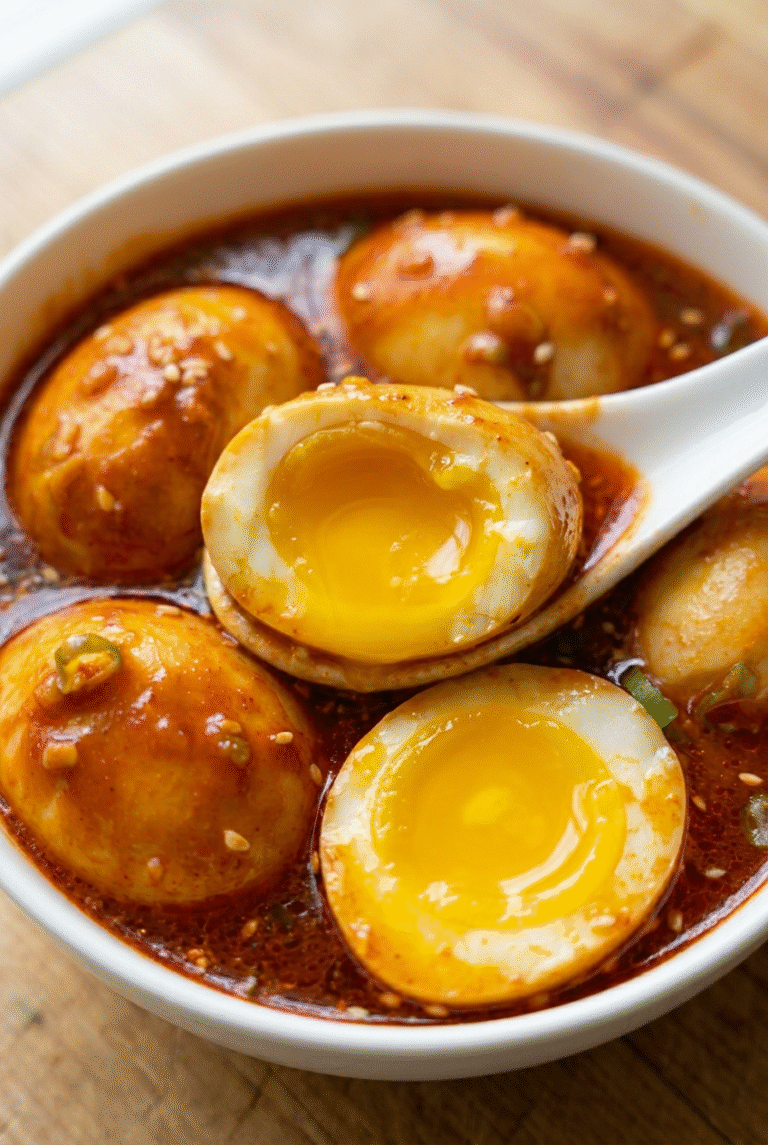
1-Step 1: Prepare the Eggs Start by bringing a pot of water to a boil. You want enough water to completely cover the eggs by at least an inch. Once the water reaches a rolling boil, carefully lower the eggs into the water using a spoon to prevent cracking. Set your timer for exactly 7½ minutes to achieve the ideal jammy consistency creamy but not runny yolks that blend perfectly with the spicy sauce. While the eggs cook, prepare an ice bath by filling a bowl with cold water and ice cubes. This will be crucial for stopping the cooking process immediately after boiling. If you prefer firmer yolks, you can extend the cooking time to 10 minutes, but the 7½-minute mark strikes the perfect balance for this recipe.
2-Step 2: Cool and Peel the Eggs Once the timer goes off, quickly transfer the eggs to the ice bath using a slotted spoon. Let them cool completely for about 5 minutes. The rapid temperature change not only stops the cooking process but also makes peeling significantly easier by separating the membrane from the white. Gently tap each egg on the counter to create cracks all over the shell. Start peeling from the wider end, where there’s typically a small air pocket that makes it easier to get under the membrane. Rinse the peeled eggs under cool water to remove any small shell fragments, then pat them dry with paper towels.
3-Step 3: Create the Spicy Sauce While the eggs cool, prepare the flavorful sauce that makes this dish special. In a small bowl, combine ½ tablespoon of gochujang paste with 2 tablespoons of mayonnaise. The mayonnaise helps tame the heat of the gochujang while adding creaminess to the final dish. Add ½ teaspoon of toasted sesame oil for that distinctive nutty flavor that characterizes many Korean dishes. If you prefer a slightly sweeter balance to the heat, incorporate ¼ teaspoon of brown sugar. Whisk everything together until you have a smooth, vibrant orange-red sauce. Taste and adjust the seasoning if needed, keeping in mind that the flavor will meld beautifully with the eggs.
4-Step 4: Mash and Combine Place the cooled, peeled eggs in a mixing bowl and use a fork to mash them to your desired consistency. Some people prefer their egg salad with larger chunks for more texture, while others like it completely smooth. For this recipe, aim for a slightly chunky mash that still holds together well. Pour the gochujang sauce over the mashed eggs and fold it in gently until everything is evenly combined. The mixture should turn a lovely orange hue as the sauce coats the eggs. Season with salt and freshly ground black pepper to taste, being mindful that both the gochujang and mayonnaise already contain sodium.
5-Step 5: Assemble and Serve For the classic presentation, toast 2 thick slices of sourdough bread until golden brown and crispy. Spread a thin layer of butter on each slice while still warm, then top with roughly chopped kimchi the tangy, fermented flavor of the kimchi perfectly complements the spicy, creamy egg salad. Spoon the gochujang egg mixture over the kimchi-topped toast, allowing it to mound slightly for an attractive presentation. Finish with a sprinkle of toasted sesame seeds for extra crunch and visual appeal, along with thinly sliced chives or green onions for a fresh pop of color and mild onion flavor. For alternative serving methods, try serving the egg salad alongside steamed rice and additional kimchi for a more traditional Korean meal, or use it as a filling for sandwiches and wraps. The recipe also makes an excellent appetizer when served on crackers or cucumber slices. From start to finish, this entire process takes just 15 minutes, making it perfect for busy mornings or quick weeknight dinners. The combination of creamy eggs, spicy gochujang, and tangy kimchi creates a satisfying meal that feels indulgent while still being nutritious.
Last Step:
Please leave a rating and comment letting us know how you liked this recipe! This helps our business to thrive and continue providing free, high-quality recipes for you.Notes
🥚 Boil eggs 5-10 minutes based on desired yolk creaminess – 7.5 minutes for soft and creamy.
🌶️ Gochujang spice varies by brand; start small and adjust, or sub with sriracha for milder heat.
🥄 Toasted sesame oil brings nutty flavor while brown sugar perfectly balances the spice.
- Prep Time: 5 minutes
- Storage: Up to 3 days in refrigerator
- Cook Time: 10 minutes
- Category: Breakfast
- Method: Boiling
- Cuisine: Korean
- Diet: Vegetarian
Nutrition
- Serving Size: 2 eggs
- Calories: 472 kcal
- Sugar: 3g
- Sodium: 430mg
- Fat: 40g
- Saturated Fat: 9g
- Unsaturated Fat: 29g
- Trans Fat: 0g
- Carbohydrates: 5g
- Fiber: 0g
- Protein: 23g
- Cholesterol: 666mg