
Why You’ll Love This French Onion Soup
French Onion Soup has a timeless appeal that makes it a favorite in kitchens worldwide. It’s comforting, flavorful, and surprisingly simple to make at home. One of the standout features is its ease of preparation, which relies on basic ingredients and straightforward steps that fit into any busy schedule. For instance, the recipe takes just 10 minutes to prep and cooks in about 1 hour 30 minutes, letting you create a hearty meal without spending all day in the kitchen.
Beyond convenience, this soup offers notable health benefits from its star ingredient, yellow onions. These provide vitamins, antioxidants, and even potential anti-inflammatory effects, making French Onion Soup a nourishing option that supports overall wellness. You can adapt it for diet-conscious individuals by choosing low-sodium broth or plant-based swaps, turning it into a lighter meal that still satisfies.
Versatility is another reason this recipe shines, as it works well for various lifestyles and preferences. Whether you’re a busy parent tweaking it for family dinners or a student looking for an affordable comfort food, the soup adapts easily to different dietary needs. Finally, its distinctive flavor comes from the deeply caramelized onions, balanced by tangy balsamic vinegar and fresh thyme, creating a rich, savory depth that’s hard to beat. This combination of simplicity, nutrition, flexibility, and taste makes French Onion Soup a go-to choice for home cooks everywhere.
The blend of tamari and white wine in this version heightens the traditional French Onion Soup profile, offering a modern twist without losing its classic charm. With options like adding red pepper flakes for a bit of heat, it caters to food enthusiasts seeking that perfect umami punch. Overall, this recipe’s straightforward nature ensures anyone can enjoy authentic, mouthwatering results with minimal effort.
Jump To
- 1. Why You’ll Love This French Onion Soup
- 2. Essential Ingredients for French Onion Soup
- 3. How to Prepare the Perfect French Onion Soup: Step-by-Step Guide
- 4. Dietary Substitutions to Customize Your French Onion Soup
- 5. Mastering French Onion Soup: Advanced Tips and Variations
- 6. How to Store French Onion Soup: Best Practices
- 7. FAQs: Frequently Asked Questions About French Onion Soup
- 8. French Onion Soup
Essential Ingredients for French Onion Soup
Selecting the right ingredients is key to achieving the best French Onion Soup. Each component plays a role in building the soup’s rich, caramelized flavor. Below, you’ll find a detailed list of everything needed for a batch serving 4-6 people, complete with precise measurements and brief explanations of their purpose.
Main Ingredients
- 6 tablespoons oil – Provides the base for caramelizing onions, helping them cook evenly and develop a deep golden color.
- 3 pounds medium yellow onions (halved and thinly sliced) – The heart of the soup, these onions caramelize to create a sweet, flavorful foundation that gives French Onion Soup its signature taste.
- 3/4 teaspoon salt – Enhances the natural flavors of the onions and balances the overall seasoning during cooking.
- 1 1/2 tablespoons balsamic vinegar – Adds a tangy acidity that brightens the soup and complements the sweetness of the caramelized onions.
- 1 1/2 tablespoons tamari – Brings a savory, umami depth that substitutes well for traditional soy sauce, making the broth more robust.
- 1 1/2 tablespoons fresh thyme leaves – Infuses the soup with an aromatic, earthy note that elevates its herbal profile and ties in fresh flavors.
- 3 cloves garlic (minced) – Offers a punchy aroma and flavor that deepens the soup’s base, preventing it from tasting one-dimensional.
- 3 tablespoons all-purpose white flour – Acts as a thickener to give the soup a velvety texture, ensuring it coats the spoon nicely.
- 1 cup dry white wine – Deglazes the pan and adds complexity with its acidity, enhancing the onions’ sweetness as it cooks down.
- 6 cups broth – Forms the liquid base, carrying the flavors of the caramelized onions; vegetable broth works for lighter options.
- Baguette slices (for topping) – Provide a crunchy contrast when toasted and topped with cheese, making the soup more satisfying.
- Gruyère cheese (or a combination of aged white cheddar and Parmesan) – Melts into a gooey, rich topping that adds creamy indulgence to each bowl.
- Fresh thyme (for garnish) – Adds a final touch of freshness and visual appeal, enhancing the soup’s presentation.
- An optional pinch of red pepper flakes – Introduces a subtle heat that can be adjusted for those wanting a spicy kick in their French Onion Soup.
Special Dietary Options
For vegan adaptations, simply swap the Gruyère cheese for a plant-based alternative like nutritional yeast or vegan cheese, and use vegetable broth instead of any animal-based options. Gluten-free versions can replace the all-purpose white flour with a gluten-free flour blend to maintain thickness. If you’re aiming for low-calorie tweaks, reduce the oil to 4 tablespoons and choose low-sodium broth to cut down on fats and salts while keeping the soup’s essence intact.
To learn more about the health perks of onions, check out this resource on health benefits of onions. This can help diet-conscious individuals appreciate why yellow onions are such a staple in recipes like French Onion Soup.
| Ingredient Category | Quantity | Key Benefit |
|---|---|---|
| Onions and Aromatics | 3 pounds yellow onions, 3 cloves garlic | Builds the soup’s core flavor through caramelization |
| Liquids and Seasonings | 1 cup wine, 6 cups broth, 1 1/2 tablespoons balsamic vinegar | Enhances depth and adaptability for various diets |
How to Prepare the Perfect French Onion Soup: Step-by-Step Guide
Making French Onion Soup at home is a rewarding process that results in a warm, flavorful dish. This guide breaks down the recipe into clear, actionable steps, drawing from the classic preparation method. Start by gathering all your ingredients to ensure smooth cooking and incorporate the French Onion Soup’s rich layers.
First Step: Prepare Your Ingredients
Begin with preparation to set yourself up for success. Slice the 3 pounds of medium yellow onions thinly this helps them caramelize evenly for that melt-in-your-mouth texture. Mince the 3 cloves of garlic and measure out the 1 1/2 tablespoons each of balsamic vinegar, tamari, and fresh thyme leaves. For dietary preferences, like a vegetarian version, have vegetable broth ready to swap in. This step takes about 10 minutes and ensures everything is handy.
Second Step: Caramelize the Onions
Heat 6 tablespoons of oil in a large pot or Dutch oven over medium heat. Add the sliced onions, 3/4 teaspoon salt, and a dash of pepper, then reduce the heat to low. Cook for about 40 minutes, stirring occasionally, until the onions are very soft and starting to brown. This slow process is crucial for developing the deep, sweet flavor that defines great French Onion Soup. If you’re adapting for a low-calorie diet, stir in a bit of water if the onions stick, keeping things lighter.
Third Step: Build the Soup Base
Increase the heat to medium and cook the onions for another 15-20 minutes until they turn golden brown. Stir in the balsamic vinegar, tamari, thyme leaves, and minced garlic to enhance the savory notes. Sprinkle 3 tablespoons of all-purpose white flour over the mixture and cook for 2 minutes, stirring constantly this thickens the soup nicely. For gluten-free options, use a gluten-free flour here to maintain the recipe’s integrity.
Fourth Step: Add Liquids and Simmer
Pour in 1 cup of dry white wine and cook until it evaporates, which takes about 5 minutes and adds a nice acidity. Then, add 6 cups of broth and bring the mixture to a simmer over medium heat. Let it cook uncovered for 30 minutes, allowing the flavors to meld together. This step is where the soup gains its comforting, hearty quality, and you can adjust for low-sodium needs by choosing a reduced-salt broth.
Fifth Step: Prepare the Toppings
While the soup simmers, preheat your oven to 450°F. Place baguette slices on a baking sheet and top them with Gruyère cheese or a mix of aged white cheddar and Parmesan. Bake for 8-10 minutes until the cheese is melted and bubbly, creating that irresistible, gooey topping. This preparation ensures the bread stays crisp and contrasts perfectly with the soup’s warmth.
Final Step: Serve and Enjoy
Ladle the hot soup into bowls, then top each with the cheesy baguette slices, a sprinkle of fresh thyme, and an optional pinch of red pepper flakes for extra zest. The total preparation time is about 1 hour 40 minutes, making it ideal for busy parents or working professionals. Serve immediately and savor the velvety, rich taste of your homemade French Onion Soup. For more ideas on pairing soups, check out our recipe for zucchini corn chowder, which complements hearty meals like this one.
The key to a great French Onion Soup is patience with the onions let them caramelize slowly for that authentic, deep flavor that makes every bowl memorable.

Dietary Substitutions to Customize Your French Onion Soup
Protein and Main Component Alternatives
When customizing French Onion Soup, start with the main components like the broth or onions. For a vegetarian twist, replace the traditional broth with vegetable stock to keep the soup light and plant-based. If you’re avoiding gluten, swap the all-purpose flour for a cornstarch slurry, ensuring the soup thickens without issues. Travelers or students might appreciate using pre-sliced onions for quicker prep, adapting to their on-the-go lifestyles.
Vegetable, Sauce, and Seasoning Modifications
Experiment with vegetables by adding carrots or leeks alongside the onions for extra nutrition, which suits health-focused individuals. For sauces, substitute tamari with coconut aminos to reduce sodium, appealing to diet-conscious readers. Seasonings can vary with herbs like rosemary instead of thyme, offering new flavors for food enthusiasts. Newlyweds might try a sweeter version by reducing balsamic vinegar, tailoring it to their tastes. Overall, these changes keep the soup versatile for seniors or baking enthusiasts seeking milder options.
Mastering French Onion Soup: Advanced Tips and Variations
Pro Cooking Techniques
To elevate your French Onion Soup, focus on advanced methods like using a heavy-bottomed pot for even heat distribution. Stirring every few minutes during caramelization prevents burning and ensures a uniform golden color. For busy schedules, consider batch cooking the onions ahead, as the flavor improves after refrigerating for 2 days.
Flavor Variations
- Add mushrooms for an earthy twist, enhancing the umami in this French Onion Soup classic.
- Incorporate different cheeses like blue cheese for a sharper profile.
- Use red wine instead of white for a bolder, fruitier taste that pairs well with meats.
Presentation Tips
Garnish with edible flowers for a visually appealing bowl that impresses at dinner parties. Serve in individual oven-safe crocks to keep the cheese topping melty and inviting. Make-ahead options include freezing for up to 3 months, perfect for storing extra batches.
For more French-inspired dishes, explore our beef bourguignon recipe, which shares similar techniques.
How to Store French Onion Soup: Best Practices
Proper storage keeps French Onion Soup fresh and flavorful. For refrigeration, cool the soup completely at room temperature for no more than 2 hours, then transfer it to an airtight container. It typically lasts 3-5 days in the fridge, maintaining its rich taste from caramelized onions and herbs.
When freezing, portion the soup into freezer-safe bags or containers, leaving space for expansion, and it can last up to 3 months. Reheating involves thawing in the fridge overnight and warming on the stovetop to 165°F for safety. For meal prep, divide into single servings for easy lunches, helping busy parents and working professionals.

FAQs: Frequently Asked Questions About French Onion Soup
How long does French onion soup last in the fridge?
French onion soup typically lasts 3-5 days in the fridge when stored properly in an airtight container. For best quality and safety, consume it within 3 days, especially if it contains cheese or dairy toppings. Always check for signs of spoilage like off odors, mold, or sliminess before reheating. To store, let the soup cool completely at room temperature (no more than 2 hours), then refrigerate promptly. Divide into smaller portions for quicker cooling and easier reheating. Label containers with the date made. This storage method preserves the rich flavors of caramelized onions, beef broth, and thyme while minimizing bacterial growth. If you’re meal prepping, portion it into lunch-sized servings right away.
Can you reheat French onion soup in the microwave?
Yes, you can safely reheat French onion soup in the microwave for a quick work lunch. Transfer a portion to a microwave-safe bowl, cover loosely with a lid or damp paper towel to prevent splatters, and heat on high in 1-2 minute intervals, stirring between each until it reaches 165°F (74°C) internally. Add a splash of broth if it’s thickened too much. For the best texture, top with fresh baguette and melted cheese after reheating—broil briefly if possible. Microwave reheating works well for single servings but may not crisp the bread topping like stovetop or oven methods. Stir well to evenly distribute heat and avoid hot spots. This makes it ideal for busy days without sacrificing flavor.
Can you freeze French onion soup?
Yes, French onion soup freezes well for up to 3 months, but freeze it without the cheese topping or bread for best results. Ladle cooled soup (under 40°F/4°C) into freezer-safe bags or containers, leaving 1-inch headspace for expansion. Squeeze out air from bags and flatten for quick thawing. Label with the date. Thaw overnight in the fridge, then reheat on the stovetop over medium heat, stirring until simmering and reaching 165°F (74°C). Add fresh croutons and Gruyère cheese post-thaw to restore that classic gooey topping. Freezing preserves the deep umami from caramelized onions and wine, though onions may soften slightly. Avoid refreezing thawed soup to maintain quality and safety.
How do you caramelize onions for French onion soup?
Caramelizing onions for French onion soup takes 45-60 minutes over low heat for sweet, jammy results. Slice 4-5 large yellow onions thinly (about 1/8-inch). Melt 4 tablespoons butter (or a mix of butter and oil) in a Dutch oven over medium heat, add onions with a pinch of salt, and cook uncovered, stirring every 5 minutes. Reduce heat to low after 10 minutes; they’ll turn translucent, then golden (20-30 minutes), and deeply browned (40+ minutes). Add 1/4 cup water or broth if sticking occurs. Deglaze with 1/2 cup wine or sherry near the end. Patience is key—rushing burns them. This step builds the soup’s signature rich base, essential for authentic flavor without sugar shortcuts.
Can you make vegetarian French onion soup?
Yes, make a delicious vegetarian French onion soup by swapping beef broth for vegetable broth and using white wine or sherry for depth. Follow the standard recipe: caramelize onions as usual, then simmer with 8 cups vegetable broth, 2 bay leaves, thyme sprigs, and a splash of balsamic vinegar for 30 minutes. Season with salt, pepper, and Worcestershire sauce alternative (soy sauce + tamari mix). For serving, ladle into oven-safe bowls, top with toasted baguette slices and shredded Gruyère or Swiss cheese, then broil until bubbly and golden (2-3 minutes). This version retains the savory, caramelized essence while being fully plant-based. It’s perfect for dietary needs and pairs well with a green salad—total prep time remains under 90 minutes.
French Onion Soup
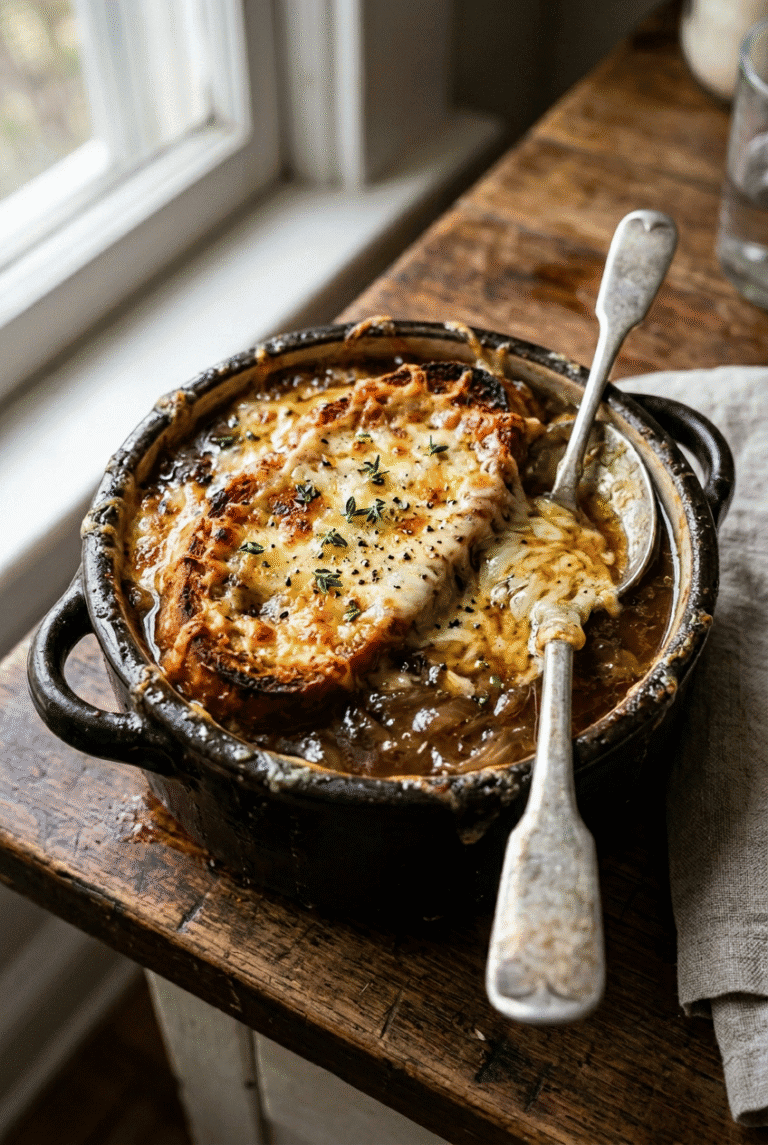
🥣 Warm your soul with the deep, savory flavors from slowly caramelized onions, creating a comforting classic that’s perfect for cozy evenings.
🍞 Indulge in the gooey melted Gruyère atop crusty baguette, elevating this simple soup into an elegant, restaurant-quality dish you’ll crave.
- Total Time: 1 hour 40 minutes
- Yield: Serves 4-6
Ingredients
– 6 tablespoons oil for caramelizing onions
– 3 pounds medium yellow onions (halved and thinly sliced) for caramelizing
– 3/4 teaspoon salt for enhancing flavors
– 1 1/2 tablespoons balsamic vinegar for tangy acidity
– 1 1/2 tablespoons tamari for umami depth
– 1 1/2 tablespoons fresh thyme leaves for aromatic note
– 3 cloves garlic (minced) for aroma and depth
– 3 tablespoons all-purpose white flour for thickening
– 1 cup dry white wine for deglazing
– 6 cups broth for liquid base
– Baguette slices (for topping) for crunchy contrast
– Gruyère cheese (or a combination of aged white cheddar and Parmesan) for topping
– Fresh thyme (for garnish) for freshness
– An optional pinch of red pepper flakes for subtle heat
Instructions
1-First Step: Prepare Your Ingredients Begin with preparation to set yourself up for success. Slice the 3 pounds of medium yellow onions thinly this helps them caramelize evenly for that melt-in-your-mouth texture. Mince the 3 cloves of garlic and measure out the 1 1/2 tablespoons each of balsamic vinegar, tamari, and fresh thyme leaves. For dietary preferences, like a vegetarian version, have vegetable broth ready to swap in. This step takes about 10 minutes and ensures everything is handy.
2-Second Step: Caramelize the Onions Heat 6 tablespoons of oil in a large pot or Dutch oven over medium heat. Add the sliced onions, 3/4 teaspoon salt, and a dash of pepper, then reduce the heat to low. Cook for about 40 minutes, stirring occasionally, until the onions are very soft and starting to brown. This slow process is crucial for developing the deep, sweet flavor that defines great French Onion Soup. If you’re adapting for a low-calorie diet, stir in a bit of water if the onions stick, keeping things lighter.
3-Third Step: Build the Soup Base Increase the heat to medium and cook the onions for another 15-20 minutes until they turn golden brown. Stir in the balsamic vinegar, tamari, thyme leaves, and minced garlic to enhance the savory notes. Sprinkle 3 tablespoons of all-purpose white flour over the mixture and cook for 2 minutes, stirring constantly this thickens the soup nicely. For gluten-free options, use a gluten-free flour here to maintain the recipe’s integrity.
4-Fourth Step: Add Liquids and Simmer Pour in 1 cup of dry white wine and cook until it evaporates, which takes about 5 minutes and adds a nice acidity. Then, add 6 cups of broth and bring the mixture to a simmer over medium heat. Let it cook uncovered for 30 minutes, allowing the flavors to meld together. This step is where the soup gains its comforting, hearty quality, and you can adjust for low-sodium needs by choosing a reduced-salt broth.
5-Fifth Step: Prepare the Toppings While the soup simmers, preheat your oven to 450°F. Place baguette slices on a baking sheet and top them with Gruyère cheese or a mix of aged white cheddar and Parmesan. Bake for 8-10 minutes until the cheese is melted and bubbly, creating that irresistible, gooey topping. This preparation ensures the bread stays crisp and contrasts perfectly with the soup’s warmth.
6-Final Step: Serve and Enjoy Ladle the hot soup into bowls, then top each with the cheesy baguette slices, a sprinkle of fresh thyme, and an optional pinch of red pepper flakes for extra zest. The total preparation time is about 1 hour 40 minutes, making it ideal for busy parents or working professionals. Serve immediately and savor the velvety, rich taste of your homemade French Onion Soup. For more ideas on pairing soups, check out our recipe for zucchini corn chowder, which complements hearty meals like this one.
Last Step:
Please leave a rating and comment letting us know how you liked this recipe! This helps our business to thrive and continue providing free, high-quality recipes for you.Notes
🔪 Slice the onions thinly to achieve a silky, melt-in-your-mouth texture in the broth.
⏱️ Caramelize the onions thoroughly on low heat first, then higher, for the richest flavor without burning.
🍞 Toast extra baguette slices as backups—they disappear quickly with this irresistible topping!
- Prep Time: 10 minutes
- Cook Time: 1 hour 30 minutes
- Category: Soup
- Method: Stovetop
- Cuisine: French
- Diet: Vegetarian
Nutrition
- Serving Size: 1 bowl
- Calories: 350 kcal
- Sugar: 12 g
- Sodium: 1200 mg
- Fat: 18 g
- Saturated Fat: 8 g
- Unsaturated Fat: 10 g
- Trans Fat: 0 g
- Carbohydrates: 35 g
- Fiber: 4 g
- Protein: 12 g
- Cholesterol: 30 mg