

Why You’ll Love This Cacio E Pepe
Cacio E Pepe represents the pinnacle of Italian culinary simplicity, transforming just a few humble ingredients into a dish that’s truly greater than the sum of its parts. This traditional Roman pasta recipe has captured the hearts of food enthusiasts worldwide, and once you try it, you’ll understand why it has stood the test of time.
- Ease of preparation: This Cacio E Pepe recipe comes together in just 15-30 minutes with minimal ingredients. The straightforward technique makes it perfect for busy weeknights when you want something impressive without spending hours in the kitchen.
- Health benefits: Unlike many creamy pasta dishes, authentic Cacio E Pepe contains no heavy cream. The recipe provides a good balance of carbohydrates, protein (23g per serving), and essential nutrients like calcium (290mg) and iron (2mg), making it a relatively nutritious comfort food option.
- Versatility: While traditional Cacio E Pepe uses specific ingredients, this recipe can be adapted to various dietary needs. It can easily be made gluten-free with alternative pastas, and the cheese blend can be adjusted for different flavor preferences or dietary restrictions.
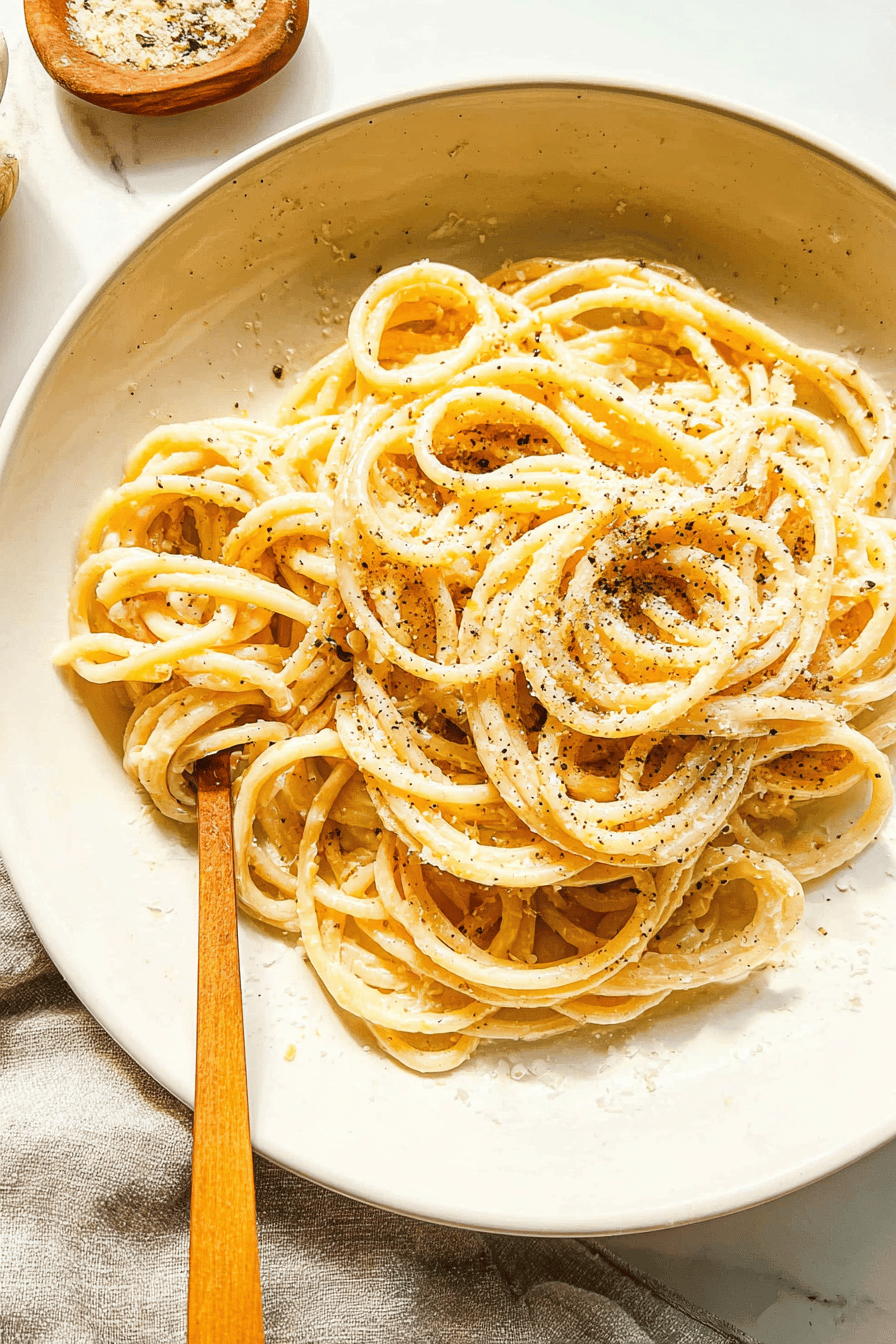
- Distinctive flavor: The combination of sharp Pecorino Romano and coarsely ground black pepper creates a uniquely robust flavor profile that’s both comforting and sophisticated. The starchy pasta water binds everything into a silky sauce that clings perfectly to every strand of pasta.
“Cacio E Pepe proves that the most extraordinary dishes often come from the simplest ingredients. It’s Italian cooking at its most honest and delicious.”
Jump To
- 1. Why You’ll Love This Cacio E Pepe
- 2. Essential Ingredients for Cacio E Pepe
- 3. How to Prepare the Perfect Cacio E Pepe: Step-by-Step Guide
- 4. Mastering Cacio E Pepe: Advanced Tips and Variations
- 5. How to Store Cacio E Pepe: Best Practices
- 6. FAQs: Frequently Asked Questions About Cacio E Pepe
- 7. Cacio E Pepe
Essential Ingredients for Cacio E Pepe
The beauty of this traditional Roman dish lies in its minimal ingredient list. When making authentic Cacio E Pepe, quality matters more than quantity. Each component serves a specific purpose in creating the dish’s signature creamy sauce and distinctive flavor profile.
- 8 ounces (approx. 225g) dried pasta – Acceptable options include bucatini, spaghetti, rigatoni, or tonnarelli. The pasta shape affects how well the sauce clings, with long strands being traditional.
- 2 tablespoons (approx. 28g) unsalted butter – This optional ingredient adds richness to the dish, though traditional Cacio E Pepe recipes typically omit it.
- 1 teaspoon freshly cracked black pepper – Coarsely ground and toasted to release its aromatic oils, this is one of the two namesake ingredients in Cacio E Pepe.
- ½ cup (approx. 50g, about 2 ounces) freshly grated Pecorino Romano cheese – Plus extra for garnish. Alternatively, a 50/50 blend with Parmigiano-Reggiano works well for a slightly milder flavor.
- Fine sea salt – Used generously in the pasta water to properly season the pasta from within.
- Extra starchy pasta water – Reserved before draining, this liquid gold is crucial for creating the creamy sauce that makes Cacio E Pepe so special.
Special Dietary Options
| Dietary Need> | Substitutions> |
|---|---|
| Vegan | Nutritional yeast combined with cashew cream and vegan butter; omit cheese entirely |
| Gluten-free | Use high-quality gluten-free pasta made from corn, rice, or quinoa blends |
| Low-calorie | Omit butter, reduce cheese by half, and increase black pepper for flavor |
How to Prepare the Perfect Cacio E Pepe: Step-by-Step Guide
Making authentic Cacio E Pepe is a straightforward process that requires attention to timing and technique. The magic of this dish comes from properly emulsifying the cheese with starchy pasta water to create a creamy sauce without any actual cream. Let’s walk through each step to ensure your Italian pasta dish turns out perfectly every time.
First Step: Preparing the Pasta Water
Bring 3 quarts of water to a rolling boil in a large pot over high heat. Using a pot that’s only about half full ensures a more concentrated starch in the cooking water, which is essential for a creamy sauce. Once boiling, add 2 tablespoons of fine sea salt to the water. This step may seem excessive, but it’s crucial for properly seasoning the pasta itself, as the pasta will absorb the salted water during cooking.
Second Step: Cooking the Pasta
Add your chosen pasta shape to the boiling water and cook, stirring occasionally, until it reaches the perfect al dente texture. This typically takes 6-10 minutes depending on the pasta shape. The pasta should be firm to the bite but not hard, as it will continue to cook slightly when combined with the hot sauce later. For the best pasta dishes, proper cooking time is essential to achieve that perfect texture.
Third Step: Preparing the Pepper Base
While the pasta cooks, place a large nonstick sauté pan over medium heat. If you’re using the optional butter, add 2 tablespoons to the pan and let it melt. Add 1 teaspoon of freshly cracked, coarsely ground black pepper to the pan. Toast the pepper for about 30 seconds until fragrant, then immediately remove the pan from the heat. This toasting step intensifies the pepper’s flavor, which is essential for an authentic Cacio E Pepe taste.
Fourth Step: Reserving the Starchy Pasta Water
Before draining your cooked pasta, carefully reserve 2/3 cup (approximately 160ml) of the starchy pasta water. This liquid is golden in the world of Italian pasta dishes, as its starch content is what helps create a silky, emulsified sauce with the cheese. After reserving the water, drain the pasta but don’t rinse it, as you want to keep the starch on the pasta’s surface to help the sauce adhere.
Final Step: Creating the Creamy Sauce
Transfer the hot pasta immediately to the pan with the butter and pepper (if using) using tongs. Add 1/3 cup (approximately 80ml) of the hot, starchy reserved pasta water and toss everything well to combine. Now, with the pan still off the heat, add half of the grated Pecorino Romano cheese and toss continuously to coat the pasta. Gradually add the remaining cheese while tossing constantly until it melts completely, forming a smooth, creamy sauce. If needed, add small amounts of the reserved hot pasta water to achieve a glossy, perfectly emulsified sauce consistency. Serve immediately, topped with extra freshly grated cheese and additional black pepper if desired.
Protein and Main Component Alternatives
While traditional Cacio E Pepe is a vegetarian dish, you can easily add protein to make it more substantial. Consider adding grilled chicken strips, pan-seared shrimp, or crispy pancetta. For a vegetarian protein boost, try incorporating cannellini beans or sautéed mushrooms. These additions can transform your simple Italian pasta dish into a more complete meal while still honoring the classic Cacio E Pepe flavors.
Vegetable, Sauce, and Seasoning Modifications
The beauty of Cacio E Pepe lies in its simplicity, but if you’d like to add vegetables to increase nutritional value, consider incorporating quickly sautéed spinach, roasted asparagus, or blistered cherry tomatoes. When modifying the sauce, remember that keeping the cheese-to-pasta-water ratio is key to maintaining the proper consistency. For seasoning variations, you might add a pinch of nutmeg for warmth or incorporate lemon zest for brightness, though purists might argue these stray from tradition. For inspiration on other simple Italian dishes, you might explore easy pasta recipes that celebrate straightforward preparation and bold flavors.
Mastering Cacio E Pepe: Advanced Tips and Variations
Once you’ve mastered the basic Cacio E Pepe recipe, you can refine your technique with these professional tips that elevate this simple dish to restaurant quality. These insights come from understanding the science behind what makes this traditional Roman pasta so special.
Pro Cooking Techniques
- For maximum creaminess: Always use warm/hot reserved pasta water. The heat helps melt the cheese evenly while the starch creates a stable emulsion that prevents the oil from separating.
- Cheese preparation: Grate your Pecorino Romano finely by hand just before use. Pre-grated cheese contains anti-caking agents that can prevent proper melting and result in a grainy sauce.
- Preventing clumping: Ensure your pan is completely off the heat before adding the cheese. Add cheese gradually while tossing the pasta continuously. Using a large pan provides ample space for effective tossing action.
- Perfecting your pasta water: Don’t overfill your pasta pot filling it about half full creates more concentrated starch in the cooking water. Always reserve your pasta water before draining.
Flavor Variations
For a different take on this classic, try infusing your olive oil with garlic and red pepper flakes before adding the pasta. Alternatively, incorporate a small amount of lemon zest to brighten the flavor profile or add crispy fried sage leaves for an earthy note. Some regional variations include a pinch of nutmeg or a drizzle of truffle oil for a luxurious upgrade.
Presentation Tips
For restaurant-quality presentation, use tongs to create a nest of pasta in the center of warm bowls. Finish with a generous shower of freshly grated Pecorino Romano and a light dusting of coarsely ground black pepper. A final drizzle of high-quality olive oil adds shine and visual appeal.
Make-Ahead Options
While Cacio E Pepe is best served immediately, you can prepare components in advance. Grate your cheese and toast your pepper ahead of time, storing them separately. When ready to serve, simply cook your pasta and combine everything following the recipe instructions.
How to Store Cacio E Pepe: Best Practices
Though Cacio E Pepe is best enjoyed fresh, understanding proper storage techniques helps maintain quality if you have leftovers. The creaminess of this Italian pasta dish comes from the emulsification of cheese and starch, which can change upon storage and reheating.
Refrigeration
Store leftover Cacio E Pepe in an airtight container in the refrigerator for up to 3 days. The sauce may solidify when chilled, but this is normal. For best results, keep the pasta in a single layer rather than overcrowding the container, which helps maintain texture.
Freezing
Freezing is not recommended for Cacio E Pepe as the cheese sauce can separate and become grainy upon thawing. If you must freeze, do so for no more than one month. Thaw overnight in the refrigerator before reheating using the method below.
Reheating
To reheat, place the pasta in a nonstick pan over low heat. Add a tablespoon of water at a time, tossing until the sauce creamy again. The microwave can also be used, but heat in short bursts, stirring between each to ensure even warming and prevent the cheese from clumping.
Meal Prep Considerations
For meal prep, consider keeping the components separate until ready to eat. Cook and store the pasta tossed with a little olive oil, and keep the cheese and pepper mixture in a separate container. When ready to eat, simply combine with a splash of hot pasta water or regular hot water to recreate the creamy sauce.
FAQs: Frequently Asked Questions About Cacio E Pepe
How do you properly pronounce “cacio e pepe”?
“Cacio e pepe” is pronounced as “KA-choh eh PEH-peh.” The phrase comes from Italian, where “cacio” means cheese and “pepe” means pepper, reflecting the dish’s simple ingredients.
What ingredients do I need to make authentic cacio e pepe?
The essential ingredients for authentic cacio e pepe are pasta (usually spaghetti or tonnarelli), Pecorino Romano cheese, freshly ground black pepper, and pasta cooking water. No butter or cream is used traditionally. The hot pasta water helps to create a creamy sauce when mixed with the cheese and pepper.
How can I stop the cheese from clumping when making cacio e pepe?
To avoid clumping, finely grate fresh Pecorino Romano cheese by hand instead of using pre-grated versions. After cooking, remove the pan from heat before adding the cheese and toss the pasta quickly. Adding warm pasta water gradually while stirring helps create a smooth, glossy sauce.
Where did cacio e pepe originate and what is its history?
Cacio e pepe is a traditional Roman pasta dish believed to have originated with shepherds in Italy’s Apennine Mountains. It was a simple meal made from available ingredients—dried pasta, Pecorino cheese from sheep’s milk, and black pepper. Over time, it became popular in Rome’s Lazio region as an affordable and flavorful dish.
Can I use other types of cheese for cacio e pepe?
Traditional cacio e pepe uses Pecorino Romano, which has a sharp, salty flavor crucial to the dish. While you can try substituting with Parmesan, the taste and texture will differ. For the closest result, use authentic Pecorino and grate it finely to melt evenly into a creamy sauce.
Cacio E Pepe
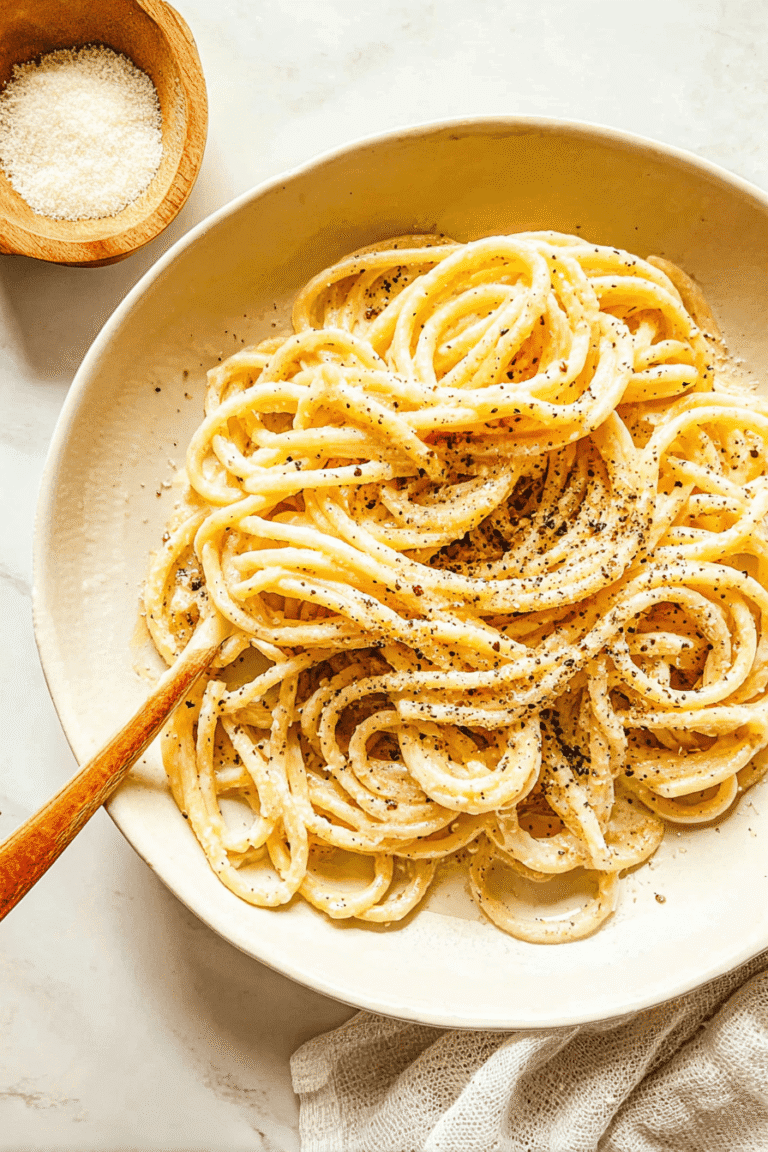
🍝 Elegant Roman classic that transforms just three ingredients into a luxurious, creamy pasta dish in under 30 minutes
✨ Restaurant-quality results with minimal ingredients and simple techniques that showcase the magic of authentic Italian cooking
- Total Time: 15-30 minutes
- Yield: 2-3 servings
Ingredients
– 8 ounces (approx. 225g) dried pasta
– 2 tablespoons (approx. 28g) unsalted butter for adding richness
– 1 teaspoon freshly cracked black pepper
– ½ cup (approx. 50g, about 2 ounces) freshly grated Pecorino Romano cheese for garnish
– Fine sea salt for seasoning the pasta
– Extra starchy pasta water for creating the creamy sauce
Instructions
1-First Step: Preparing the Pasta Water – Bring 3 quarts of water to a rolling boil in a large pot over high heat. Using a pot that’s only about half full ensures a more concentrated starch in the cooking water, which is essential for a creamy sauce. Once boiling, add 2 tablespoons of fine sea salt to the water. This step may seem excessive, but it’s crucial for properly seasoning the pasta itself, as the pasta will absorb the salted water during cooking.
2-Second Step: Cooking the Pasta – Add your chosen pasta shape to the boiling water and cook, stirring occasionally, until it reaches the perfect al dente texture. This typically takes 6-10 minutes depending on the pasta shape. The pasta should be firm to the bite but not hard, as it will continue to cook slightly when combined with the hot sauce later. For the best pasta dishes, proper cooking time is essential to achieve that perfect texture.
3-Third Step: Preparing the Pepper Base – While the pasta cooks, place a large nonstick sauté pan over medium heat. If you’re using the optional butter, add 2 tablespoons to the pan and let it melt. Add 1 teaspoon of freshly cracked, coarsely ground black pepper to the pan. Toast the pepper for about 30 seconds until fragrant, then immediately remove the pan from the heat. This toasting step intensifies the pepper’s flavor, which is essential for an authentic Cacio E Pepe taste.
4-Fourth Step: Reserving the Starchy Pasta Water – Before draining your cooked pasta, carefully reserve 2/3 cup (approximately 160ml) of the starchy pasta water. This liquid is golden in the world of Italian pasta dishes, as its starch content is what helps create a silky, emulsified sauce with the cheese. After reserving the water, drain the pasta but don’t rinse it, as you want to keep the starch on the pasta’s surface to help the sauce adhere.
5-Final Step: Creating the Creamy Sauce – Transfer the hot pasta immediately to the pan with the butter and pepper (if using) using tongs. Add 1/3 cup (approximately 80ml) of the hot, starchy reserved pasta water and toss everything well to combine. Now, with the pan still off the heat, add half of the grated Pecorino Romano cheese and toss continuously to coat the pasta. Gradually add the remaining cheese while tossing constantly until it melts completely, forming a smooth, creamy sauce. If needed, add small amounts of the reserved hot pasta water to achieve a glossy, perfectly emulsified sauce consistency. Serve immediately, topped with extra freshly grated cheese and additional black pepper if desired.
Last Step:
Please leave a rating and comment letting us know how you liked this recipe! This helps our business to thrive and continue providing free, high-quality recipes for you.Notes
💧 Use warm/hot reserved pasta water – the starch helps melt the cheese evenly and prevents clumping, creating a smooth sauce
🧀 Grate cheese finely by hand just before use – avoid pre-grated cheese as it often contains anti-caking agents that hinder melting
🔥 Keep the pan OFF the heat before adding the cheese and add cheese gradually while tossing pasta continuously to prevent clumping and ensure a creamy texture
- Prep Time: 5-10 minutes
- Cook Time: 10-20 minutes
- Category: Pasta
- Method: Stovetop
- Cuisine: Italian
- Diet: Vegetarian, Gluten-free adaptable
Nutrition
- Serving Size: 1 serving
- Calories: 621
- Sugar: 3
- Sodium: 308
- Fat: 20
- Saturated Fat: 12
- Unsaturated Fat: 6
- Trans Fat: 0
- Carbohydrates: 86
- Fiber: 4
- Protein: 23
- Cholesterol: 57





Just made this for dinner and I’m in heaven!
The trick with the ice cold water to keep the cheese from clumping really worked wonders.