

Why You’ll Love This pesto pasta
- Ease of preparation: This pesto pasta recipe is incredibly simple and quick to make, perfect for busy weekdays or last-minute meals. With just a few ingredients and straightforward steps, you can have a delicious, flavorful dish ready in under 20 minutes.
- Health benefits: Packed with fresh basil, pine nuts, and olive oil, this pesto pasta offers numerous nutritional advantages, including healthy fats, antioxidants, and essential vitamins that contribute to overall wellness. It’s a heart-healthy option that supports immune function and provides a good balance of nutrients.
- Versatility: The recipe is highly adaptable, allowing you to customize it for various dietary needs such as vegan, gluten-free, or low-calorie diets by substituting ingredients without compromising on flavor or texture.
- Distinctive flavor: What sets this pesto pasta apart is its fresh, vibrant basil flavor combined with the nuttiness of pine nuts and the sharpness of Parmesan cheese, creating a harmonious and memorable taste experience that stands out from regular pasta dishes.
Jump To
- 1. Why You’ll Love This pesto pasta
- 2. Essential Ingredients for pesto pasta
- 3. How to Prepare the Perfect pesto pasta: Step-by-Step Guide
- 4. Dietary Substitutions to Customize Your pesto pasta
- 5. Mastering pesto pasta: Advanced Tips and Variations
- 6. How to Store pesto pasta: Best Practices
- 7. FAQs: Frequently Asked Questions About pesto pasta
- 8. pesto pasta
Essential Ingredients for pesto pasta
- 2 cups fresh basil leaves (packed) – provides the signature herbal aroma and flavor
- 1/4 cup pine nuts – adds a creamy texture and subtle nuttiness
- 1/2 cup freshly grated Parmesan cheese – contributes a salty, rich taste that enhances the pesto
- 2 garlic cloves – infuses pungent warmth and depth
- 1/2 cup extra virgin olive oil – binds ingredients and adds richness
- Salt and freshly ground black pepper, to taste – balances and enhances flavors
- 300 to 350 grams (10 to 12 ounces) pasta (penne, ziti, or spaghetti) – serves as the hearty base
- 2 teaspoons salt (for pasta water) – seasons the pasta during cooking
- 3/4 to 1 cup reserved pasta cooking water – emulsifies and blends pesto into a creamy sauce
- Freshly grated Parmesan cheese (for serving) – optional garnish for extra flavor
- Fresh basil leaves (for garnish, optional) – adds freshness and visual appeal
Special Dietary Options:
- Vegan: Substitute Parmesan cheese with nutritional yeast or vegan cheese alternatives
- Gluten-free: Use gluten-free pasta made from rice, corn, or legumes to accommodate dietary restrictions
- Low-calorie: Use spiralized vegetables like zucchini noodles or whole wheat pasta to reduce calories
How to Prepare the Perfect pesto pasta: Step-by-Step Guide
First Step: Gather and Prepare Ingredients
Wash and pat dry fresh basil leaves. Measure pine nuts and grate Parmesan cheese. Peel garlic cloves and prepare pasta water by bringing a large pot with 2 teaspoons salt to boil.
Second Step: Toast Pine Nuts
In a dry skillet over medium heat, lightly toast pine nuts for 3 to 5 minutes until golden and fragrant. Stir frequently to prevent burning. Remove from heat and let cool.
Third Step: Make Pesto
In a food processor or blender, combine basil leaves, toasted pine nuts, garlic cloves, and Parmesan cheese. Pulse until coarsely chopped. While blending, slowly drizzle in olive oil until the mixture forms a smooth, creamy sauce. Season with salt and fresh black pepper to taste.
Fourth Step: Cook Pasta
Add your choice of pasta (penne, ziti, or spaghetti recommended) to the boiling salted water and cook according to package instructions until al dente, typically 8 to 12 minutes. Scoop out and reserve about 3/4 to 1 cup of pasta cooking water just before draining.
Fifth Step: Combine Pasta and Pesto
Drain pasta and transfer it to a large mixing bowl (avoid hot pot to maintain pesto freshness). Add the pesto sauce along with 1/4 cup reserved pasta water. Toss well to coat evenly. Add more pasta water gradually as needed to create a silky, emulsified sauce that clings beautifully to the pasta.
Sixth Step: Season and Serve
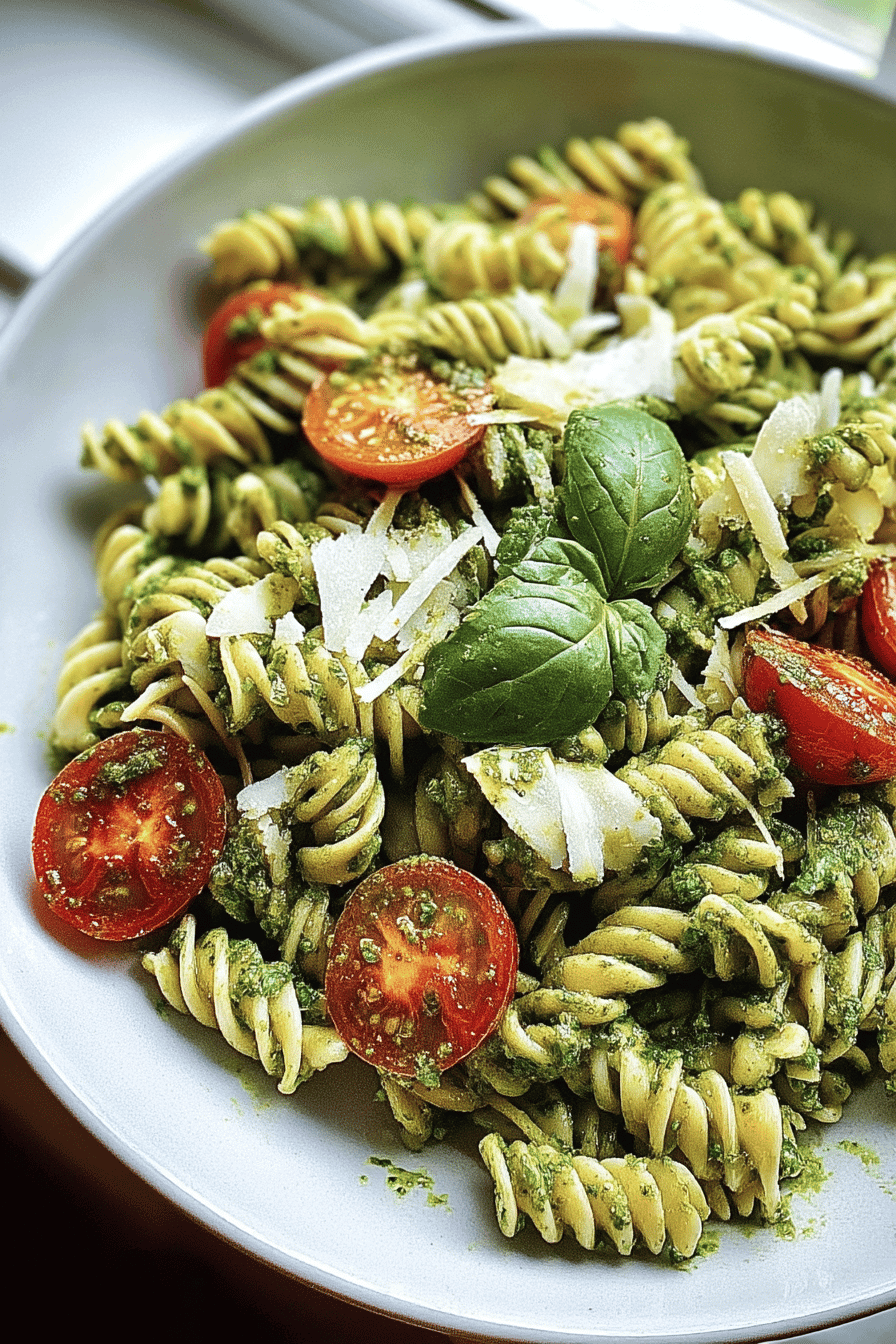
Taste and adjust seasoning by adding extra salt, freshly ground black pepper, or a squeeze of lemon juice if desired. Serve immediately, topped with a generous sprinkle of freshly grated Parmesan and optional fresh basil leaves for garnish.
Adaptations:
For vegan variations, use plant-based Parmesan substitutes and select gluten-free pasta if needed. For a lighter meal, try spiralized vegetable noodles instead of traditional pasta.

Dietary Substitutions to Customize Your pesto pasta
Protein and Main Component Alternatives
- Grilled chicken breast or sautéed shrimp to add protein and heartiness
- Plant-based options such as pan-fried tofu or tempeh for vegan diets
- Legumes like chickpeas for added fiber and protein while keeping it plant-based
Vegetable, Sauce, and Seasoning Modifications
- Replace basil with kale, spinach, or arugula to diversify the green base and nutrient profile
- Substitute pine nuts with walnuts, almonds, or cashews for different textures and flavors
- Add sun-dried tomatoes or roasted red peppers for a sweet and smoky flavor twist
- Enhance brightness with lemon zest or a sprinkle of chili flakes for subtle heat
- Include fresh or cooked seasonal vegetables like asparagus, cherry tomatoes, or peas for texture and freshness
Mastering pesto pasta: Advanced Tips and Variations
- Pro cooking techniques: Use a mortar and pestle to crush the ingredients manually for a rustic texture, and toast nuts evenly without overdoing to avoid bitterness. Chill olive oil before blending to retain the pesto’s vibrant green color.
- Flavor variations: Combine basil with fresh herbs like mint or cilantro to create a unique flavor profile. Add lemon or orange zest to brighten the sauce, or include roasted garlic and caramelized onions for added sweetness and depth.
- Presentation tips: Serve pesto pasta in warm bowls drizzled with extra virgin olive oil, topped with fresh basil leaves and extra grated cheese. For a decorative touch, garnish with edible flowers or toasted nuts for elegance.
- Make-ahead options: Prepare pesto sauce ahead and store it in an airtight container covered with a thin layer of olive oil to keep it fresh. Cook pasta just before serving or slightly undercook and reheat by tossing with pesto and warm pasta water for a freshly made taste.
How to Store pesto pasta: Best Practices
| Storage Method | Instructions | Duration |
|---|---|---|
| Refrigeration | Store cooked pesto pasta and extra pesto sauce separately in airtight containers. Refrigerate up to 3 days to preserve texture and freshness. | Up to 3 days |
| Freezing | Freeze pesto sauce in ice cube trays for convenient portions. Cooked pasta can be frozen but may experience texture changes. Reheat gently. | Up to 1 month |
| Reheating | Warm pesto pasta in a skillet over low heat, adding reserved pasta water or olive oil to prevent drying and maintain sauce creaminess. | As needed |
| Meal prep considerations | Keep pasta and pesto separate until serving. Combine just before eating for optimal texture and flavor. | Flexible |
FAQs: Frequently Asked Questions About pesto pasta
How do I make pesto pasta sauce smooth without using too much oil?
To create a smooth pesto sauce without extra oil, reserve about ¾ cup of the starchy pasta cooking water before draining. Gradually stir this water into the pesto and pasta mixture. The starch in the water binds with the oils from the pesto, forming a glossy sauce that coats the pasta evenly without feeling greasy.
Which types of pasta are best for tossing with pesto?
Short, tubular pasta shapes like penne, rigatoni, or ziti work best for pesto because their hollow centers hold the sauce well. Long pastas like spaghetti or linguine are also good but may be trickier to toss evenly. Avoid pasta with lots of ridges or complicated shapes, as they can cause uneven pesto distribution.
Can I use store-bought pesto for pesto pasta, and does it change the preparation?
Yes, store-bought pesto can be used successfully. Since it tends to vary in saltiness and texture, start with a smaller amount—about one-third cup—and add more as needed. Like homemade pesto, adding pasta water will help loosen it into a creamy sauce, but store-bought versions may require less water due to their concentrated texture.
How should pesto pasta be combined to keep the basil bright and fresh?
Toss the pesto with warm pasta off the heat, ideally in a mixing bowl or room temperature pan. Avoid tossing the pesto directly in the hot pot or over a flame, as excessive heat will cause the basil to wilt and turn dark, affecting both color and flavor.
Is it okay to reheat pesto pasta leftovers?
It’s best not to reheat pesto pasta because heat can darken the basil and alter the fresh flavor. If you need to warm it, do so gently over very low heat and stir in a little pasta water to maintain sauce creaminess. Otherwise, pesto pasta is best enjoyed fresh or at room temperature.

pesto pasta
🍝 Elevate your dinner with this Pesto Pasta, offering a deliciously creamy sauce without excessive oil.
🌿 Quick and versatile, this dish easily adapts to your favorite vegetables or proteins for a personalized touch.
- Total Time: 20 minutes
- Yield: 4 servings
Ingredients
– 2 cups fresh basil leaves
– 1/4 cup pine nuts
– 1/2 cup freshly grated Parmesan cheese
– 2 garlic cloves
– 1/2 cup extra virgin olive oil
– Salt and freshly ground black pepper to taste
– 300 to 350 grams pasta
– 2 teaspoons salt for pasta water
– 3/4 to 1 cup reserved pasta cooking water
– Freshly grated Parmesan cheese for serving
– Fresh basil leaves for garnish
Instructions
First Step: Gather and Prepare Ingredients Wash and pat dry fresh basil leaves. Measure pine nuts and grate Parmesan cheese. Peel garlic cloves and prepare pasta water by bringing a large pot with 2 teaspoons salt to boil.
Second Step: Toast Pine Nuts In a dry skillet over medium heat, lightly toast pine nuts for 3 to 5 minutes until golden and fragrant. Stir frequently to prevent burning. Remove from heat and let cool.
Third Step: Make Pesto In a food processor or blender, combine basil leaves, toasted pine nuts, garlic cloves, and Parmesan cheese. Pulse until coarsely chopped. While blending, slowly drizzle in olive oil until the mixture forms a smooth, creamy sauce. Season with salt and fresh black pepper to taste.
Fourth Step: Cook Pasta Add your choice of pasta (penne, ziti, or spaghetti recommended) to the boiling salted water and cook according to package instructions until al dente, typically 8 to 12 minutes. Scoop out and reserve about 3/4 to 1 cup of pasta cooking water just before draining.
Fifth Step: Combine Pasta and Pesto Drain pasta and transfer it to a large mixing bowl (avoid hot pot to maintain pesto freshness). Add the pesto sauce along with 1/4 cup reserved pasta water. Toss well to coat evenly. Add more pasta water gradually as needed to create a silky, emulsified sauce that clings beautifully to the pasta.
Sixth Step: Season and Serve Taste and adjust seasoning by adding extra salt, freshly ground black pepper, or a squeeze of lemon juice if desired. Serve immediately, topped with a generous sprinkle of freshly grated Parmesan and optional fresh basil leaves for garnish.
Last Step:
Please leave a rating and comment letting us know how you liked this recipe! This helps our business to thrive and continue providing free, high-quality recipes for you.Notes
💧 Use pasta cooking water to emulsify and enhance the sauce, making it cling to the pasta better.
🧊 Avoid high heat to preserve the vibrant color and flavor of basil in the pesto.
🍋 Generously salt pasta water as it significantly impacts the final flavor of the dish.
- Prep Time: 5 minutes
- Resting Time: 5 minutes
- Cook Time: 10 minutes
- Category: Main Course
- Method: Boiling
- Cuisine: Italian
- Diet: Vegetarian
Nutrition
- Serving Size: 1 plate
- Calories: 400
- Sugar: 2 grams
- Sodium: 600 mg
- Fat: 18 grams
- Saturated Fat: 3 grams
- Unsaturated Fat: 15 grams
- Trans Fat: 0 grams
- Carbohydrates: 45 grams
- Fiber: 3 grams
- Protein: 10 grams
- Cholesterol: 10 mg


I just made this pasta for dinner and it was incredible! 🌿 My kids, who can be picky, absolutely devoured it. Thank you for such an easy and delicious recipe. I added grilled chicken to make it a full meal and it worked out perfectly!