Why You’ll Love This Whole Roasted Chicken
Preparing a whole roasted chicken might seem intimidating at first, but this recipe makes it approachable for cooks of all skill levels. There’s something incredibly satisfying about pulling a perfectly golden, fragrant bird from the oven, knowing you’ve created a meal that will impress family and friends. This whole roasted chicken recipe combines simplicity with fantastic results, making it a go-to dish for Sunday dinners, special occasions, or even weeknight meals.- Ease of preparation: With just 10 minutes of prep time, this whole roasted chicken fits perfectly into busy schedules. The straightforward method involves mixing a simple butter rub, stuffing the cavity with aromatic ingredients, and letting the oven do the rest of the work. No complex techniques or special equipment are required, just basic kitchen tools and ingredients you likely already have on hand.
- Health benefits: Chicken is an excellent source of lean protein, providing essential amino acids that support muscle growth and repair. This whole roasted chicken recipe minimizes added fats while maximizing flavor through herbs and aromatics. Roasting preserves the natural nutrients while creating a delicious meal that fits well into a balanced diet without compromising on taste.
- Versatility: This whole roasted chicken adapts beautifully to various dietary preferences and seasonal ingredients. The base recipe is naturally gluten-free, and you can easily customize the herb blend to suit your taste. The leftovers work wonderfully in countless dishes, from sandwiches to salads, making it an economical choice that reduces food waste.
- Distinctive flavor: What sets this whole roasted chicken apart is the combination of lemon zest, garlic, and thyme rubbed directly under the skin, ensuring the meat stays incredibly moist while developing deep, savory flavors. The cavity stuffed with fresh aromatics infuses the bird from the inside out, creating layers of taste that make every bite memorable.
Jump To
- 1. Why You’ll Love This Whole Roasted Chicken
- 2. Essential Ingredients for Whole Roasted Chicken
- 3. How to Prepare the Perfect Whole Roasted Chicken: Step-by-Step Guide
- 4. Dietary Substitutions to Customize Your Whole Roasted Chicken
- 5. Mastering Whole Roasted Chicken: Advanced Tips and Variations
- 6. How to Store Whole Roasted Chicken: Best Practices
- 7. FAQs: Frequently Asked Questions About Whole Roasted Chicken
- 8. Whole Roasted Chicken
Essential Ingredients for Whole Roasted Chicken
Creating the perfect whole roasted chicken starts with quality ingredients. Each component plays a specific role in building flavor, ensuring moisture, and creating that irresistible crispy skin. Here’s everything you’ll need to bring this recipe to life:- 1 large carrot, halved lengthwise and cut into thirds
- 1 stalk celery, cut into large thirds
- 1 whole chicken, 2 to 4 pounds, giblets removed and patted dry
- 1/4 cup unsalted butter, melted
- 3 cloves garlic, finely minced
- 1/2 teaspoon fresh thyme
- 1/2 teaspoon grated lemon zest
- 3 tablespoons olive oil
- Salt
- Freshly cracked black pepper
For the cavity:
- 1 head garlic, top sliced off
- 1/2 yellow onion, cut into 2 large pieces
- 1 lemon, cut in half
- 4 to 6 sprigs fresh thyme
Main Ingredients Explained
The chicken serves as the foundation of this dish, with a 2 to 4-pound bird being ideal for even cooking and proper portion sizing. The vegetables placed in the roasting pan serve a dual purpose they create a natural roasting rack that elevates the chicken for better air circulation, and they caramelize beautifully in the drippings, becoming a flavorful side dish.
The butter mixture, infused with minced garlic, lemon zest, and thyme, acts as both a flavor enhancer and moisture protector. Rubbing this mixture under the skin ensures the meat itself stays seasoned and juicy, while the olive oil brushed on the exterior promotes that coveted crispy, golden skin.
The aromatics stuffed inside the cavity slowly release their flavors during roasting, infusing the meat from the inside out. The whole garlic head becomes sweet and spreadable as it roasts, while the lemon adds subtle brightness and the onion contributes savory depth. Fresh thyme sprigs provide an earthy, herbal note that complements the chicken beautifully.
Special Dietary Options
Gluten-free: This whole roasted chicken recipe is naturally gluten-free, making it suitable for those with celiac disease or gluten sensitivity. Just ensure all your seasonings and accompaniments are certified gluten-free.
Dairy-free: Substitute the butter with an equal amount of olive oil or your favorite plant-based butter alternative. The results will still be delicious with crispy skin and moist meat.
Low-sodium: Reduce the amount of salt used in the butter rub and for seasoning the skin. Rely more on the herbs, garlic, and lemon for flavor, and let guests salt their portions at the table if desired.
How to Prepare the Perfect Whole Roasted Chicken: Step-by-Step Guide
Following these detailed steps will ensure your whole roasted chicken turns out perfectly every time. The process is straightforward but paying attention to these small details makes all the difference in the final result. Let’s walk through each stage of preparation and cooking.
Preparation Phase
First Step: Preheat your oven to 400 degrees Fahrenheit. This temperature strikes the perfect balance between rendering fat for crispy skin and cooking the meat through without drying it out. While the oven heats, remove the chicken from the refrigerator about 10 to 15 minutes before cooking to ensure even roasting. Cold chicken placed directly in a hot oven can lead to uneven cooking.
Second Step: In a small bowl, combine the melted butter, minced garlic, lemon zest, thyme, salt, and pepper. Whisk these ingredients together until well blended. This aromatic compound butter will be the flavor engine of your whole roasted chicken, infusing both the meat and skin with delicious notes.
Take this time to also prepare your roasting vessel. A cast iron skillet or roasting pan works wonderfully for this recipe. Place the carrot and celery pieces in the bottom of your chosen pan. These vegetables will serve as a bed for the chicken, keeping it elevated while catching and enhancing the flavorful drippings that will form during roasting.
Seasoning and Stuffing
Third Step: Thoroughly pat the chicken dry with paper towels, both inside and out. This step is crucial for achieving crispy skin, as excess moisture creates steam during roasting that prevents proper crisping. Once dry, carefully loosen the skin from the breast and thigh meat by gently running your fingers between the skin and flesh, being careful not to tear it.
Rub about two-thirds of your butter mixture under the skin, spreading it over the breast and thigh meat as evenly as possible. This technique ensures the meat itself stays flavorful and moist throughout the cooking process. Use the remaining butter mixture to season the inside of the cavity, coating it well.
Fourth Step: Stuff the cavity of the chicken with the head of garlic (sliced side up), onion pieces, lemon halves, and fresh thyme sprigs. These aromatics will slowly release their essence as the chicken roasts, infusing the meat with incredible flavor from the inside out. If you prefer, you can tie the drumsticks together with kitchen twine to help the bird hold its shape, though this step is optional.
Roasting Process
Fifth Step: Place the prepared chicken breast side up on top of the bed of vegetables in your roasting pan. Drizzle the olive oil over the entire bird, using a brush or your hands to coat it evenly. This oil, combined with the butter already present, will promote beautiful golden-brown coloration. Season generously with additional salt and freshly cracked black pepper, ensuring every surface is covered for maximum flavor development.
Sixth Step: Transfer the pan to the middle rack of your preheated oven. Roast the whole roasted chicken for approximately 1 hour and 15 to 30 minutes. Every 30 minutes, open the oven and baste the chicken with the pan drippings that have accumulated in the bottom of the pan. This simple step helps self-baste the bird, keeping the meat moist while adding layers of flavor to the skin.
Keep an eye on the chicken as it roasts. If the skin begins to brown too quickly before the meat is cooked through, loosely tent a piece of aluminum foil over the top. This will protect the skin from burning while allowing the cooking process to continue. Remove the foil for the final 10-15 minutes to restore crispiness.
Final Steps
Final Step: Check for doneness by inserting an instant-read thermometer into the thickest part of the thigh, being careful not to touch bone. The chicken is done when it reaches an internal temperature of 165 degrees Fahrenheit. Additionally, the juices should run clear when pierced, and the legs should wiggle easily in their sockets.
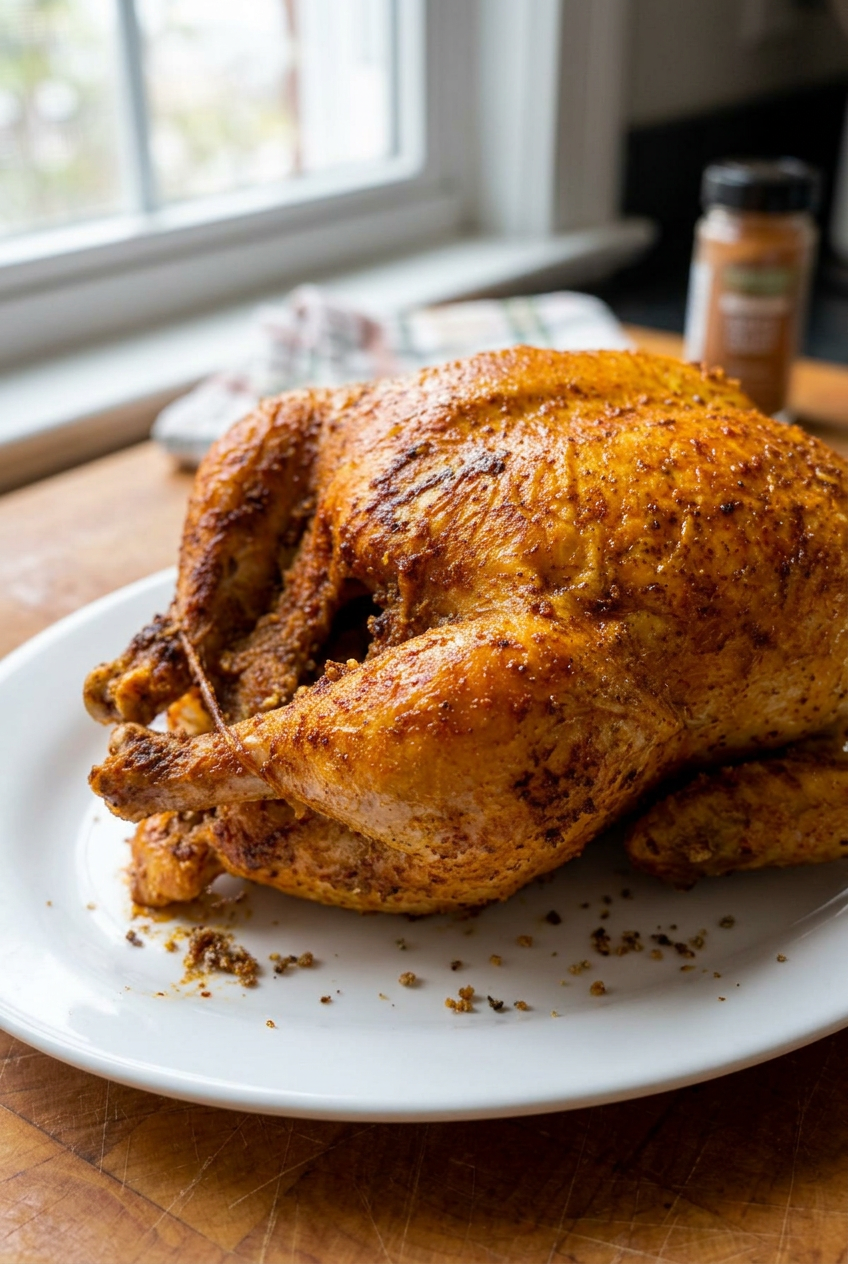
Once cooked through, remove the chicken from the oven and transfer it to a cutting board or serving platter. Let it rest for 10 to 15 minutes before carving. This resting period allows the juices to redistribute throughout the meat, resulting in a juicier whole roasted chicken. While it rests, you can spoon some of the pan drippings over the bird or reserve them for making a simple homemade gravy.
Carve the chicken by removing the legs and wings first, then slice the breast meat. Serve immediately with the roasted vegetables from the pan and any additional sides you’ve prepared. This whole roasted chicken pairs beautifully with hot water cornbread to soak up those delicious juices.
Dietary Substitutions to Customize Your Whole Roasted Chicken
Protein and Main Component Alternatives
While this recipe focuses on a classic whole roasted chicken, there are several ways to adapt it based on your preferences or ingredient availability. For those who prefer white meat, you can adapt this method for a whole turkey, adjusting the cooking time accordingly generally 13-15 minutes per pound at the same temperature.
If you’re cooking for fewer people, consider using chicken pieces instead of a whole bird. Bone-in, skin-on thighs, breasts, and drumsticks can be roasted using the same seasoning blend and temperature, but the cooking time will be reduced to approximately 35-45 minutes depending on the pieces used. This modification is perfect for smaller households or when you need dinner on the table more quickly.
For those following different dietary patterns, this technique works wonderfully with a whole duck, which will render more fat and require about 15 minutes per pound at 375°F. Alternatively, a cornish game hen can be prepared using the same method but will only require about 45 minutes total cooking time.
Vegetable, Sauce, and Seasoning Modifications
The beauty of this whole roasted chicken recipe lies in its adaptability. Feel free to change the roasting vegetables based on what’s in season or your personal preferences. Root vegetables like parsnips, turnips, or potatoes can be added to the pan alongside the carrots and celery. These will become tender and flavorful as they roast in the chicken drippings.
For the seasoning blend, consider these variations:
- Herbs de Provence substitution: Replace the thyme with a mix of rosemary, savory, and marjoram for a French-inspired flavor profile.
- Mediterranean twist: Use oregano and add diced sun-dried tomatoes to the butter mixture.
- Spicy version: Add crushed red pepper flakes or a pinch of cayenne to the butter rub for some heat.
- Asian-inspired: Substitute ginger and five-spice powder for the garlic and thyme.
For those who enjoy sauces, the pan drippings make an excellent base for gravy. Simply whisk a little flour into the hot drippings, cook for a minute to remove the raw flour taste, then add chicken broth or white wine until you reach your desired consistency. For a lighter sauce, deglaze the pan with wine or lemon juice and reduce slightly, then finish with a touch of butter.
Mastering Whole Roasted Chicken: Advanced Tips and Variations
Once you’ve mastered the basic whole roasted chicken technique, these advanced tips will help you elevate your results and customize the dish to suit any occasion. These professional techniques make a noticeable difference in the final quality of your roasted chicken.
Pro Cooking Techniques
For the crispiest skin possible, consider the dry-brining method. Salting your chicken heavily 24-48 hours before roasting and letting it rest uncovered in the refrigerator allows the salt to penetrate deeply while the skin dries out completely. This technique results in exceptionally crispy skin and well-seasoned meat throughout.
Trussing, or tying, your whole roasted chicken helps it cook more evenly by keeping the legs close to the body. This prevents the thinner parts of the legs from overcooking before the thicker breast meat is done. Use kitchen twine to tie the legs together and tuck the wing tips under the body for a compact, neat presentation.
Basting creates a beautiful, glossy finish but opening the oven too frequently extends cooking time. Instead, rotate the pan halfway through cooking to ensure even browning on all sides. This simple step eliminates hot spots in your oven and promotes uniform coloration without sacrificing temperature.
Flavor Variations
Experiment with compound butters to create different flavor profiles for your whole roasted chicken. Mix softened butter with ingredients like sage and brown butter for a nutty, autumnal variation, or combine it with citrus zest and herbs for a bright, summery version. These flavored butters can be made in advance and frozen, making meal preparation even faster.
Consider adding vegetables to the cavity along with the aromatics. Chopped apples, fennel, or even shallots can complement the traditional stuffing ingredients and infuse the meat with additional flavors. Each combination creates a unique tasting experience while maintaining the moist, juicy texture that makes roasted chicken so appealing.
Presentation Tips
Carving your whole roasted chicken tableside adds a dramatic touch to dinner parties. Present the bird on a large platter garnished with fresh herbs and lemon slices. This simple presentation looks impressive and appetizing, setting the stage for a memorable meal.
For individual servings, consider presenting each guest with a perfectly carved portion featuring both white and dark meat, accompanied by a spoonful of the roasted vegetables from the pan. A light drizzle of reduced pan juices or a simple sauce adds the finishing touch to this elegant presentation.
Make-Ahead Options
You can prepare the butter mixture up to three days in advance, storing it in the refrigerator until needed. The vegetables for the roasting pan can also be cut ahead and kept in an airtight container. These simple preparations make the actual cooking process quicker and more manageable on busy days.
For maximum efficiency, roast two chickens at once when your oven has the space. This uses the same amount of energy and time as cooking one but provides you with leftovers for meals throughout the week. Shredded leftover chicken works wonderfully in salads, sandwiches, soups, and casseroles, saving you time on future meal preparation.
How to Store Whole Roasted Chicken: Best Practices
Properly storing your whole roasted chicken ensures food safety while maintaining quality and flavor. Following these guidelines will help you enjoy your leftovers safely and reduce food waste. A whole roasted chicken provides multiple meals when stored correctly.
| Storage Method | Duration | Temperature | Container |
|---|---|---|---|
| Refrigerator | 3-4 days | 40°F or below | Airtight container |
| Freezer | 2-6 months | 0°F or below | Freezer-safe bag/container |
| Room Temperature | Maximum 2 hours | Above 40°F (not recommended) | Serving platter |
Refrigeration
Refrigerate leftover whole roasted chicken within two hours of cooking to prevent bacterial growth. Remove the meat from the bones if you plan to use it for multiple dishes, or store whole pieces if you’ll be reheating them as-is. Place the chicken in airtight containers or wrap tightly with aluminum foil or plastic wrap. Properly stored, cooked chicken will maintain its quality for 3-4 days in the refrigerator.
When storing, keep the meat separate from the stuffing and stuffing separate from the gravy. This practice prevents cross-contamination and allows each component to be used most effectively. The carved carcass can be wrapped and refrigerated for making stock later, adding another layer of value to your roasted chicken.
Freezing
For longer storage, freeze your whole roasted chicken leftovers. Portion the meat into meal-sized amounts before freezing for easier thawing and use. Remove as much air as possible from freezer bags to prevent freezer burn, which affects texture and flavor. Label containers with the date to help you track freshness.
Whole roasted chicken maintains its best quality for 2-3 months in the freezer, though it remains safe beyond that period. For the best results, thaw frozen chicken in the refrigerator overnight rather than at room temperature. This slow thawing process helps maintain texture and prevents bacterial growth.
Reheating
Reheat leftover whole roasted chicken gently to prevent drying out. The oven method works well for larger portions place the chicken in a baking dish with a splash of chicken broth or water, cover with foil, and heat at 350°F until warmed through. This method helps restore moisture while heating evenly.
For smaller portions, the microwave works efficiently but requires caution. Place the chicken on a microwave-safe plate, cover loosely with a damp paper towel, and heat in short intervals, checking frequently. Adding a small amount of liquid or covering with sauce helps prevent the meat from becoming tough during reheating.
Meal Prep Considerations
Whole roasted chicken makes excellent meal prep fare. Cook a chicken on Sunday and portion it for lunches throughout the week. The meat can be used in various ways in salads, wraps, grain bowls, or simply reheated with sides. This approach saves time while providing nutritious, satisfying meals.
Consider batch cooking multiple whole roasted chickens when you have the oven space. Shred the meat and freeze it in recipe-sized portions for quick meals later. Having pre-cooked chicken on hand simplifies weeknight cooking significantly, allowing you to assemble meals in minutes rather than starting from scratch.

FAQs: Frequently Asked Questions About Whole Roasted Chicken
Should I roast a whole chicken covered or uncovered?
Roast your whole chicken uncovered at 425°F for crispy, golden-brown skin that everyone loves. Covering it traps steam, leading to soggy skin instead of that satisfying crunch. Start with the chicken breast-side up on a rack in a roasting pan. If the skin browns too quickly—common with larger birds over 5 pounds—loosely tent aluminum foil over the top after the first 30-45 minutes. This shields it without steaming. Remove the foil for the last 15-20 minutes to recrisp the skin. Always pat the chicken dry before seasoning and oiling for the best results. This method works for chickens from 3-6 pounds and takes about 1-2 hours total.
How do I keep a whole roasted chicken moist?
The key to a moist whole roasted chicken is avoiding overcooking with an instant-read meat thermometer. Aim for an internal temperature of 165°F in the thickest part of the thigh, without touching bone. Insert it halfway through roasting at 425°F. Brine the chicken beforehand in saltwater (1/4 cup salt per quart of water) for 4-24 hours to lock in juices, or dry-brine with salt rubbed under the skin overnight in the fridge. Baste every 30 minutes with pan juices, and let it rest tented under foil for 10-15 minutes after roasting. This redistributes juices for tender, juicy meat. Skip high heat past 450°F to prevent drying.
What temperature should I roast a whole chicken at?
Roast a whole chicken at 425°F for balanced crispy skin and juicy meat. Preheat your oven fully, place the chicken on a rack over a roasting pan to allow air circulation, and season generously with salt, pepper, herbs, and oil. This temperature cooks a 4-5 pound bird in 65-80 minutes. For smaller birds (3 pounds), check at 50 minutes; larger ones (6 pounds) may need 2 hours. Use the convection setting if available to speed up cooking by 25% while keeping skin crisp. Monitor with a thermometer—thigh at 165°F, breast at 160°F. Avoid lower temps like 350°F, as they can make skin rubbery without high initial heat.
How long does it take to roast a whole chicken?
Plan for 15-20 minutes per pound at 425°F for a whole chicken, so a 4-pound bird takes 60-80 minutes. Factors like oven accuracy, chicken size, and starting temperature affect timing—always verify with a meat thermometer (165°F in thigh). Pat dry, truss legs loosely, and roast breast-up on a rack. Rotate the pan halfway for even browning. If stuffed, add 30 minutes. Rest 10-15 minutes post-roast. Quick tip: High-heat start (450°F for 15 minutes) then drop to 400°F crisps skin faster. Track progress: skin golden at 45 minutes for most birds.
How do I know when a whole roasted chicken is done?
Check doneness with an instant-read thermometer: 165°F in the thigh (deepest part, no bone contact) and 160°F in the breast. Juices should run clear, not pink, when pierced. Skin pulls back from bones, and legs wiggle easily. Total time at 425°F is 15-20 minutes per pound. Clear signs include golden, crispy skin and a firm texture when pressed. Rest 10-15 minutes tented in foil—internal temp rises 5-10°F. Undercooked chicken risks foodborne illness; overcooked dries out. Pro move: Test multiple spots. Carve against the grain for best slices.
Whole Roasted Chicken
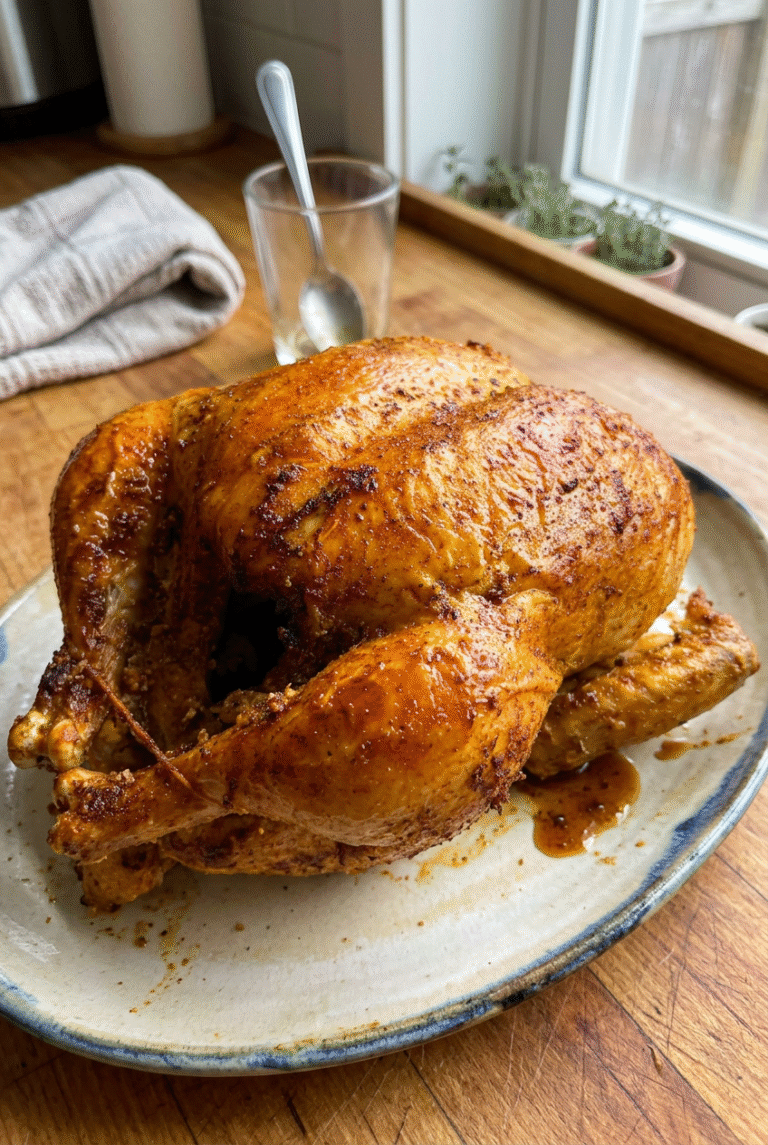
🍗 Master juicy, golden roasted chicken with crispy skin and infused flavors using simple pantry staples—no fuss for impressive results.
🐔 Tender, versatile perfection ready in under 90 minutes, ideal for weeknight dinners, holidays, or easy meal prep with leftovers.
- Total Time: 1 hour 25 minutes
- Yield: 6 servings
Ingredients
– 1 large carrot, halved lengthwise and cut into thirds
– 1 stalk celery, cut into large thirds
– 1 whole chicken, 2 to 4 pounds, giblets removed and patted dry
– 1/4 cup unsalted butter, melted
– 3 cloves garlic, finely minced
– 1/2 teaspoon fresh thyme
– 1/2 teaspoon grated lemon zest
– 3 tablespoons olive oil
– Salt
– Freshly cracked black pepper
– 1 head garlic, top sliced off
– 1/2 yellow onion, cut into 2 large pieces
– 1 lemon, cut in half
– 4 to 6 sprigs fresh thyme
Instructions
1-First Step: Preheat your oven to 400 degrees Fahrenheit. This temperature strikes the perfect balance between rendering fat for crispy skin and cooking the meat through without drying it out. While the oven heats, remove the chicken from the refrigerator about 10 to 15 minutes before cooking to ensure even roasting. Cold chicken placed directly in a hot oven can lead to uneven cooking.
2-Second Step: In a small bowl, combine the melted butter, minced garlic, lemon zest, thyme, salt, and pepper. Whisk these ingredients together until well blended. This aromatic compound butter will be the flavor engine of your whole roasted chicken, infusing both the meat and skin with delicious notes. Take this time to also prepare your roasting vessel. A cast iron skillet or roasting pan works wonderfully for this recipe. Place the carrot and celery pieces in the bottom of your chosen pan. These vegetables will serve as a bed for the chicken, keeping it elevated while catching and enhancing the flavorful drippings that will form during roasting.
3-Third Step: Thoroughly pat the chicken dry with paper towels, both inside and out. This step is crucial for achieving crispy skin, as excess moisture creates steam during roasting that prevents proper crisping. Once dry, carefully loosen the skin from the breast and thigh meat by gently running your fingers between the skin and flesh, being careful not to tear it. Rub about two-thirds of your butter mixture under the skin, spreading it over the breast and thigh meat as evenly as possible. This technique ensures the meat itself stays flavorful and moist throughout the cooking process. Use the remaining butter mixture to season the inside of the cavity, coating it well.
4-Fourth Step: Stuff the cavity of the chicken with the head of garlic (sliced side up), onion pieces, lemon halves, and fresh thyme sprigs. These aromatics will slowly release their essence as the chicken roasts, infusing the meat with incredible flavor from the inside out. If you prefer, you can tie the drumsticks together with kitchen twine to help the bird hold its shape, though this step is optional.
5-Fifth Step: Place the prepared chicken breast side up on top of the bed of vegetables in your roasting pan. Drizzle the olive oil over the entire bird, using a brush or your hands to coat it evenly. This oil, combined with the butter already present, will promote beautiful golden-brown coloration. Season generously with additional salt and freshly cracked black pepper, ensuring every surface is covered for maximum flavor development.
6-Sixth Step: Transfer the pan to the middle rack of your preheated oven. Roast the whole roasted chicken for approximately 1 hour and 15 to 30 minutes. Every 30 minutes, open the oven and baste the chicken with the pan drippings that have accumulated in the bottom of the pan. This simple step helps self-baste the bird, keeping the meat moist while adding layers of flavor to the skin. Keep an eye on the chicken as it roasts. If the skin begins to brown too quickly before the meat is cooked through, loosely tent a piece of aluminum foil over the top. This will protect the skin from burning while allowing the cooking process to continue. Remove the foil for the final 10-15 minutes to restore crispiness.
7-Final Step: Check for doneness by inserting an instant-read thermometer into the thickest part of the thigh, being careful not to touch bone. The chicken is done when it reaches an internal temperature of 165 degrees Fahrenheit. Additionally, the juices should run clear when pierced, and the legs should wiggle easily in their sockets. Once cooked through, remove the chicken from the oven and transfer it to a cutting board or serving platter. Let it rest for 10 to 15 minutes before carving. This resting period allows the juices to redistribute throughout the meat, resulting in a juicier whole roasted chicken. While it rests, you can spoon some of the pan drippings over the bird or reserve them for making a simple homemade gravy. Carve the chicken by removing the legs and wings first, then slice the breast meat. Serve immediately with the roasted vegetables from the pan and any additional sides you’ve prepared. This whole roasted chicken pairs beautifully with hot water cornbread to soak up those delicious juices.
Last Step:
Please leave a rating and comment letting us know how you liked this recipe! This helps our business to thrive and continue providing free, high-quality recipes for you.Notes
🧼 Pat chicken completely dry for ultra-crispy skin that crackles perfectly.
🌡️ Let chicken sit out 10-15 minutes before roasting for even cooking.
⏲️ Use instant-read thermometer—pull at 165°F for juicy, never dry results.
- Prep Time: 10 minutes
- Cook Time: 75 minutes
- Category: Main Dish
- Method: Roasted
- Cuisine: American
- Diet: Gluten Free
Nutrition
- Serving Size: 1/6 chicken
- Calories: 300 kcal
- Sugar: 1g
- Sodium: 400mg
- Fat: 20g
- Saturated Fat: 8g
- Unsaturated Fat: 10g
- Trans Fat: 0g
- Carbohydrates: 3g
- Fiber: 1g
- Protein: 25g
- Cholesterol: 100mg