

Why You’ll Love This Vegetarian Pozole
If you’re looking for a satisfying meatless option that delivers big on taste, this vegetarian pozole recipe stands out as a go-to choice for home cooks. It takes the classic flavors of traditional pozole and turns them into something simple yet packed with heartiness, making it perfect for weeknight dinners or gatherings. Let me share why this plant-based pozole hits all the right notes.
- Ease of preparation: This vegetarian pozole comes together without much hassle, thanks to straightforward steps like gathering ingredients and a quick cooking time. You can use a mise en place technique to chop onions and chiles ahead, which keeps things organized and stress-free. In just about 30 minutes of prep and another 30 for cooking, you’ll have a warm bowl ready, ideal for busy parents or working professionals who want meatless pozole without spending hours in the kitchen.
- Health benefits: Diving into this vegetarian hominy stew means you’re treating your body to a nutritious boost with plenty of fiber from hominy and veggies, plus vitamins from chiles and fresh garnishes. It’s lower in saturated fat compared to meat-based versions, supporting overall wellness by promoting digestion and keeping things light for diet-conscious folks. Whether you’re a student or a senior, this plant-based pozole offers a balanced meal that fits various health goals without skimping on flavor.
- Versatility: One of the best parts of this vegetarian pozole is how adaptable it is to different needs, from swapping ingredients for a vegan twist to adjusting for gluten-free diets. You can serve it for casual family meals or dress it up for food enthusiasts at a party, making it a flexible option for travelers and newlyweds exploring new tastes. This meatless pozole easily fits various occasions, letting you tweak it with extras like rice or beans to match your preferences.
- Distinctive flavor: What really sets this vegetarian pozole apart is the deep, rich taste from dried chiles that bring warmth and smokiness, paired with the chewy texture of hominy for a satisfying bite. Herbs like Mexican oregano and spices add layers of flavor, creating an umami-packed dish that feels comforting and authentic. It’s like a hearty vegetarian hominy stew that captures the essence of traditional recipes while standing on its own as a plant-based pozole delight.
This vegetarian pozole not only satisfies cravings but also makes cooking feel fun and approachable, perfect for anyone wanting to try something new.
Jump To
- 1. Why You’ll Love This Vegetarian Pozole
- 2. Essential Ingredients for Vegetarian Pozole
- 3. How to Prepare the Perfect Vegetarian Pozole: Step-by-Step Guide
- 4. Dietary Substitutions to Customize Your Vegetarian Pozole
- 5. Mastering Vegetarian Pozole: Advanced Tips and Variations
- 6. How to Store Vegetarian Pozole: Best Practices
- 7. FAQs: Frequently Asked Questions About Vegetarian Pozole
- 8. Vegetarian Pozole
Essential Ingredients for Vegetarian Pozole
Building a great pot of vegetarian pozole starts with quality ingredients that create its signature flavor and texture. Below, I’ve listed everything you need based on the recipe, with precise measurements and a quick note on why each one matters. This ensures your meatless posole turns out just right every time.
- 5-6 dried Ancho chiles these provide the base for the rich, smoky flavor that defines red pozole.
- 5-6 dried Guajillo chiles (or another variety like New Mexican chiles) add fruity depth and heat, making the broth more complex in this plant-based hominy stew.
- 1 small onion chopped finely for sautéing, it builds the foundational aroma and sweetness in vegetarian pozole.
- 6 garlic cloves minced to release their pungent flavor, enhancing the overall savoriness of the dish.
- 10 cups stock (preferably homemade vegetarian stock, enhanced with nutritional yeast) forms the liquid base, with nutritional yeast adding umami for a meaty taste without meat.
- 1-2 cans hominy (approximately 30 oz. each) offers the hearty, chewy texture essential for authentic vegetarian pozole.
- 1/2 cup rice (optional) absorbs flavors and makes the meal more filling if added to this meatless pozole.
- Cooked carrots, beans, or other vegetables (optional, quantities not specified) boost nutrition and add extra veggies for a heartier plant-based pozole variation.
- 1/2 teaspoon cumin spices up the broth with earthy notes, complementing the chiles in this vegetarian hominy stew.
- 1 tablespoon Mexican oregano infuses a unique herbal tang that elevates the traditional taste of vegetarian pozole.
- Pinch of ground clove (optional) adds a subtle warmth and depth for those wanting to tweak the flavor profile.
- Pinch of ground cinnamon (optional) brings a hint of sweetness to balance the spices in this plant-based pozole.
- Freshly cracked black pepper (to taste) seasons the dish and enhances other flavors without overwhelming them.
- 1 teaspoon salt (adjust based on the sodium content of the stock) helps bring out the tastes, but go easy if using store-bought stock in your meatless posole.
- For special dietary options: Vegan Use vegetable stock and ensure all add-ins like nutritional yeast are plant-based, keeping everything animal-free in this vegetarian pozole. Gluten-free Stick with naturally gluten-free ingredients like hominy and check that your stock is certified gluten-free. Low-calorie Opt for lighter veggies and reduce rice portions to keep calories down while enjoying plant-based hominy stew.
These ingredients make it simple to whip up a delicious vegetarian pozole, with options to adapt for various preferences.
How to Prepare the Perfect Vegetarian Pozole: Step-by-Step Guide
Making vegetarian pozole at home is a rewarding process that results in a flavorful, comforting meal. Follow these clear steps to create your own version of this plant-based pozole, incorporating the recipe details for the best outcome. We’ll cover everything from prepping ingredients to simmering the stew, with tips for adaptations along the way.
First Step: Prep the Chiles
Start by wiping, de-stemming, and de-seeding the 5-6 dried Ancho chiles and 5-6 dried Guajillo chiles. This removes any dust and prepares them for roasting. Roast the chiles in a 400°F oven for 1-2 minutes until they become fragrant, which enhances their flavor for this vegetarian pozole. After roasting, soak them in hot tap water for 20-30 minutes to soften, setting the stage for a rich broth in your meatless pozole.
Second Step: Cook the Aromatics
While the chiles soak, finely chop 1 small onion and mince 6 garlic cloves as part of your mise en place. In a pan, heat a bit of oil over medium heat and cook the onion until it softens, about 5 minutes. Add the garlic and cook for another minute, stirring to avoid burning. Meatless pozole relies on these steps for a solid flavor base, so take your time for the best results.
Third Step: Make the Chile Puree
Remove half of the onion-garlic mixture from the pan and blend it with the drained, softened chiles and 2 cups of stock until smooth. This creates a vibrant chile puree that forms the heart of your vegetarian hominy stew. For a smoother texture, blend on high for 1-2 minutes. This step is key for adapting to vegan needs by using only plant-based stock.
Fourth Step: Build and Simmer the Soup
In a large pot, combine the remaining onion-garlic mixture with 8 cups of stock, the drained and rinsed hominy (from 1-2 cans, about 30 oz. each), 1 tablespoon Mexican oregano, 1/2 teaspoon cumin, a pinch of ground clove and cinnamon if using, freshly cracked black pepper to taste, and 1 teaspoon salt. Add optional items like 1/2 cup rice or cooked vegetables for extra heartiness. Stir in the chile puree, bring everything to a boil over high heat, then reduce to a simmer. Cover and cook for 20-25 minutes until the flavors meld. For a lower-sodium vegetarian pozole, adjust salt based on your stock’s content.
Final Step: Finish and Serve
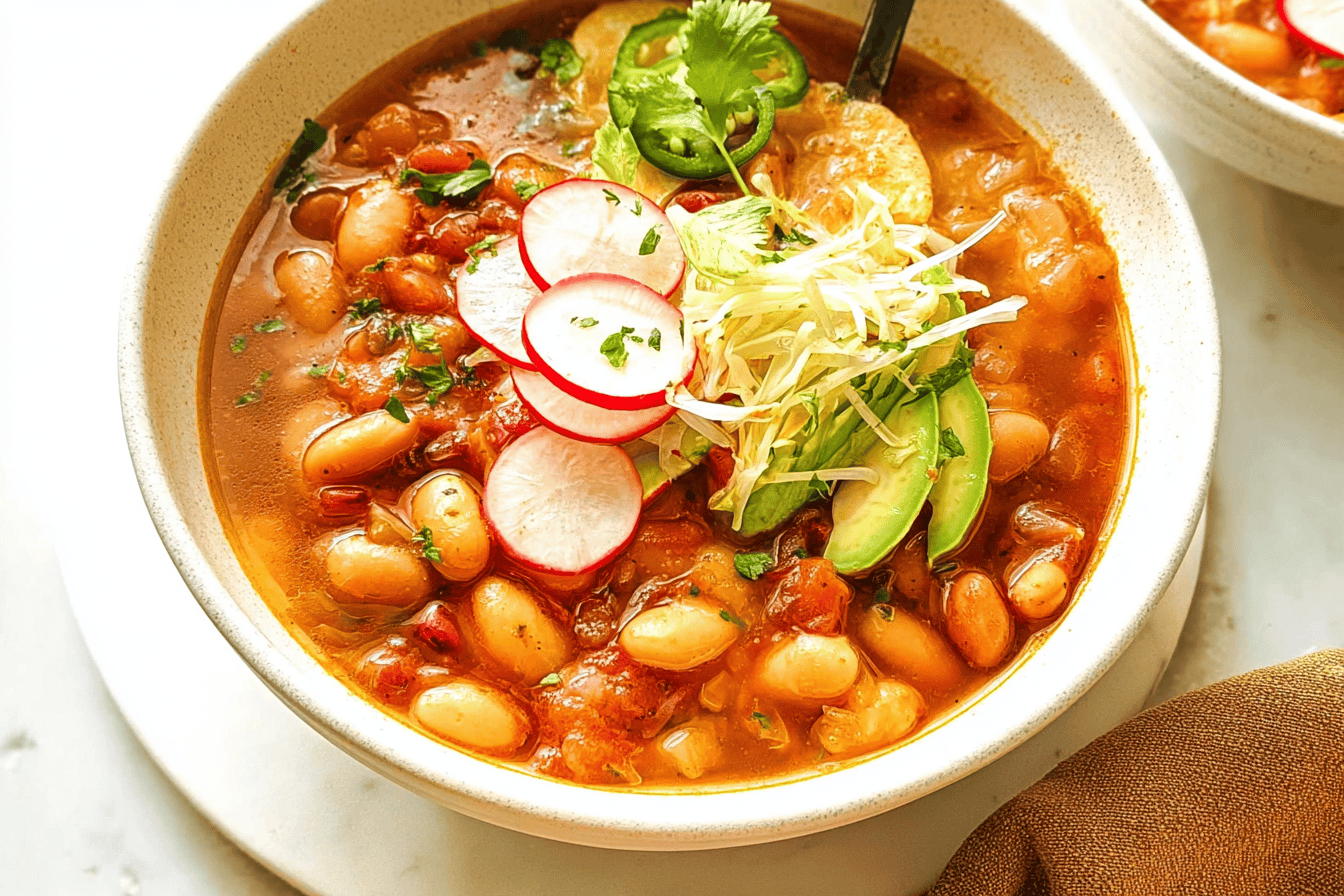
Once simmered, taste and adjust seasoning, adding more salt if needed for your plant-based pozole. Let it rest for a few minutes off the heat to thicken slightly. Serve hot with desired garnishes like thinly sliced cabbage tossed with lime juice and salt, radishes, avocado, cilantro, and tortilla strips. This vegetarian pozole reheats well, making it great for meal prep, and you can make it quicker by using canned ingredients instead of fresh ones for a faster version.
For more ideas on hearty vegetarian dishes, check out our vegan lasagna recipe that pairs perfectly with soups like this one.
Dietary Substitutions to Customize Your Vegetarian Pozole
Protein and Main Component Alternatives
When tweaking your vegetarian pozole, consider swapping proteins to fit your needs. For instance, add firm tofu or tempeh for a meaty texture that absorbs the broth’s flavors, making your plant-based hominy stew even more satisfying. You could use jackfruit or shredded oyster mushrooms to mimic the chewiness of traditional meat in meatless pozole, with jackfruit adding a subtle sweetness. Extra beans or lentils boost protein without altering the core taste, while extra hominy or roasted squash can make the dish heartier remember to increase cooking time by 5-10 minutes for these additions to ensure they’re tender.
Vegetable, Sauce, and Seasoning Modifications
Switch up veggies in your vegetarian pozole for seasonal variety, like using sweet potato or zucchini instead of carrots for a fresher twist that changes the texture to something creamier. For sauce options, try different chiles or even a salsa verde variation to shift from red to green pozole, which might require blending in tomatillos for a tangier flavor. Seasoning tweaks, such as smoked paprika or more lime and cilantro, can brighten the dish note that smoked options add depth but may make it spicier, so adjust proportions accordingly. These changes keep your meatless posole adaptable for gluten-free status by sticking to natural ingredients.
Mastering Vegetarian Pozole: Advanced Tips and Variations
Pro Cooking Techniques
To elevate your vegetarian pozole, focus on toasting chiles properly before soaking; this draws out deeper flavors for a more authentic taste. Roasting vegetables and hominy adds a nice char, while reducing the broth concentrates the taste simmer uncovered for the last 5 minutes. Finish with a splash of lime for acidity and a bit of oil for balance, ensuring your plant-based pozole shines in every bowl.
Flavor Variations
Experiment with seasoning for fun twists, like using guajillo and ancho for red meatless pozole, or switching to tomatillo and poblano for a green version. A smoky chipotle add-in brings heat, and nutritional yeast boosts umami without meat. These changes keep your vegetarian hominy stew versatile and exciting.
Presentation Tips
Plate your vegetarian pozole in stacked bowls with shredded cabbage, radish slices, and cilantro for visual appeal. Add avocado and crispy tortilla strips on top, portioning for individual tastes to make meals feel special.
Make-Ahead Options
Prep the chile paste and broth ahead for busy days, storing components separately in the fridge for up to 3 days. Freeze portions for 2-3 months and reheat gently on the stove for quick assembly of plant-based pozole nights.
Learn more about enhancing flavors with external resources, such as benefits of using dried chillies, which can inspire your cooking.
How to Store Vegetarian Pozole: Best Practices
Keeping your vegetarian pozole fresh is key to enjoying leftovers. Cool the soup completely before storing to maintain its quality. For short-term needs, refrigerate in airtight containers for 3-4 days, and keep garnishes separate to preserve their crunch.
For longer storage, freeze portions in meal-sized containers for up to 2-3 months; label with the date for easy tracking. When reheating frozen vegetarian pozole, thaw overnight in the fridge and warm gently on the stovetop at medium-low until simmering, adding broth if it thickens.
Meal prep tip: Store broth, hominy, and toppings apart for the best texture, allowing quick assembly for weeknights. This approach keeps your meatless pozole tasting great every time. For health insights, check healthy eating guidelines that align with dishes like this.

FAQs: Frequently Asked Questions About Vegetarian Pozole
What makes hominy essential for authentic vegetarian Pozole?
Hominy is nixtamalized corn, which means it has been treated with an alkaline solution to enhance its flavor and texture. This ingredient gives Pozole its distinctive chewy and slightly nutty character. You can find canned hominy in most supermarkets, typically in the Latin foods aisle. It’s important for authentic Pozole because it absorbs the flavors of the broth while maintaining its unique texture, making it a cornerstone of the dish.
How can I add rich, savory flavor to vegetarian Pozole broth without meat?
To build savory depth in a vegetarian Pozole broth, start with a good-quality vegetable stock—homemade is best. Adding a little oil or vegan butter helps carry the flavors. Nutritional yeast is an excellent addition; sprinkling a few tablespoons into the simmering broth introduces umami notes. Roasting dried chiles like Ancho and Guajillo before blending them into the broth also enhances its savory profile.
What types of dried chiles work best for vegetarian Pozole, and can I substitute them?
Traditional recipes often use Ancho and Guajillo dried chiles for a balanced smoky and fruity flavor. If you only have Ancho chiles, using about 7-8 will yield a pleasant taste. These chiles should be soaked in hot water until softened, then blended into the broth. Fresh chiles are less common in Pozole because dried chiles develop richer flavors when rehydrated and roasted, which are key to the dish’s character.
What are some popular garnishes for vegetarian red Pozole to add texture and flavor?
Common garnishes include thinly sliced cabbage tossed with lime juice and salt, fresh cilantro, avocado slices, thinly sliced jalapeños or serranos for heat, crunchy tortilla strips, and sliced radishes. A final squeeze of lime brightens the dish. These toppings add freshness, crunch, and a balance of flavors that complement the hearty broth and hominy.
How should I store and reheat leftover vegetarian Pozole to keep its flavor and texture?
Store leftover Pozole in an airtight container in the refrigerator for up to 3-4 days. When reheating, gently warm it on the stove over medium heat until simmering. If the broth has thickened, add a splash of vegetable stock or water to restore the desired consistency. Avoid microwaving for better texture and even heating. Freezing is possible, but some texture changes in hominy may occur.

Vegetarian Pozole
🌶️ This Vegetarian Red Pozole Recipe delivers rich, authentic flavors while being entirely plant-based and nourishing.
🍲 With easy ingredients and customizable options, it’s a hearty meal perfect for cozy dinners or gatherings.
- Total Time: 1 hour
- Yield: 8 servings
Ingredients
– 5-6 dried Ancho chiles these provide the base for the rich, smoky flavor that defines red pozole.
– 5-6 dried Guajillo chiles (or another variety like New Mexican chiles) add fruity depth and heat, making the broth more complex in this plant-based hominy stew.
– 1 small onion chopped finely for sautéing, it builds the foundational aroma and sweetness in vegetarian pozole.
– 6 garlic cloves minced to release their pungent flavor, enhancing the overall savoriness of the dish.
– 10 cups stock (preferably homemade vegetarian stock, enhanced with nutritional yeast) forms the liquid base, with nutritional yeast adding umami for a meaty taste without meat.
– 1-2 cans hominy (approximately 30 oz. each) offers the hearty, chewy texture essential for authentic vegetarian pozole.
– 1/2 cup rice (optional) absorbs flavors and makes the meal more filling if added to this meatless pozole.
– Cooked carrots, beans, or other vegetables (optional, quantities not specified) boost nutrition and add extra veggies for a heartier plant-based pozole variation.
– 1/2 teaspoon cumin spices up the broth with earthy notes, complementing the chiles in this vegetarian hominy stew.
– 1 tablespoon Mexican oregano infuses a unique herbal tang that elevates the traditional taste of vegetarian pozole.
– Pinch of ground clove (optional) adds a subtle warmth and depth for those wanting to tweak the flavor profile.
– Pinch of ground cinnamon (optional) brings a hint of sweetness to balance the spices in this plant-based pozole.
– Freshly cracked black pepper (to taste) seasons the dish and enhances other flavors without overwhelming them.
– 1 teaspoon salt (adjust based on the sodium content of the stock) helps bring out the tastes, but go easy if using store-bought stock in your meatless posole.
Instructions
1-First Step: Prep the Chiles Start by wiping, de-stemming, and de-seeding the 5-6 dried Ancho chiles and 5-6 dried Guajillo chiles. This removes any dust and prepares them for roasting. Roast the chiles in a 400°F oven for 1-2 minutes until they become fragrant, which enhances their flavor for this vegetarian pozole. After roasting, soak them in hot tap water for 20-30 minutes to soften, setting the stage for a rich broth in your meatless pozole.
2-Second Step: Cook the Aromatics While the chiles soak, finely chop 1 small onion and mince 6 garlic cloves as part of your mise en place. In a pan, heat a bit of oil over medium heat and cook the onion until it softens, about 5 minutes. Add the garlic and cook for another minute, stirring to avoid burning. Meatless pozole relies on these steps for a solid flavor base, so take your time for the best results.
3-Third Step: Make the Chile Puree Remove half of the onion-garlic mixture from the pan and blend it with the drained, softened chiles and 2 cups of stock until smooth. This creates a vibrant chile puree that forms the heart of your vegetarian hominy stew. For a smoother texture, blend on high for 1-2 minutes. This step is key for adapting to vegan needs by using only plant-based stock.
4-Fourth Step: Build and Simmer the Soup In a large pot, combine the remaining onion-garlic mixture with 8 cups of stock, the drained and rinsed hominy (from 1-2 cans, about 30 oz. each), 1 tablespoon Mexican oregano, 1/2 teaspoon cumin, a pinch of ground clove and cinnamon if using, freshly cracked black pepper to taste, and 1 teaspoon salt. Add optional items like 1/2 cup rice or cooked vegetables for extra heartiness. Stir in the chile puree, bring everything to a boil over high heat, then reduce to a simmer. Cover and cook for 20-25 minutes until the flavors meld. For a lower-sodium vegetarian pozole, adjust salt based on your stock’s content.
5-Final Step: Finish and Serve Once simmered, taste and adjust seasoning, adding more salt if needed for your plant-based pozole. Let it rest for a few minutes off the heat to thicken slightly. Serve hot with desired garnishes like thinly sliced cabbage tossed with lime juice and salt, radishes, avocado, cilantro, and tortilla strips. This vegetarian pozole reheats well, making it great for meal prep, and you can make it quicker by using canned ingredients instead of fresh ones for a faster version.
Last Step:
Please leave a rating and comment letting us know how you liked this recipe! This helps our business to thrive and continue providing free, high-quality recipes for you.Notes
🌱 Enhance vegetarian stock with nutritional yeast for umami depth, or add neutral oil if not using.
🌶️ Use more Ancho chiles if Guajillo chiles are unavailable for similar flavor intensity.
🍋 Brighten the bowl with acidity like lime juice or pickled vegetables before serving.
- Prep Time: 30 minutes
- Cook Time: 30 minutes
- Category: Soup
- Method: Simmering and blending
- Cuisine: Mexican
- Diet: Vegetarian
Nutrition
- Serving Size: 1 bowl
- Calories: 145


