

Why You’ll Love This Vegetable Casserole
Picture this: a warm, hearty dish that comes together effortlessly and fills your kitchen with inviting aromas. This vegetable casserole is a go-to option for anyone craving something simple yet satisfying, especially on those busy nights when you need a quick meal. It’s packed with colorful veggies that make it both nutritious and versatile for different tastes.
One of the best parts is how easy it is to prepare, with steps that feel like second nature even if you’re new to cooking. You’ll appreciate how this recipe delivers a comforting blend of flavors that feels like a hug in a bowl, turning everyday ingredients into something special.
For those watching their diet, this dish offers plenty of health perks without skimping on taste. Let’s dive into what makes it so appealing and why it’s become a favorite in many homes.
Ease of Preparation
This vegetable casserole is straightforward to make, requiring minimal chopping and simple layering, making it perfect for busy weeknights. Its fast cooking time means dinner can be on the table in under an hour, which is a real win for families on the go. Plus, you can use ingredients you likely have on hand, keeping things simple and stress-free.
Health Benefits
Packed with a variety of fresh or frozen vegetables, this dish provides a rich source of vitamins, minerals, and dietary fiber, supporting digestion and overall wellness. It’s a nutrient-dense choice that fits into a balanced diet, offering benefits like improved energy and immune support. Whether you’re a health-conscious parent or just looking for a lighter meal, this casserole hits the mark.
Versatility
The vegetable casserole recipe is highly adaptable, suitable for vegan, gluten-free, and low-calorie diets with easy ingredient swaps. Layers of roasted vegetables create a unique flavor that’s far from ordinary, setting it apart as a meal everyone can enjoy. It’s this flexibility that makes it a staple for home cooks everywhere.
Distinctive Flavor
What really stands out is the savory mix of veggies, herbs, and a cheesy topping that brings everything together in a delightful way. This vegetable bake is more than just a side; it’s a complete dish that adds excitement to your table. For more ideas on veggie-focused recipes, check out our zucchini corn chowder for a creamy twist.
To get started, let’s talk about the key ingredients that make this vegetable casserole so special. For a classic take on similar dishes, you might enjoy this external resource: Classic Vegetable Casserole Recipe.
Jump To
- 1. Why You’ll Love This Vegetable Casserole
- 2. Essential Ingredients for Vegetable Casserole
- 3. How to Prepare the Perfect Vegetable Casserole: Step-by-Step Guide
- 4. Dietary Substitutions to Customize Your Vegetable Casserole
- 5. Mastering Vegetable Casserole: Advanced Tips and Variations
- 6. How to Store Vegetable Casserole: Best Practices
- 7. FAQs: Frequently Asked Questions About Vegetable Casserole
- 8. Vegetable Casserole
Essential Ingredients for Vegetable Casserole
Gathering the right ingredients is the first step to creating a delicious vegetable casserole that everyone will love. This recipe focuses on simple, frozen veggies for ease, but you can swap them if needed. Below is a complete list based on the recipe we’re highlighting today, making sure you have exactly what you need for a successful cook.
- 1 (16 ounce) bag frozen broccoli (about 454 grams)
- 1 (16 ounce) bag frozen carrots (about 454 grams)
- 1 (16 ounce) bag frozen cauliflower (about 454 grams)
- 1 (16 ounce) package sliced processed cheese
- 1 roll crushed buttery crackers
- 1/4 cup melted butter (about 57 grams)
This structured list ensures you have precise measurements for each item, helping you measure out everything accurately. Remember, using about 48 ounces total of frozen vegetables gives you around 9 cups, which is perfect for a 9×13 inch baking dish.
How to Prepare the Perfect Vegetable Casserole: Step-by-Step Guide
Getting this vegetable casserole just right is all about following a few easy steps that build layers of flavor and texture. Start by preheating your oven and preparing your ingredients for a smooth process. This guide draws from the specific directions for our featured recipe, making it simple to follow along.
First, preheat the oven to 350 degrees Fahrenheit (175 degrees Celsius) to get everything ready for baking. Combine the frozen broccoli, carrots, and cauliflower in a large microwave-safe bowl for quick heating.
Microwave uncovered on high for 12 to 15 minutes until the vegetables are warm and tender, which helps them blend well in the dish. Transfer the vegetables to a 9×13 inch baking dish and layer the sliced cheese evenly over them for that melty goodness.
In a separate bowl, mix the crushed crackers with the melted butter until well coated, creating a crunchy topping. Sprinkle this mixture over the cheese layer and bake in the preheated oven for 30 to 45 minutes until everything is golden brown and bubbly.
Preparation time is straightforward: prep takes about 15 minutes, cooking runs 30 to 45 minutes, and the total time is around 1 hour. For nutritional details, here’s a quick overview in a table to make it easy to see:
| Nutrient | Amount per 1 cup serving |
|---|---|
| Calories | 178 |
| Carbohydrates | 7 grams |
| Protein | 11 grams |
| Fat | 12 grams (5 grams saturated) |
| Cholesterol | 24 mg |
| Sodium | 967 mg |
| Potassium | 196 mg |
| Sugar | 5 grams |
| Vitamin A | 831 IU |
| Vitamin C | 1 mg |
| Calcium | 328 mg |
| Iron | 1 mg |
Looking for more vegetable gratin ideas? Check out our vegan lasagna recipe for a layered twist.
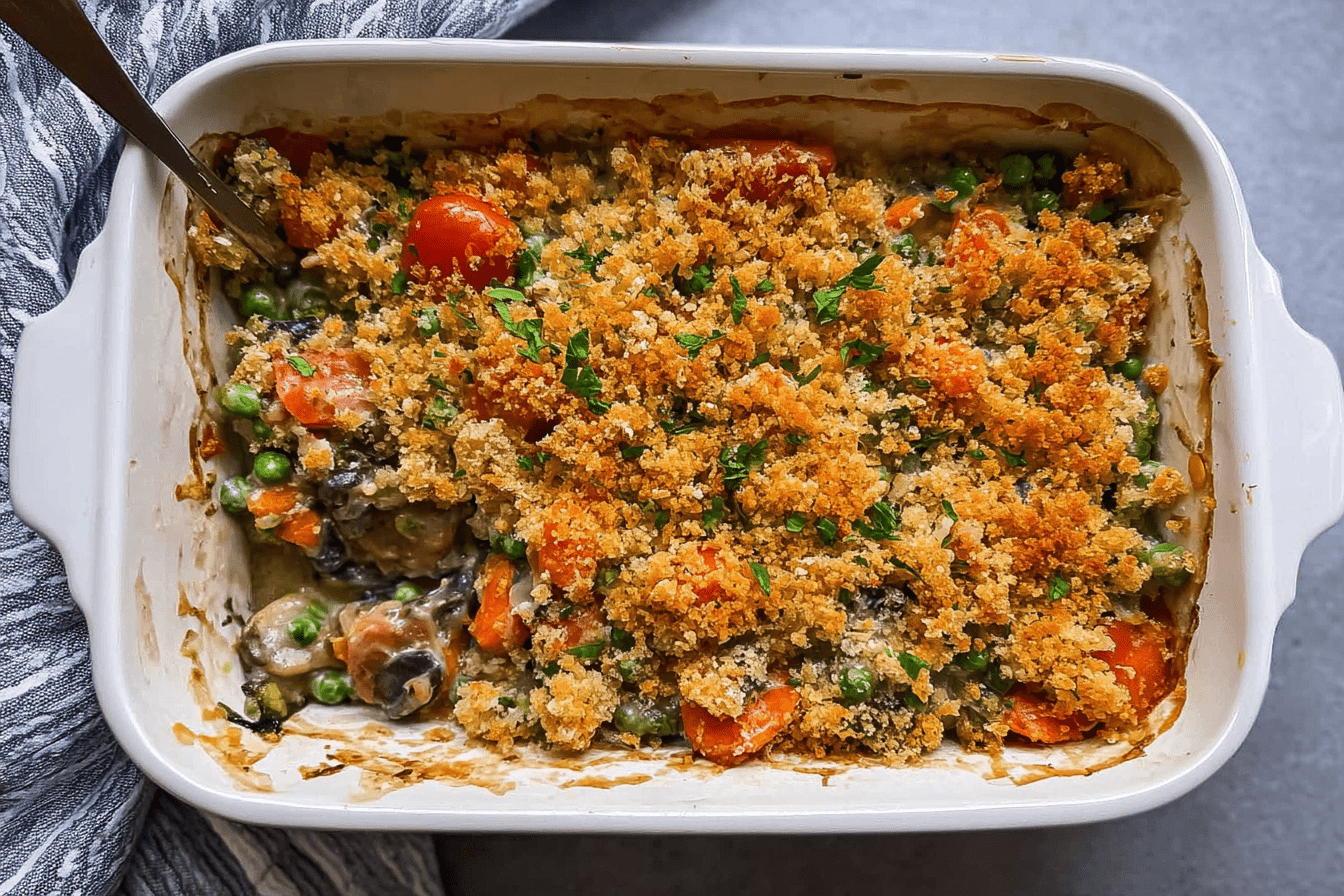
Dietary Substitutions to Customize Your Vegetable Casserole
Making this vegetable casserole your own is fun and easy with a few tweaks. Whether you’re aiming for a vegan option or something gluten-free, these changes keep the dish tasty and welcoming.
Protein and Main Component Alternatives: Replace standard cheese with vegan cheese for a plant-based option. Substitute mixed vegetables with seasonal ones like broccoli, cauliflower, or spinach. Use plant proteins such as tofu cubes for added protein in vegetarian versions.
Vegetable, Sauce, and Seasoning Modifications: Swap tomato-based elements for other flavors. Use fresh herbs like basil or thyme to enhance taste. For spice lovers, add chili flakes, and opt for gluten-free seasoning blends to meet dietary needs.
This flexibility allows the vegetable au gratin to suit various tastes while keeping its comforting feel. Some tips include substituting cheese with cheddar, Parmesan, feta, or ricotta, and replacing crackers with gluten-free breadcrumbs or chopped nuts.
Mastering Vegetable Casserole: Advanced Tips and Variations
Once you’re comfortable with the basics, it’s time to level up your vegetable casserole with some pro moves. Roasting vegetables individually can bring out deeper flavors before you layer them in. For flavor variations, try adding sun-dried tomatoes or fresh basil for a Mediterranean vibe.
Presentation tips include serving in individual ramekins for a nice look, garnished with herbs. You can assemble ahead and refrigerate for up to 24 hours or freeze for later, which is great for busy days. Feel free to mix in other veggies like green beans, zucchini, peas, onions, peppers, eggplant, or spinach.
This dish works well in an oven-safe slow cooker for gatherings, and you can reheat portions in the microwave or oven. For more on vegetable bakes, remember the health benefits from eating plenty of veggies, as shared in this guide: Health Benefits of Vegetables.
How to Store Vegetable Casserole: Best Practices
Keeping your vegetable casserole fresh is key to enjoying leftovers without any fuss. Store it in an airtight container in the fridge for up to 4 days to lock in that great taste.
For longer storage, wrap it tightly and freeze for up to 2 months, then thaw overnight before reheating. When reheating, use the oven at 350 degrees Fahrenheit for 15-20 minutes to keep the texture just right.
Meal prep ideas include dividing into portions for easy grab-and-go meals, reducing waste and simplifying your routine. These steps ensure your vegetable casserole stays delicious and ready whenever you need it.
FAQs: Frequently Asked Questions About Vegetable Casserole
Can I use frozen vegetables to make a vegetable casserole?
Yes, frozen vegetables work well for a vegetable casserole. Simply thaw or microwave them until heated through before adding them to your baking dish. This prevents excess moisture and helps the casserole cook evenly. Using frozen vegetables also saves prep time while maintaining good flavor and texture.
What are the basic ingredients needed for a vegetable casserole?
A typical vegetable casserole includes cooked vegetables (fresh or frozen), a creamy sauce such as a condensed soup or homemade béchamel, cheese for added flavor, and a crunchy topping like crushed crackers or breadcrumbs mixed with butter. These components come together to create a balanced dish with savory and creamy textures.
How long should I bake a vegetable casserole?
Bake your vegetable casserole at 350°F (175°C) for 30 to 45 minutes. The casserole is done when it is hot and bubbly throughout, and the topping is golden brown. If using frozen vegetables, make sure they’re fully heated inside before serving by testing the center with a fork.
Can I prepare a vegetable casserole ahead of time and reheat it later?
Yes, vegetable casseroles can be made in advance. Assemble the casserole and store it covered in the refrigerator for up to 24 hours before baking. When ready, bake as usual, adding a few extra minutes if baking from cold. Leftover casserole can also be reheated in the oven or microwave until hot.
Are vegetable casseroles suitable for vegetarian diets?
Most vegetable casseroles are vegetarian-friendly when made without meat or meat-based broths. Using vegetable stock and vegetarian cheese ensures the dish fits vegetarian dietary needs. Always check labels for hidden animal-derived ingredients if you want to keep the casserole fully vegetarian.

Vegetable Casserole
🥦 Vegetable Casserole Recipes feature a vibrant mix of nutritious vegetables layered with creamy cheese and a crispy topping for a wholesome meal.
🧀 This easy-to-make casserole is perfect for home cooking, bringing simple flavors together in a comforting, delicious dish.
- Total Time: 1 hour
- Yield: 6 servings 1x
Ingredients
1 (16 ounce) bag frozen broccoli
1 (16 ounce) bag frozen carrots
1 (16 ounce) bag frozen cauliflower
1 (16 ounce) package sliced processed cheese
1 roll crushed buttery crackers
1/4 cup melted butter
Instructions
1-First, preheat the oven to 350 degrees Fahrenheit (175 degrees Celsius) to get everything ready for baking. Combine the frozen broccoli, carrots, and cauliflower in a large microwave-safe bowl for quick heating.
2-Microwave uncovered on high for 12 to 15 minutes until the vegetables are warm and tender, which helps them blend well in the dish. Transfer the vegetables to a 9×13 inch baking dish and layer the sliced cheese evenly over them for that melty goodness.
3-In a separate bowl, mix the crushed crackers with the melted butter until well coated, creating a crunchy topping. Sprinkle this mixture over the cheese layer and bake in the preheated oven for 30 to 45 minutes until everything is golden brown and bubbly.
Last Step:
Please leave a rating and comment letting us know how you liked this recipe! This helps our business to thrive and continue providing free, high-quality recipes for you.Notes
🥒 Use about 48 ounces total of frozen vegetables; blanch and dry fresh vegetables before using.
🧀 Substitute cheese with cheddar, Parmesan, feta, or ricotta for variety.
🌰 Replace crackers with gluten-free breadcrumbs or chopped nuts for dietary needs.
- Prep Time: 15 minutes
- Cook Time: 30 to 45 minutes
- Category: Side Dish
- Method: Baking and Microwaving
- Cuisine: American
- Diet: Vegetarian
Nutrition
- Serving Size: 1 cup
- Calories: 178
- Sugar: 5 g
- Sodium: 967 mg
- Fat: 12 g
- Saturated Fat: 5 g
- Carbohydrates: 7 g
- Protein: 11 g
- Cholesterol: 24 mg


