

Why You’ll Love This Vegetable Casserole
This vegetable casserole is a go-to option for busy families who want something tasty on the table without much effort. Its straightforward steps make it ideal for weeknights, while the mix of fresh flavors keeps everyone coming back for more. Let’s dive into what makes this dish so appealing for home cooks and food enthusiasts alike.
First off, ease of preparation stands out as a key feature. This recipe needs only a few simple steps and common ingredients, saving you time on busy days. Next, the health benefits are impressive, with plenty of veggies that deliver vitamins and fiber to support your family’s wellness goals.
Plus, its versatility lets you tweak it for different diets, like going vegan or gluten-free. And don’t forget the distinctive flavor that comes from the blend of vegetables and toppings, making every bite feel special and satisfying.
Key Benefits at a Glance
- It cooks quickly, often in under an hour, perfect for busy parents and working professionals.
- Loaded with nutrients from veggies, it’s a smart choice for diet-conscious folks and seniors.
- You can mix in herbs or swap ingredients to match what students or newlyweds have on hand.
For more on how vegetables like broccoli boost your meals, check out this helpful resource on broccoli benefits. This link offers insights into why these veggies are a staple in flavorful meals.
Jump To
- 1. Why You’ll Love This Vegetable Casserole
- 2. Essential Ingredients for Vegetable Casserole
- 3. How to Prepare the Perfect Vegetable Casserole: Step-by-Step Guide
- 4. Dietary Substitutions to Customize Your Vegetable Casserole
- 5. Mastering Vegetable Casserole: Advanced Tips and Variations
- 6. How to Store Vegetable Casserole: Best Practices
- 7. FAQs: Frequently Asked Questions About Vegetable Casserole
- 8. Vegetable Casserole
Essential Ingredients for Vegetable Casserole
Getting the right ingredients is key to making a delicious vegetable casserole that fits your family’s needs. This recipe focuses on simple, nutritious items that come together easily, drawing from everyday finds in your kitchen. By using frozen veggies, you cut down on prep time while keeping flavors fresh and vibrant.
Below is a complete list of the ingredients needed for this vegetable casserole. We’ve pulled together the exact measurements to ensure your dish turns out just right. Each item is listed clearly so you can shop and measure without any confusion.
Main Ingredients List
- 1 bag (454 grams) frozen broccoli – for a crisp and nutritious base
- 1 bag (454 grams) frozen carrots – adds sweetness and color
- 1 bag (454 grams) frozen cauliflower – provides a hearty texture
- 1 package (454 grams) sliced cheese – melts to create a creamy layer
- 1 roll of crushed crackers – gives a crunchy topping
- 1/4 cup (57 grams) melted butter – helps bind the topping for even baking
This setup keeps things straightforward and adaptable, whether you’re aiming for quick family meals or easy recipes on a budget. For ideas on other vegetable-based dishes, explore our zucchini corn chowder recipe that pairs well with casseroles.
How to Prepare the Perfect Vegetable Casserole: Step-by-Step Guide
Making a vegetable casserole doesn’t have to be complicated, and this guide walks you through it with clear, simple steps. Start by gathering your ingredients and tools to keep things smooth and fun. You’ll end up with a warm, flavorful dish that’s ready for the table in no time.
First, preheat your oven to 350°F (175°C) to get it ready for baking. Then, combine the frozen broccoli, carrots, and cauliflower in a large microwave-safe bowl and microwave uncovered on high for 12 to 15 minutes until warm.
Once warmed, transfer the vegetables to a 9-inch by 13-inch baking dish for even cooking. Layer the sliced cheese evenly over the vegetables to add a melty, rich touch.
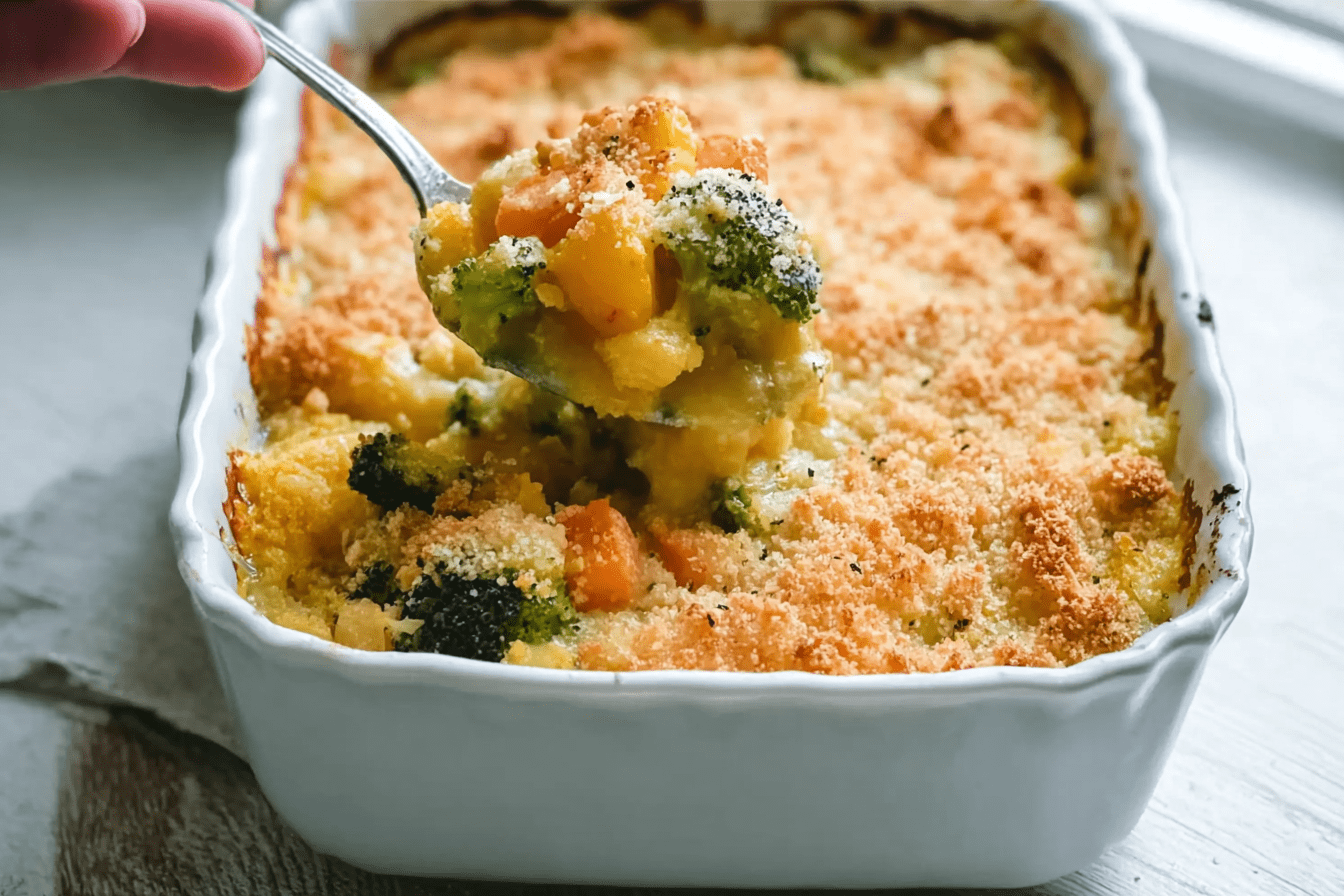
In a medium bowl, mix the crushed crackers with the melted butter until well combined, then sprinkle this mixture on top of the cheese for a crispy finish. Finally, bake for 30 to 45 minutes until the cheese has melted and the topping turns golden brown.
Tips for Smooth Preparation
- Use a large spoon to spread the veggies evenly in the dish.
- Check the bake at 30 minutes to avoid overcooking.
For more vegetable casserole ideas, visit this site that shares tasty variations.
Dietary Substitutions to Customize Your Vegetable Casserole
One of the best parts of this vegetable casserole is how easy it is to tweak for different tastes and needs. Whether you’re cooking for picky eaters or following a special diet, small changes can make a big difference. This keeps the dish flavorful while fitting your lifestyle.
For protein and main component swaps, try replacing cheese with tofu or tempeh to add a plant-based boost. You could also use lentils or chickpeas as another protein source for heartier family meals.
When it comes to veggies, sauce, and seasonings, swap bell peppers for options like asparagus or green beans based on what’s in season. Opt for a cream-based sauce if you want it richer, or stick with tomato sauce for a lighter feel, and adjust herbs to match your preferences.
Mastering Vegetable Casserole: Advanced Tips and Variations
Taking your vegetable casserole to the next level is all about trying new tricks and flavors. With a bit of practice, you can turn this simple recipe into something exciting for food enthusiasts. Let’s look at ways to enhance it without losing that easy, comforting vibe.
Pro Cooking Techniques
Roast your vegetables first to bring out deeper flavors before adding them to the casserole. A mix of fresh and dried herbs adds layers of taste that make every bite more interesting.
Flavor Variations
Experiment with spices like curry powder for a fun twist on easy recipes. Toss in nuts or seeds to give the dish extra crunch and appeal.
| Variation Type | Suggested Add-In | Why It Works |
|---|---|---|
| Global Twist | Za’atar spice | Brings Middle Eastern flavors to flavorful meals |
| Texture Boost | Almond slices | Adds crunch without extra prep |
For more inspiration on vegetable dishes, check out our vegan lasagna guide that offers similar customization tips.
How to Store Vegetable Casserole: Best Practices
Proper storage helps keep your vegetable casserole fresh and tasty for later. Whether you’re meal prepping or saving leftovers, these steps make it simple. Follow them to enjoy your dish without any waste.
For refrigeration, put leftovers in airtight containers and chill them right away. Aim to eat them within 3-4 days to keep everything safe and flavorful.
When freezing, let the casserole cool fully first, then divide it into freezer-safe portions. It can last up to 2-3 months, and thawing overnight in the fridge works best before reheating.
Reheating in an oven at 350°F for 15-20 minutes keeps the texture nice, or use a microwave for quicker options. This approach is great for busy parents planning meals ahead.
FAQs: Frequently Asked Questions About Vegetable Casserole
Can I use frozen vegetables to make a vegetable casserole?
Yes, frozen vegetables work well for vegetable casseroles and save time on prep. Before baking, microwave the frozen veggies to thaw and slightly cook them, which helps release excess moisture. This step improves the texture, preventing a soggy casserole. Drain any extra water before adding other ingredients to keep the dish from becoming watery during baking.
What are the main ingredients needed to make a vegetable casserole?
A basic vegetable casserole typically includes mixed vegetables (fresh or frozen), a creamy sauce such as cream of mushroom or cheese sauce, a binding ingredient like sour cream or mayonnaise, and a crunchy topping like crushed crackers or breadcrumbs. You can also add cheese for extra flavor and protein. Seasoning with salt, pepper, and herbs enhances the overall taste.
How long and at what temperature should I bake a vegetable casserole?
Most vegetable casseroles bake well at 350°F (175°C) for about 30 to 45 minutes. The casserole is done when the topping is golden brown and crispy, and the interior is hot and bubbly. Before baking, cover with foil to prevent excessive browning and uncover during the last 10 minutes if you want a crunchy topping.
Can I prepare a vegetable casserole ahead of time and freeze it?
Yes, you can prepare a vegetable casserole in advance and freeze it before or after baking. For best results, assemble the casserole without the crunchy topping, cover tightly, and freeze. When ready to eat, thaw in the refrigerator overnight, add the topping, and bake as usual. This helps maintain the texture and flavor.
Are vegetable casseroles healthy and suitable for a balanced diet?
Vegetable casseroles can be a nutritious addition to your meals, especially when packed with a variety of vegetables. To keep them healthy, use low-fat dairy or plant-based sauces and limit high-calorie toppings. Incorporating whole grains or lean proteins can provide balanced nutrition. Be mindful of added salt or creamy sauces if you’re watching your sodium intake.

Vegetable Casserole
🥦 Enjoy a wholesome and comforting Vegetable Casserole that brings vibrant veggies and rich cheese into a satisfying family meal.
🧀 This easy recipe is perfect for busy weeknights and offers a delicious way to include a variety of vegetables in your diet.
- Total Time: 1 hour
- Yield: 6 servings
Ingredients
– 1 bag (454 grams) frozen broccoli for a crisp and nutritious base
– 1 bag (454 grams) frozen carrots adds sweetness and color
– 1 bag (454 grams) frozen cauliflower provides a hearty texture
– 1 package (454 grams) sliced cheese melts to create a creamy layer
– 1 roll of crushed crackers gives a crunchy topping
– 1/4 cup (57 grams) melted butter helps bind the topping for even baking
Instructions
1-First, preheat your oven to 350°F (175°C) to get it ready for baking. Then, combine the frozen broccoli, carrots, and cauliflower in a large microwave-safe bowl and microwave uncovered on high for 12 to 15 minutes until warm.
2-Once warmed, transfer the vegetables to a 9-inch by 13-inch baking dish for even cooking. Layer the sliced cheese evenly over the vegetables to add a melty, rich touch.
3-In a medium bowl, mix the crushed crackers with the melted butter until well combined, then sprinkle this mixture on top of the cheese for a crispy finish. Finally, bake for 30 to 45 minutes until the cheese has melted and the topping turns golden brown.
Last Step:
Please leave a rating and comment letting us know how you liked this recipe! This helps our business to thrive and continue providing free, high-quality recipes for you.Notes
🧀 Use a good melting cheese like cheddar or a cheese blend for best flavor and texture.
🥄 Ensure the vegetables are warmed before baking to reduce oven time.
🍽️ Let the casserole rest a few minutes after baking to set and make serving easier.
- Prep Time: 15 minutes
- Cook Time: 45 minutes
- Category: Main Dish
- Method: Baking
- Cuisine: American
- Diet: Vegetarian
Nutrition
- Serving Size: 1 serving


