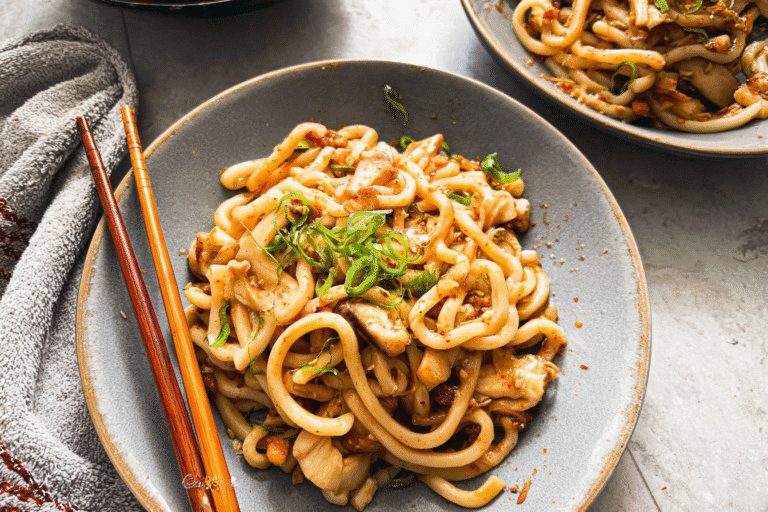
Ingredients
– Udon noodles – Forms the thick, chewy base made from wheat flour, essential for the structure of the dish
– Broth – Creating a mild dashi that varies by region; dark soy sauce is common in eastern Japan, while light soy sauce is used in western Japan
– Thinly sliced scallions – Added for a fresh, pungent flavor and crunch
– Tempura (especially shrimp or mixed fritters) – Provides a crispy contrast to the soft noodles
– Aburaage (sweet fried tofu pouch) – Offers a sweet and savory element, popular in many udon recipes
– Kamaboko (sliced fish cake) – Adds a chewy texture and subtle seafood taste
– Shichimi (Japanese seven-spice blend) – Used to taste for a spicy kick that enhances the overall flavor
– Vegetables such as mushrooms, onions, or radish – Incorporated by dish type to add nutrition and variety
– Proteins including chicken, seafood, or eggs – Selected based on preferences to make the meal more filling
– Seasonings like curry, miso, or soy sauce – Adjusted for flavor profiles in different japanese noodles variations
Instructions
1-First Step: Before starting, gather all ingredients to make the process smooth. Begin by preparing your workspace, measuring out udon noodles and other components like broth and toppings. This sets the stage for an efficient cooking session.
2-Second Step: Boil a pot of water, using about 4 liters for 200g of fresh udon noodles to ensure they have room to move. Add the noodles once the water reaches a rolling boil, stirring gently to prevent sticking; cook for 1-2 minutes until they achieve a chewy consistency.
3-Third Step: While the noodles cook, prepare the broth by simmering kombu and katsuobushi in a separate pot for 10 minutes, then strain and add soy sauce to taste. This step infuses the broth with authentic flavors, making your udon recipes stand out.
4-Fourth Step: Drain the cooked noodles and rinse them under cold water for 30 seconds to stop the cooking process andremove excess starch.
5-Fifth Step: Assemble the dish by placing the noodles in a bowl, pouring the hot broth over them, and adding toppings like thinly sliced scallions and tempura.
6-Sixth Step: Customize with variable additions such as vegetables or proteins, heating them briefly if needed.
7-Final Step: Serve immediately, sprinkling shichimi to taste for extra flavor, and enjoy your quick udon noodles while they’re warm.
Last Step:
Please leave a rating and comment letting us know how you liked this recipe! This helps our business to thrive and continue providing free, high-quality recipes for you.Notes
🍜 For the best texture, don’t overcook the udon noodles – they should be tender but still slightly chewy when done
🌡 Keep the dashi stock at a gentle simmer, not a rolling boil, to maintain the delicate umami flavor
🧂 Add soy sauce gradually and taste as you go – you can always add more but you can’t take it away once it’s too salty
- Prep Time: 10 minutes
- Cook Time: 15 minutes
- Category: Main Course
- Method: Boiled
- Cuisine: Japanese
- Diet: Regular
Nutrition
- Serving Size: 1 bowl
- Calories: 320
- Sugar: 8g
- Sodium: 950mg
- Fat: 6g
- Saturated Fat: 1g
- Unsaturated Fat: 5g
- Trans Fat: 0g
- Carbohydrates: 58g
- Fiber: 2g
- Protein: 12g
- Cholesterol: 25mg