

Tall, Flaky Scones Recipe
This is one master dough that makes tall, flaky scones either plain or loaded with fruit, chips, or nuts. It yields 8 scones, takes about 10 minutes of active prep, needs roughly 35 minutes of chilling and freezing, and bakes in 20 to 26 minutes in a 400°F oven.
Scones usually spread for one reason: too much moisture and butter that has softened. This recipe handles both problems. Juicy fruit adds water, so the amount of flour changes depending on the add in you choose. The dough is also folded several times to build layers, and the shaped wedges go into the freezer before baking.
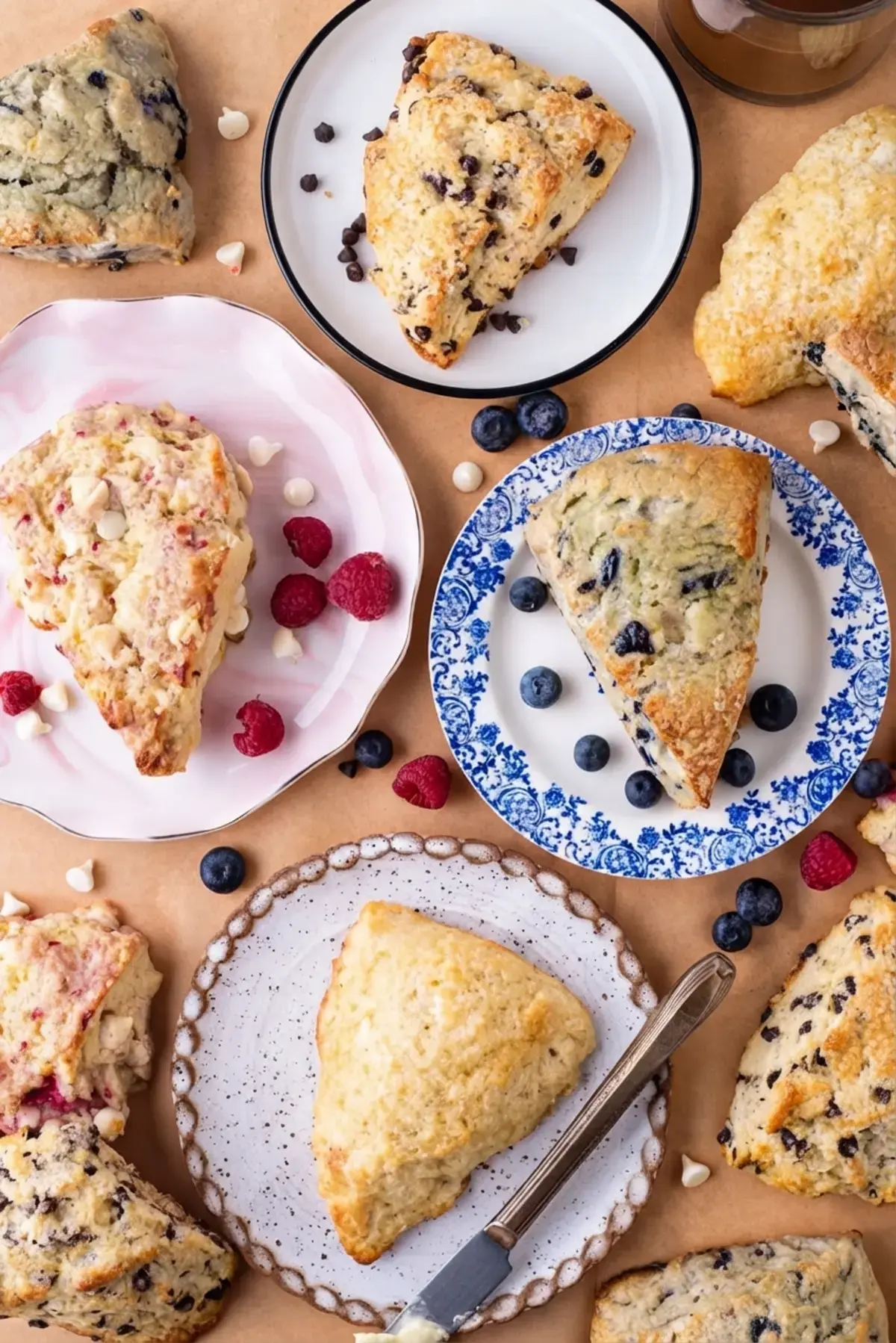
Three techniques do most of the work:
- Adjust the flour. Add ¾ cup (90 g) extra flour for raspberry scones and ¼ cup (30 g) for blueberry or strawberry scones. Chocolate chips need no extra flour.
- Laminate the dough. Fold it in half, press, turn 90 degrees, and fold again, repeating 4 to 5 times.
- Freeze the wedges. Thirty minutes in the freezer keeps the butter cold and helps each scone hold its shape.
The flour amounts were dialed in through repeated testing, about four batches per flavor, so those gram measurements are worth following closely. Weighing the extra flour is more accurate than scooping it.
Cold butter and a frozen wedge are what separate a tall scone from a flat one.
Based on the source nutrition, one scone has about 411 calories, 55 g carbohydrate, 19 g fat, 12 g saturated fat, 5 g protein, 26 g sugar, 1 g fiber, 331 mg sodium, and 55 mg cholesterol. Values shift depending on the add ins you use.
This article adapts the recipe from The First Year Blog scone recipe.
Jump To
What is a scone?
An American scone is a baked pastry made with flour, baking powder, butter, and milk, and sometimes eggs.
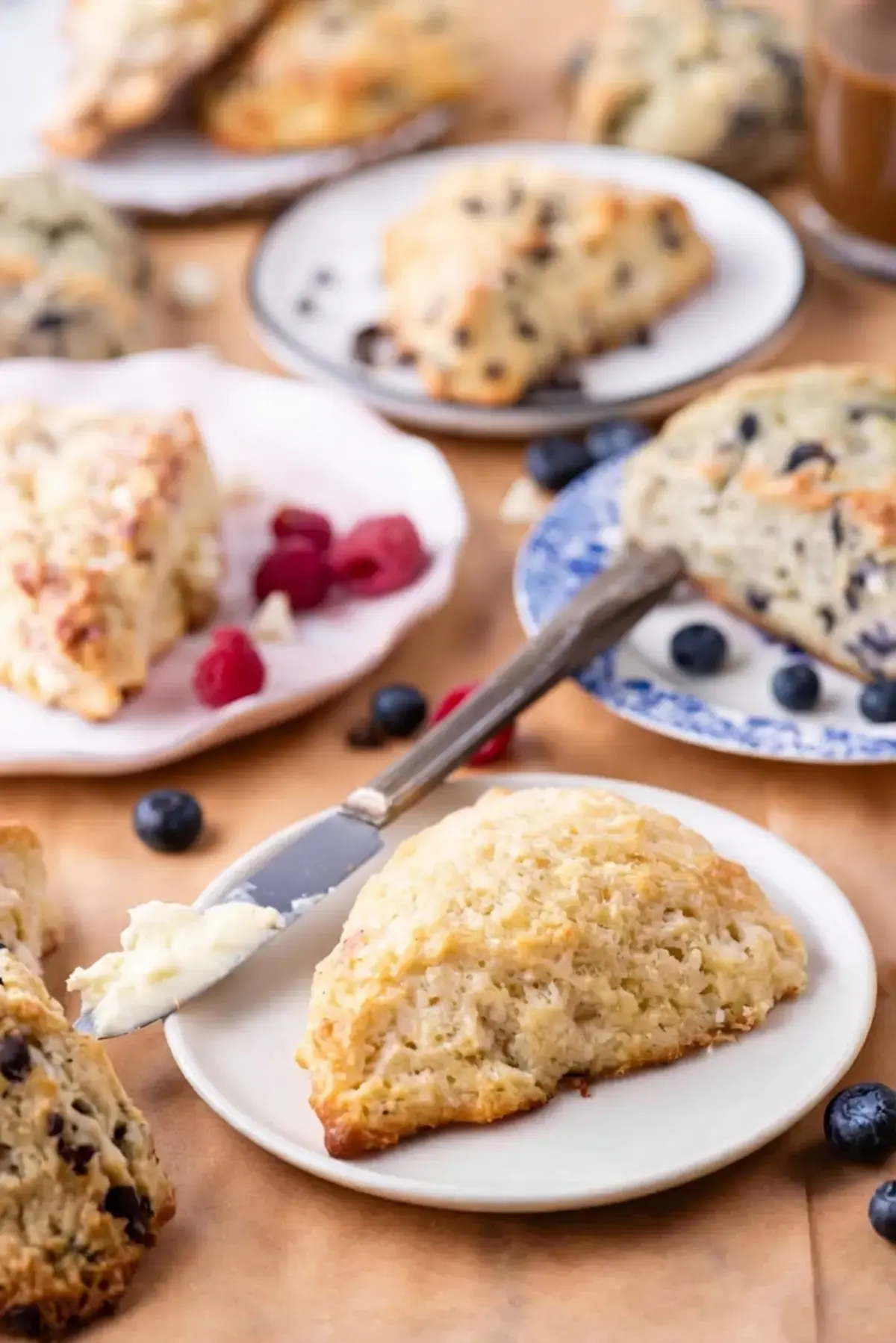
It can be sweet or savory, with fruit, nuts, or cheese stirred into the dough, and it is commonly served for breakfast or as a dessert.
Scone vs Biscuit
English scones are closer to American biscuits. They are less sweet, softer, and typically round, and they are often served with butter or jam. American scones are sweeter and more crumbly, and they may include fruit, nuts, or savory additions such as cheese.
Biscuits are usually softer and savory with no add ins, and they are commonly cut into rounds, while scones are often formed or cut into wedges.
Scones Recipe Ingredients
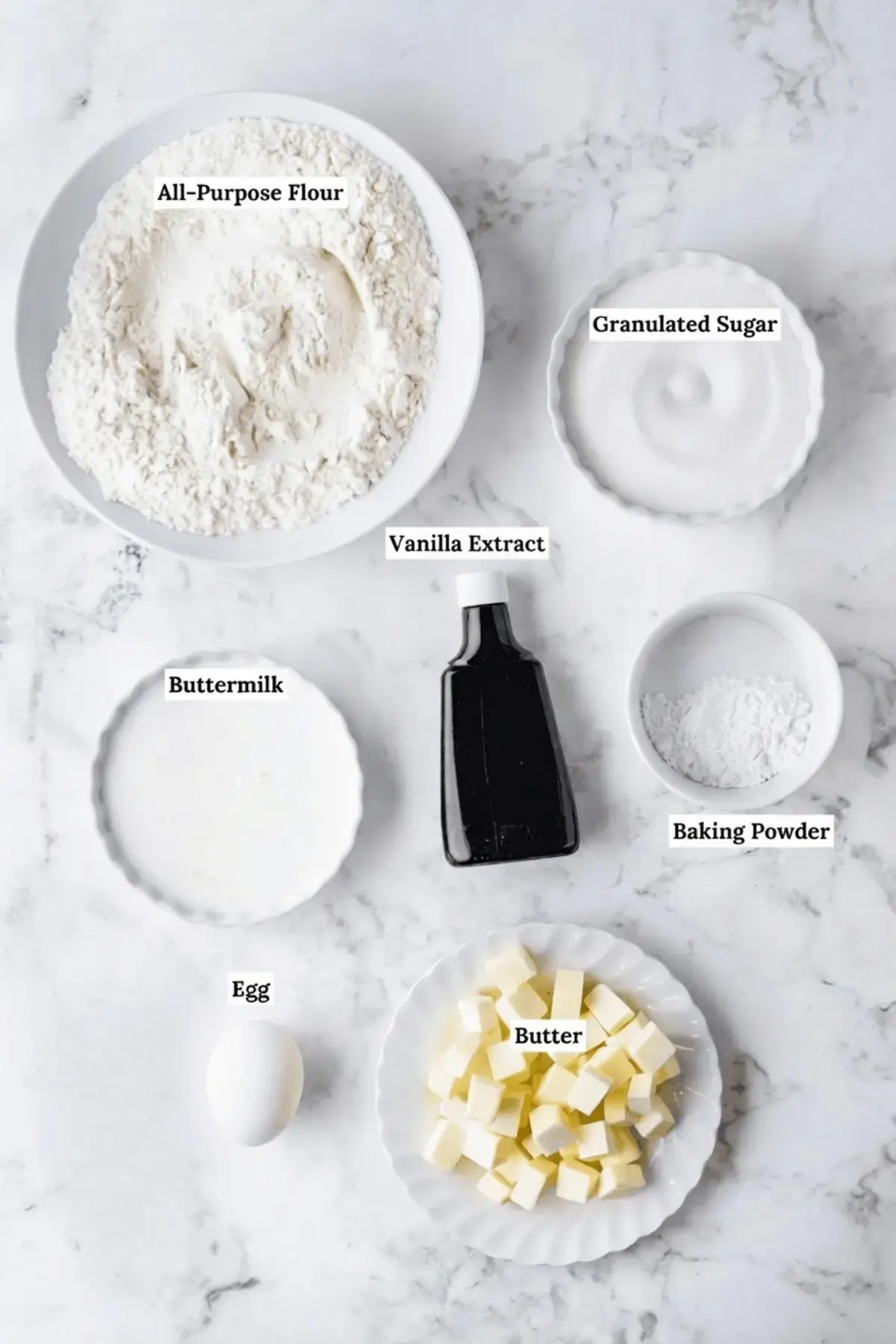
The base comes together with pantry staples plus cold butter, buttermilk, vanilla, and an egg. Optional add ins let you change the flavor without changing the method.
Plain Scones
- 2 ¼ cups (270 g) all purpose flour
- ½ cup (99 g) granulated sugar
- 1 Tbsp baking powder
- ½ tsp salt
- ½ cup (113 g) cold unsalted butter, cubed
- ½ cup (118 ml) buttermilk
- 1 tsp vanilla extract
- 1 large egg
What if I don’t have buttermilk? What can I substitute?
Heavy whipping cream works well, and so does sour cream thinned slightly with a splash of milk.

Homemade buttermilk is another option.

Use the same amount the recipe calls for. Avoid whole milk and almond milk, because they do not give the dough the tenderness and structure that buttermilk provides.
Add Ins (optional)
You can add up to 1 cup of fruit plus up to 1 cup of chips or nuts. The options used in this recipe are 1 cup chocolate chips (mini chips appear in the photos), 1 cup white chocolate chips, 1 cup fresh raspberries broken into pieces and frozen, 1 cup blueberries, and 1 cup chopped strawberries.
How to Make Scones
The method is simple, but the order matters. If you are baking a fruit version, start with the flour adjustment so the dough has enough structure to hold the fruit.
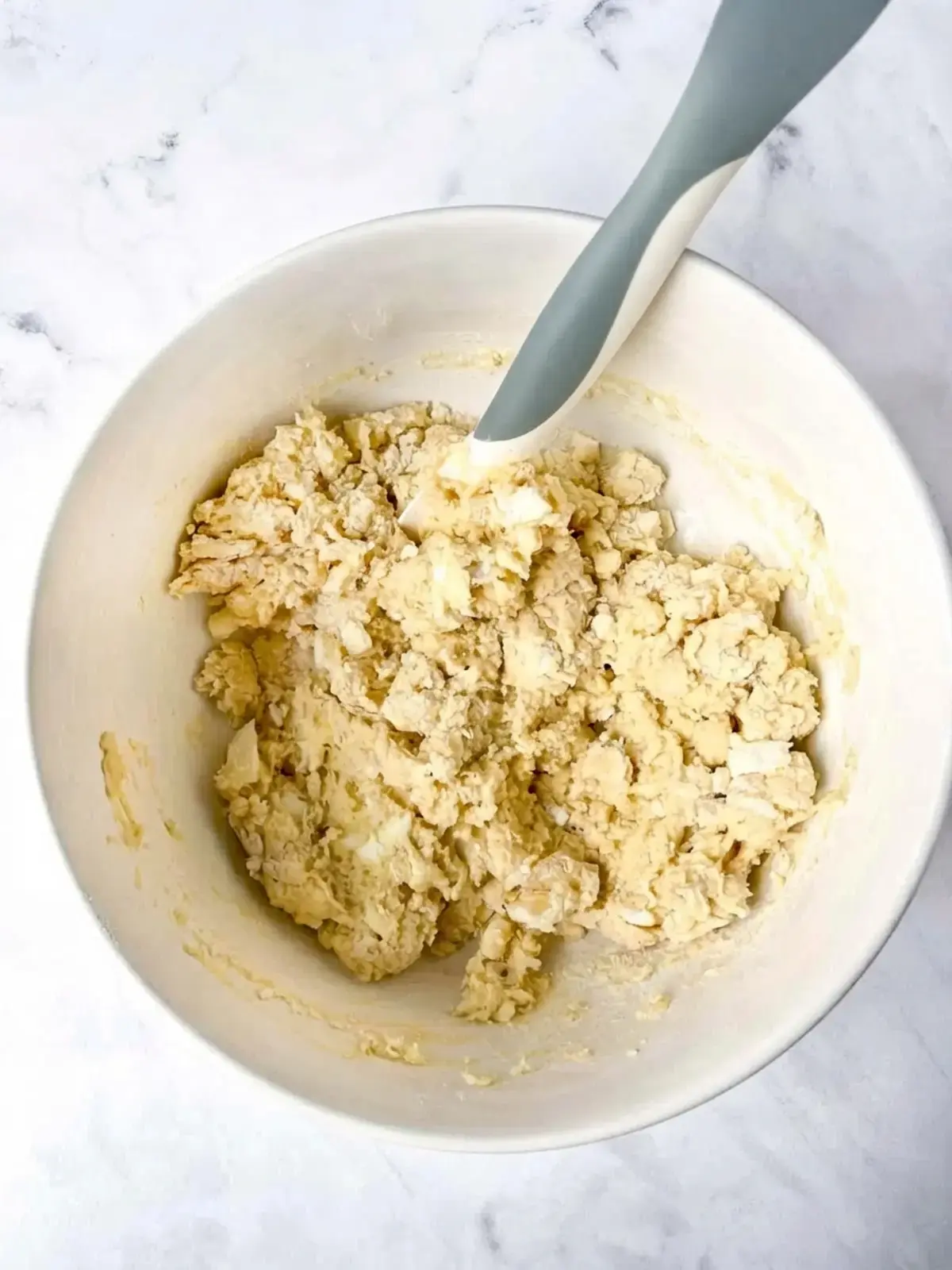
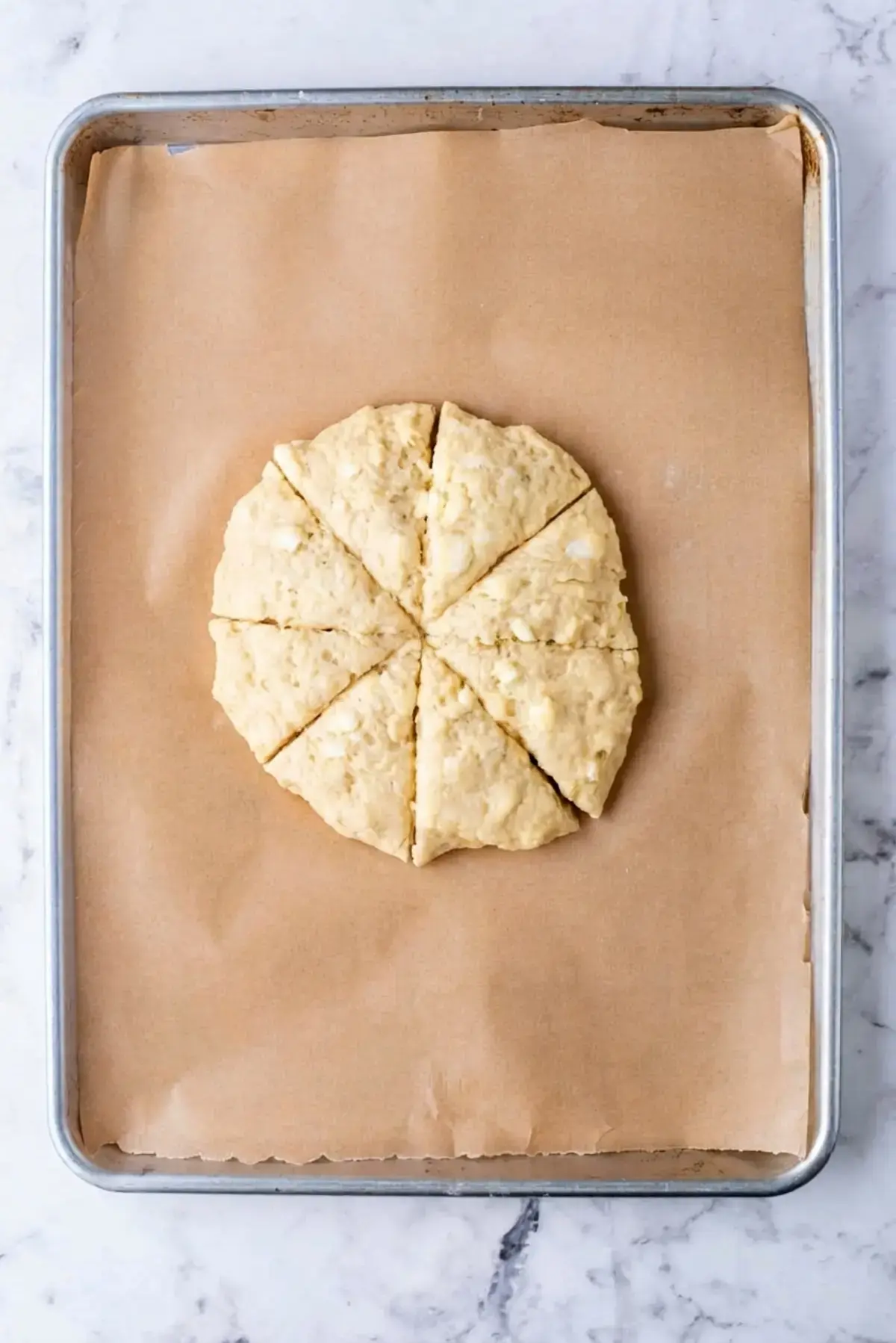
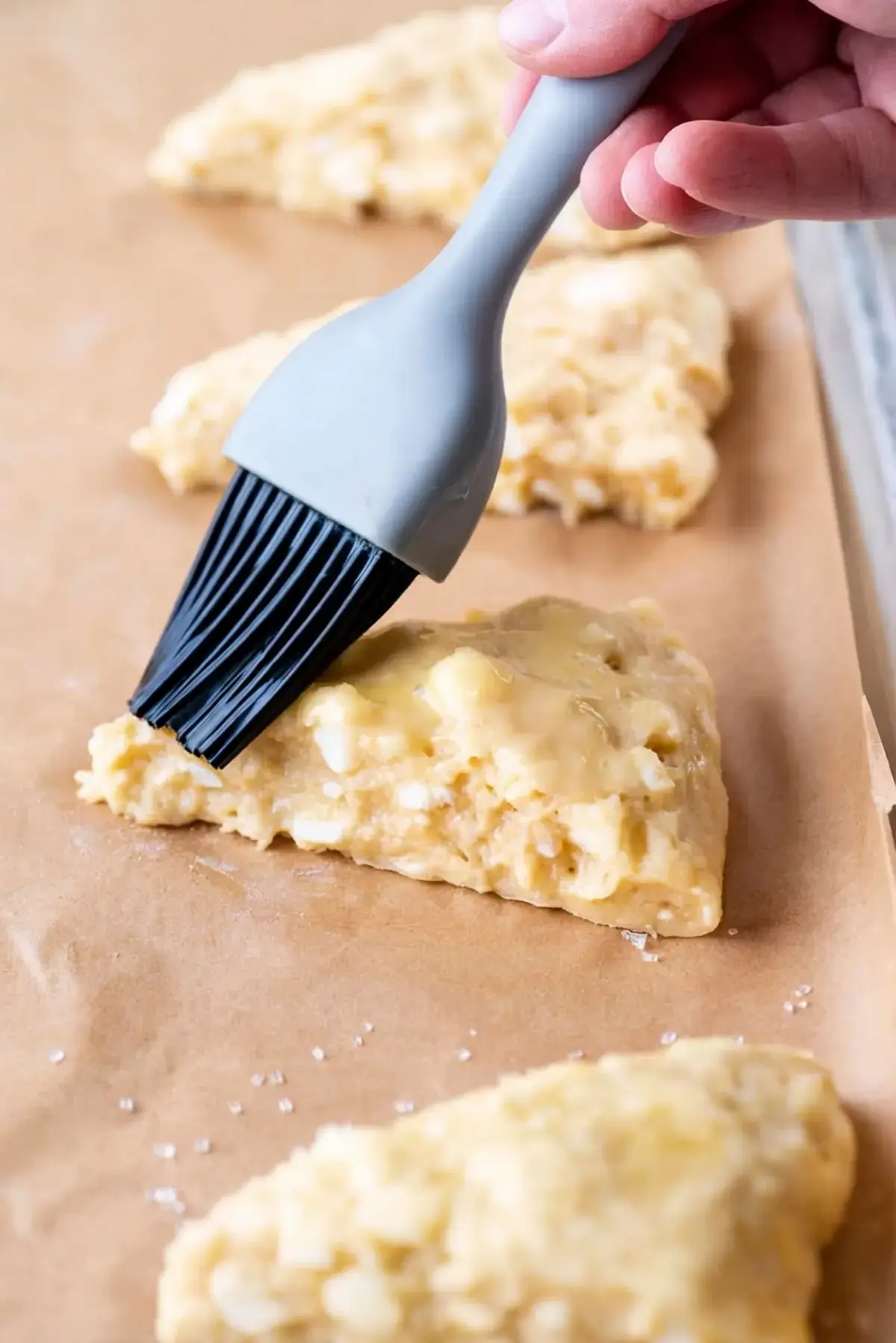
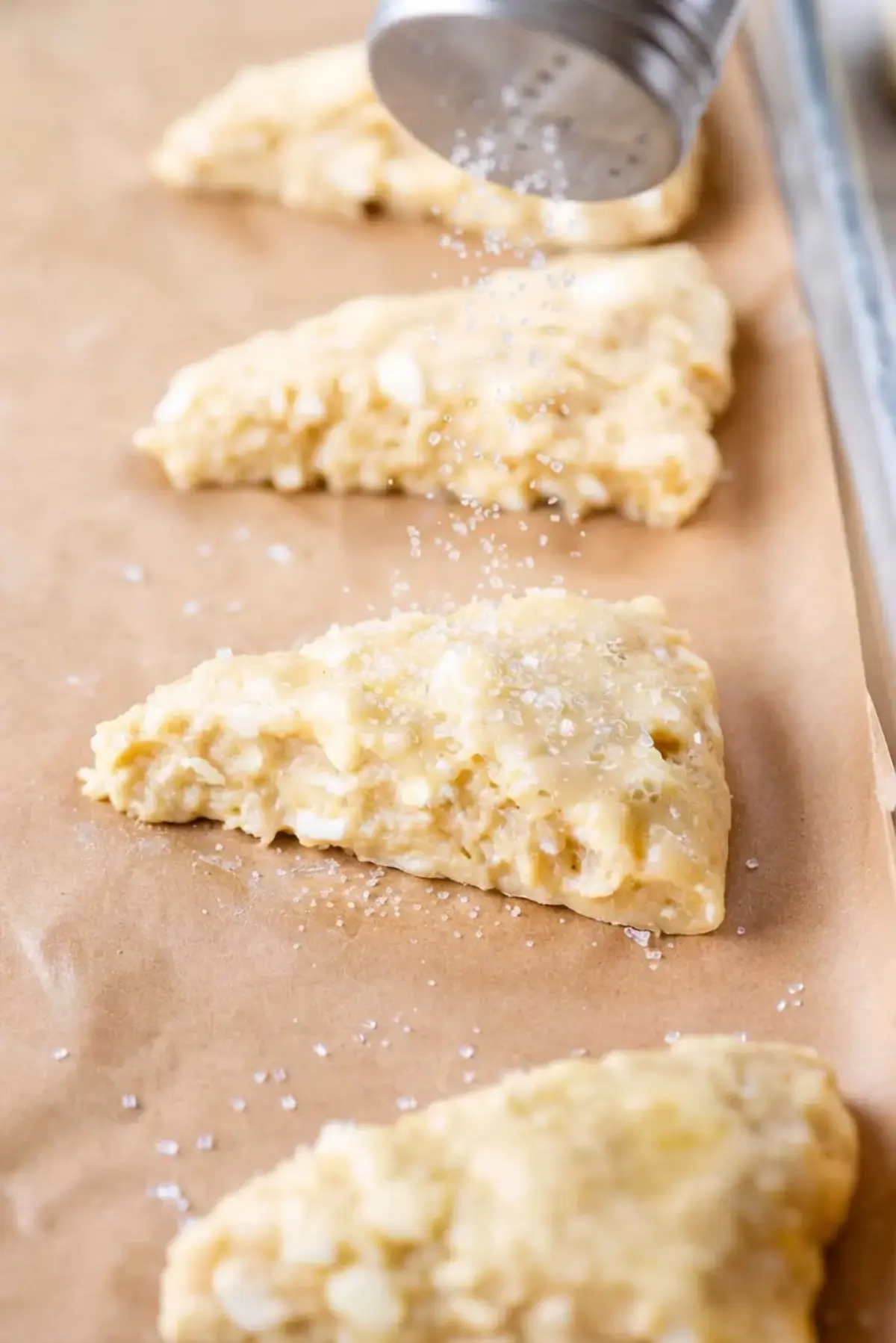

- For raspberry scones, add an additional ¾ cup (90 g) flour. For blueberry or strawberry scones, add an additional ¼ cup (30 g) flour. Fresh fruit adds a lot of moisture, and without the extra flour the dough will be too wet and will not have enough structure when baking.
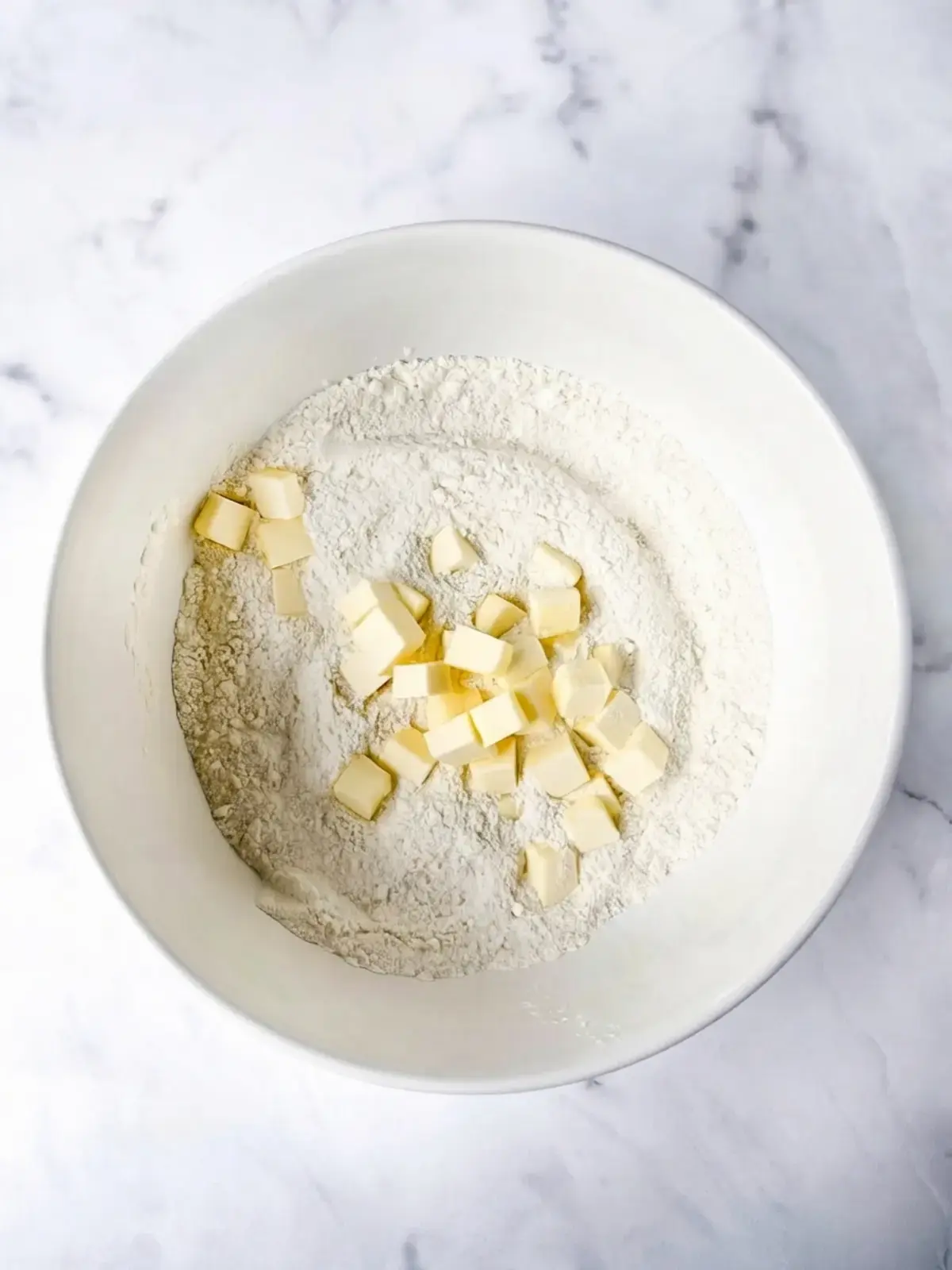
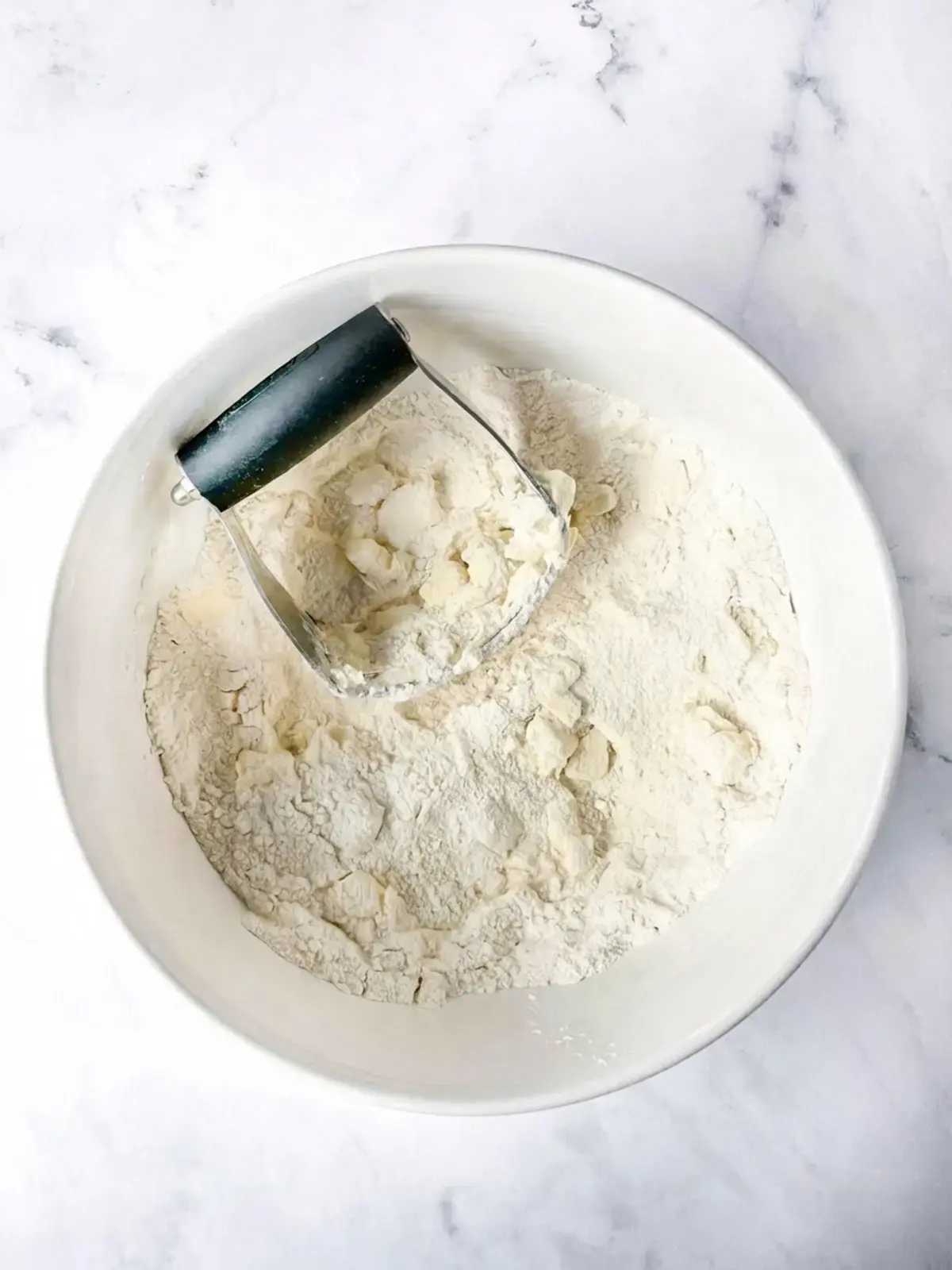
- In a large mixing bowl, combine the flour, granulated sugar, baking powder, and salt. Add the cold cubed butter and cut it in with your hands or a pastry cutter until pea sized pieces of butter remain.
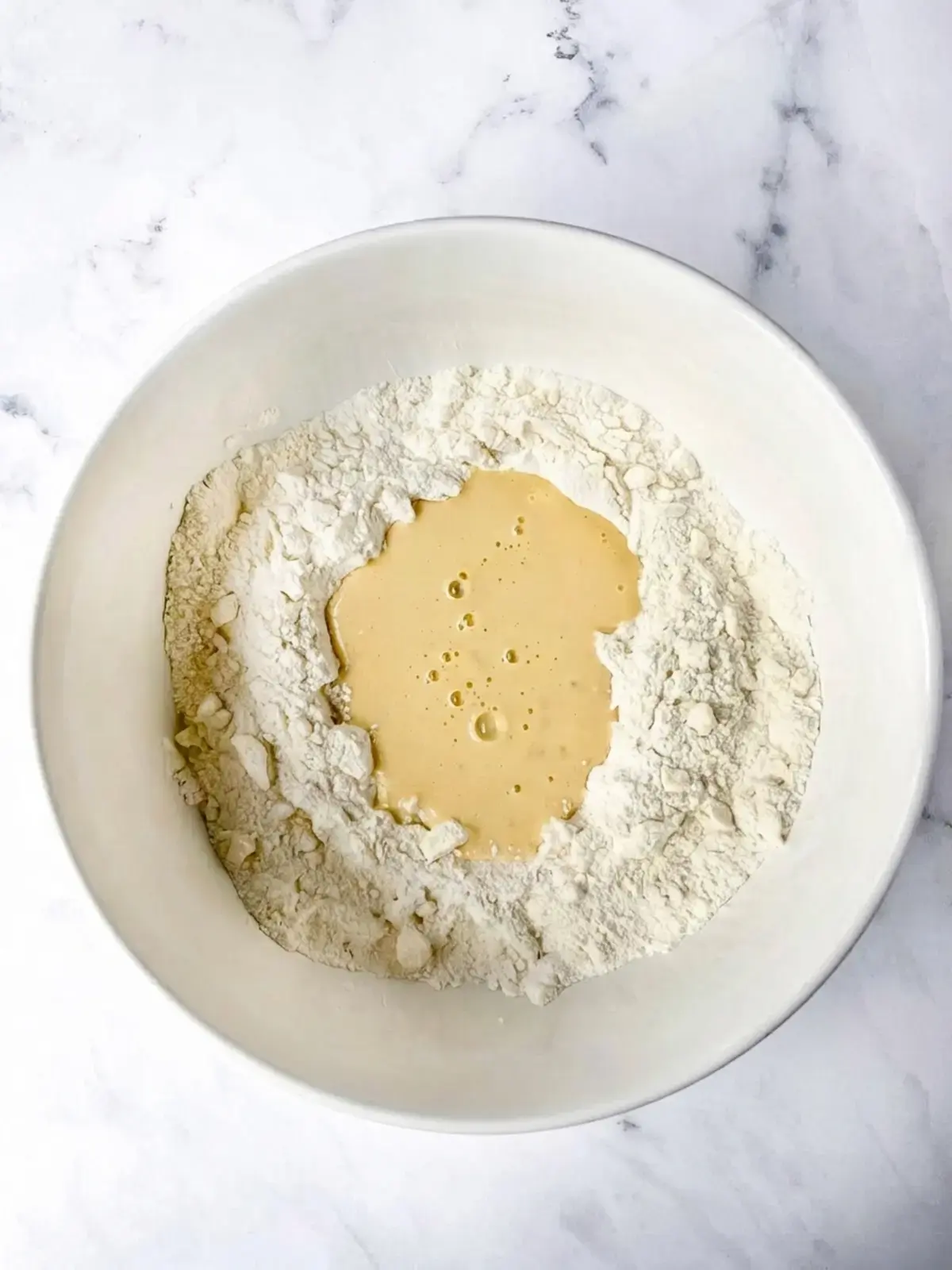
- Create a well in the center of the flour mixture. Add the buttermilk, vanilla extract, and egg, then use a spatula to combine gently until the dough is thick and sticky. If you are using a mix in, stir it in gently now: 1 cup chocolate chips, 1 cup fresh raspberries broken into pieces and frozen, 1 cup blueberries, or 1 cup chopped strawberries.
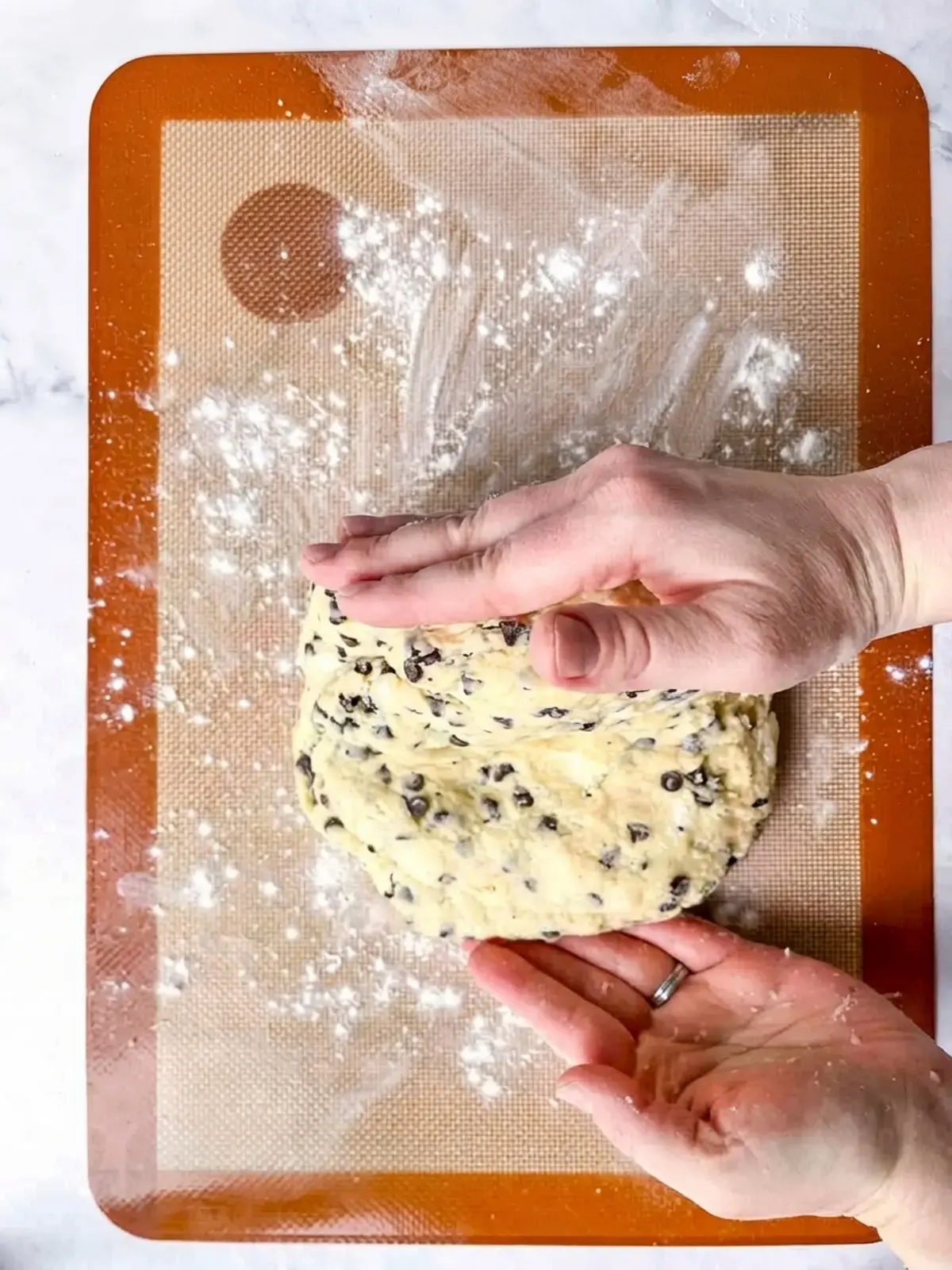
- On a silicone mat or kitchen counter, knead the dough gently until all the flour is incorporated. If the dough is too sticky, add 1 to 2 additional tablespoons of flour.
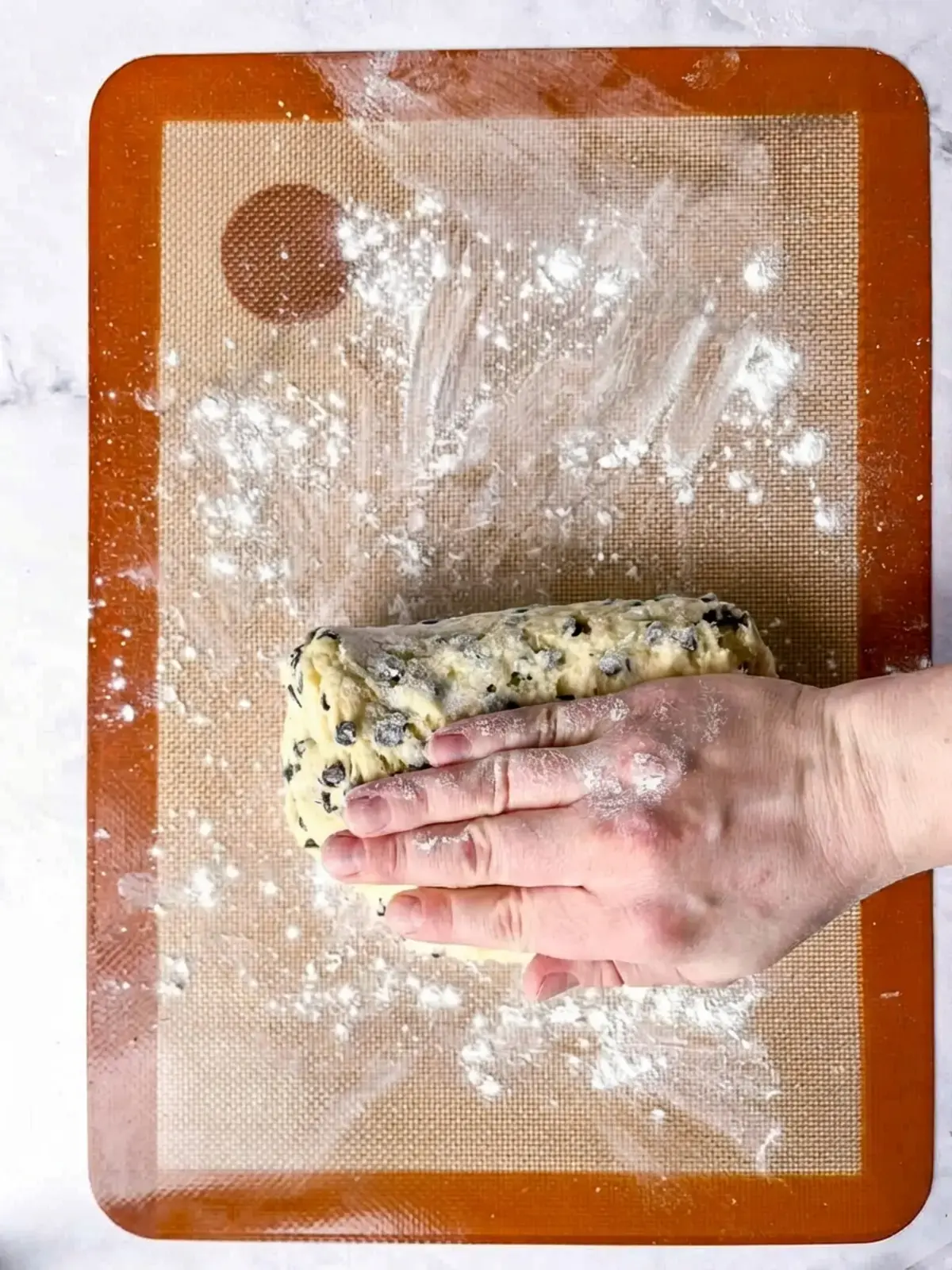
- Laminate the dough to create flaky layers. Fold it in half, press down slightly, turn it 90 degrees, and fold in half again. Repeat this folding and turning 4 to 5 times.
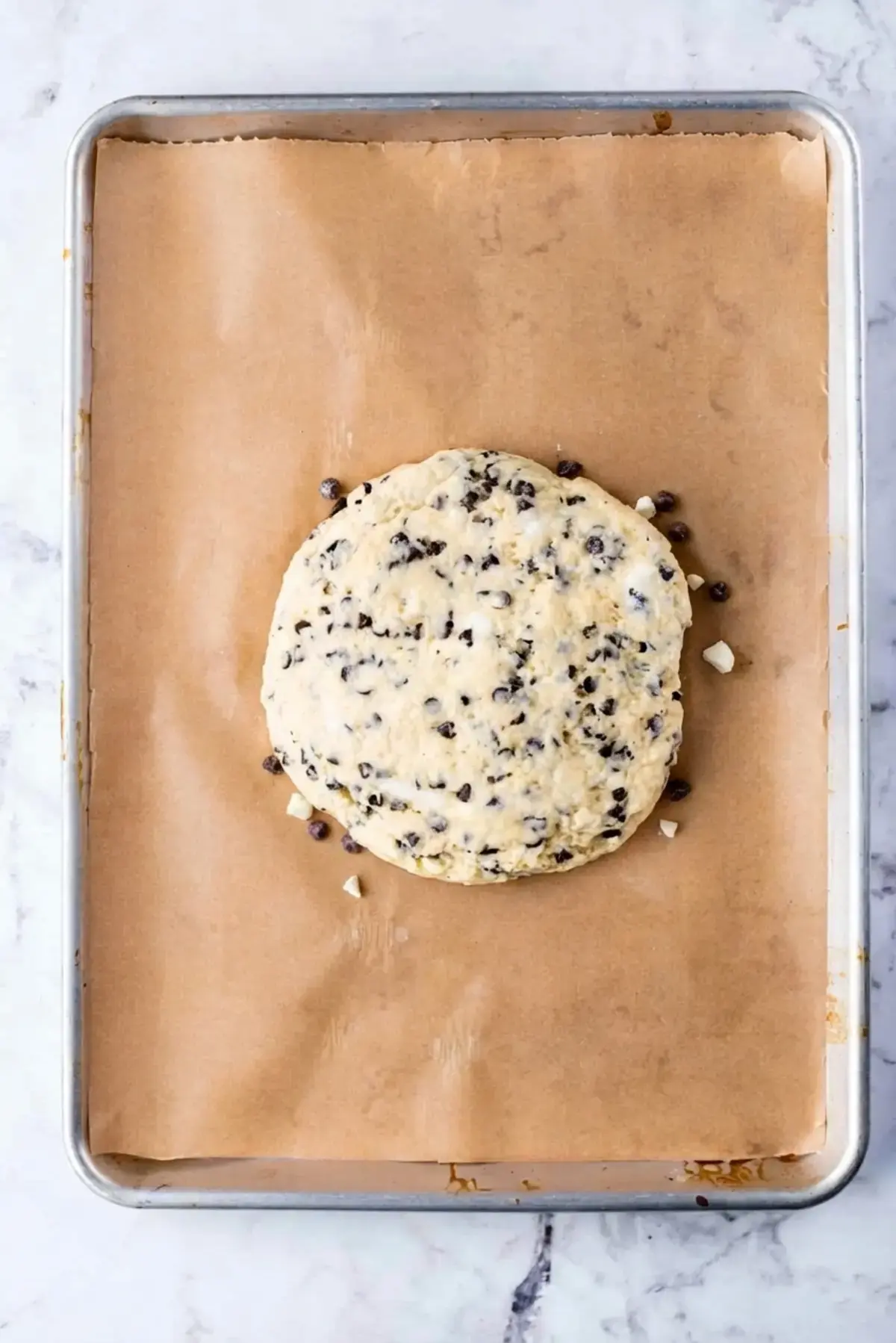
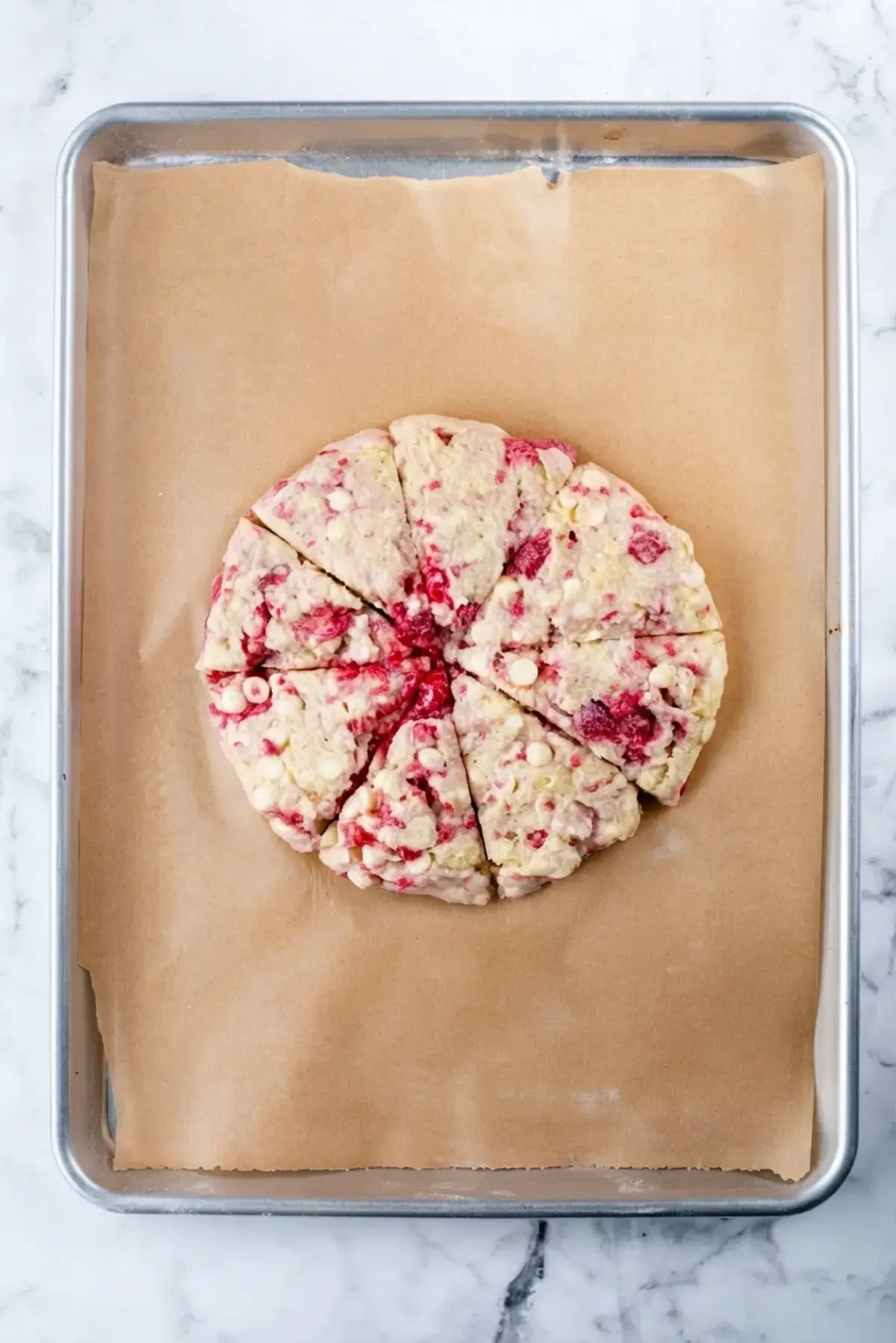
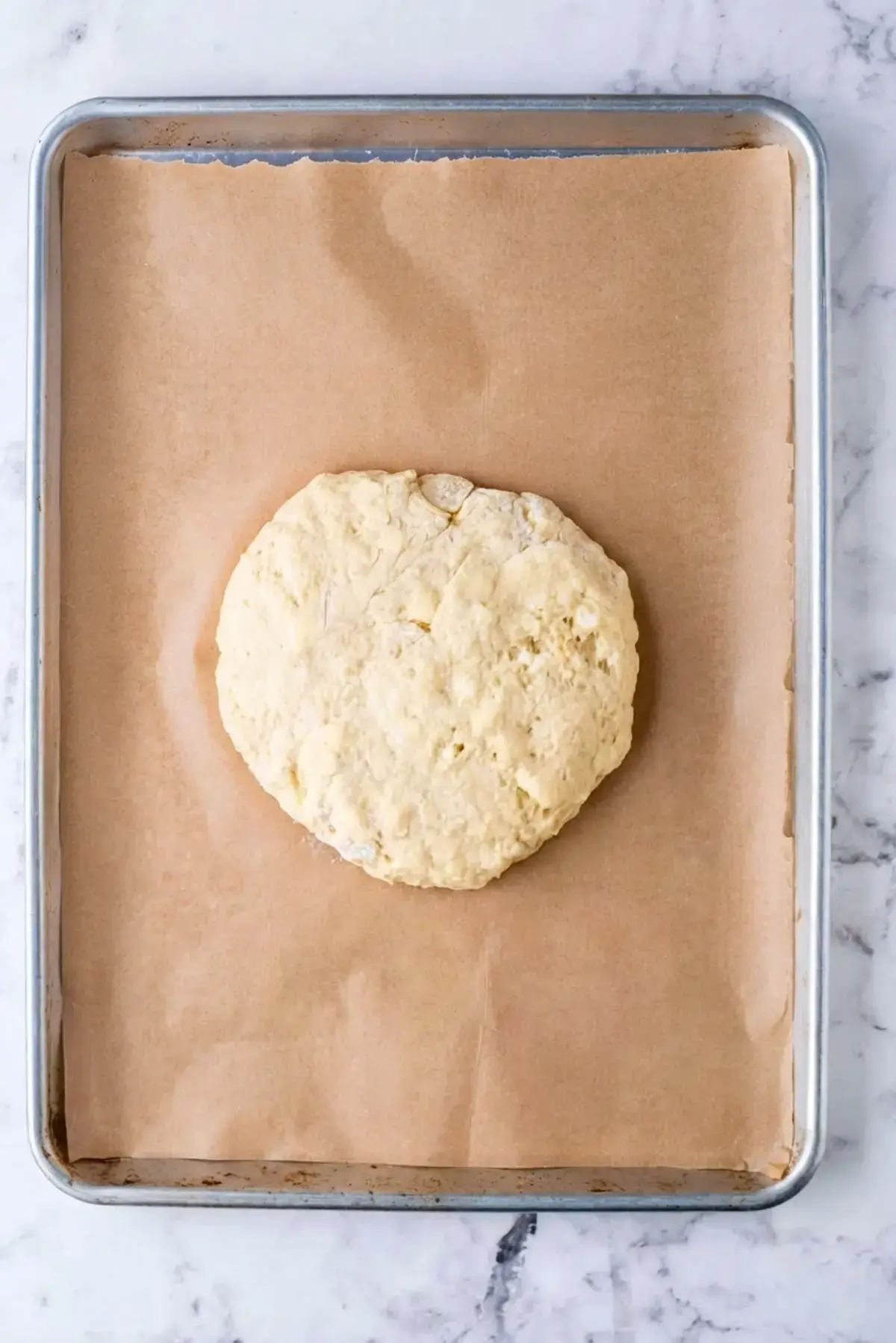
- Shape the dough into an 8 to 10 inch disc that is about 1.5 to 2 inches tall. Refrigerate the disc for 5 to 10 minutes.
- Use a knife or a pizza cutter to cut the dough into 8 equal wedges.
- Place the scones 2 to 3 inches apart on a baking sheet lined with a silicone mat or parchment paper.
- Freeze the scones for 30 minutes. During the last 5 minutes, preheat the oven to 400°F.
- Brush the tops with egg wash made from 1 large egg plus 1 Tbsp water, or use buttermilk or heavy cream. Add coarse sanding sugar if desired.
- Bake for 20 to 26 minutes, until the scones are lightly golden. Allow the scones to cool before serving.
Tips for the BEST Scones
A few habits make the difference between a decent scone and a bakery style one.
- Keep the butter cold. Cube it and freeze it before you mix, then work quickly. Cold butter creates steam in the oven, and that steam lifts the layers.
- Use only 1 cup of fresh fruit. More fruit means more water, and wet dough spreads.
- Add flour for juicy fruit. Raspberries need ¾ cup (90 g) extra, while blueberries and strawberries need ¼ cup (30 g).
- Do not skip the freeze. Thirty minutes firms the butter and helps the wedges keep their shape as they bake.
- Handle the dough lightly. Gentle folds build layers, while heavy kneading develops gluten and makes scones tough.
- Measure carefully. Weighing flour in grams keeps the dough consistent from batch to batch.
Flour adjustment at a glance:
| Add in (1 cup) | Extra flour |
|---|---|
| Fresh raspberries, broken and frozen | ¾ cup (90 g) |
| Blueberries | ¼ cup (30 g) |
| Strawberries, chopped | ¼ cup (30 g) |
| Chocolate chips or white chocolate chips | None |
For a second look at the same technique, this guide to buttery and flaky scones covers cold butter and gentle handling in similar detail.
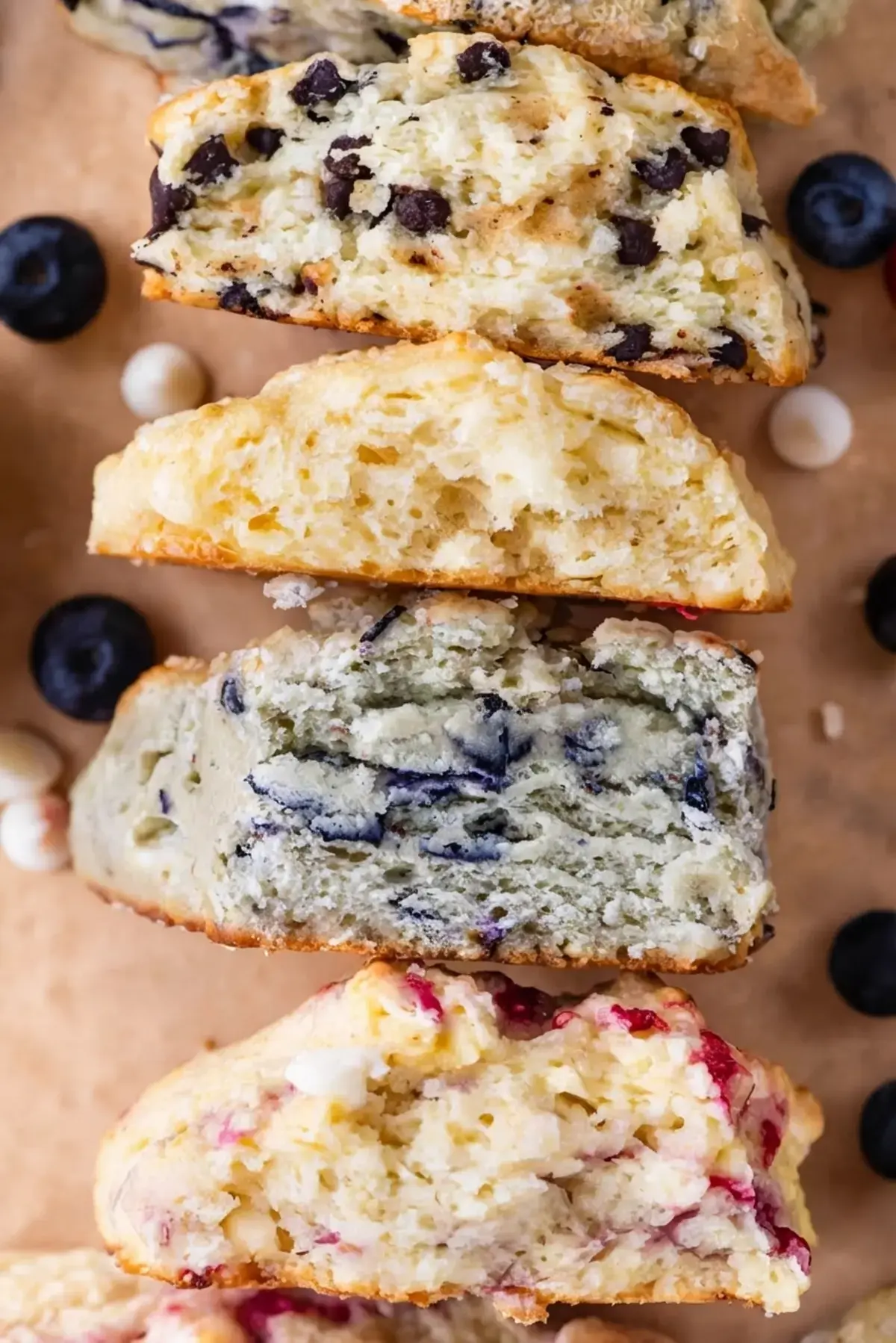
How To Make Tall, Flaky Scones
Lamination is the step that creates height. Folding the dough in half, pressing it, turning it 90 degrees, and folding again 4 to 5 times stacks butter between thin sheets of dough.
In the oven, the water in the butter turns to steam, and the steam pushes those sheets apart. A frozen start and a hot 400°F oven complete the effect, so the scones rise tall instead of spreading outward.
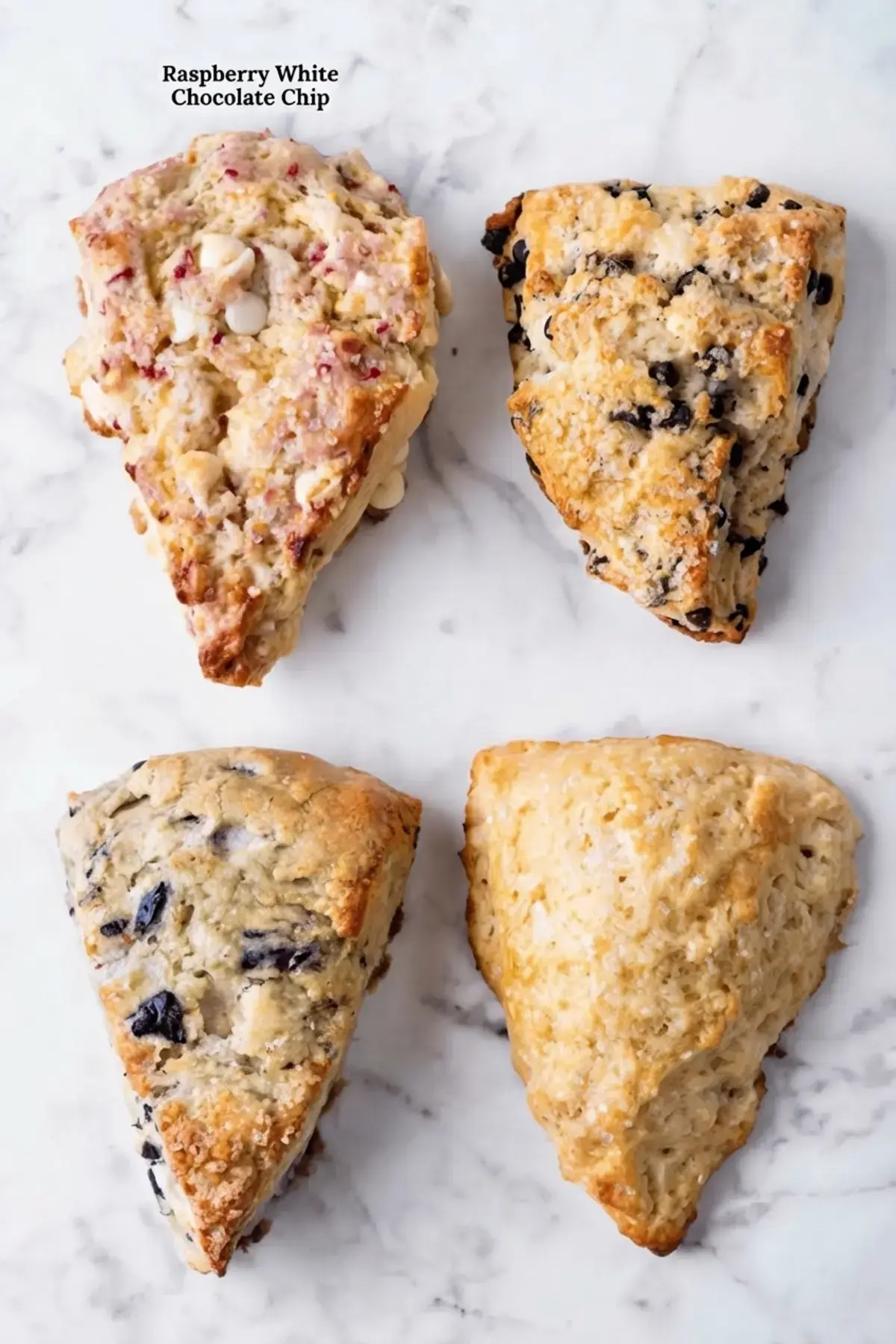
Scone Flavors
The same base dough handles a range of flavors. Only the add ins change, so pick one version and follow the flour adjustment if fruit is involved.
- Plain: the base dough with no add ins.
- Raspberry white chocolate: 1 cup fresh raspberries, broken into pieces and frozen, plus 1 cup white chocolate chips.
- Chocolate chip: 1 cup semi sweet chocolate chips, with mini chips suggested.
- Blueberry: 1 cup blueberries.
- Cranberry orange: the zest of 2 oranges plus 1 cup frozen cranberries.
- Strawberry: 1 cup chopped strawberries.
- Lemon poppy seed: the zest of 3 lemons plus ½ tablespoon poppy seeds.
- Lemon blueberry: the zest of 3 lemons plus 1 cup blueberries.
For the raspberry version with white chocolate, here is a full raspberry white chocolate scones recipe to compare notes with.
How to Make Gluten Free Scones
Swap the all purpose flour for King Arthur’s Gluten Free Measure for Measure Flour in a one for one replacement, and keep everything else the same. If you prefer working with almond flour, these gluten free almond flour scones use a different approach.

How to Store Scones
Let the scones cool completely before you store them. Sealing them while warm traps steam, and that condensation makes the crust soggy.

- Room temperature: keep cooled scones in an airtight container or a zip top bag in a cool, dry place for up to 2 days. Skip the refrigerator, which dries them out.
- Freezer, baked: freeze baked scones for up to 1 month and thaw them at room temperature before serving.
- Freezer, unbaked: freeze the wedges on a baking sheet until solid, then move them to a freezer bag for up to 2 months. Bake them straight from frozen and add 2 to 3 minutes to the bake time.
- Make ahead: shape and cut the dough, refrigerate it overnight, and bake the next day.
FAQs
Why should butter be cold when making scones?
Cold butter is essential for tall, flaky scones because when it melts in the hot oven it releases steam that creates air pockets, giving the scones their lift and flaky layers. If the butter warms up during mixing or shaping, it will blend into the dough rather than staying in distinct pieces, resulting in dense, flat scones. For best results, cube the butter and freeze it for 10 to 15 minutes before cutting it into the dry ingredients.
How do you keep scones from spreading in the oven?
To keep scones from spreading, freeze the shaped wedges for 30 minutes before baking. This firms the butter so it melts slowly, allowing the scone structure to set before the butter fully liquefies. Additionally, adjusting the flour amount for moist add-ins like fruit and laminating the dough help the scones hold their shape and rise tall instead of spreading outward.
How much extra flour should you add to fruit scones?
For raspberry scones, add an extra ¾ cup (90 grams) of all-purpose flour to offset the berries moisture. For blueberry or strawberry scones, add an extra ¼ cup (30 grams) of flour. No extra flour is needed for chocolate chip scones. These precise adjustments are crucial to prevent the dough from becoming too wet, which would cause the scones to lose structure and spread while baking.
Can you freeze scones before baking?
Yes, freezing unbaked scones is recommended to improve their shape and texture. After cutting the dough into wedges, freeze them on a baking sheet for 30 minutes, then bake directly from frozen, adding 2 to 3 extra minutes to the bake time. Unbaked scones can be frozen for up to 2 months by transferring the frozen wedges to a zip-top bag, allowing you to bake fresh scones whenever you want.

Tall, Flaky Scones
Tall, Flaky Scones Recipe This is one master dough that makes tall, flaky scones either plain or loaded with fruit, chips, or nuts. It yields 8 scones, takes about 10 minutes of active prep, needs roughly 35 minutes of chilling and freezing, and bakes in 20 to 26 minutes in a 400°F oven.
- Yield: 8 scones 1x
Ingredients
Plain Scones
2 ¼ cups all-purpose flour
½ cup granulated sugar
1 Tbsp baking powder
½ tsp salt
½ cup unsalted butter, cold, cubed
½ cup buttermilk
1 tsp vanilla extract
1 large egg
Add-Ins, optional, add up to 1 cup of fruit plus up to 1 cup of chips/nuts
1 cup chocolate chips
1 cup white chocolate chips
1 cup fresh raspberries, broken into pieces and frozen
1 cup blueberries
1 cup strawberries, chopped
Instructions
Instructions
1-If making raspberry scones add an additional: If making raspberry scones add an additional ¾ cup flour (90 grams). If making blueberry or strawberry scones add an additional ¼ cup flour (30 grams). The fresh fruit adds a lot of moisture so more flour is needed otherwise the dough will be very wet and not have enough structure when baking.
2-In a large mixing bowl combine the: In a large mixing bowl combine the flour, granulated sugar, baking powder, and salt. Add in the cold, cubed butter and use your hands or a pastry cutter to cut in the butter until pea sized amounts of butter remain.
3-Create a well in the center of: Create a well in the center of the flour mixture. Add the buttermilk, vanilla extract, and egg. Use a spatula to gently combine until the dough is thick and sticky. Gently stir in your mix-in if using – example 1 cup chocolate chips, 1 cup fresh raspberries (broken into pieces and frozen) 1 cup blueberries, OR 1 cup strawberries, chopped.
4-On a silicone mat or kitchen counter,: On a silicone mat or kitchen counter, gently knead the dough, until all the flour is incorporated. Add 1-2 additional tablespoons of flour if the dough is too sticky.
5-Lamination (folding the dough to create flaky: Lamination (folding the dough to create flaky layers!): Fold the dough in half, press it down slightly, then turn the dough 90 degrees and fold in half again. Repeat this folding and turning process 4-5 times.
6-Shape the dough into a 8-10 inch: Shape the dough into a 8-10 inch disc that is about 1.5 to 2 inches tall. Refrigerate the scone in a disc for 5-10 minutes.
7-Use a knife or pizza cutter to: Use a knife or pizza cutter to cut the scones into 8 equal wedges.
8-Place the scones 2-3 inches apart on: Place the scones 2-3 inches apart on a baking sheet that’s lined with a silicone mat or parchment paper.
9-Freeze the scones for 30 minutes: Freeze the scones for 30 minutes. The last 5 minutes, preheat the oven to 400º F.
10-Brush the tops of the scones with: Brush the tops of the scones with egg wash (1 large egg + 1 Tbsp water), buttermilk or heavy cream. Add coarse sanding sugar if desired.
11-Bake for 20-26 minutes or until the: Bake for 20-26 minutes or until the scones are lightly golden. Allow the scones to cool.
Last Step:
Please leave a rating and comment letting us know how you liked this recipe! This helps our business to thrive and continue providing free, high-quality recipes for you.Notes
Preparation: 10 min. Cooking: 26 min. Allow time for every resting, cooling and chilling step in the instructions. Additional time: follow the resting and cooling steps (35 min).
- Method: bake
Nutrition
- Serving Size: 1 scone
- Calories: 411kcal
- Sugar: 26g
- Sodium: 331mg
- Fat: 19g
- Saturated Fat: 12g
- Carbohydrates: 55g
- Fiber: 1g
- Protein: 5g
- Cholesterol: 55mg


