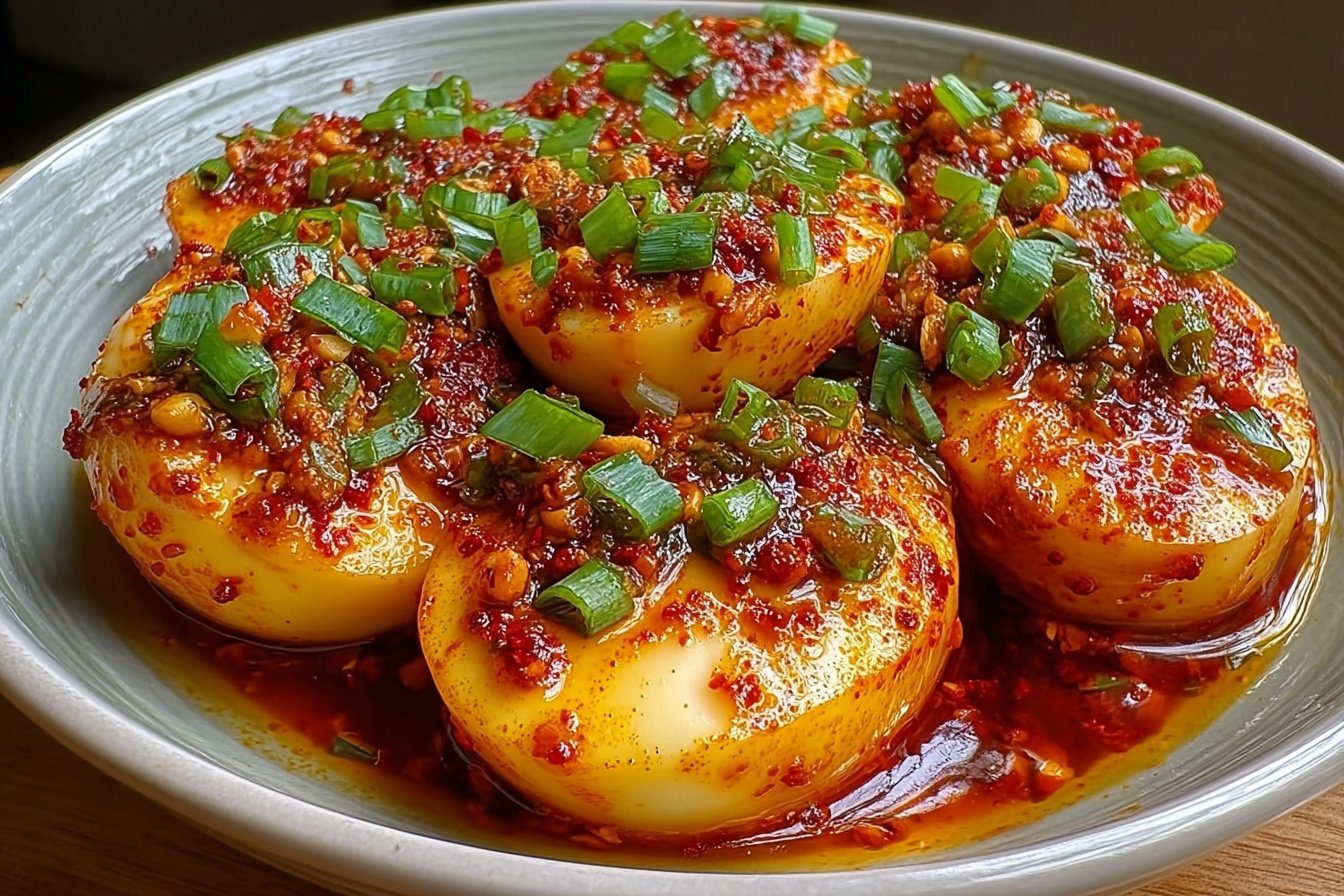
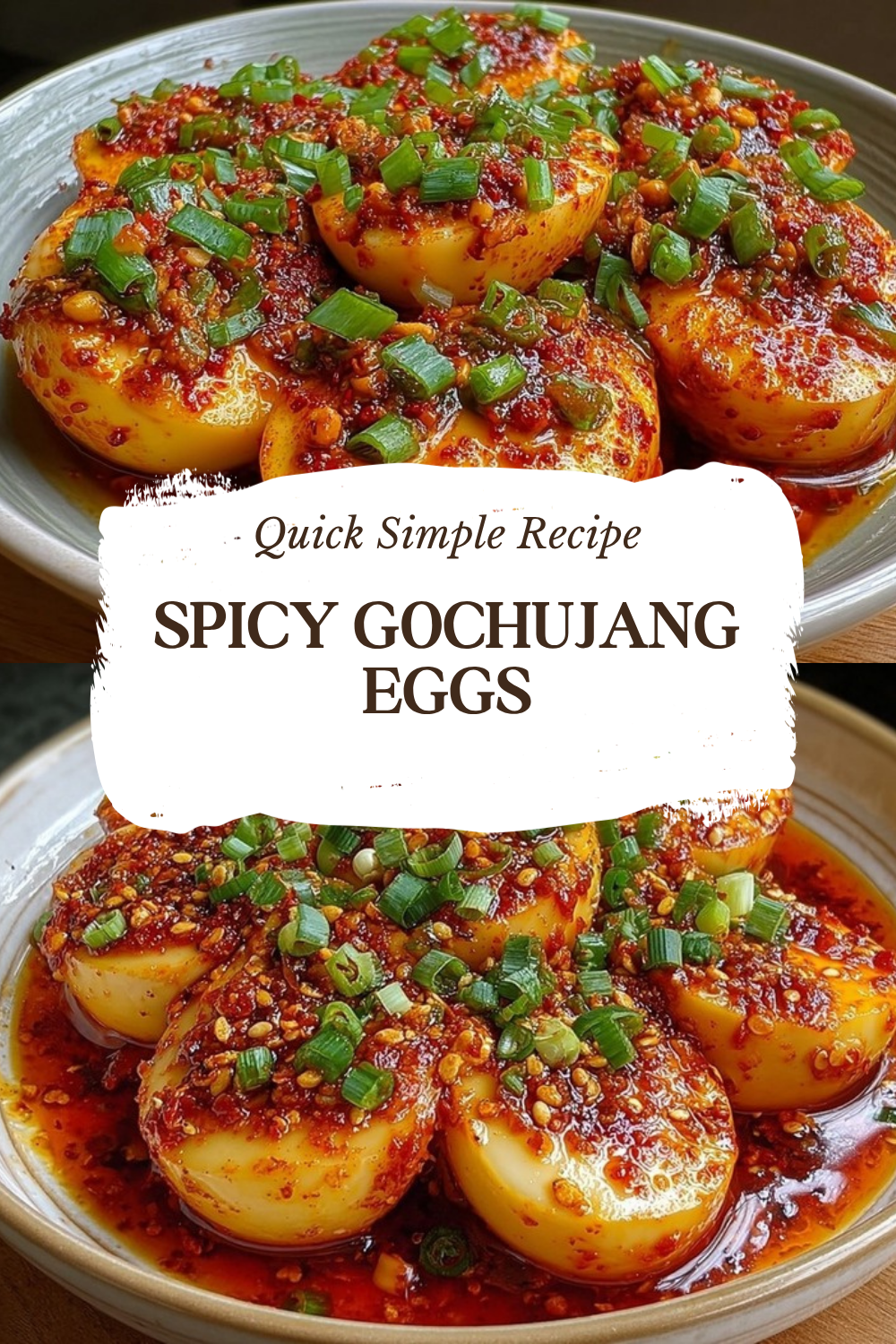
Why You’ll Love This Spicy Gochujang Eggs
- Ease of preparation: This Spicy Gochujang Eggs recipe is built for busy days. You boil the eggs for 7 minutes, then simmer them in a quick gochujang sauce while you set the table.
- Health benefits: Eggs provide filling protein, and gochujang is known for its fermented chili flavor that makes the dish satisfying without needing lots of extra sauces or seasonings. For a deeper look at gochujang benefits, see this WebMD guide to the health benefits of gochujang.
- Versatility: You can tweak heat and swap proteins easily, which makes these spicy gochujang eggs friendly for different tastes. Want a mild version? Skip the chili peppers and rely on the gochujang sweetness and savoriness.
- Distinctive flavor: The sauce mixes gochujang, soy sauce, rice vinegar, sesame oil, ginger, sugar, and honey for that signature balance of savory, tangy, and mildly sweet heat.
Tip for best results: boil eggs gently and stir carefully so the yolks center nicely, then spoon sauce over the eggs so every bite gets coated.
Jump To
- 1. Why You’ll Love This Spicy Gochujang Eggs
- 2. Essential Ingredients for Spicy Gochujang Eggs
- 3. How to Prepare the Perfect Spicy Gochujang Eggs: Step-by-Step Guide
- 4. Dietary Substitutions to Customize Your Spicy Gochujang Eggs
- 5. Mastering Spicy Gochujang Eggs: Advanced Tips and Variations
- 6. How to Store Spicy Gochujang Eggs: Best Practices
- 7. FAQs: Frequently Asked Questions About Spicy Gochujang Eggs
- 8. Spicy Gochujang Eggs
Essential Ingredients for Spicy Gochujang Eggs
This recipe is all about making bold, spicy gochujang eggs with a glossy sauce. Below are the exact ingredients and measurements you need for the eggs, the sauce, and serving. Use fresh green onions for the clean, peppery finish.
- 3 green onions (divided) – sliced into whites and greens for layering flavor
- 3 cloves garlic – finely chopped for savory aroma
- 1 green chili pepper (optional) – thinly sliced, for extra heat
- 1 mild red chili pepper (optional) or red bell pepper – for gentle sweetness and color
- 10 cups (2,400 ml) water (divided) – used for boiling eggs and building the simmering sauce
- 12 large eggs – the main protein for spicy gochujang eggs
- 1 tablespoon neutral-tasting oil – helps sear beef and sauté aromatics
- 1/2 pound (225 g) ground beef – adds savory depth and makes the dish hearty
- 1/2 tablespoon gochujang – included for the base flavor (used as part of the recipe build)
- generous pinch toasted sesame seeds – for nutty crunch on top
- hot steamed rice (about 1 cup or 210 g per serving) – for serving and soaking up the sauce
Seasoning Paste (the Spicy Gochujang Sauce)
Mix these together in a small container before cooking, so you can sauté and simmer quickly.
- 2 tablespoons gochujang – fermented chili paste for spicy, savory flavor
- 2 tablespoons soy sauce – deep umami and salt balance
- 1 tablespoon rice vinegar – tangy brightness
- 1 tablespoon sesame oil – warm sesame aroma
- 1/2 tablespoon grated ginger – zingy, fresh heat
- 1/2 tablespoon sugar – rounds out the spice
- 1 tablespoon honey – adds a soft, caramel sweetness
- black pepper to taste – adjusts seasoning to your preference
How to Prepare the Perfect Spicy Gochujang Eggs: Step-by-Step Guide
These spicy gochujang eggs come together in about 30 minutes total. The main timing points are the 7-minute gentle boil and the 7-minute simmer in sauce, so plan around those and you will be set.
First, set up your ingredients (mise en place)
Start by prepping for smooth cooking. Thinly slice the green onions and separate the white parts from the green parts. Finely chop the garlic, then thinly slice the green chili pepper (optional) and the mild red chili pepper or red bell pepper (optional).
Next, mix the seasoning paste ingredients in a small container until smooth. Having this ready makes it easier to sauté without burning.
Second, boil and peel the eggs
Bring 8 cups water to a boil. Carefully lower the cold eggs into the water, then stir gently so the yolks stay centered. Boil eggs gently for 7 minutes for that soft, spoonable texture that works great with sauce.
When the time is up, cool the eggs in ice water, then peel. If you want extra-careful peeling, let the eggs sit in the ice bath for a couple of minutes so they release more easily from the shell.
Third, sear the ground beef for savory depth
Heat 1 tablespoon neutral-tasting oil in a large pan over medium-high heat. Add the ground beef and sear for 1 minute. Flip and break up the beef, then cook for 1 to 2 minutes until it is no longer pink.
This step gives your spicy gochujang eggs a deeper, richer base so the sauce tastes more restaurant-style.
Fourth, sauté aromatics
Reduce heat to medium-low, then add the white parts of the green onions and the garlic. Stir-fry for 1 minute until fragrant. Keep an eye on the garlic so it stays golden, not browned.
Fifth, sauté the seasoning paste without burning
Reduce heat to low and add the seasoning paste. Sauté for 2 minutes without burning. If the pan looks too dry, use residual heat or splash a tiny bit of water to keep it from scorching.
Quick fix: if your paste starts to stick or smell too toasty, lower the heat and splash in a teaspoon or two of water right away.
Sixth, build the simmering sauce
Pour in 2 cups water and stir to combine. Bring to a boil, then reduce to medium-high heat. This helps the sauce loosen so eggs can simmer evenly.
Seventh, simmer eggs in gochujang sauce
Add the peeled eggs to the sauce and simmer for 7 minutes. The eggs should soak up spicy gochujang flavor while staying tender. Stir gently if needed so they get coated from all sides.
Final Step: finish, garnish, and serve
Turn off the heat. Add the remaining green onions, the chili peppers if you are using them, sesame oil, and sesame seeds; mix until glossy. Serve the eggs over hot steamed rice, and drizzle with extra sauce plus a little sesame oil if you like.
If you want a super quick meal rhythm, cook rice while the eggs boil and peel. Serve immediately so the sauce stays thick and clingy.
Dietary Substitutions to Customize Your Spicy Gochujang Eggs
Protein and Main Component Alternatives
If you do not want to use ground beef, you can swap the main savory component while keeping the spicy gochujang eggs spirit.
- Duck eggs: Use duck eggs for a richer yolk flavor and slightly creamier texture.
- Ground venison: Substitute ground venison for a leaner, gamey-savory twist.
You can also adjust heat and texture by changing how long you simmer. For a firmer egg, simmer a minute or two longer.
Vegetable, Sauce, and Seasoning Modifications
Make it your own with simple swaps that still taste like gochujang eggs.
- For mild heat: Use the mild red chili pepper or red bell pepper instead of hot chili peppers, and skip the green chili pepper (optional).
- For more spice: Keep the green chili pepper and red chili pepper, and consider adding extra gochujang during the simmer.
- Extra aromatics: If you love ginger, add a pinch more to the seasoning paste.
- Balance the sweetness: If your sauce tastes too sweet, reduce sugar slightly while keeping honey in place.
For readers who like breakfast bowls with strong flavor, you might also enjoy this egg and avocado breakfast sandwich as another easy egg-based option.
Mastering Spicy Gochujang Eggs: Advanced Tips and Variations
Once you nail the timing, you can level up your spicy gochujang eggs with small technique changes and fun variations.
Pro cooking techniques
- Center the yolks: Stir eggs gently while boiling to help yolks stay centered.
- Sauté carefully: When cooking the seasoning paste, keep heat low and use residual heat or a small water splash to prevent burning.
- Simmer for coating: The 7-minute simmer is key for eggs to absorb sauce, so avoid rushing it.
Flavor variations
- Spicier version: Include both chili peppers and add a bit more gochujang during simmer.
- Milder version: Omit chili peppers and rely on gochujang plus garlic for warmth.
- Sesame-forward: Add more toasted sesame seeds at the end for extra crunch.
Presentation tips
Serve spicy gochujang eggs in shallow bowls so the sauce collects around the rice. Finish with a generous pinch of sesame seeds and extra green onion greens for freshness.
Make-ahead options
You can prep components ahead to make weeknights easier. Store the seasoning paste in the fridge, then cook eggs fresh for best texture. If you are meal prepping, portion sauce separately so it re-heats smoothly without drying out.
How to Store Spicy Gochujang Eggs: Best Practices
These eggs hold up well for meal prep when you store them correctly. Since spicy gochujang eggs are sauce-coated, refrigeration helps the flavors stay strong.
Refrigeration
- Store leftovers in an airtight container in the fridge for up to 3 days.
- Keep the rice separate if possible, so it does not soak up too much sauce.
Freezing
- Freezing is not recommended. Yolks can become tougher and the sauce texture may change.
Reheating
- Reheat by boiling with water or reheating over hot rice until warmed through.
- For the sauciest results, warm gently so the coating stays glossy.
Meal prep considerations
If you are cooking for multiple days, portion sauce separately and cook eggs right before serving. That way, your spicy gochujang eggs stay tender and the sauce tastes freshly made.
If you are curious about egg nutrition, this Iowa Egg nutrition resource can be a helpful reference.
FAQs: Frequently Asked Questions About Spicy Gochujang Eggs
What are gochujang eggs?
Gochujang eggs are a quick Korean-inspired dish featuring soft or fried eggs coated in a savory, spicy sauce made from gochujang, a fermented red chili paste. The eggs absorb the bold umami flavors of gochujang mixed with butter, soy sauce, and sesame oil, creating a glossy, spicy topping perfect for breakfast or topping rice bowls. They’re popular for their simple 10-minute prep and customizable heat level. Start with sunny-side-up eggs for the best sauce adhesion, then spoon the reduced gochujang mixture over the yolks. This dish balances creamy egg texture with tangy, garlicky spice, making it a hit for gochujang fans. Pair with steamed rice or toast for a full meal. (92 words)
How do you make spicy gochujang eggs?
To make spicy gochujang eggs, heat 1 tbsp butter in a nonstick pan over medium. Crack in 2-4 eggs and fry sunny-side up for 2-3 minutes until whites set. In a small bowl, mix 2 tbsp gochujang, 1 tbsp soy sauce, 1 tsp sesame oil, 1 minced garlic clove, and 1 tsp honey. Push eggs aside, add sauce to pan, and simmer 1-2 minutes until thickened. Spoon over eggs, garnish with sesame seeds and green onions. Serves 2 in under 10 minutes. Adjust gochujang for spice—use mild versions for less heat. Great over rice or noodles. (98 words)
How spicy are gochujang eggs?
Gochujang eggs have medium spice from gochujang’s fermented chilies, rating 4-6/10 on the heat scale depending on the paste brand—milder like Bibigo is beginner-friendly, while traditional is hotter. The eggs’ richness tempers the burn, and honey or butter in the sauce adds sweetness. Test spice by tasting the paste first; dilute with more soy or mirin if needed. For extra kick, add gochugaru flakes. Most people find it pleasantly warming, not overwhelming, similar to sriracha scrambled eggs. Start with 1 tbsp gochujang per two eggs and build up. Hydrate with milk or yogurt if sensitive. (102 words)
What do you serve gochujang eggs with?
Gochujang eggs pair well with simple sides to balance their spice: steamed white rice or multigrain bowls soak up the sauce perfectly. Add kimchi for crunch and tang, or avocado toast for creaminess. For breakfast, top quinoa or soba noodles; for dinner, serve over bibimbap rice with veggies like spinach and carrots. Protein boosts include tofu or grilled chicken. A fried rice version mixes eggs directly in. Drink with iced green tea or yogurt to cool heat. This versatile dish fits brunch, lunch, or snacks—experiment with your staples for 300-calorie meals packed with flavor. (96 words)
Can you make gochujang eggs ahead or store leftovers?
Yes, prepare gochujang sauce ahead: mix ¼ cup gochujang, 2 tbsp soy sauce, 1 tbsp each sesame oil and honey, plus garlic—stores in fridge up to 2 weeks. Cook fresh eggs daily for best texture, but assembled eggs refrigerate well in an airtight container for 2 days. Reheat gently in microwave 20-30 seconds or pan with a splash of water to restore gloss. Avoid freezing as yolks toughen. For meal prep, portion sauce separately and fry eggs morning-of. Keeps nutrition intact—high in protein (15g per serving) and probiotics from gochujang. (94 words)
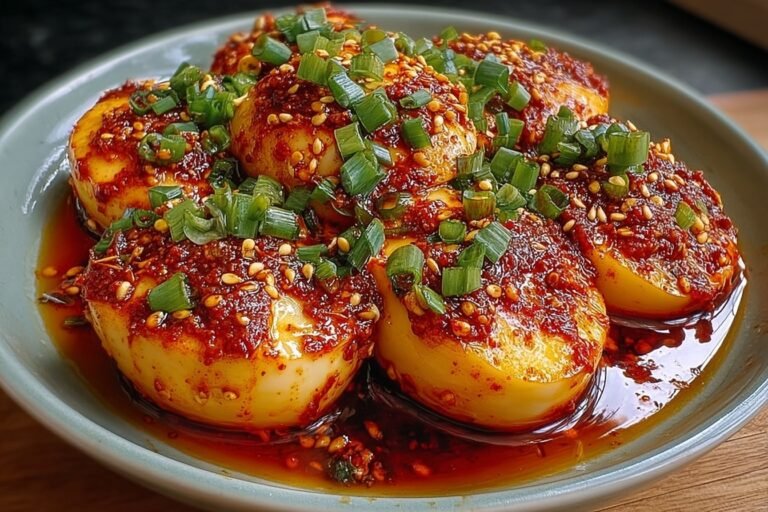
Spicy Gochujang Eggs
🌶️ Ignite your taste buds with these spicy gochujang eggs, delivering bold Korean flavors and tender texture in every bite!
🥚 High-protein, ready in just 30 minutes – perfect for a fiery breakfast, lunch, or dinner that packs a punch!
- Total Time: 30 minutes
- Yield: 4 servings
Ingredients
– 3 green onions (divided) for layering flavor
– 3 cloves garlic for savory aroma
– 1 green chili pepper (optional) for extra heat
– 1 mild red chili pepper (optional) or red bell pepper for gentle sweetness and color
– 10 cups (2,400 ml) water (divided) for boiling eggs and building the simmering sauce
– 12 large eggs for the main protein
– 1 tablespoon neutral-tasting oil for searing beef and sautéing aromatics
– 1/2 pound (225 g) ground beef for savory depth and heartiness
– 1/2 tablespoon gochujang for the base flavor
– generous pinch toasted sesame seeds for nutty crunch on top
– hot steamed rice (about 1 cup or 210 g per serving) for serving and soaking up the sauce
– 2 tablespoons gochujang for spicy, savory flavor
– 2 tablespoons soy sauce for deep umami and salt balance
– 1 tablespoon rice vinegar for tangy brightness
– 1 tablespoon sesame oil for warm sesame aroma
– 1/2 tablespoon grated ginger for zingy, fresh heat
– 1/2 tablespoon sugar for rounding out the spice
– 1 tablespoon honey for soft, caramel sweetness
– black pepper to taste for adjusting seasoning
Instructions
1-First, set up your ingredients (mise en place): Start by prepping for smooth cooking. Thinly slice the green onions and separate the white parts from the green parts. Finely chop the garlic, then thinly slice the green chili pepper (optional) and the mild red chili pepper or red bell pepper (optional). Next, mix the seasoning paste ingredients in a small container until smooth. Having this ready makes it easier to sauté without burning.
2-Second, boil and peel the eggs: Bring 8 cups water to a boil. Carefully lower the cold eggs into the water, then stir gently so the yolks stay centered. Boil eggs gently for 7 minutes for that soft, spoonable texture that works great with sauce. When the time is up, cool the eggs in ice water, then peel. If you want extra-careful peeling, let the eggs sit in the ice bath for a couple of minutes so they release more easily from the shell.
3-Third, sear the ground beef for savory depth: Heat 1 tablespoon neutral-tasting oil in a large pan over medium-high heat. Add the ground beef and sear for 1 minute. Flip and break up the beef, then cook for 1 to 2 minutes until it is no longer pink. This step gives your spicy gochujang eggs a deeper, richer base so the sauce tastes more restaurant-style.
4-Fourth, sauté aromatics: Reduce heat to medium-low, then add the white parts of the green onions and the garlic. Stir-fry for 1 minute until fragrant. Keep an eye on the garlic so it stays golden, not browned.
5-Fifth, sauté the seasoning paste without burning: Reduce heat to low and add the seasoning paste. Sauté for 2 minutes without burning. If the pan looks too dry, use residual heat or splash a tiny bit of water to keep it from scorching. Quick fix: if your paste starts to stick or smell too toasty, lower the heat and splash in a teaspoon or two of water right away.
6-Sixth, build the simmering sauce: Pour in 2 cups water and stir to combine. Bring to a boil, then reduce to medium-high heat. This helps the sauce loosen so eggs can simmer evenly.
7-Seventh, simmer eggs in gochujang sauce: Add the peeled eggs to the sauce and simmer for 7 minutes. The eggs should soak up spicy gochujang flavor while staying tender. Stir gently if needed so they get coated from all sides.
8-Final Step: finish, garnish, and serve: Turn off the heat. Add the remaining green onions, the chili peppers if you are using them, sesame oil, and sesame seeds; mix until glossy. Serve the eggs over hot steamed rice, and drizzle with extra sauce plus a little sesame oil if you like. If you want a super quick meal rhythm, cook rice while the eggs boil and peel. Serve immediately so the sauce stays thick and clingy.
Last Step:
Please leave a rating and comment letting us know how you liked this recipe! This helps our business to thrive and continue providing free, high-quality recipes for you.Notes
🥚 Stir the eggs gently while boiling to help center the yolks perfectly.
🔥 Sauté the seasoning paste on low heat or with a splash of water to prevent burning.
❄️ Store leftovers in an airtight container in the fridge for up to 3 days; reheat by simmering with a bit of water or over hot rice.
- Prep Time: 15 minutes
- Cook Time: 15 minutes
- Category: Breakfast
- Method: Stovetop
- Cuisine: Korean
Nutrition
- Serving Size: 3 eggs with rice
- Calories: 550
- Sugar: 6 grams
- Sodium: 850 mg
- Fat: 28 grams
- Saturated Fat: 8 grams
- Unsaturated Fat: 19.5 grams
- Trans Fat: 0.5 grams
- Carbohydrates: 35 grams
- Fiber: 2 grams
- Protein: 28 grams
- Cholesterol: 560 mg