

Why You’ll Love This Samosas
Samosas are a beloved snack that bring a burst of flavor to your table, making them perfect for quick meals or special gatherings. With this recipe, you’ll enjoy a crispy exterior and a flavorful potato filling that’s easy to prepare, even if you’re new to cooking. Let’s dive into what makes these samosas stand out for home cooks, busy parents, and food enthusiasts alike.
This samosas recipe is simple and quick, requiring minimal ingredients and straightforward steps, making it perfect for beginners and those seeking a fast snack. The quick cooking time ensures you can enjoy fresh, hot samosas without a long wait. Packed with nutritious ingredients, these samosas offer a balanced meal option with good fiber, vitamins, and moderate calories.
Using fresh vegetables and healthy spices supports wellness and adds antioxidant properties. The recipe is adaptable to various dietary needs including vegan, gluten-free, and low-calorie diets. You can easily substitute ingredients to cater to preferences without compromising taste or texture.
What truly sets these samosas apart is their unique blend of spices and perfectly crisp pastry, creating an irresistible, savory flavor profile that stands out from other snacks. For instance, if you’re looking for a refreshing side to go with your samosas, check out our cucumber pepper salad recipe for a cool contrast. This versatility means you can whip up samosas anytime, whether for a family dinner or a party appetizer.
Jump To
- 1. Why You’ll Love This Samosas
- 2. Essential Ingredients for Samosas
- 3. How to Prepare the Perfect Samosas: Step-by-Step Guide
- 4. Dietary Substitutions to Customize Your Samosas
- 5. Mastering Samosas: Advanced Tips and Variations
- 6. How to Store Samosas: Best Practices
- 7. FAQs: Frequently Asked Questions About Samosas
- 8. Samosas
Essential Ingredients for Samosas
Gathering the right ingredients is the first step to making delicious samosas that everyone will love. Below, you’ll find a detailed list of everything needed for the dough, filling, and spices. This ensures your samosas turn out crispy and full of flavor every time.
Ingredients for Samosa Dough
- 2 cups all-purpose flour (organic/unbleached)
- ¼ cup oil or melted ghee
- 6 tablespoons water
- ¾ teaspoon carom seeds (ajwain)
- ¾ teaspoon salt
Ingredients for Potato Filling
- 4 medium potatoes (about 500 grams)
- ½ cup green peas (boiled or frozen)
- 1 tablespoon oil or ghee
- 1 tablespoon minced ginger or ginger paste
- 1 to 2 green chilies, chopped (optional)
- Pinch of hing (asafoetida) (optional)
- 4 tablespoons finely chopped coriander leaves
- 1 teaspoon lemon juice or ½ teaspoon amchur or chaat masala
- ½ teaspoon salt (adjust to taste)
Spices
- ¾ teaspoon cumin seeds
- ¾ to 1 teaspoon garam masala
- ¾ teaspoon red chili powder (adjust to taste)
- ½ teaspoon cumin powder
- ½ teaspoon fennel powder (optional)
To Serve
- Mint chutney, sweet tamarind chutney, or tomato ketchup
Main ingredients like 2 cups all-purpose flour form the crispy outer shell. Other key items include 4 medium potatoes for a smooth filling base and spices such as ¾ teaspoon cumin seeds for depth. For special dietary options, choose plant-based oil for vegan versions or chickpea flour for gluten-free ones. If you want to pair samosas with a light salad, try our fresh cherry salad to add a sweet twist.
How to Prepare the Perfect Samosas: Step-by-Step Guide
Making samosas from scratch might seem tricky, but with these clear steps, you’ll create delicious results every time. Start by preparing the dough and filling, then move on to shaping and frying for that iconic crispy texture. This guide incorporates the exact directions to ensure your samosas turn out just right.
Step 1: Prepare the Potatoes and Dough
Peel, halve, and boil potatoes until fork tender but not mushy; crumble and set aside. Mix flour, carom seeds, salt, and oil or ghee by rubbing between palms until mixture resembles breadcrumbs. Gradually add water and knead into a firm, slightly stiff dough. Cover and rest for 25 to 30 minutes.
Step 2: Make the Filling
Heat oil or ghee in a pan, add cumin seeds and let them splutter. Add minced ginger, chopped green chilies, and hing, then sauté briefly. Add red chili powder, garam masala, cumin powder, chaat masala or amchur, and fennel powder; sauté for 30 seconds. Add green peas and sauté for 1 2 minutes, then mix in potatoes and salt. Cook for 2 3 minutes, stir in coriander leaves and lemon juice, and set aside to cool.
Step 3: Shape and Fry the Samosas
Knead rested dough again for 3 4 minutes. Divide into 5 equal portions and roll each into an oval about 8.5 by 6.5 inches. Cut each oval into two halves. Apply water on the straight edge, form a cone, seal edges well, fill with potato mixture, press gently, seal open edges with water, and shape by folding or pleating. Heat oil for deep frying to moderate heat, test with a small dough piece, and fry on low flame for 10 12 minutes until the crust firms up, then increase to medium heat until golden and crispy. Drain on a wire rack and serve hot with chutneys or ketchup.
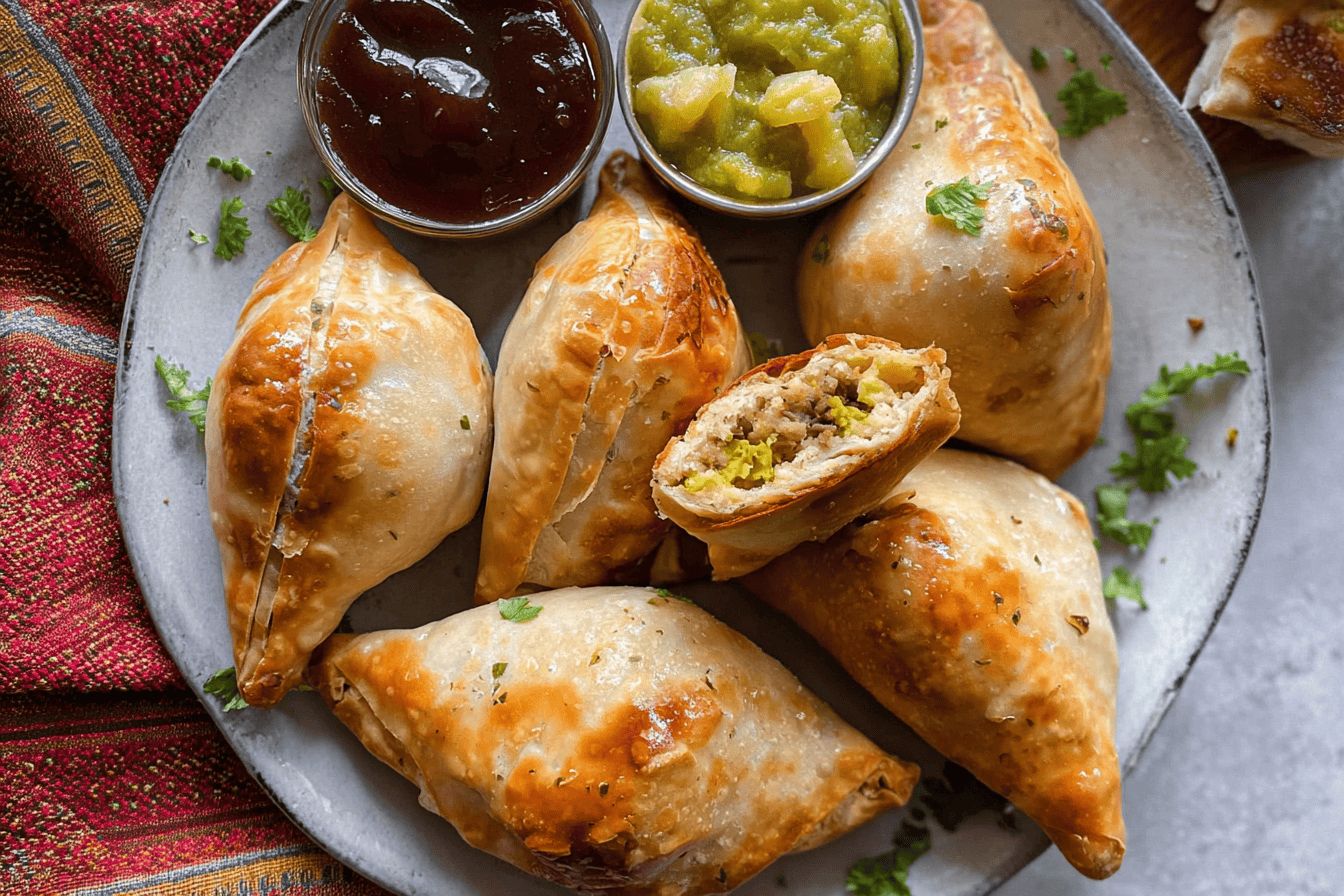
Preparation takes about 55 minutes total, with 30 minutes for prep and 25 for cooking, yielding around 10 large samosas. First, prepare the dough by mixing all-purpose flour, salt, and oil with water until smooth; rest for 30 minutes. Boil potatoes, mash them with peas, and mix with spices such as cumin seeds and garam masala. Divide the dough into equal balls, roll each into thin oval shapes, and cut in half. For more ideas on snacks, explore fresh apple salad as a healthy companion.
Dietary Substitutions to Customize Your Samosas
Whether you’re vegan, gluten-free, or simply watching calories, this samosas recipe adapts easily. Customizing helps everyone enjoy this tasty treat without skipping out. Let’s look at simple swaps for the filling and seasonings.
Protein and main component alternatives include replacing potatoes and peas with spiced lentils, chickpeas, or tofu for added protein. Use paneer or minced vegetables as alternative fillings for different textures. Vegetable, sauce, and seasoning modifications involve substituting green peas with corn or finely chopped carrots based on seasonal availability.
Adjust spice levels using mild or hot chili powders according to taste preferences. Incorporate coriander or mint chutneys for varied flavor profiles and freshness. These substitutions allow the recipe to accommodate vegans, gluten-free diets, and those seeking lower calorie or unique taste variations, like using chickpea flour instead of all-purpose flour for a gluten-free option.
Mastering Samosas: Advanced Tips and Variations
Once you’re comfortable with the basics, try these advanced techniques to elevate your samosas. From achieving the perfect crisp to experimenting with flavors, these tips will make your cooking even better. Remember the nutritional benefits, with each samosa offering about 222 calories, 8g fat, and 6g protein.
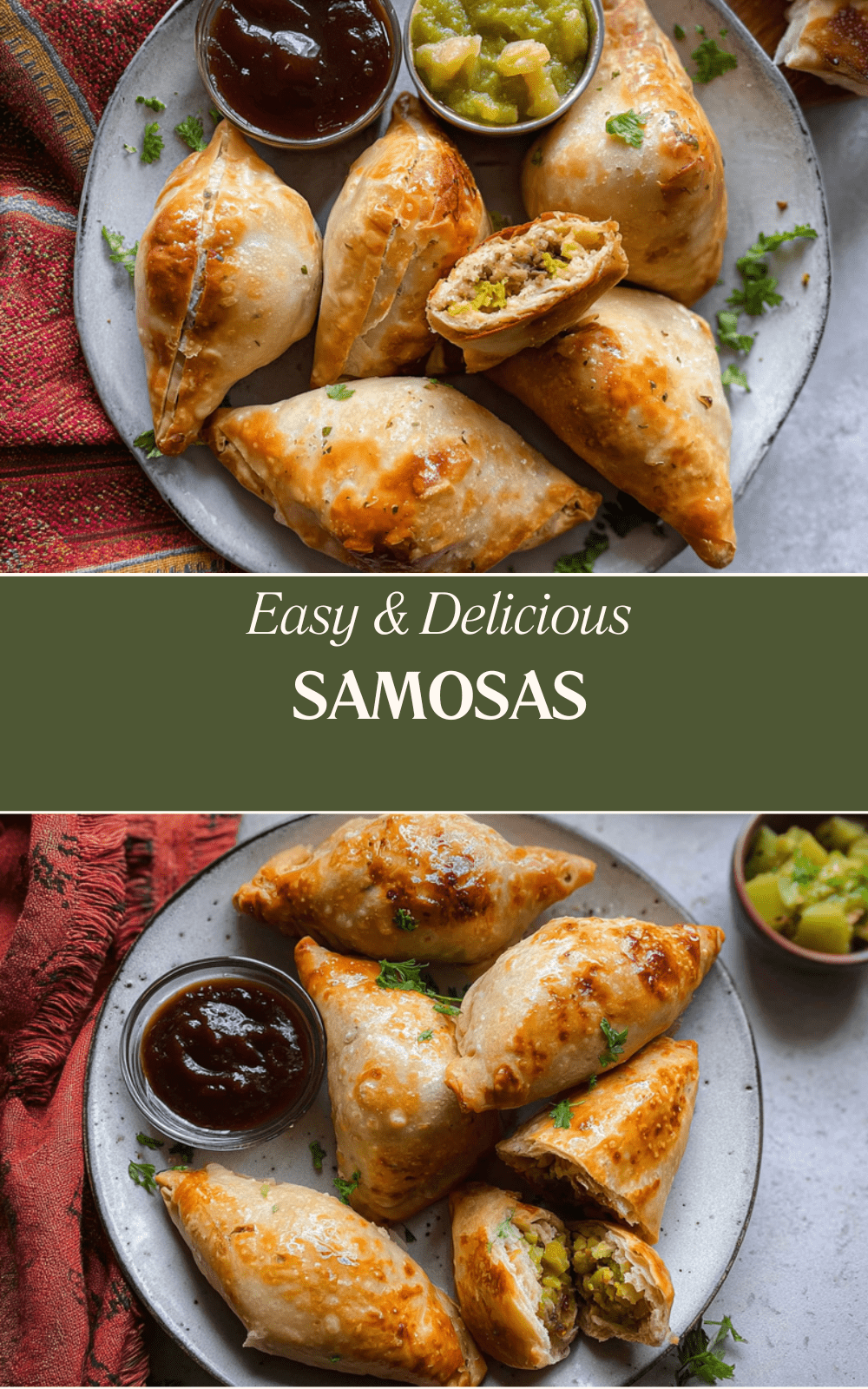
Pro cooking techniques include using chilled dough for easier handling and achieving extra crispiness by double frying at controlled temperatures. For flavor variations, experiment with fillings like curried chicken, sweet potato, or lentil-based mixtures to diversify taste. Presentation tips involve garnishing finished samosas with fresh herbs and serving with colorful dips for an appealing look.
Make-ahead options mean preparing filling and dough in advance; store separately in airtight containers and assemble just before cooking to save time. Here are some key tips in a table for quick reference:
| Tip Category | Advice |
|---|---|
| Dough Preparation | Use a flour-to-oil ratio that resembles breadcrumbs for a flaky crust |
| Frying Technique | Fry slowly on low heat to avoid excess oil absorption |
| Substitutions | Whole wheat flour can be substituted, but all-purpose is preferred |
Samosas can be baked or air-fried, but deep frying yields the best texture. For bulk preparation, pre-fry slightly, cool, store airtight, and re-fry before serving.
How to Store Samosas: Best Practices
Proper storage keeps your samosas fresh and tasty for later. Follow these steps to maintain that crunch without much effort. It’s all about planning ahead for busy days.
Refrigeration involves storing cooled samosas in an airtight container; consume within 2 days to maintain freshness. Freezing means placing uncooked samosas on a baking sheet to freeze individually; transfer to bags and store up to 1 month. Reheating requires a preheated oven at 375°F for 10-15 minutes to retain crispness; avoid microwaving as it makes them soggy.
Nutritional info per samosa includes 222 calories, 32g carbohydrates, and 4g fiber, making it a balanced choice. Meal prep considerations include assembling batches ahead, freezing, and frying or baking as needed to streamline meal planning and ensure quality. For more meal ideas, consider our peas biscuits recipe as a complementary side.
FAQs: Frequently Asked Questions About Samosas
Why do my samosas turn out hard and crunchy instead of flaky?
Samosas can become hard if the dough lacks enough oil or ghee during mixing. Fat coats the flour, preventing gluten formation, which keeps the crust tender and flaky. Use a balanced amount of oil or ghee—usually about 3 tablespoons per cup of flour—and avoid over-kneading the dough. Resting the dough for 20-30 minutes before shaping also helps create a softer texture.
What causes samosas to be greasy or oily after frying?
Excess oiliness in samosas is often due to soft dough from adding too much water or uneven sealing of the edges, allowing oil to seep inside. To prevent this, add water gradually when kneading to achieve firm, pliable dough. Also, ensure the samosa edges are tightly sealed using a flour-water paste or egg wash. Frying at medium heat (around 350°F/175°C) helps cook them evenly without absorbing excess oil.
Can I use alternative pastry sheets like spring roll or puff pastry sheets to make samosas?
Yes, spring roll sheets and puff pastry sheets can be used to make samosas. Spring roll sheets produce a crispier and thinner crust, while puff pastry yields a flakier and richer texture. Both are good shortcuts, but adjust filling quantity to avoid overstuffing. For baked samosas, puff pastry is especially recommended because it creates a golden, flaky crust without deep-frying.
How do I bake samosas instead of frying them, and will they taste different?
Baked samosas can be made by brushing the assembled samosas generously with oil and placing them on a baking tray in a preheated oven at 340-360°F (170-180°C) for 35-40 minutes, turning halfway through. Baking results in a less oily but slightly drier and less crispy texture than frying. Using store-bought puff pastry sheets can improve the baked samosa’s flakiness, making them a healthier alternative.
Is it better to use all-purpose flour or whole wheat flour for samosa dough?
All-purpose flour is preferred for samosas because it creates a lighter, crispier crust. Whole wheat flour can be used but produces a denser, nuttier crust that may not be as crisp. A good compromise is to mix 50% whole wheat flour with 50% all-purpose flour to gain some nutrition and flavor while maintaining a flaky texture. Adjust water slightly, since whole wheat flour absorbs more moisture.
Samosas
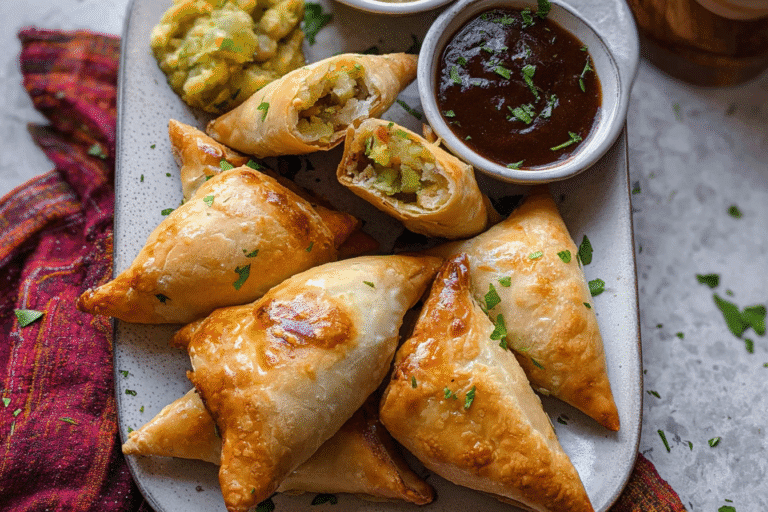
🥟 Samosa Recipe Potato Filling with Crispy Punjabi Style Dough offers a deliciously flaky and flavorful snack perfect for any occasion.
🥔 The combination of spiced potato filling with a crispy dough creates a satisfying blend of texture and taste that everyone will love.
- Total Time: 55 minutes
- Yield: 10 large samosas 1x
Ingredients
2 cups all-purpose flour
¼ cup oil or melted ghee
6 tablespoons water
¾ teaspoon carom seeds (ajwain)
¾ teaspoon salt
4 medium potatoes
½ cup green peas
1 tablespoon oil or ghee
1 tablespoon minced ginger or ginger paste
1 to 2 green chilies
Pinch of hing (asafoetida)
4 tablespoons finely chopped coriander leaves
1 teaspoon lemon juice or ½ teaspoon amchur or chaat masala
½ teaspoon salt
¾ teaspoon cumin seeds
¾ to 1 teaspoon garam masala
¾ teaspoon red chili powder
½ teaspoon cumin powder
½ teaspoon fennel powder
Mint chutney, sweet tamarind chutney, or tomato ketchup
Instructions
1-Step 1: Prepare the Potatoes and Dough Peel, halve, and boil potatoes until fork tender but not mushy; crumble and set aside. Mix flour, carom seeds, salt, and oil or ghee by rubbing between palms until mixture resembles breadcrumbs. Gradually add water and knead into a firm, slightly stiff dough. Cover and rest for 25 to 30 minutes.
2-Step 2: Make the Filling Heat oil or ghee in a pan, add cumin seeds and let them splutter. Add minced ginger, chopped green chilies, and hing, then sauté briefly. Add red chili powder, garam masala, cumin powder, chaat masala or amchur, and fennel powder; sauté for 30 seconds. Add green peas and sauté for 1 2 minutes, then mix in potatoes and salt. Cook for 2 3 minutes, stir in coriander leaves and lemon juice, and set aside to cool.
3-Step 3: Shape and Fry the Samosas Knead rested dough again for 3 4 minutes. Divide into 5 equal portions and roll each into an oval about 8.5 by 6.5 inches. Cut each oval into two halves. Apply water on the straight edge, form a cone, seal edges well, fill with potato mixture, press gently, seal open edges with water, and shape by folding or pleating. Heat oil for deep frying to moderate heat, test with a small dough piece, and fry on low flame for 10 12 minutes until the crust firms up, then increase to medium heat until golden and crispy. Drain on a wire rack and serve hot with chutneys or ketchup.
Last Step:
Please leave a rating and comment letting us know how you liked this recipe! This helps our business to thrive and continue providing free, high-quality recipes for you.Notes
🌾 Use the correct flour-to-oil ratio to get a flaky crust that resembles breadcrumbs.
💧 Keep the dough stiff yet pliable; avoid excess water to prevent oiliness and sogginess.
⏳ Rest the dough before final kneading and rolling to improve texture.
🍳 Fry slowly on low to moderate heat to ensure thorough cooking without absorbing excess oil.
- Prep Time: 30 minutes
- Cook Time: 25 minutes
- Category: Snack
- Method: Deep frying
- Cuisine: Indian
Nutrition
- Serving Size: 1 samosa
- Calories: 222
- Sugar: 1 g
- Sodium: 320 mg
- Fat: 8 g
- Saturated Fat: 1 g
- Carbohydrates: 32 g
- Fiber: 4 g
- Protein: 6 g


