Why You’ll Love This Rose Macarons
Imagine biting into a delicate treat that combines the elegance of rose flavors with a light, airy texture these rose macarons are just that special. This recipe is straightforward and quick, making it ideal for home bakers who want impressive results without spending all day in the kitchen. You’ll appreciate how it uses minimal ingredients and simple steps to create something truly delightful.
One of the best parts is the health angle, as these macarons feature natural rose elements that can be tweaked for wellness benefits. For instance, opting for low-sugar options helps diet-conscious folks enjoy a treat that supports their goals. Whether you’re a busy parent or a baking enthusiast, this recipe’s adaptability means it fits various occasions and preferences.
Plus, these macarons shine with their versatility, allowing easy tweaks for vegan, gluten-free, or low-calorie diets. The unique rose essence paired with a sweet almond base offers a taste that’s charming and memorable, setting it apart from everyday desserts. It’s perfect for sharing with family and friends, turning any gathering into a joyful moment.
Jump To
- 1. Why You’ll Love This Rose Macarons
- 2. Essential Ingredients for Rose Macarons
- 3. How to Prepare the Perfect Rose Macarons: Step-by-Step Guide
- 4. Dietary Substitutions to Customize Your Rose Macarons
- 5. Mastering Rose Macarons: Advanced Tips and Variations
- 6. How to Store Rose Macarons: Best Practices
- 7. FAQs: Frequently Asked Questions About Rose Macarons
- 8. Rose Macarons
Essential Ingredients for Rose Macarons
Gathering the right ingredients is key to making perfect rose macarons, and I’ve compiled a full list based on proven methods. This section covers everything you need, from the macaron shells to the filling and decorations. I’ll break it down clearly so you can follow along easily.
- Almond flour (120g) Provides the base texture and characteristic nutty flavor.
- Powdered sugar (200g) Adds sweetness and helps create a smooth shell.
- Egg whites (3 large) Used for meringue, providing structure and lightness.
- Granulated sugar (50g) Stabilizes the meringue and adds crunch.
- Rose water (2 tsp) Imparts the distinctive floral aroma and flavor.
- Pink food coloring (optional) Enhances the classic rose color visually.
- Swiss meringue macaron batter Forms the foundation of the shells for a reliable structure.
- 1/16 teaspoon rose powder food coloring Added to the batter for a subtle, natural tint.
- 1/2 cup heavy cream (120 ml) For the rose ganache, bringing creaminess to the filling.
- 5 grams invert sugar Helps stabilize the ganache, preventing it from separating.
- 255 grams white chocolate Melts into the ganache for a smooth, rich center.
- 1/2 teaspoon rose water or rose extract Infuses the ganache with a floral note.
- 1/4 cup white chocolate Used for drizzling during decoration.
- Dried edible rose petals For topping, adding a beautiful, edible garnish.
- Sprinkles Provides a fun, colorful finish to the macarons.
For special dietary needs, consider these options to make the recipe your own. Vegan versions can swap egg whites with aquafaba from chickpeas. If you’re aiming for gluten-free, stick with almond flour, but double-check that your powdered sugar is certified gluten-free. For a lower-calorie twist, try erythritol or stevia in place of powdered sugar to keep things light.
How to Prepare the Perfect Rose Macarons: Step-by-Step Guide
Creating rose macarons at home is easier than you might think, and I’ll walk you through each step to ensure success. Start by setting up your workspace, as a clean and organized area makes all the difference. This guide draws from time-tested methods, including preparing the shells with Swiss meringue for that signature texture.
Getting Started with the Basics
First, sift almond flour and powdered sugar together twice to get a fine, lump-free mixture that blends smoothly into the batter. This step helps avoid any gritty bits in your final treats. Once that’s done, whip the egg whites in a clean, dry bowl until soft peaks form, then gradually add granulated sugar to make a glossy, stiff meringue that holds its shape well.
Next, gently fold in the dry ingredients along with rose water and food coloring, being careful not to deflate the mixture. Prepare the macaron shells by following the Swiss meringue method, adding just 1/16 teaspoon of rose powder food coloring at the end of the whipping stage for that pretty hue. Transfer the batter to a piping bag and pipe small, even rounds onto a lined baking sheet.
Baking and Finishing Touches
Let the piped macarons rest at room temperature for 30-60 minutes until a skin forms, which is crucial for developing the classic foot. Bake them in a preheated oven at 150°C (300°F) for 15-18 minutes, keeping an eye on them to prevent overbaking. For the rose ganache, heat 1/2 cup heavy cream and 5 grams invert sugar in a saucepan until just below boiling, then pour over 255 grams white chocolate and 1/2 teaspoon rose water.
Use an immersion blender to mix until smooth, or whisk if you skip the invert sugar. Refrigerate the ganache for at least one hour to firm it up. Finally, pipe the ganache onto half the shells, sandwich with the others, and drizzle with melted white chocolate before adding dried rose petals and sprinkles. Let the macarons mature in the fridge overnight for the best flavor it’s worth the wait for that perfect balance.
Adapting for dietary preferences is simple; use aquafaba for vegan options and ensure all ingredients are gluten-free as needed. Remember, piping uniform rounds and allowing proper rest time helps achieve fresh cherry pie recipe like consistency in your baking adventures.
Dietary Substitutions to Customize Your Rose Macarons
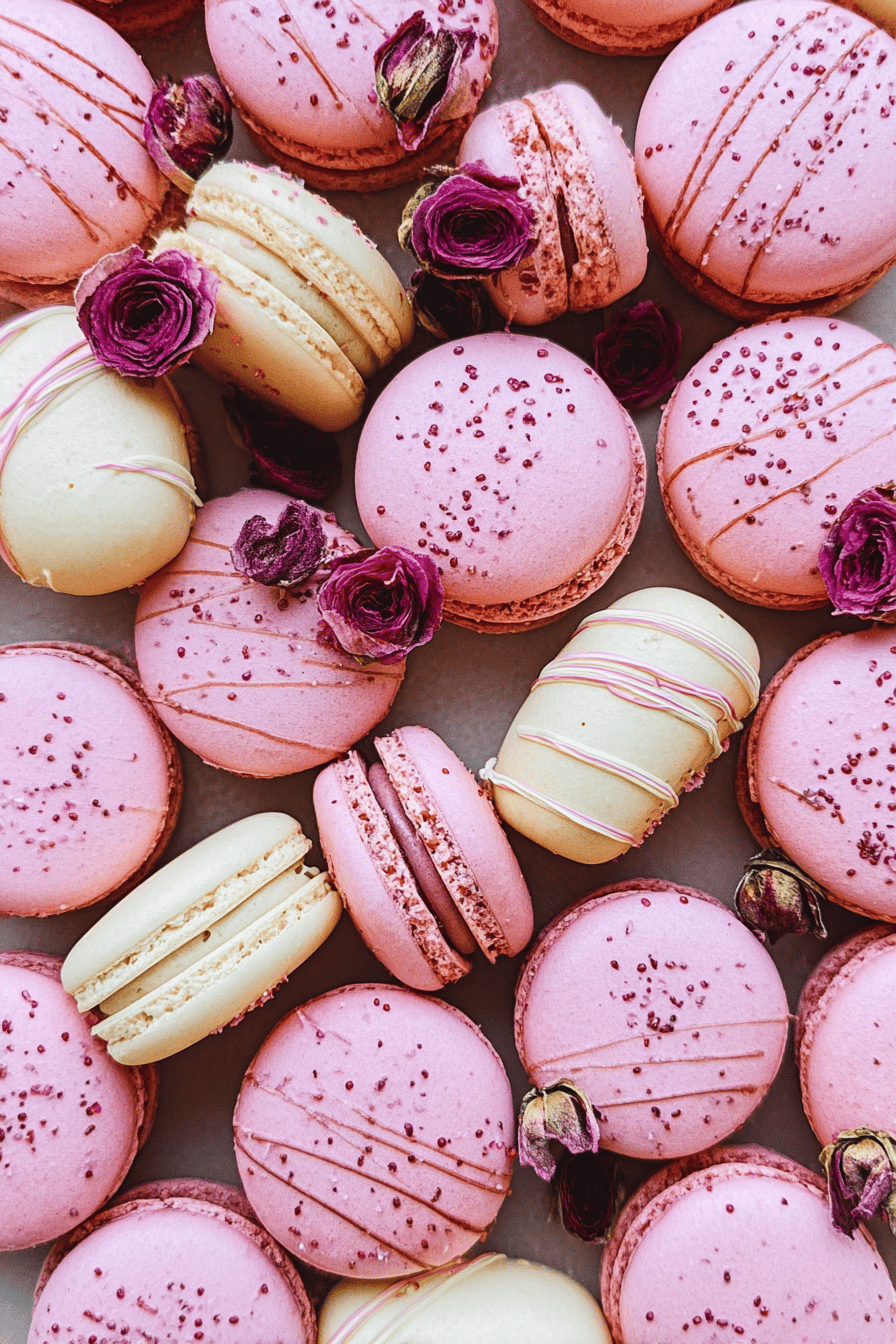
Tailoring rose macarons to your needs is fun and flexible, letting you adjust for allergies or preferences without losing that delicate charm. Start with simple swaps for the main components to keep the recipe accessible. For instance, replace egg whites with aquafaba for a vegan version that still whips up nicely.
- Use hazelnut or cashew flour instead of almond flour for a different nutty taste while maintaining the texture.
- Try natural fruit purees like raspberry to complement the rose flavor, adding a fruity twist.
- Switch granulated sugar with honey or agave for a natural sweetener that fits low-sugar diets.
These changes keep the macarons light and aromatic, making them suitable for everyone from students to seniors. If you’re exploring new flavors, consider pairing rose with elements from other recipes, like those in no-churn vanilla ice cream recipe for a creamy variation.
Mastering Rose Macarons: Advanced Tips and Variations
Once you’re comfortable with the basics, dive into advanced techniques to elevate your rose macarons even further. Aging egg whites for 24 hours beforehand can improve the meringue’s stability, leading to smoother shells. Use a food processor for blending dry ingredients to ensure a consistent batter that pipes perfectly.
Flavor and Presentation Ideas
Experiment with additions like lavender essence or lemon zest to create unique twists on the classic recipe. For decoration, pipe uniform shells and arrange them on pretty plates with edible rose petals for an elegant look. If you want to make mini macarons, use the same batter but bake for a shorter time at a lower temperature, rotating the tray if needed to prevent cracking.
| Tips for Success | Why It Helps |
|---|---|
| Use a small amount of rose flavoring | It prevents the taste from overwhelming the dessert |
| Opt for an immersion blender for ganache | It creates a smoother texture and avoids separation |
| Rest macarons overnight | Improves flavor and texture for the best results |
Invert sugar stabilizes the ganache, but you can swap it with glucose or corn syrup if needed. These macarons pair well with other desserts, offering a floral contrast to something like a fruit-based treat.
How to Store Rose Macarons: Best Practices
Proper storage keeps your rose macarons fresh and delicious, extending their enjoyment beyond baking day. Keep them in an airtight container in the fridge for up to 3 days to maintain that perfect texture. For longer storage, freeze them in a sealed bag for up to a month, thawing in the fridge when you’re ready.
- Avoid reheating, as it can make them lose their delicate crispness serve at room temperature instead.
- Prep shells ahead and assemble with filling just before eating to keep everything optimal.
- Consider meal prep by storing components separately for easy access.
This approach works well for busy professionals or families, ensuring you always have a treat on hand. With these steps, your macarons will stay as enjoyable as when they were first made.
FAQs: Frequently Asked Questions About Rose Macarons
What size are rose macaron shells typically, and are mini macarons available?
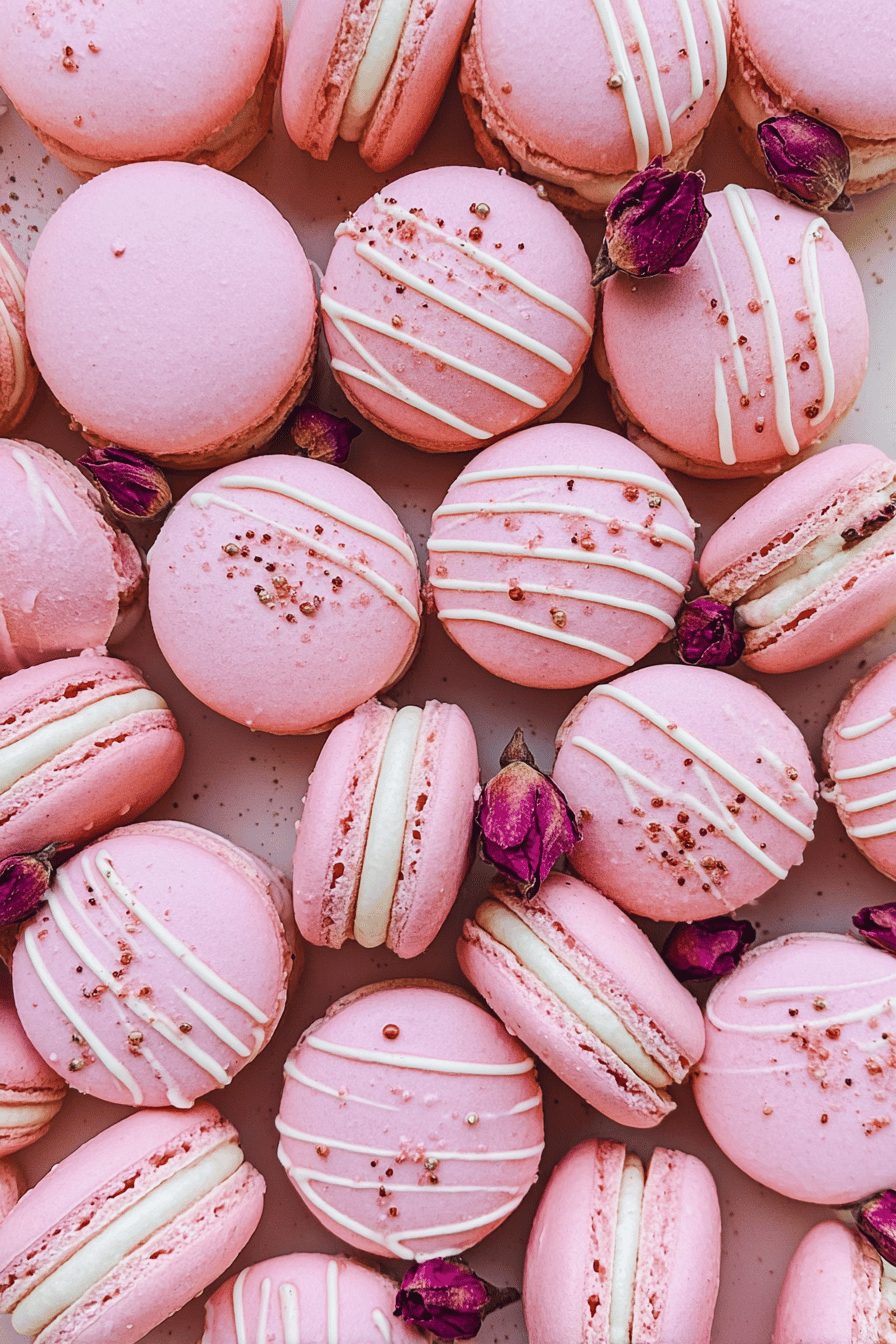
Rose macaron shells commonly measure about 3.5 to 4 centimeters (1.4 to 1.6 inches) in diameter, which is the standard size for most macarons. Mini macarons are smaller, usually around 2 to 2.5 centimeters (0.8 to 1 inch). These bite-sized versions are great for events or tasting assortments. When baking at home, aim for consistent piping circles within these size ranges for even baking.
Why does my rose ganache harden too much after refrigeration?
Ganache can firm up considerably in the fridge due to temperature and ingredients. If no invert sugar or stabilizers are used, the ganache tends to crystallize and become solid. To soften it before filling macarons, let it sit at room temperature for 15 to 30 minutes and gently stir. Including a small amount of invert sugar, glucose, or corn syrup in the ganache helps keep it smooth and pipeable after chilling.
Is invert sugar necessary for making rose-flavored ganache, or can I skip it?
Invert sugar is not absolutely required but improves the ganache’s texture by preventing crystallization and separation. Without it, ganache may harden or become grainy after refrigeration. If you prefer not to use invert sugar, adding corn syrup or glucose syrup works as a substitute and offers similar stabilizing benefits, keeping your rose ganache creamy and easy to work with.
What are good alternatives to rose water if I can’t find it for making rose macarons?
If rose water or rose extract is unavailable, you can use a high-quality rose syrup diluted with water or a few drops of natural rose essential oil designed for cooking. Some bakers also use a blend of hibiscus extract or a few drops of floral flavorings like orange blossom water, but these will change the final flavor profile slightly. Always add any alternative sparingly to avoid overpowering the macarons.
Do rose, lychee, and white chocolate flavors pair well in macarons?
Yes, rose, lychee, and white chocolate create a delicate and harmonious flavor combination. Rose offers a floral note, lychee adds a subtle fruity sweetness, and white chocolate brings creamy richness. This trio works well in macarons either as a ganache filling or layered flavors. For a variation, you can also include raspberry to add a slight tartness, balancing the sweetness.
Rose Macarons
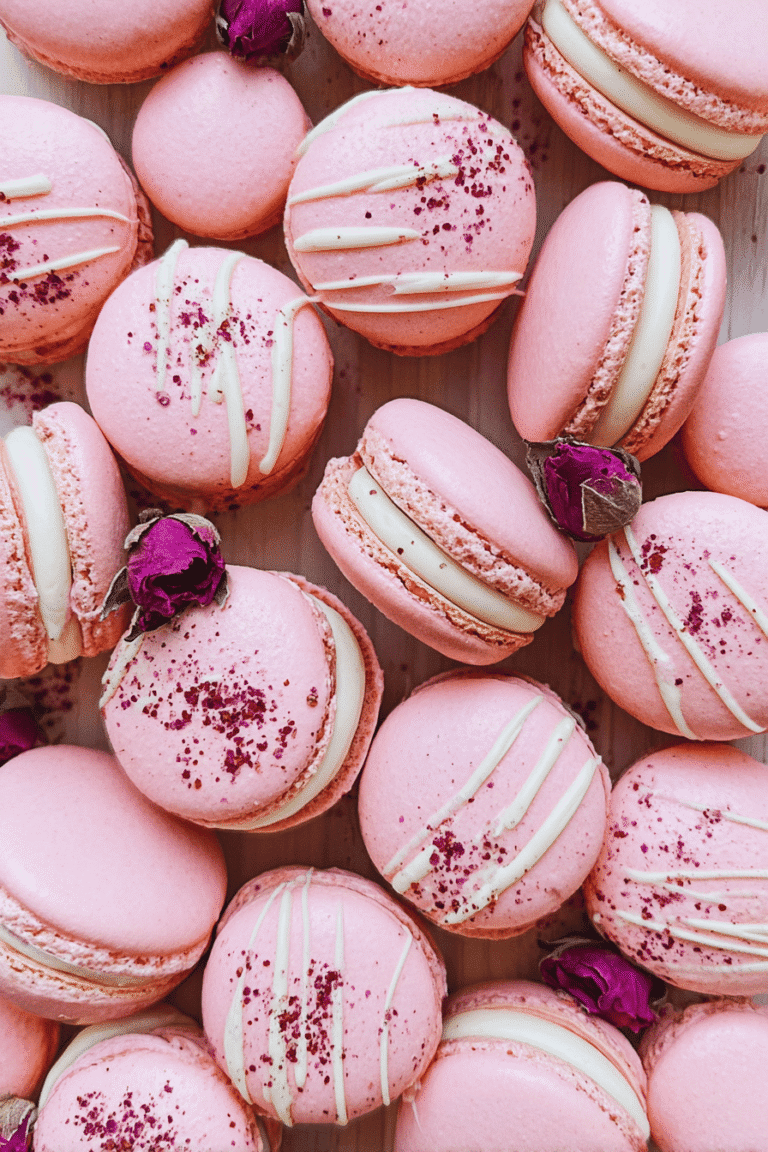
🌹 Experience the delicate floral essence and elegant texture of rose macarons, perfect for sophisticated celebrations.
🍬 Indulge in balanced sweetness paired with a luxurious rose ganache for a uniquely refreshing treat.
- Total Time: 2 hours 40 minutes
- Yield: Makes approximately 20-24 macarons
Ingredients
– 120g almond flour Provides the base texture and characteristic nutty flavor
– 200g powdered sugar Adds sweetness and helps create a smooth shell
– 3 large egg whites Used for meringue, providing structure and lightness
– 50g granulated sugar Stabilizes the meringue and adds crunch
– 2 tsp rose water Imparts the distinctive floral aroma and flavor
– pink food coloring (optional) Enhances the classic rose color visually
– Swiss meringue macaron batter Forms the foundation of the shells for a reliable structure
– 1/16 teaspoon rose powder food coloring Added to the batter for a subtle, natural tint
– 1/2 cup heavy cream (120 ml) For the rose ganache, bringing creaminess to the filling
– 5 grams invert sugar Helps stabilize the ganache, preventing it from separating
– 255 grams white chocolate Melts into the ganache for a smooth, rich center
– 1/2 teaspoon rose water or rose extract Infuses the ganache with a floral note
– 1/4 cup white chocolate Used for drizzling during decoration
– dried edible rose petals For topping, adding a beautiful, edible garnish
– sprinkles Provides a fun, colorful finish to the macarons
Instructions
1-Getting Started with the Basics: First, sift almond flour and powdered sugar together twice to get a fine, lump-free mixture that blends smoothly into the batter. This step helps avoid any gritty bits in your final treats. Once that’s done, whip the egg whites in a clean, dry bowl until soft peaks form, then gradually add granulated sugar to make a glossy, stiff meringue that holds its shape well.
2-Next: gently fold in the dry ingredients along with rose water and food coloring, being careful not to deflate the mixture. Prepare the macaron shells by following the Swiss meringue method, adding just 1/16 teaspoon of rose powder food coloring at the end of the whipping stage for that pretty hue. Transfer the batter to a piping bag and pipe small, even rounds onto a lined baking sheet.
3-Baking and Finishing Touches: Let the piped macarons rest at room temperature for 30-60 minutes until a skin forms, which is crucial for developing the classic foot. Bake them in a preheated oven at 150°C (300°F) for 15-18 minutes, keeping an eye on them to prevent overbaking. For the rose ganache, heat 1/2 cup heavy cream and 5 grams invert sugar in a saucepan until just below boiling, then pour over 255 grams white chocolate and 1/2 teaspoon rose water.
4-Use an immersion blender to mix until smooth, or whisk if you skip the invert sugar. Refrigerate the ganache for at least one hour to firm it up. Finally, pipe the ganache onto half the shells, sandwich with the others, and drizzle with melted white chocolate before adding dried rose petals and sprinkles. Let the macarons mature in the fridge overnight for the best flavor it’s worth the wait for that perfect balance.
Last Step:
Please leave a rating and comment letting us know how you liked this recipe! This helps our business to thrive and continue providing free, high-quality recipes for you.Notes
🌸 Use only a small amount of rose flavoring to avoid overpowering taste.
🧁 Mini macarons can be made with the same batter; reduce bake time and temperature, and rotate trays if cracks develop.
🍯 Invert sugar stabilizes ganache; can substitute with glucose or corn syrup.
- Prep Time: 2 hours
- Cook Time: 40 minutes
- Cook Time: 40 minutes
- Category: Dessert
- Method: Baking
- Cuisine: French
- Diet: Vegetarian
Nutrition
- Serving Size: 1 macaron
- Calories: 70
- Sugar: 8 grams
- Sodium: 5 milligrams
- Fat: 3 grams
- Saturated Fat: 2 grams
- Unsaturated Fat: 1 gram
- Trans Fat: 0 grams
- Carbohydrates: 9 grams
- Fiber: 0 grams
- Protein: 1 gram
- Cholesterol: 10 milligrams