Why You’ll Love This Pear Tart
If you’re looking for a simple yet impressive dessert, this pear tart is sure to become a favorite in your kitchen. It’s perfect for family gatherings or a quiet evening treat, offering a balance of ease and elegance that busy parents and baking enthusiasts appreciate. Not only does it showcase the natural sweetness of pears, but it also delivers a burst of flavor that makes it a standout choice.
For starters, the recipe is straightforward, making it ideal for home cooks who want to avoid complicated steps. You’ll enjoy how quickly everything comes together, allowing more time to share the experience with loved ones. Whether you’re a beginner or a seasoned baker, this pear tart brings joy to the process and results in a dessert that’s both delicious and rewarding.
Beyond its simplicity, the tart packs in health benefits from fresh pears, which are rich in fiber and vitamins. This means you can indulge without much guilt, appealing to diet-conscious individuals and those seeking wholesome options. Plus, its versatility lets you tweak ingredients to fit various preferences, making it a flexible recipe for everyone from students to seniors.
Ease of Preparation
This pear tart recipe is simple and quick to make, perfect for both beginners and experienced bakers. With straightforward steps and a short cooking time, you can enjoy a delicious homemade dessert without spending hours in the kitchen. It’s especially great for busy parents and working professionals who need something reliable yet tasty.
Health Benefits
Pears provide essential vitamins, fiber, and antioxidants, making this tart a nutritious choice. The recipe balances natural sweetness with wholesome ingredients, promoting wellness and a guilt-free indulgence for food enthusiasts and diet-conscious folks. Using seasonal fruits like pears adds to the appeal for travelers exploring new flavors.
Versatility and Flavor
This pear tart can be easily adapted for dietary needs, such as vegan or gluten-free options. Its flexible ingredients allow customization without losing that distinctive flavor from juicy pears and a buttery crust. The harmony of tastes creates a delightful experience that will impress your family and guests, especially newlyweds hosting their first dinner.
To learn more about similar fruit-based desserts, check out our cherry tart recipe for another easy option.
Jump To
- 1. Why You’ll Love This Pear Tart
- 2. Essential Ingredients for Pear Tart
- 3. How to Prepare the Perfect Pear Tart: Step-by-Step Guide
- 4. Dietary Substitutions to Customize Your Pear Tart
- 5. Mastering Pear Tart: Advanced Tips and Variations
- 6. How to Store Pear Tart: Best Practices
- 7. FAQs: Frequently Asked Questions About Pear Tart
- 8. Pear Tart
Essential Ingredients for Pear Tart
Gathering the right ingredients is the key to making a perfect pear tart, and this recipe keeps things simple with fresh, everyday items. Each component plays a role in creating a tender crust and flavorful filling that highlights the star of the show: ripe pears. Let’s break down what you’ll need to get started.
Before we dive in, remember that quality matters, so choose fresh pears and good butter for the best results. This tart not only tastes great but also lets you experiment with substitutions if needed. Below is a structured list of all the ingredients required, based on the recipe details.
Crust Ingredients
- 1 1/2 cups all-purpose flour
- 5 tablespoons sugar
- 1/2 teaspoon salt
- 12 tablespoons unsalted butter (melted)
Filling Ingredients
- 8 large pears (washed)
- 3 tablespoons unsalted butter
- 1 tablespoon water
- 3/4 cup fig preserves
- 1/4 teaspoon salt
This list ensures you have everything for a complete pear tart, making it easy to shop and prepare. For more ideas on fruit desserts, explore our sweet peach tart recipe, which offers similar techniques.
How to Prepare the Perfect Pear Tart: Step-by-Step Guide
Making a pear tart at home is a fun and rewarding process that anyone can master with a little guidance. Start by setting up your kitchen so everything flows smoothly from start to finish. This guide walks you through each step, ensuring your tart turns out beautifully every time.
First, preheat your oven to 350°F and position one rack in the middle and another on the top. This setup helps with even baking and a quick caramelizing finish. Gather all your ingredients to make the process feel like a breeze.
Next, mix 1 1/2 cups flour, 5 tablespoons sugar, and 1/2 teaspoon salt in a bowl, then add 12 tablespoons melted unsalted butter to form the dough. Press this dough into a 9-inch tart pan, covering the bottom and sides evenly for a sturdy base.
Baking the Crust
Bake the crust on the middle rack for 30 minutes until it’s golden brown, then let it cool completely. While it cools, prepare the filling by heating 3/4 cup fig preserves for 40 seconds and straining to separate the liquid and solids.
Preparing the Pears
Slice five pears into 1/2-inch pieces, discarding the cores, and cook them with 1 tablespoon butter and 1 tablespoon water in a covered skillet over medium heat for about 3 minutes until slightly tender. Cool these slices, then slice the remaining three pears the same way for the topping.
Melt 2 tablespoons butter in the skillet, add the cooked pear slices, fig preserve solids, and 1/4 teaspoon salt. Cover and cook on medium for 10 minutes, stirring occasionally, until very tender. Mash the mixture into a puree and cook for another 5 to 7 minutes until thickened.
Assembling and Finishing
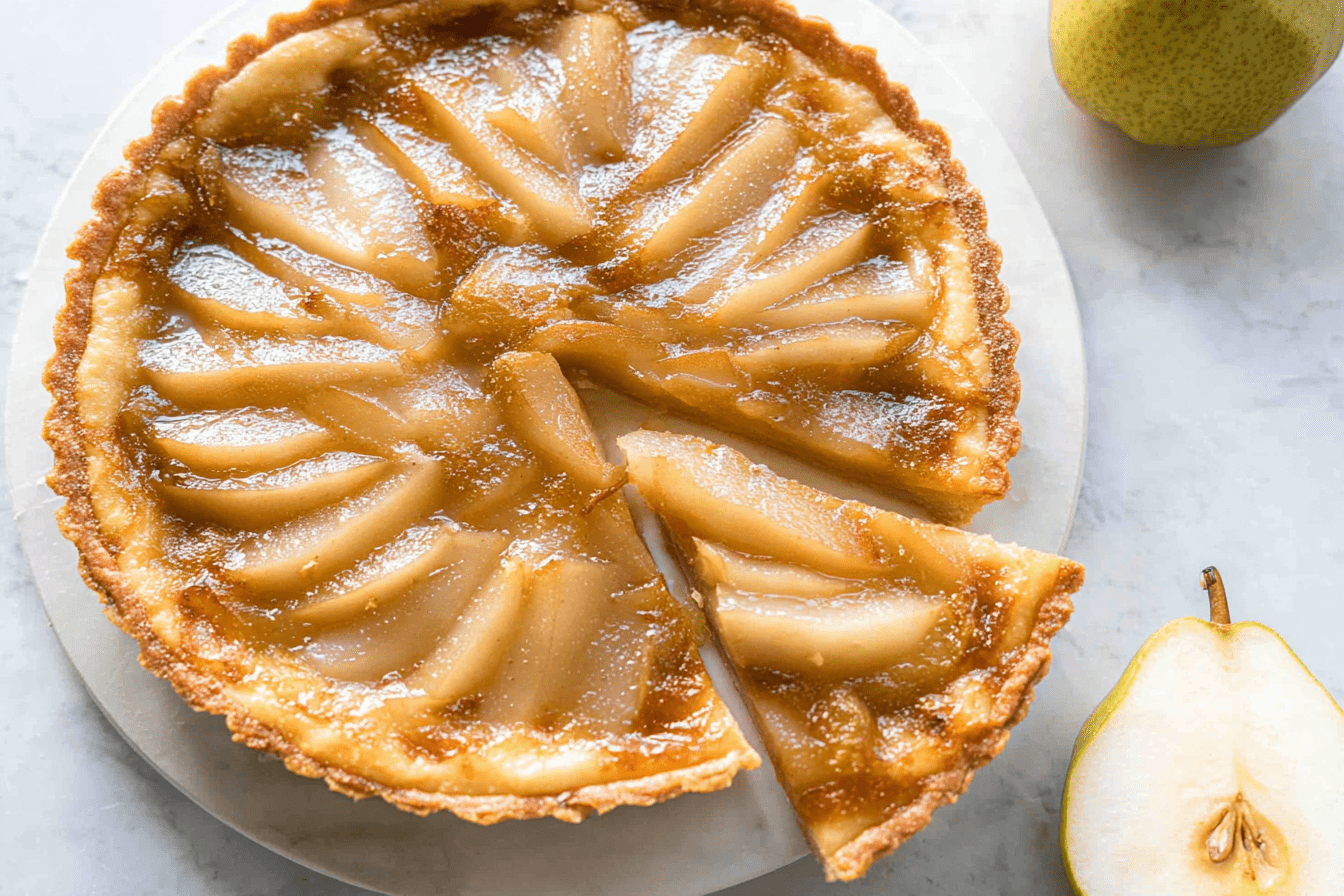
Spread the pear-fig puree evenly over the cooled crust and arrange the remaining pear slices in layered concentric circles. Bake the assembled tart on the middle rack at 350°F for 30 minutes. Warm the strained fig liquid for 20 seconds, brush it over the pears, and broil briefly on the top rack to caramelize, watching carefully to avoid burning.
Let the tart cool for at least 1.5 hours before removing from the pan by inverting over a wide can and sliding off the ring. Cut into eight slices for serving. The total preparation time is about 20 minutes, with 60 minutes of cooking, making it a 1 hour and 20 minutes project overall.
Tip: Always heat and strain fig preserves for a smooth filling and glaze, and cook pears in stages to get them just right.
Dietary Substitutions to Customize Your Pear Tart
One of the best parts of this pear tart is how easy it is to adapt for different dietary needs. Whether you’re vegan, gluten-free, or watching calories, small changes keep the tart delicious and inclusive. Let’s look at some smart swaps that maintain the tart’s charm.
For protein and main components, substitute eggs with flax eggs or chia seeds if needed, though this recipe doesn’t require them. Use nut-based crusts or gluten-free flour blends to accommodate those with gluten intolerance for a fresh take.
- Substitute eggs with flax eggs or chia seeds for a vegan-friendly tart.
- Use nut-based crusts or gluten-free flour blends for gluten intolerance.
When it comes to vegetables, sauces, and seasonings, try incorporating spices like nutmeg or cardamom. You can also use fruit purees or natural syrups as sweeteners, and adjust seasoning based on your tastes. These substitutions help tailor the pear tart while keeping its deliciousness intact.
Mastering Pear Tart: Advanced Tips and Variations
Once you’re comfortable with the basics, take your pear tart to the next level with some expert advice and creative twists. Chilling the dough before rolling helps achieve a flakier crust, and blind baking prevents sogginess for a professional finish. These techniques make the process even more enjoyable for baking enthusiasts.
Experiment with flavors by adding almond extract or ginger to the filling for a unique spin. For presentation, garnish with toasted nuts or a dusting of powdered sugar to make it look as good as it tastes. If you’re planning ahead, prepare the crust and filling in advance and store the assembled tart in the fridge for up to 24 hours.
| Technique | Benefit |
|---|---|
| Chill dough | Achieves flakier crust |
| Blind bake | Prevents sogginess |
| Add ginger | Enhances flavor |
For an alternate crust, try using cold butter cut into flour for a flakier texture, and substitute fig preserves if desired, cooking them down fresh with pears and using tapioca flour as a thickener. These tips keep the recipe adaptable for all skill levels.
How to Store Pear Tart: Best Practices
Proper storage keeps your pear tart fresh and tasty, so let’s cover the essentials to preserve its quality. Whether you’re saving leftovers or prepping in advance, these methods help maintain the tart’s texture and flavor. It’s all about making your baking last longer without losing that homemade appeal.
- Store the tart covered in the refrigerator for up to 3 days to keep it fresh.
- Wrap it tightly in plastic wrap and aluminum foil to freeze for up to 2 months.
- Thaw overnight in the fridge before reheating in a low oven at 300°F for 10-15 minutes.
- Bake multiple tarts and freeze portions for easy meal prep during busy times.
Following these guidelines ensures your pear tart stays delicious and safe. For more storage tips on fruit desserts, visit this beautiful pear tart recipe for additional ideas.
FAQs: Frequently Asked Questions About Pear Tart
Can I use a store-bought pie crust to make a pear tart?
Yes, using a store-bought pie crust is a convenient option for making a pear tart. While a homemade crust may offer a flakier texture and a richer flavor, a good-quality store-bought crust will still produce a delicious tart. Just be sure to follow the baking instructions carefully, and if the crust is frozen, allow it to thaw before assembling your tart to prevent uneven baking.
What types of pears are best for baking a pear tart?
Firm, slightly tart pears such as Bosc, Anjou, or Bartlett work best for baking because they hold their shape during cooking and provide a nice balance of sweetness. Avoid overripe pears, which can become mushy when baked. When selecting pears, look for ones that are ripe but still firm to the touch.
How do I prevent the pear tart crust from becoming soggy?
To prevent sogginess, you can blind bake the crust before adding the pear filling. This involves baking the crust partially with pie weights or dried beans for 10-15 minutes, which helps set the crust and reduce moisture absorption. Additionally, brushing the crust with a thin layer of beaten egg or melted chocolate before adding the pears creates a moisture barrier that keeps the crust crisp.
Can I substitute other fruit preserves if I don’t have fig preserves for the pear tart glaze?
Yes, fruit preserves like apricot, peach, or apple can be suitable substitutes for fig preserves when glazing a pear tart. Apricot preserves are especially popular because they provide a mild sweetness and give the tart a shiny finish. Warm the preserves slightly and brush them over the tart right after baking for a beautiful glaze.
How long should a pear tart be baked, and at what temperature?
A typical pear tart bakes at 375°F (190°C) for about 35 to 45 minutes. The crust should be golden brown, and the pears soft but still holding their shape. Keep an eye on the tart during baking to prevent overcooking, and if the crust edges brown too quickly, cover them with foil to avoid burning while the tart finishes baking.
Pear Tart
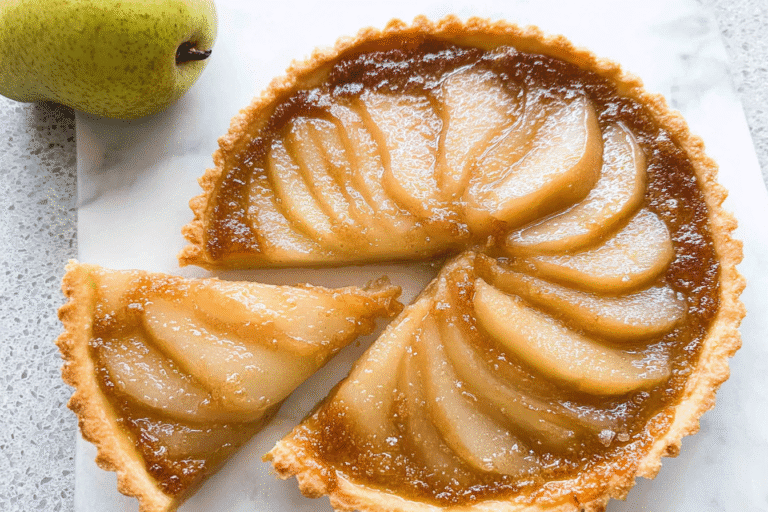
🍐 French Pear Tart Recipe offers a delightful combination of flaky pastry and sweet spiced pears for a perfect dessert.
🍰 This classic tart is elegant, easy to make, and a wonderful way to enjoy seasonal fruit with rich flavors.
- Total Time: 1 hour 20 minutes
- Yield: 8 servings
Ingredients
– 1 1/2 cups all-purpose flour
– 5 tablespoons sugar
– 1/2 teaspoon salt
– 12 tablespoons unsalted butter (melted)
– 8 large pears (washed)
– 3 tablespoons unsalted butter
– 1 tablespoon water
– 3/4 cup fig preserves
– 1/4 teaspoon salt
Instructions
1-First, preheat your oven to 350°F and position one rack in the middle and another on the top. This setup helps with even baking and a quick caramelizing finish. Gather all your ingredients to make the process feel like a breeze.
2-Next, mix 1 1/2 cups flour, 5 tablespoons sugar, and 1/2 teaspoon salt in a bowl, then add 12 tablespoons melted unsalted butter to form the dough. Press this dough into a 9-inch tart pan, covering the bottom and sides evenly for a sturdy base.
3-Bake the crust on the middle rack for 30 minutes until it’s golden brown, then let it cool completely. While it cools, prepare the filling by heating 3/4 cup fig preserves for 40 seconds and straining to separate the liquid and solids.
4-Slice five pears into 1/2-inch pieces, discarding the cores, and cook them with 1 tablespoon butter and 1 tablespoon water in a covered skillet over medium heat for about 3 minutes until slightly tender. Cool these slices, then slice the remaining three pears the same way for the topping.
5-Melt 2 tablespoons butter in the skillet, add the cooked pear slices, fig preserve solids, and 1/4 teaspoon salt. Cover and cook on medium for 10 minutes, stirring occasionally, until very tender. Mash the mixture into a puree and cook for another 5 to 7 minutes until thickened.
6-Spread the pear-fig puree evenly over the cooled crust and arrange the remaining pear slices in layered concentric circles. Bake the assembled tart on the middle rack at 350°F for 30 minutes. Warm the strained fig liquid for 20 seconds, brush it over the pears, and broil briefly on the top rack to caramelize, watching carefully to avoid burning.
7-Let the tart cool for at least 1.5 hours before removing from the pan by inverting over a wide can and sliding off the ring. Cut into eight slices for serving.
Last Step:
Please leave a rating and comment letting us know how you liked this recipe! This helps our business to thrive and continue providing free, high-quality recipes for you.Notes
🍎 Heating and straining fig preserves creates a smooth filling and glaze.
🍐 Cooking pears in stages ensures they soften perfectly.
⏲️ Allow full cooling before removing tart from pan to maintain shape.
- Prep Time: 20 minutes
- Cooking time: 60 minutes
- Cook Time: 60 minutes
- Category: Dessert
- Method: Baking
- Cuisine: French
Nutrition
- Serving Size: 1 slice