

Why You’ll Love This Molasses Cookies Recipe
There’s something special about homemade molasses cookies that brings comfort and warmth to any kitchen. These Seriously Soft Molasses Cookies will quickly become a favorite in your baking rotation. Here’s why you’ll love making them:- Ease of preparation: Despite their impressive taste, these molasses cookies are surprisingly simple to make. With just 15 minutes of active prep time plus chilling, you can have bakery-quality cookies at home without any fancy techniques or hard-to-find ingredients.
- Distinctive flavor: The combination of warm spices like ginger, cinnamon, cloves, and nutmeg creates a complex, rich flavor profile that’s perfect for holidays, rainy days, or whenever you need a little comfort. The deep, earthy molasses taste is balanced perfectly with sweetness.
- Health benefits: Molasses contains essential minerals like iron, calcium, magnesium, and potassium. While cookies should be enjoyed in moderation, these offer a bit more nutritional value than standard sugar cookies. Ginger also provides digestive benefits and anti-inflammatory properties.
- Versatility: This recipe serves as an excellent base that you can customize to your liking. Add candied ginger for extra zing, roll in coarse sugar for sparkle, or adjust the spices to suit your taste preferences. They work beautifully as lunchbox treats, holiday gifts, or alongside a cup of tea on a cozy afternoon.
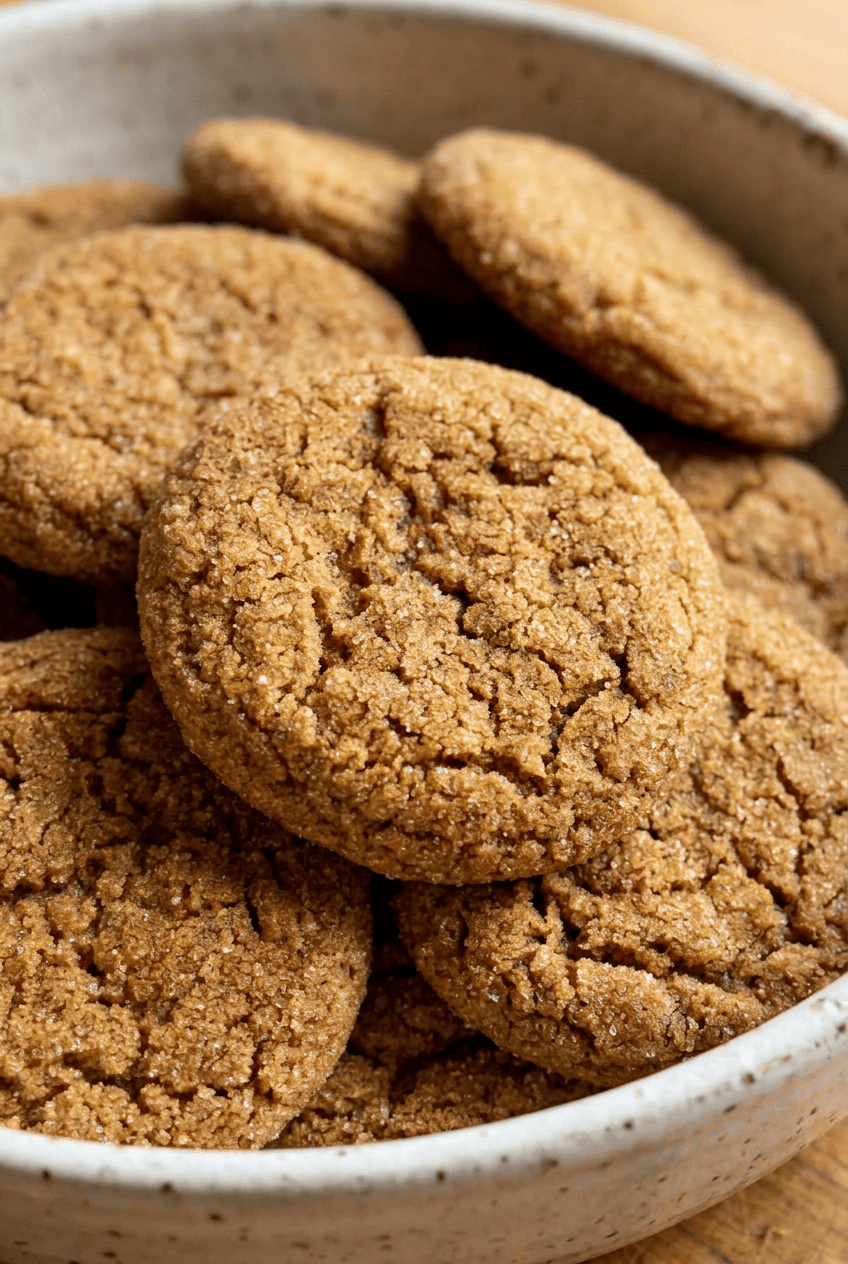
The secret to achieving that perfect crackly top is a combination of the right amount of baking soda and a simple technique of gently tapping the baking sheet on the counter halfway through baking. This small step makes a huge difference in both appearance and texture!
Jump To
- 1. Why You’ll Love This Molasses Cookies Recipe
- 2. Essential Ingredients for Molasses Cookies
- 3. How to Prepare the Perfect Molasses Cookies: Step-by-Step Guide
- 4. Dietary Substitutions to Customize Your Molasses Cookies
- 5. Mastering Molasses Cookies: Advanced Tips and Variations
- 6. How to Store Molasses Cookies: Best Practices
- 7. FAQs: Frequently Asked Questions About Molasses Cookies
- 8. Molasses Cookies
Essential Ingredients for Molasses Cookies
Every ingredient in this recipe serves a specific purpose to create the softest, most flavorful molasses cookies possible. Here’s what you’ll need:Main Ingredients:
- 2 and 1/4 cups (281g) all-purpose flour – Provides structure and body to the cookies
- 1 and 1/2 teaspoons baking soda – Creates lift and helps develop those signature cracks on top
- 2 teaspoons ground ginger – Adds warm, spicy notes characteristic of molasses cookies
- 1 and 1/2 teaspoons ground cinnamon – Provides comforting depth and warmth
- 1/4 teaspoon ground cloves – Contributes intense, earthy flavor that pairs perfectly with molasses
- 1/4 teaspoon nutmeg – Adds subtle nutty notes that complement the other spices
- 1/4 teaspoon salt – Balances sweetness and enhances all other flavors
- 3/4 cup (12 tablespoons; 170g) unsalted butter, softened – Creates rich flavor and tender texture
- 1/2 cup (100g) packed light or dark brown sugar – Adds moisture and contributes to chewiness
- 1/4 cup (50g) granulated sugar – Creates slight crisp edges and balances the brown sugar
- 1/3 cup (80ml) unsulphured or dark molasses (avoid blackstrap) – Provides the signature deep flavor and dark color
- 1 large egg, at room temperature – Binds ingredients together and adds structure
- 2 teaspoons pure vanilla extract – Enhances overall flavor complexity
- 1/3 cup (67g) granular or coarse sugar for rolling – Creates the crackly, sugary exterior
Special Dietary Options:
Vegan: Substitute the butter with vegan butter sticks or coconut oil, use a flax egg (1 tablespoon ground flaxseed + 3 tablespoons water), and ensure your sugar is vegan-friendly.
Gluten-free: Use a high-quality 1-to-1 gluten-free flour blend that contains xanthan gum for best results. The texture may vary slightly but will still be delicious.
Low-calorie: You can reduce the sugar by up to 25% and use a sugar substitute that measures 1:1 with sugar. Keep in mind that texture and browning may be affected.
How to Prepare the Perfect Molasses Cookies: Step-by-Step Guide
These soft molasses cookies come together with a simple process that yields impressive results. Follow these steps for cookie perfection:
First Step: Prepare Your Ingredients and Workspace
Start by gathering all your ingredients. For the best results, make sure your butter and egg are at room temperature before you begin. This temperature difference helps the ingredients incorporate properly, leading to better texture. Line your baking sheets with parchment paper or silicone mats in advance, so you’re ready to go when it’s time to bake.
Second Step: Mix the Dry Ingredients
In a medium bowl, whisk together the flour, baking soda, ginger, cinnamon, cloves, nutmeg, and salt until well combined. This step ensures that the leavening agent and spices are evenly distributed throughout the flour, which helps the cookies bake uniformly. Set this mixture aside while you prepare the wet ingredients.
Third Step: Cream the Butter and Sugars
In a large bowl, beat the softened butter, brown sugar, and granulated sugar on high speed until creamy and well combined. This process usually takes about 2 minutes. The mixture should look lighter in color and have a fluffy texture. Creaming incorporates air into the dough, which helps create a pleasant texture in the final cookie. Don’t skip this step or rush through it, as it makes a noticeable difference in the quality of your cookies.
Fourth Step: Add Molasses, Egg, and Vanilla
Add the molasses to the butter mixture and beat until combined. The mixture might look a bit curdled at this stage, which is completely normal. Next, add the egg and vanilla extract, beating for about 1 minute until fully incorporated. Remember to scrape down the sides of the bowl as needed to ensure everything is well mixed. The dough will become smooth and glossy.
Fifth Step: Combine Wet and Dry Ingredients
With the mixer on low speed, gradually add the dry ingredients to the wet mixture. Mix only until just combined; the dough will be slightly sticky. Overmixing can lead to tough cookies, so stop as soon as you no longer see streaks of flour. Cover the dough tightly with plastic wrap and refrigerate for at least 1 hour. You can chill the dough for up to 2-3 days, which actually intensifies the flavors and makes for even better cookies.
Sixth Step: Preheat and Prepare for Baking
When you’re ready to bake, preheat your oven to 350°F (177°C). If your dough has been chilling for longer than 2 hours, let it sit at room temperature for about 30 minutes to soften slightly. This makes it easier to scoop and shape. Place your granulated or coarse sugar in a small bowl for rolling.
Seventh Step: Shape and Roll the Cookies
Roll the dough into 1 tablespoon-sized balls. For consistently sized cookies, you can use a cookie scoop. Roll each ball generously in the granulated sugar until completely coated. This sugar coating creates that signature crackly top and adds a delightful crunch to the exterior. Place the dough balls about 3 inches apart on your prepared baking sheets to allow room for spreading.
Eighth Step: Bake to Perfection
Bake the cookies for 11-12 minutes until the edges look set but the centers still appear slightly soft. If the cookies don’t crack on top during baking, remove the baking sheet from the oven and gently bang it on the counter 2-3 times, then return to the oven for 1 more minute. This technique encourages those beautiful cracks to form. The cookies may look slightly underbaked in the center, but they will continue to cook as they cool on the baking sheet.
Final Step: Cool and Enjoy
Let the cookies cool on the baking sheets for 5 minutes before transferring them to a wire rack to cool completely. This resting period allows them to set without becoming too hard. Once completely cool, store them in an airtight container at room temperature for up to 1 week. For the softest texture, place a piece of bread in the container with the cookies.
| Prep Time | Cook Time | Total Time | Yields |
|---|---|---|---|
| 1 hour 45 minutes (includes chilling) | 12 minutes | Approximately 2 hours | About 2-3 dozen cookies |
Dietary Substitutions to Customize Your Molasses Cookies
This versatile recipe can be adapted to suit various dietary needs and preferences without sacrificing flavor or texture.
Protein and Main Component Alternatives
For those with dairy restrictions, you can easily replace the unsalted butter with an equal amount of vegan butter sticks, coconut oil, or even margarine. Each option will slightly alter the flavor profile, but the cookies will still maintain their delightful texture. Coconut oil adds a subtle coconut flavor that pairs surprisingly well with molasses, while vegan butter usually yields the closest result to traditional butter.
If you need to make these egg-free, try substituting the egg with a flax egg (1 tablespoon ground flaxseed mixed with 3 tablespoons water and allowed to sit for 5 minutes) or a commercial egg replacer. These alternatives work well in binding the ingredients together, though the texture may be slightly denser than the original.
Vegetable, Sauce, and Seasoning Modifications
The spice blend in this recipe is classic, but feel free to adjust it to your taste preferences. If you find cloves too strong, reduce the amount to 1/8 teaspoon or omit them entirely. For a spicier cookie, increase the ginger to 2 1/2 teaspoons or add 1/8 teaspoon of white pepper for a subtle kick.
For those who enjoy additional texture and flavor, consider adding up to 1/4 cup of chopped candied ginger to the dough. Just reduce the ground ginger to 1 teaspoon to prevent the ginger flavor from becoming overpowering. You could also fold in 1/2 cup of raisins or chopped pecans for variety.
If you don’t have unsulphured or dark molasses on hand, you can substitute with sorghum syrup, though the flavor will be slightly different. Avoid using blackstrap molasses, as its intense bitterness will overpower the other flavors in the cookie.
Mastering Molasses Cookies: Advanced Tips and Variations
Once you’ve mastered the basic recipe, these expert tips and creative variations will help you take your molasses cookies to the next level.
Pro Cooking Techniques
For consistently soft cookies, measure your flour by weight rather than volume. This recipe uses slightly reduced flour and increased baking soda specifically to create a softer, chewier texture. If your cookies are consistently turning out too flat, your flour might be too densely packed. Weighing 281g of flour will give you perfect results every time.
The temperature of your ingredients matters more than you might think. Room temperature ingredients incorporate more air into the dough, creating better texture. Take your butter and egg out of the refrigerator about 30 minutes before you start baking.
When rolling the dough in sugar, don’t be shy! A generous coating of sugar not only creates that beautiful sparkle but also helps develop the signature crackly top. Coarse sanding sugar works particularly well for this and adds an extra crunch to the exterior.
Flavor Variations
Transform this classic recipe into a ginger snap variation by increasing the ginger to 1 tablespoon and adding 1/2 teaspoon of freshly grated ginger. The combination of ground and fresh ginger creates layers of spicy flavor that ginger lovers will adore.
For a coffee-infused version, dissolve 1 tablespoon of instant espresso powder in the molasses before adding it to the butter mixture. This adds depth and complexity that pairs beautifully with the warm spices.
Citrus lovers can add the zest of 1 orange along with the vanilla extract. The bright citrus notes contrast wonderfully with the deep molasses flavor. You could also add 1 teaspoon of orange extract for a more pronounced citrus flavor.
Presentation Tips
For a festive touch during the holidays, use colored sanding sugar or edible glitter instead of plain granulated sugar for rolling. This simple change makes these cookies perfect for cookie exchanges and holiday parties.
Drizzle cooled cookies with a simple glaze made of powdered sugar and milk, or dip half of each cookie in melted white or dark chocolate for an elegant finish. These additions make the cookies look professionally made and add another layer of flavor.
Make-Ahead Options
This recipe is perfect for busy schedules because the dough can be made ahead of time. You can refrigerate the dough for up to 3 days before baking, and many bakers swear the cookies taste even better when the dough has had time to rest and develop flavor.
For even more convenience, scoop the dough into balls and freeze them on a baking sheet before transferring to a freezer bag. These frozen dough balls can be baked directly from the freezer, just add 1-2 minutes to the baking time. This means you can have fresh-baked cookies whenever the craving strikes!
If you enjoy baking different types of cookies, you might also like to try these tangy cream cheese cookies for a different flavor profile that’s equally delicious.
How to Store Molasses Cookies: Best Practices
Proper storage ensures your soft molasses cookies remain fresh and delicious for as long as possible. Follow these guidelines to maintain quality.
Refrigeration
Molasses cookies actually stay softer at room temperature than in the refrigerator. The cold air can dry them out and make them harder. If you must refrigerate them due to warm weather or other circumstances, place them in an airtight container with a piece of bread to help maintain moisture. They will keep for about 1 week under these conditions.
Freezing
Both baked cookies and unbaked dough freeze exceptionally well. For baked cookies, cool them completely first, then layer them in an airtight container with parchment paper between layers to prevent sticking. They will maintain their quality for up to 3 months in the freezer. Unbaked dough balls can be frozen for the same amount of time. When ready to bake, let frozen dough balls thaw in the refrigerator for 30 minutes before rolling in sugar and baking. You may need to add 1-2 minutes to the baking time.
Reheating
To revive slightly hardened cookies, place them on a baking sheet in a 300°F oven for 3-5 minutes. This will help restore their soft texture. Alternatively, you can microwave individual cookies for 5-10 seconds, though be careful not to overheat them as they can become tough.
Meal Prep Considerations
For efficient meal prep, double or triple the recipe and freeze portions of dough. This approach gives you the option to bake fresh cookies throughout the month with minimal effort. You can also bake a full batch and freeze half the cookies for later, ensuring you always have homemade treats on hand for unexpected guests or sudden cravings.

FAQs: Frequently Asked Questions About Molasses Cookies
What type of molasses is best for molasses cookies?
For the best flavor and texture in molasses cookies, choose unsulphured or dark molasses, also known as “robust” molasses. This type offers a balanced sweet-bitter taste without overpowering intensity. Avoid blackstrap molasses, which is too strong and bitter for cookies. Recommended brands include Grandma’s, Brer Rabbit, or Wholesome organic. Use about 1/2 cup per batch for soft, chewy results. If substituting lighter molasses, add 1 tablespoon of coffee or espresso powder to deepen the flavor. Always measure by weight (170g) for precision, as volume can vary. This choice keeps cookies crackly-topped and moist. (78 words)
Why are my molasses cookies flat and how can I fix it?
Flat molasses cookies often result from an oven too hot, old baking soda, warm butter when creaming, or hot baking sheets. To fix: Preheat accurately to 350°F (175°C) and use an oven thermometer. Check baking soda freshness by mixing 1/4 tsp with vinegar—it should fizz. Cream room-temperature butter and sugars for 2-3 minutes until light. Chill dough 1-2 hours. Use cool, parchment-lined sheets and space 2 inches apart. Bake one sheet at a time in the middle rack. These steps yield thicker, chewier cookies with proper spread. (92 words)
How do I get cracked tops on molasses cookies?
Cracked, crinkly tops on molasses cookies form as dough rises then falls during baking, thanks to extra baking soda (1 tsp per batch). Roll dough balls in sugar before baking for shine. If cracks don’t appear, tap the baking sheet firmly on the counter 2-3 times 5 minutes into baking while cookies are warm—this encourages spreading. Ensure dough is chilled 30-60 minutes first. Use coarse sugar for rolling to enhance texture. Bake at 350°F for 10-12 minutes until edges set but centers are soft. Cool on sheet 5 minutes. Perfect cracks every time. (96 words)
Can you freeze molasses cookie dough or baked cookies?
Yes, molasses cookie dough freezes excellently for up to 3 months. Portion into 1.5-tablespoon balls, flash-freeze on a tray, then store in freezer bags. Thaw in fridge overnight and bake straight from cold, adding 1-2 minutes to time. Refrigerate dough up to 3 days for better flavor. Baked cookies freeze well too—cool fully, layer with parchment in bags. Thaw at room temp or warm in 300°F oven 3 minutes. Label with date for freshness. This method keeps chewy texture and spice notes intact. (89 words)
How long do molasses cookies stay fresh and how to store them?
Freshly baked molasses cookies stay soft and flavorful at room temperature for up to 1 week in an airtight container. Layer with parchment to prevent sticking. For longer storage, freeze up to 3 months as noted above. In humid climates, add a slice of bread to the container to maintain moisture. Avoid refrigeration, as it can dry them out. They taste best days 2-4 as flavors meld. Revive day-old cookies by microwaving 5-10 seconds or oven-warming at 300°F for 3 minutes. Proper storage keeps them chewy. (92 words)

Molasses Cookies
🍪 Savor the perfect soft and chewy texture that makes these molasses cookies irresistible and keeps them moist for days.
🌟 Bursting with warm ginger, cinnamon, and molasses flavor, they’re a delightful treat for holidays or any cozy day.
- Total Time: 2 hours
- Yield: 27 cookies
Ingredients
– 2 and 1/4 cups (281g) all-purpose flour – Provides structure and body to the cookies
– 1 and 1/2 teaspoons baking soda – Creates lift and helps develop those signature cracks on top
– 2 teaspoons ground ginger – Adds warm, spicy notes characteristic of molasses cookies
– 1 and 1/2 teaspoons ground cinnamon – Provides comforting depth and warmth
– 1/4 teaspoon ground cloves – Contributes intense, earthy flavor that pairs perfectly with molasses
– 1/4 teaspoon nutmeg – Adds subtle nutty notes that complement the other spices
– 1/4 teaspoon salt – Balances sweetness and enhances all other flavors
– 3/4 cup (12 tablespoons; 170g) unsalted butter, softened – Creates rich flavor and tender texture
– 1/2 cup (100g) packed light or dark brown sugar – Adds moisture and contributes to chewiness
– 1/4 cup (50g) granulated sugar – Creates slight crisp edges and balances the brown sugar
– 1/3 cup (80ml) unsulphured or dark molasses (avoid blackstrap) – Provides the signature deep flavor and dark color
– 1 large egg, at room temperature – Binds ingredients together and adds structure
– 2 teaspoons pure vanilla extract – Enhances overall flavor complexity
– 1/3 cup (67g) granular or coarse sugar for rolling – Creates the crackly, sugary exterior
Instructions
1-First Step: Prepare Your Ingredients and Workspace Start by gathering all your ingredients. For the best results, make sure your butter and egg are at room temperature before you begin. This temperature difference helps the ingredients incorporate properly, leading to better texture. Line your baking sheets with parchment paper or silicone mats in advance, so you’re ready to go when it’s time to bake.
2-Second Step: Mix the Dry Ingredients In a medium bowl, whisk together the flour, baking soda, ginger, cinnamon, cloves, nutmeg, and salt until well combined. This step ensures that the leavening agent and spices are evenly distributed throughout the flour, which helps the cookies bake uniformly. Set this mixture aside while you prepare the wet ingredients.
3-Third Step: Cream the Butter and Sugars In a large bowl, beat the softened butter, brown sugar, and granulated sugar on high speed until creamy and well combined. This process usually takes about 2 minutes. The mixture should look lighter in color and have a fluffy texture. Creaming incorporates air into the dough, which helps create a pleasant texture in the final cookie. Don’t skip this step or rush through it, as it makes a noticeable difference in the quality of your cookies.
4-Fourth Step: Add Molasses, Egg, and Vanilla Add the molasses to the butter mixture and beat until combined. The mixture might look a bit curdled at this stage, which is completely normal. Next, add the egg and vanilla extract, beating for about 1 minute until fully incorporated. Remember to scrape down the sides of the bowl as needed to ensure everything is well mixed. The dough will become smooth and glossy.
5-Fifth Step: Combine Wet and Dry Ingredients With the mixer on low speed, gradually add the dry ingredients to the wet mixture. Mix only until just combined; the dough will be slightly sticky. Overmixing can lead to tough cookies, so stop as soon as you no longer see streaks of flour. Cover the dough tightly with plastic wrap and refrigerate for at least 1 hour. You can chill the dough for up to 2-3 days, which actually intensifies the flavors and makes for even better cookies.
6-Sixth Step: Preheat and Prepare for Baking When you’re ready to bake, preheat your oven to 350°F (177°C). If your dough has been chilling for longer than 2 hours, let it sit at room temperature for about 30 minutes to soften slightly. This makes it easier to scoop and shape. Place your granulated or coarse sugar in a small bowl for rolling.
7-Seventh Step: Shape and Roll the Cookies Roll the dough into 1 tablespoon-sized balls. For consistently sized cookies, you can use a cookie scoop. Roll each ball generously in the granulated sugar until completely coated. This sugar coating creates that signature crackly top and adds a delightful crunch to the exterior. Place the dough balls about 3 inches apart on your prepared baking sheets to allow room for spreading.
8-Eighth Step: Bake to Perfection Bake the cookies for 11-12 minutes until the edges look set but the centers still appear slightly soft. If the cookies don’t crack on top during baking, remove the baking sheet from the oven and gently bang it on the counter 2-3 times, then return to the oven for 1 more minute. This technique encourages those beautiful cracks to form. The cookies may look slightly underbaked in the center, but they will continue to cook as they cool on the baking sheet.
9-Final Step: Cool and Enjoy Let the cookies cool on the baking sheets for 5 minutes before transferring them to a wire rack to cool completely. This resting period allows them to set without becoming too hard. Once completely cool, store them in an airtight container at room temperature for up to 1 week. For the softest texture, place a piece of bread in the container with the cookies.
Last Step:
Please leave a rating and comment letting us know how you liked this recipe! This helps our business to thrive and continue providing free, high-quality recipes for you.Notes
🍯 Use unsulphured or dark molasses for rich flavor without bitterness; avoid blackstrap.
❄️ Chill the dough up to 2-3 days for even better texture and flavor development.
🔨 Gently tap the baking sheet on the counter after baking to create those signature cracks on top.
- Prep Time: 1 hour 45 minutes
- Chill Time: 1 hour
- Cook Time: 12 minutes
- Category: Dessert
- Method: Baking
- Cuisine: American
- Diet: Vegetarian
Nutrition
- Serving Size: 1 cookie
- Calories: 164 kcal
- Sugar: 15g
- Sodium: 184mg
- Fat: 7g
- Saturated Fat: 4g
- Unsaturated Fat: 3g
- Trans Fat: 0g
- Carbohydrates: 24g
- Fiber: 1g
- Protein: 2g
- Cholesterol: 24mg


