

Why You’ll Love This Mediterranean Kale Stew
If you’re on the hunt for a easy yet satisfying meal, this Mediterranean Kale Stew stands out as a go-to option. It’s straightforward to prepare, making it ideal for busy nights when time is short. The blend of fresh ingredients delivers a delightful mix of flavors that keeps everyone coming back for more.
One of the best parts about this Mediterranean Kale Stew is how nutritious it is. It’s loaded with vitamins and minerals from kale and other veggies, helping support your health without skimping on taste. Whether you’re cooking for one or feeding a crowd, this stew adapts easily to fit different preferences.
The recipe shines because it’s versatile for many diets, like vegan or gluten-free. You’ll enjoy its hearty texture and warm flavors that evoke sunny Mediterranean spots. Plus, it’s a dish that brings people together, perfect for sharing around the table.
Health and Flavor Benefits
This stew offers a bounty of nutrients from its star ingredients. For instance, kale brings strong antioxidants that aid in boosting immunity, while farro adds a chewy goodness packed with fiber. Many home cooks love how such simple elements create a meal that’s both comforting and good for you. To learn more about kale’s advantages, check out this resource on kale benefits.
Stories from kitchens show that families enjoy tweaking this stew to suit their tastes. It’s not just food; it’s a way to make memories. With its balance of ease and nutrition, this stew fits into hectic schedules while delivering on flavor.
Jump To
- 1. Why You’ll Love This Mediterranean Kale Stew
- 2. Essential Ingredients for Mediterranean Kale Stew
- 3. How to Prepare the Perfect Mediterranean Kale Stew: Step-by-Step Guide
- 4. Dietary Substitutions to Customize Your Mediterranean Kale Stew
- 5. Mastering Mediterranean Kale Stew: Advanced Tips and Variations
- 6. How to Store Mediterranean Kale Stew: Best Practices
- 7. FAQs: Frequently Asked Questions About Mediterranean Kale Stew
- 8. Mediterranean Kale Stew
Essential Ingredients for Mediterranean Kale Stew
Gathering the right ingredients is key to making this Mediterranean Kale Stew. Each one plays a role in building a dish that’s full of taste and goodness. Start with fresh produce and pantry staples to get the best results.
- 2 tablespoons olive oil
- 1 cup carrots, diced (about 2 medium)
- 1 cup onion, diced (1 small)
- 1 cup celery, diced (about 2 stalks)
- 4 cloves garlic, minced
- 5 cups low-sodium vegetable broth
- 1 (14.5 oz) can diced tomatoes
- 1 cup farro, rinsed
- 1 teaspoon dried oregano
- 1 bay leaf
- Salt, to taste
- 1/2 cup slightly packed parsley sprigs (stems included)
- 4 cups slightly packed chopped kale, thick ribs removed
- 1 (15 oz) can cannellini beans, drained and rinsed
- 1 tablespoon lemon juice
- 1/2 cup feta cheese, crumbled, for serving
This list covers everything you need for a hearty pot of stew. Each measurement ensures the flavors balance just right, from the crunch of veggies to the heartiness of grains. Using these exact amounts helps create a consistent and delicious result every time.
Special Dietary Notes
For those watching their diet, this stew is flexible. It’s naturally vegan if you skip the feta, and gluten-free with the right farro. Many readers share how swapping items makes it work for their needs, keeping the core of the recipe intact.
How to Prepare the Perfect Mediterranean Kale Stew: Step-by-Step Guide
Making this Mediterranean Kale Stew is simple and fun, even for beginners. Follow these steps to turn your ingredients into a warm, flavorful meal. Start by prepping your veggies to make cooking smoother.
- First, rinse and chop the kale, then dice the carrots, onion, and celery, and mince the garlic to have everything ready.
- Heat the olive oil in a large pot over medium-high heat. Add the diced carrots, onion, and celery, and sauté for 3 minutes.
- Add the minced garlic and sauté for 30 seconds longer to bring out its aroma.
- Stir in the vegetable broth, diced tomatoes, rinsed farro, dried oregano, bay leaf, and salt to taste. Add the parsley and bring to a boil.
- Reduce the heat to just below medium, cover, and simmer for 20 minutes.
- Remove the parsley, stir in the chopped kale, and cook for 10-15 minutes longer until the farro and kale are tender.
- Add the drained and rinsed cannellini beans and heat through for about 1 minute. Remove the bay leaf, stir in the lemon juice, and add more broth or water if needed.
- Serve warm, topping each serving with the crumbled feta cheese.
This method ensures every bite is packed with flavor. It’s a one-pot wonder that minimizes cleanup, which busy parents appreciate. For more ideas on hearty meals, try this vegan lasagna recipe for another plant-based favorite.
Tips for Perfect Results
Keep an eye on the simmer to avoid overcooking the kale, which can make it mushy. Fresh ingredients often lead to the best taste, so choose vibrant veggies when possible. This stew comes together in about an hour, making it perfect for weeknights.
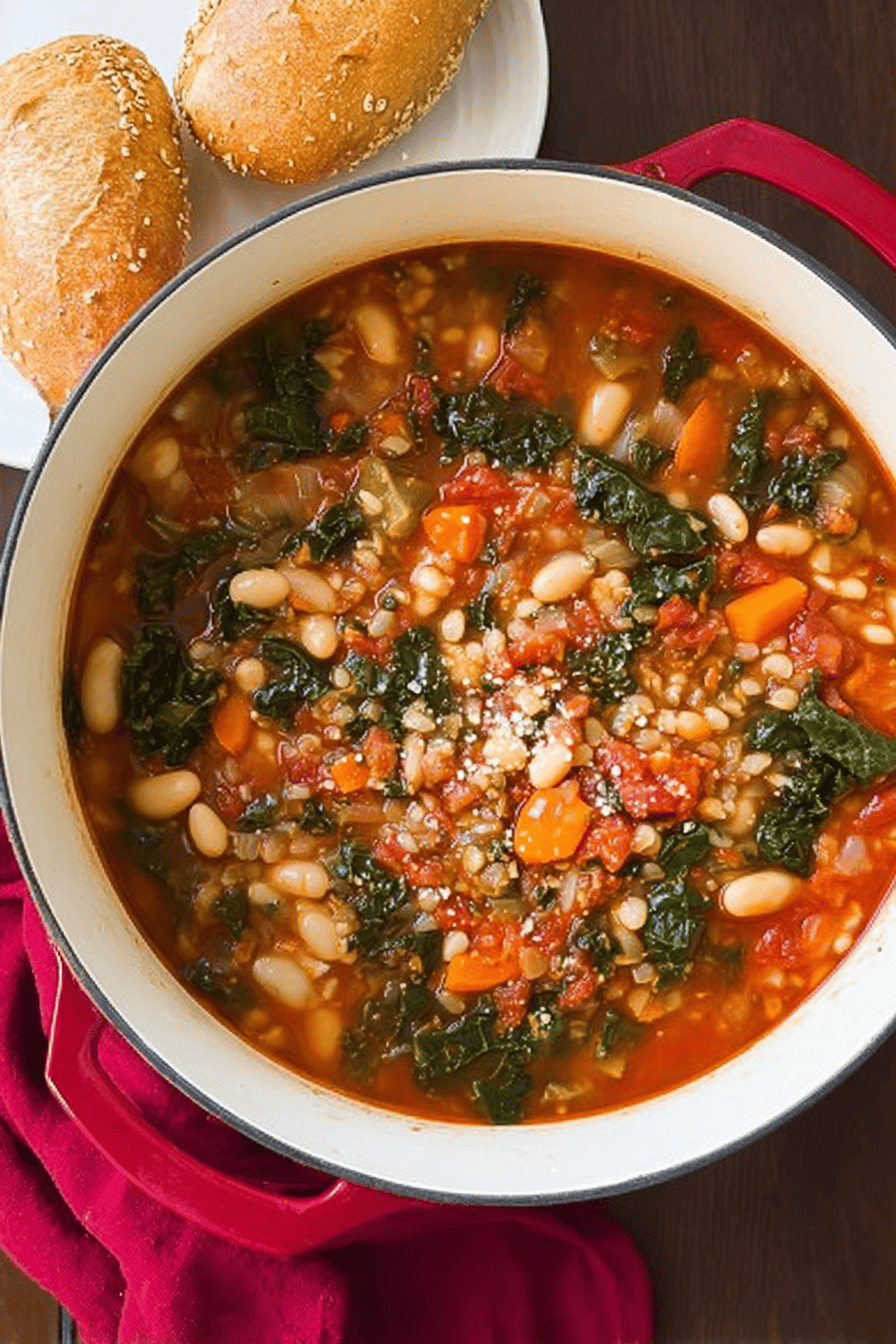
Dietary Substitutions to Customize Your Mediterranean Kale Stew
One of the joys of this Mediterranean Kale Stew is how easy it is to adapt. Whether you have allergies or just want to mix things up, small changes can make a big difference. Start with the base and tweak as needed for your preferences.
For example, if kale isn’t your thing, try Swiss chard or spinach instead. This keeps the stew green and nutritious while changing the texture a bit. You can also swap vegetable broth for chicken broth if you’re not sticking to plant-based options.
- Substitute kale with Swiss chard or spinach for a milder flavor.
- Replace farro with bulgur or quick-cooking barley for a different grain texture.
- Use chickpeas instead of cannellini beans for added protein variety.
- Opt for coconut aminos in place of salt for a soy-free twist.
These swaps help tailor the stew to different diets without losing its appeal. Many home cooks experiment with these ideas to keep meals exciting. For similar customization tips, check out our zucchini corn chowder for another adaptable recipe.
Mastering Mediterranean Kale Stew: Advanced Tips and Variations
Once you’re comfortable with the basics, dive into ways to elevate your Mediterranean Kale Stew. Sautéing onions slowly can deepen the flavors, giving a richer base. Blending part of the stew before adding kale makes it creamier and more satisfying.
Experiment with herbs like oregano or thyme to add authentic Mediterranean vibes. A squeeze of lemon at the end brightens everything up nicely. Presentation matters too; top with feta or nuts for a dish that looks as good as it tastes.
This stew is more than just food; it’s a canvas for your creativity in the kitchen.
Storage and Make-Ahead Ideas
Prepare the stew ahead and store it for up to 3 days in the fridge. Freezing portions keeps it fresh for months, perfect for meal prep. When reheating, go low and slow to keep the textures intact. Many find that the flavors improve overnight, making it even better the next day.
How to Store Mediterranean Kale Stew: Best Practices
Proper storage keeps your Mediterranean Kale Stew tasty and safe. Put leftovers in airtight containers and chill them right away. This helps maintain freshness for up to 3 days in the fridge.
For longer keeps, freeze in individual portions. Thaw slowly in the fridge before warming up. When reheating, use low heat and stir often to keep the kale from getting too soft. Meal prep lovers find this stew ideal for planning ahead.
| Storage Method | Duration | Tips |
|---|---|---|
| Refrigeration | Up to 3 days | Use airtight containers to lock in flavor |
| Freezing | Up to 3 months | Portion for easy reheating |
FAQs: Frequently Asked Questions About Mediterranean Kale Stew
What ingredients are typically used in Mediterranean kale stew?
Mediterranean kale stew commonly includes fresh kale, tomatoes, garlic, onions, olive oil, and white beans. Some recipes add farro or chickpeas for extra texture and protein. Herbs like oregano, thyme, and bay leaves provide distinct Mediterranean flavors. The stew may also contain vegetable or chicken broth as a base and sometimes lemon juice or vinegar for brightness.
Can I use other greens instead of kale in this stew?
Yes, you can substitute kale with other leafy greens such as Swiss chard, spinach, or collard greens. Keep in mind that spinach cooks much faster than kale and should be added near the end to avoid overcooking. Swiss chard and collards have a similar texture to kale and can be cooked for a similar time.
How can I make Mediterranean kale stew suitable for a gluten-free diet?
To make the stew gluten-free, avoid adding farro or any other wheat-based grains. Instead, you can use gluten-free grains like quinoa, rice, or gluten-free barley. Additionally, check that your broth and other packaged ingredients do not contain gluten-containing additives.
What are the health benefits of including kale and farro in this stew?
Kale is rich in vitamins A, C, and K, and offers antioxidants and fiber that support heart health and digestion. Farro is an ancient whole grain, packed with fiber, protein, B vitamins, magnesium, and iron, which contribute to sustained energy and overall nutritional balance. Combined, they make the stew both filling and nutrient-dense.
How long does Mediterranean kale stew take to prepare and cook?
Preparation typically takes about 10 to 15 minutes for chopping vegetables and rinsing grains, while cooking time ranges from 30 to 45 minutes. This allows the kale to soften and the flavors to meld fully. Using pre-cooked grains or canned beans can reduce total cooking time significantly.

Mediterranean Kale Stew
🥬 This Mediterranean Kale Cannellini and Farro Stew is a hearty, nutritious meal rich in fiber and protein, perfect for a wholesome dinner.
🍲 Combining ancient grains, leafy greens, and creamy beans, it offers a delicious way to enjoy plant-based flavors with Mediterranean flair.
- Total Time: 1 hour
- Yield: 6 servings
Ingredients
– 2 tablespoons olive oil
– 1 cup carrots, diced (about 2 medium)
– 1 cup onion, diced (1 small)
– 1 cup celery, diced (about 2 stalks)
– 4 cloves garlic, minced
– 5 cups low-sodium vegetable broth
– 1 (14.5 oz) can diced tomatoes
– 1 cup farro, rinsed
– 1 teaspoon dried oregano
– 1 bay leaf
– Salt, to taste
– 1/2 cup slightly packed parsley sprigs (stems included)
– 4 cups slightly packed chopped kale, thick ribs removed
– 1 (15 oz) can cannellini beans, drained and rinsed
– 1 tablespoon lemon juice
– 1/2 cup feta cheese, crumbled, for serving
Instructions
1-First, rinse and chop the kale, then dice the carrots, onion, and celery, and mince the garlic to have everything ready.
2-Heat the olive oil in a large pot over medium-high heat. Add the diced carrots, onion, and celery, and sauté for 3 minutes.
3-Add the minced garlic and sauté for 30 seconds longer to bring out its aroma.
4-Stir in the vegetable broth, diced tomatoes, rinsed farro, dried oregano, bay leaf, and salt to taste. Add the parsley and bring to a boil.
5-Reduce the heat to just below medium, cover, and simmer for 20 minutes.
6-Remove the parsley, stir in the chopped kale, and cook for 10-15 minutes longer until the farro and kale are tender.
7-Add the drained and rinsed cannellini beans and heat through for about 1 minute. Remove the bay leaf, stir in the lemon juice, and add more broth or water if needed.
8-Serve warm, topping each serving with the crumbled feta cheese.
Last Step:
Please leave a rating and comment letting us know how you liked this recipe! This helps our business to thrive and continue providing free, high-quality recipes for you.Notes
🌾 Farro adds a nutty flavor and chewy texture; substitute with bulgur or quick-cooking barley if needed.
🥬 Swap kale with spinach or Swiss chard; add spinach at the end as it cooks quickly.
🍋 Lemon juice and feta cheese enhance the dish’s flavor significantly and provide a fresh finish.
- Prep Time: 15 minutes
- Cook Time: 45 minutes
- Category: Soup/Stew
- Method: Simmering
- Cuisine: Mediterranean
- Diet: Vegetarian
Nutrition
- Serving Size: 1 serving
- Calories: 329
- Sugar: 6 grams
- Sodium: 540 milligrams
- Fat: 8 grams
- Saturated Fat: 2 grams
- Carbohydrates: 52 grams
- Fiber: 10 grams
- Protein: 12 grams
- Cholesterol: 11 milligrams


