Why You’ll Love This Macarons
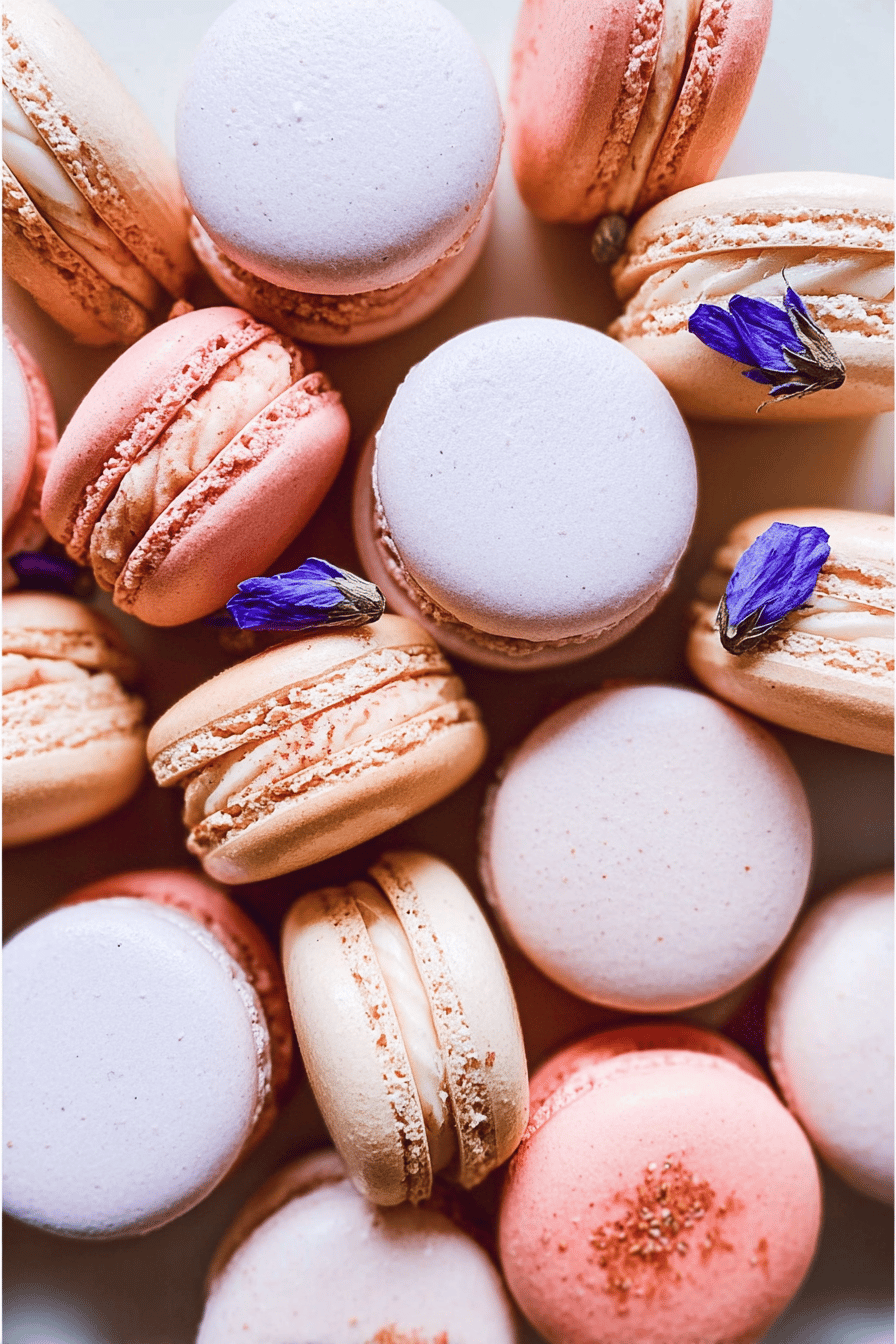
Macarons offer a simple yet elegant way to bring a touch of French flair into your home kitchen, making them perfect for busy parents or baking enthusiasts looking for fun projects. This recipe stands out for its ease of preparation, with a total time of about 40 minutes that includes just 15 minutes of prep and 25 minutes of baking. You’ll enjoy how these macarons balance nutritional benefits like healthy fats from almond flour and proteins from egg whites, supporting wellness while delivering that signature crisp shell and soft center.
One of the best parts is their versatility, allowing easy tweaks for vegan, gluten-free, or low-calorie diets without losing the classic texture. For instance, you can swap in aquafaba for egg whites to make them plant-based, or use natural sweeteners to cut down on sugar. This means students, working professionals, or diet-conscious individuals can indulge without worry, creating memorable moments with family or friends.
The distinctive flavor comes from a creamy French buttercream filling that pairs beautifully with the almond shell, offering a treat that’s both satisfying and customizable. Whether you’re a senior enjoying a quiet bake or newlyweds hosting a dinner, these macarons add joy to any occasion. With preparation tips like using aged egg whites for a stable meringue, this recipe helps even beginners succeed.
Jump To
- 1. Why You’ll Love This Macarons
- 2. Essential Ingredients for Macarons
- 3. How to Prepare the Perfect Macarons: Step-by-Step Guide
- 4. Dietary Substitutions to Customize Your Macarons
- 5. Mastering Macarons: Advanced Tips and Variations
- 6. How to Store Macarons: Best Practices
- 7. FAQs: Frequently Asked Questions About Macarons
- 8. Macarons
Essential Ingredients for Macarons
Gathering the right ingredients is key to making flawless macarons, and this section outlines everything you need for both the shells and the filling. We’ll focus on precise measurements to ensure consistent results, drawing from a reliable recipe that emphasizes quality and accuracy.
Ingredients for Macarons:
- 100 grams egg whites at room temperature (about 3 large eggs)
- 140 grams almond flour (1 1/2 cups)
- 90 grams granulated sugar (just under 1/2 cup)
- 130 grams powdered sugar (1 cup)
- 1 teaspoon vanilla (5 mL)
- 1/4 teaspoon cream of tartar (800 mg)
Ingredients for French Buttercream Filling:
- 1 cup unsalted butter, softened (226 g)
- 5 egg yolks
- 1/2 cup granulated sugar (100 g)
- 1 teaspoon vanilla
- 3 tablespoons water (30 mL)
- 1 pinch salt
These ingredients create a smooth, airy shell and a rich filling, with options for dietary adjustments like vegan substitutes. For special needs, almond flour keeps it gluten-free, or you can use aquafaba for egg whites in vegan versions.
How to Prepare the Perfect Macarons: Step-by-Step Guide
Follow this detailed guide to turn your ingredients into beautiful macarons, incorporating the exact directions for both shells and filling. Begin by sifting 130 grams powdered sugar and 140 grams almond flour into a bowl to remove any lumps for a silky batter. This step ensures the dry ingredients blend smoothly, setting up success for the rest.
Next, place 100 grams egg whites at room temperature in a clean bowl and whisk them with an electric mixer until foamy, then add 1/4 teaspoon cream of tartar and gradually mix in 90 grams granulated sugar until stiff peaks form. Add 1 teaspoon vanilla and food coloring if you like, creating that fluffy base. Gently fold in the dry ingredients a third at a time until the batter reaches a thick, lava-like consistency that forms ribbons and a figure eight.
Transfer the batter to a piping bag with a medium round tip, and pipe one-inch circles onto parchment-lined baking sheets, using small dabs to secure the paper. Tap the trays to release air bubbles, then let them rest for 40 minutes until a skin forms. Preheat your oven to 300 degrees Fahrenheit and bake for 12-15 minutes, rotating halfway, then cool on a wire rack.
For the French buttercream, combine 1/2 cup granulated sugar and 3 tablespoons water in a saucepan, heating until dissolved and boiling to 240 degrees Fahrenheit. In a mixer, beat 5 egg yolks until thick, drizzle in the syrup while mixing, and continue until cooled. Add 1 cup softened unsalted butter piece by piece, then stir in 1 teaspoon vanilla and a pinch of salt for a creamy finish.
To assemble, pipe the buttercream onto half the cooled shells and sandwich with the others, refrigerating for 1-3 days to soften. Throughout, remember to make adjustments for dietary preferences, like using aquafaba for vegan options, to keep things inclusive.
Dietary Substitutions to Customize Your Macarons
Customizing macarons for different diets is straightforward and helps everyone enjoy this treat. Replace egg whites with aquafaba to make a vegan version that still whips up nicely. For nut allergies, swap almond flour with finely ground sunflower seeds, keeping the texture light and airy.
Add natural flavorings like matcha or cocoa for variety, and use plant-based creams for dairy-free fillings. To reduce calories, substitute sugar with erythritol, a low-glycemic option that maintains sweetness. These changes ensure macarons fit various preferences, from food enthusiasts to travelers seeking portable snacks.
Mastering Macarons: Advanced Tips and Variations
Refine your skills with advanced techniques like the macaronage folding method, which gently combines ingredients to avoid deflating the meringue while achieving a smooth batter. Use aged egg whites, stored in the fridge for a few days, for better stability and a thicker meringue. Sift and process almond flour and powdered sugar multiple times to eliminate large particles, ensuring professional results.
Experiment with flavors by adding zest, spices, or extracts like lavender to the batter or filling for unique twists. For presentation, pipe macarons perpendicularly for round shapes and rest them 40-60 minutes before baking to form a skin. If shells are too crisp, brush with milk before assembling. For more ideas on desserts, try our fresh cherry pie recipe to pair with your macarons.
Practice folding to maintain bubbles for that perfect rise, and remember macarons taste best after 2-3 days in the fridge. Make-ahead options include freezing unfilled shells, which is great for busy schedules.
How to Store Macarons: Best Practices
Storing macarons properly preserves their delicate texture and flavor. Keep them in an airtight container in the fridge for up to a week to stay fresh. For longer storage, freeze unfilled shells or assembled ones, wrapped to prevent moisture, and thaw at room temperature when ready.
Avoid reheating in the microwave as it can ruin the consistency; instead, let them sit out for the best taste. This approach works well for meal prep, like preparing for events, and aligns with storing other treats. For additional inspiration, check out our no-churn vanilla ice cream recipe for complementary storage tips.
FAQs: Frequently Asked Questions About Macarons
Where do macarons originally come from?
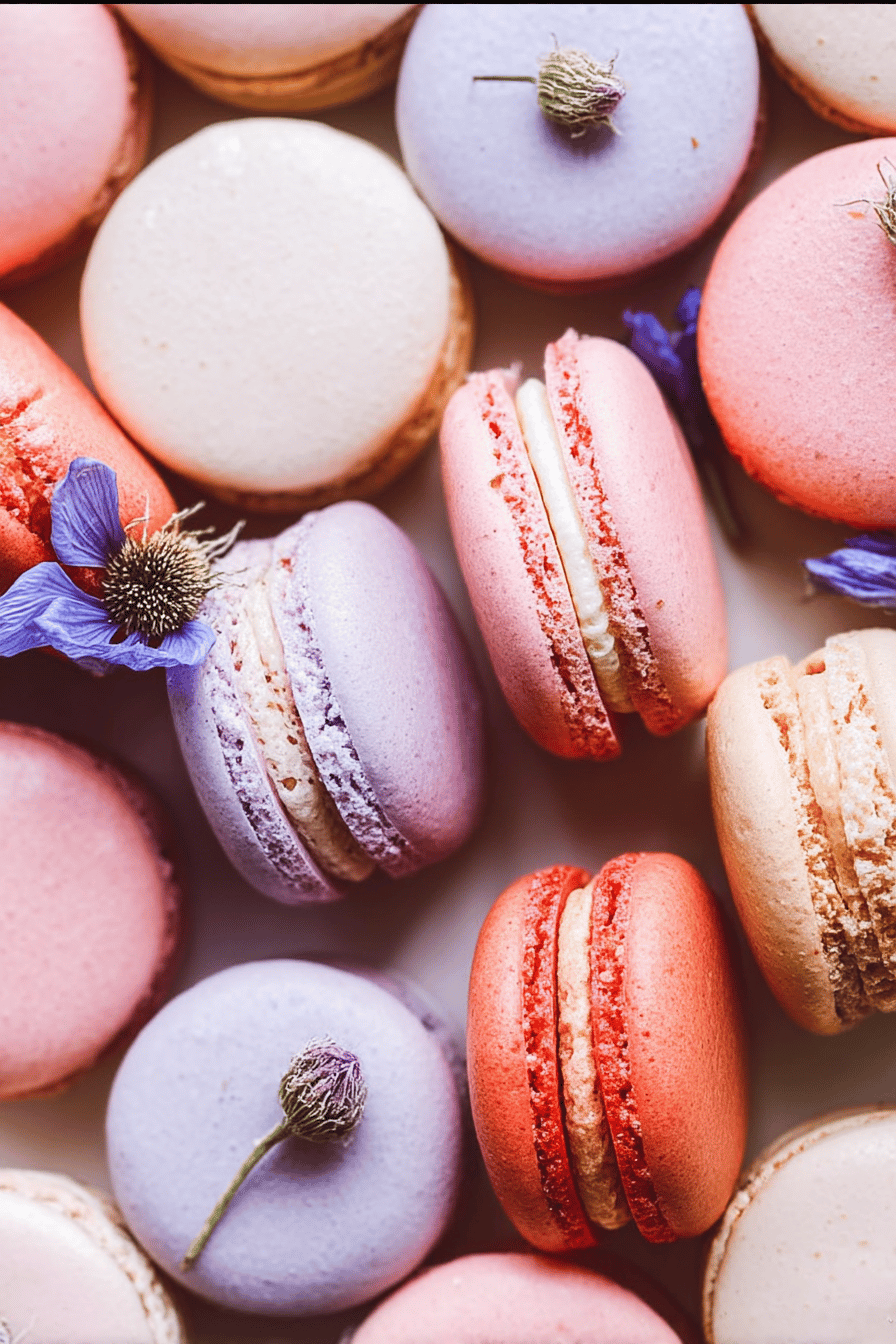
Macarons are commonly linked to France, but their origin traces back to Italy. They were introduced to France by the chef of Catherine de Medici in the 16th century. Over time, the French adapted the recipe into the delicate, colorful sandwich cookies widely enjoyed today.
What ingredients are used to make authentic French macarons?
Authentic French macarons are made from egg whites, almond flour, and sugar to create a smooth, airy meringue-based shell. The two shells are sandwiched together with fillings such as buttercream, ganache, or jam, giving the macaron its distinctive texture and flavor.
How can I tell the difference between a macaron and a macaroon?
Macarons are light, meringue-based sandwich cookies made with almond flour, featuring a crisp outer shell and soft interior. Macaroons are dense cookies made from shredded coconut, egg whites, and sugar. Though their names sound alike, their ingredients and textures are very different.
What is the best surface to bake macarons on?
Parchment paper is ideal for baking macarons because it provides a non-stick surface that supports even baking and easy removal. Silicone baking mats can also be used but may cause slight sticking. Avoid wax paper or greasing the baking surface, as these can affect the macarons’ texture.
Should I add cream of tartar when whipping egg whites for macarons?
Cream of tartar can help stabilize egg whites and create firmer peaks, which is particularly helpful on humid days. However, it is not a required ingredient. If you don’t have cream of tartar, you can still achieve good results by whipping egg whites until stiff peaks form.
Macarons
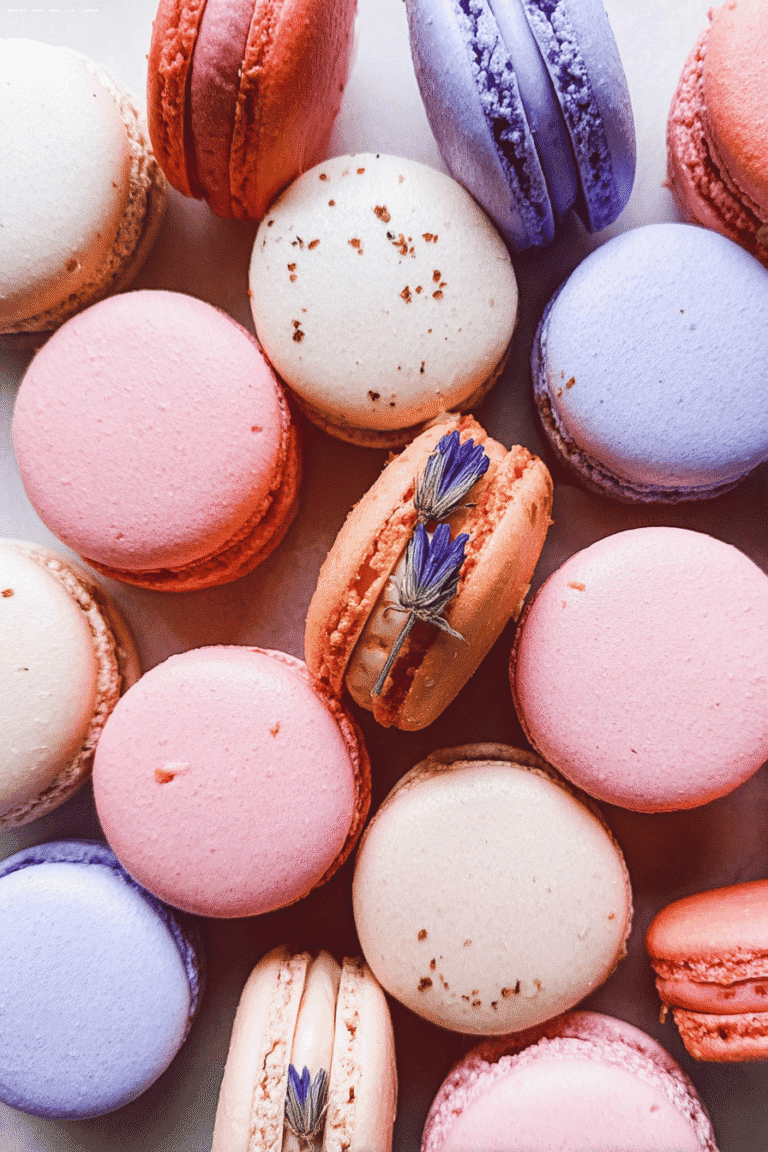
🥐 Master the art of French macarons at home with tips that ensure light, airy shells and creamy, flavorful buttercream filling.
🍰 Perfect your technique for consistent results and enjoy elegant treats that impress every time.
- Total Time: 40 minutes
- Yield: Makes approximately 20-24 macarons
Ingredients
– 100 grams egg whites at room temperature (about 3 large eggs)
– 140 grams almond flour (1 1/2 cups)
– 90 grams granulated sugar (just under 1/2 cup)
– 130 grams powdered sugar (1 cup)
– 1 teaspoon vanilla (5 mL)
– 1/4 teaspoon cream of tartar (800 mg)
– 1 cup unsalted butter, softened (226 g)
– 5 egg yolks
– 1/2 cup granulated sugar (100 g)
– 1 teaspoon vanilla
– 3 tablespoons water (30 mL)
– 1 pinch salt
Instructions
1-Follow this detailed guide to turn your ingredients into beautiful macarons, incorporating the exact directions for both shells and filling. Begin by sifting 130 grams powdered sugar and 140 grams almond flour into a bowl to remove any lumps for a silky batter. This step ensures the dry ingredients blend smoothly, setting up success for the rest.
2-Next, place 100 grams egg whites at room temperature in a clean bowl and whisk them with an electric mixer until foamy, then add 1/4 teaspoon cream of tartar and gradually mix in 90 grams granulated sugar until stiff peaks form. Add 1 teaspoon vanilla and food coloring if you like, creating that fluffy base. Gently fold in the dry ingredients a third at a time until the batter reaches a thick, lava-like consistency that forms ribbons and a figure eight.
3-Transfer the batter to a piping bag with a medium round tip, and pipe one-inch circles onto parchment-lined baking sheets, using small dabs to secure the paper. Tap the trays to release air bubbles, then let them rest for 40 minutes until a skin forms. Preheat your oven to 300 degrees Fahrenheit and bake for 12-15 minutes, rotating halfway, then cool on a wire rack.
4-For the French buttercream, combine 1/2 cup granulated sugar and 3 tablespoons water in a saucepan, heating until dissolved and boiling to 240 degrees Fahrenheit. In a mixer, beat 5 egg yolks until thick, drizzle in the syrup while mixing, and continue until cooled. Add 1 cup softened unsalted butter piece by piece, then stir in 1 teaspoon vanilla and a pinch of salt for a creamy finish.
5-To assemble, pipe the buttercream onto half the cooled shells and sandwich with the others, refrigerating for 1-3 days to soften. Throughout, remember to make adjustments for dietary preferences, like using aquafaba for vegan options, to keep things inclusive.
Last Step:
Please leave a rating and comment letting us know how you liked this recipe! This helps our business to thrive and continue providing free, high-quality recipes for you.Notes
🧾 Use aged egg whites for better meringue stability and volume.
🎯 Sift almond flour and powdered sugar multiple times and process in food processor to ensure fine texture.
🤲 Master folding technique to preserve air bubbles and achieve proper batter consistency.
- Prep Time: 15 minutes
- Bake Time: 25 minutes
- Cook Time: 25 minutes
- Category: Dessert
- Method: Baking
- Cuisine: French
- Diet: Vegetarian
Nutrition
- Serving Size: 1 macaron (approx. 11g)
- Calories: 63
- Sugar: 5.2 grams
- Sodium: 18 milligrams
- Fat: 1.9 grams
- Saturated Fat: 0.7 grams
- Trans Fat: 0 grams
- Carbohydrates: 6 grams
- Fiber: 0.5 grams
- Protein: 0.8 grams
- Cholesterol: 0.7 milligrams