

Why You’ll Love This Japchae Korean Noodle Stir Fry
- Ease of preparation: This Japchae Korean Noodle Stir Fry comes together in just 35-55 minutes, making it perfect for busy weeknights or special occasions. Despite being a traditional Korean dish with authentic glass noodles, the process is straightforward even for beginners. You can prepare the vegetables while the sweet potato noodles cook, maximizing your efficiency in the kitchen.
- Health benefits: Packed with colorful vegetables and lean protein, this Korean side dish delivers a nutritional punch. Sweet potato noodles are gluten-free and lower in calories than wheat-based pasta, while the array of vegetables provides essential vitamins and minerals. The sauce uses moderate amounts of heart-healthy sesame oil and soy sauce, keeping sodium levels in check compared to other stir fry recipes.
- Versatility: This vegetable noodle dish adapts beautifully to different dietary needs. It can be made vegetarian or vegan with simple substitutions, and you can easily adjust the protein content based on your preferences. The Korean party food also works wonderfully as a main course, side dish, or even as a packed lunch, making it one of the most adaptable traditional Korean foods in your repertoire.
- Distinctive flavor: The unique blend of sweet, savory, and nutty flavors sets this noodle stir fry apart from other Asian noodle dishes. The sweet potato noodles provide a delightfully chewy texture that perfectly complements the crisp-tender vegetables and savory beef. When tossed with the distinctive sesame-soy dressing, this Korean party food creates a taste experience that will have your family requesting it again and again.
Jump To
- 1. Why You’ll Love This Japchae Korean Noodle Stir Fry
- 2. Essential Ingredients for Japchae Korean Noodle Stir Fry
- 3. How to Prepare the Perfect Japchae Korean Noodle Stir Fry: Step-by-Step Guide
- 4. Dietary Substitutions to Customize Your Japchae Korean Noodle Stir Fry
- 5. Mastering Japchae Korean Noodle Stir Fry: Advanced Tips and Variations
- 6. How to Store Japchae Korean Noodle Stir Fry: Best Practices
- 7. FAQs: Frequently Asked Questions About Japchae Korean Noodle Stir Fry
- 8. Japchae Korean Noodle Stir Fry
Essential Ingredients for Japchae Korean Noodle Stir Fry
Main Ingredients
- 250g Korean sweet potato starch noodles (dangmyeon)
- 100g rib eye fillet, cut into strips
- 120g carrot (1 medium), rinsed, peeled, julienned
- 110g baby spinach, rinsed
- 50g red capsicum (1/4 medium), rinsed, julienned
- 105g yellow onion (1/2 medium), peeled, rinsed, thinly sliced
- 100g fresh shiitake mushrooms, cleaned, stems removed, thinly sliced
Beef Options (Alternative to Rib Eye)
- 300g boneless beef short ribs, thinly sliced OR
- 300g scotch fillet, thinly sliced (tenderize if using economical cuts by sprinkling 3/4 tsp baking soda over 300g steak, resting 20 mins, then rinsing before marinating)
Spinach Seasoning
- 1/4 tsp fine sea salt
- 1/2 tsp minced garlic
- 1 tsp toasted sesame oil
Beef Marinade
- 1 Tbsp (1 tbsp) soy sauce (all-purpose or light recommended)
- 1 tsp mirin (alternative: 1 tsp white sugar)
- 1/2 tsp minced garlic
- 1/4 tsp ground black pepper
- 1 tsp toasted sesame oil
Noodle & Vegetable Dressing/Marinade
- 4 Tbsp (4 tbsp) soy sauce (all-purpose or light recommended)
- 1 Tbsp (1 tbsp) honey (alternative: 1 Tbsp white sugar)
- 1 Tbsp (1 tbsp) brown sugar
- 1 Tbsp (1 tbsp) toasted sesame oil
- 1/8 tsp ground black pepper
- 1/2 tsp fine sea salt (optional)
Finishing Touch
- 1 Tbsp (1 tbsp) toasted sesame seeds (white)
- 1 Tbsp (1 tbsp) toasted sesame oil
- 1 extra large egg, separated (white and yolk) (optional)
Other
- Cooking oil (e.g., rice bran, vegetable – total ~4 Tbsp needed)
- Fine sea salt (for cooking vegetables)
- Water for boiling
Special Dietary Options
- Vegan: Substitute beef with firm tofu or additional mushrooms. Replace honey with maple syrup or brown sugar, and use egg-free preparation.
- Gluten-free: Use tamari or certified gluten-free soy sauce. Ensure all other ingredients, especially the sweet potato noodles, are gluten-free.
- Low-calorie: Reduce cooking oil by half, decrease sugar in the dressing, and increase the proportion of vegetables to noodles.
How to Prepare the Perfect Japchae Korean Noodle Stir Fry: Step-by-Step Guide
Preparing the Ingredients and Marinades
First Step: Begin by preparing the marinades for this authentic Japchae recipe. In a medium bowl, combine the beef marinade ingredients: 1 tablespoon soy sauce, 1 teaspoon mirin (or white sugar), 1/2 teaspoon minced garlic, 1/4 teaspoon ground black pepper, and 1 teaspoon toasted sesame oil. Add the beef strips and toss to coat evenly. Set aside to marinate for 15-20 minutes.
In a separate large bowl (this should be big enough to hold all your ingredients later), prepare the noodle and vegetable dressing. Mix together 4 tablespoons soy sauce, 1 tablespoon honey (or white sugar), 1 tablespoon brown sugar, 1 tablespoon toasted sesame oil, and 1/8 teaspoon ground black pepper. Add the optional 1/2 teaspoon fine sea salt if desired. Set this dressing aside for now.
Preparing and Cooking the Noodles
Second Step: Prepare the Korean glass noodles according to package directions. Fill a large pot with water and bring to a boil. Add the 250g of sweet potato noodles and cook for 6-7 minutes until tender but still slightly firm to the bite (al dente). The moment those sweet potato noodles turn translucent and springy in the boiling water, you’ll know they’re perfectly cooked.
Once cooked, immediately drain the noodles and rinse thoroughly under cold running water to stop the cooking process. This prevents the noodles from becoming mushy and helps maintain their pleasant chewy texture. Drain well and cut the noodles to 15-20 cm lengths if needed for easier eating. Add the cooked noodles to the large bowl with the noodle and vegetable dressing, but don’t mix them yet.
Cooking the Vegetables
Third Step: Prepare all vegetables as instructed: julienne the carrots and red capsicum, thinly slice the yellow onion, and clean and slice the shiitake mushrooms.
For the Alternative Method (Batch Cooking – Faster):
Heat 2 tablespoons of cooking oil in a large pan or wok over high heat. Add the sliced mushrooms and optionally the white parts of 3 green onions (sliced) with 1/2 teaspoon salt. Cook for 2.5-3 minutes until starting to soften, then transfer to the noodle bowl. Heat 1 tablespoon more oil in the same pan. Add carrots and cook for 1.5 minutes, then add capsicum and cook for 1.5 minutes more. Finally, add spinach, the remaining 1/2 teaspoon salt, and the green onion tops; cook until spinach wilts, about 1.5 minutes. Transfer all cooked vegetables to the noodle bowl.
For the Individual Cooking (Original) Method:
Blanch spinach in boiling water for just 5-10 seconds, then drain, cool under cold water, and squeeze out excess water. Season with the spinach seasoning (1/4 teaspoon sea salt, 1/2 teaspoon minced garlic, and 1 teaspoon toasted sesame oil), then place in the large bowl. Heat oil and cook onion with a pinch of salt until soft, then transfer to the bowl. Cook carrots with salt until soft, transfer to bowl. Cook capsicum with salt until soft, transfer to bowl. Finally, cook mushrooms until softened and transfer to the bowl.
While learning to make Korean glass noodles, I discovered that cooking each vegetable separately maintains its distinct flavor and texture, which really elevates the final dish. Japanese cooking masters often employ this technique called “kakushi aji” or hidden flavor, where each ingredient is treated with respect and cooked to its perfect doneness before being combined.
Cooking the Beef and Finishing the Dish
Fourth Step: Heat 1 tablespoon of oil in your pan over medium-high heat. Add the marinated beef and stir-fry until lightly browned and cooked through, approximately 1.5 minutes. Be careful not to overcook the beef, as it can become tough. Transfer the cooked beef to the large bowl with the noodles and vegetables.
If using the optional egg garnish, heat a small amount of oil in the pan. Pour in the egg white and cook until set into a thin sheet. Remove, slice thinly into matchsticks, and repeat the process with the egg yolk. Add both egg white and yolk strips to the noodle bowl.
Combining and Serving
Final Step: Add most of the toasted sesame seeds (reserve a little for garnish) and the 1 tablespoon of finishing sesame oil to the large bowl. Gently toss all ingredients together using chopsticks or tongs until the noodles and vegetables are evenly coated in the deliciously savory-sweet dressing. Be careful not to break the noodles while tossing.
Transfer the finished Japchae to a serving platter and sprinkle with the remaining sesame seeds for a beautiful presentation. Serve warm (but not piping hot) or at room temperature, as it’s traditionally enjoyed with Korean rice and other side dishes. This Korean special occasion food is now ready to be enjoyed! The authentic Japchae recipe typically serves 5-8 people, making it perfect for gatherings or as a make-ahead meal for the week.
Nutritional Information (Per Serving)
| Nutrient> | Amount |
|---|---|
| Calories | 300-505 |
| Carbohydrates | 45-58g |
| Protein | 7-18g |
| Fat | 10-24g (2-4g Saturated) |
| Cholesterol | 35-37mg |
| Sodium | 978-1590mg |
| Potassium | 302-1000mg |
| Fiber | 2-6g |
| Sugar | 6-9g |
| Vitamin A | 3610-10147 IU |
| Vitamin C | 12.8-51mg |
| Calcium | 53-127mg |
| Iron | 1.6-4mg |
Note: Nutritional values range based on ingredient choices and method. Variations include beef choice, exact vegetable amounts, marinade sweetness level, and serving count.
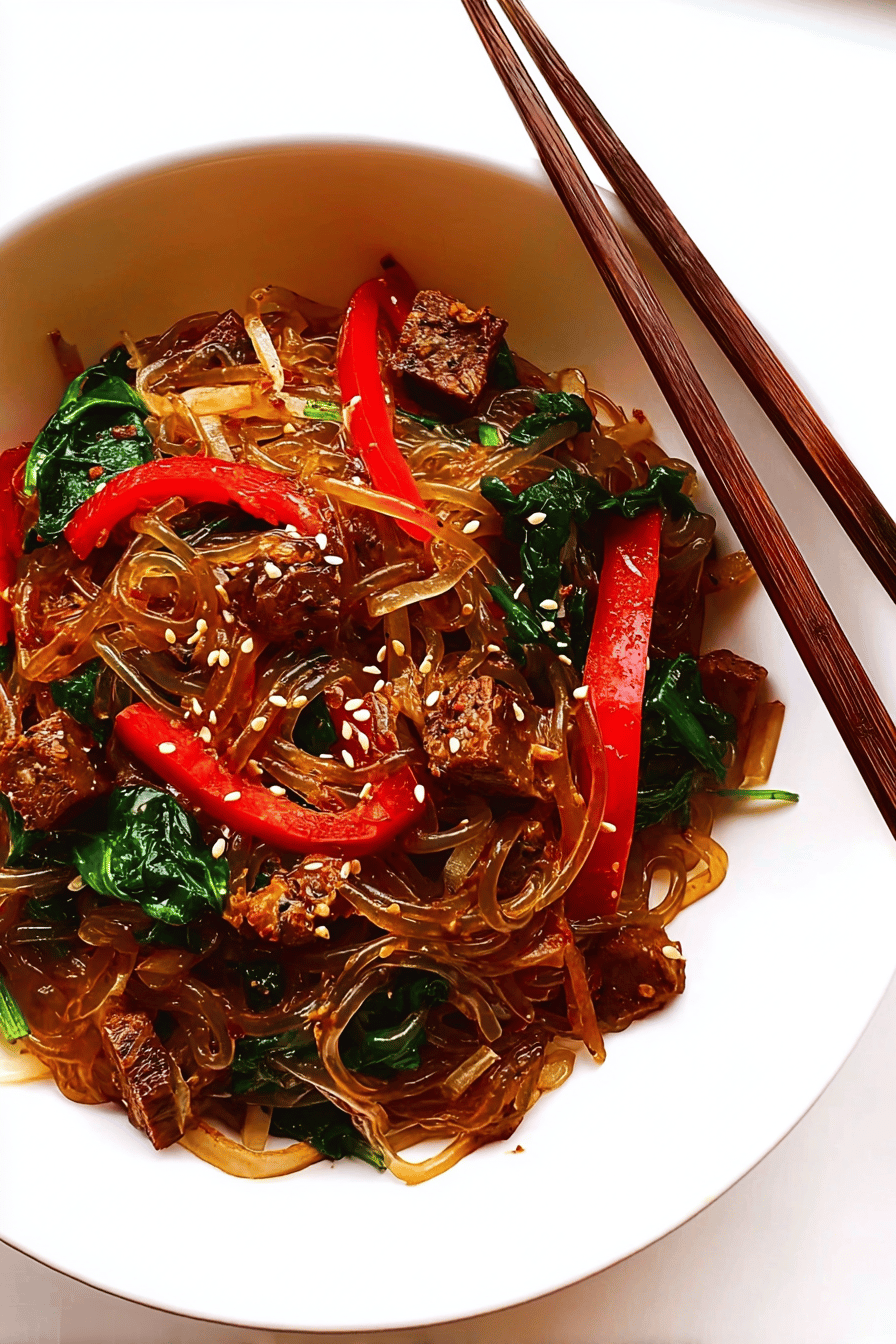
Dietary Substitutions to Customize Your Japchae Korean Noodle Stir Fry
Protein and Main Component Alternatives
The beauty of this traditional sweet potato noodle dish lies in its adaptability. While beef is the traditional protein in classic Japchae, you can easily customize it to suit various dietary preferences. For a poultry option, use thinly sliced chicken breast or thigh meat, marinating it the same way as the beef for at least 20 minutes to ensure flavor absorption. Alternatively, shrimp makes an excellent seafood alternative, requiring just 1-2 minutes of cooking until pink and perfectly tender.
For vegetarian or vegan versions of this Korean noodle stir fry, replace the beef with firm tofu cut into thin strips and pan-fried until golden. Extra-firm tofu holds up best during the stir-frying process. mushrooms, particularly shiitake or king oyster, can provide that satisfying umami flavor and meaty texture. Simply increase the quantity of mushrooms in the recipe or add a variety of different types to create depth and complexity.
Vegetable, Sauce, and Seasoning Modifications
One of the best aspects of making Japchae with vegetables at home is the freedom to adjust the vegetable selection based on what’s in season or your personal preferences. Zucchini, snow peas, asparagus, or even thinly sliced cabbage can provide excellent texture and nutritional variety. For a colorful presentation, consider adding purple cabbage or yellow bell pepper to create visual appeal alongside the traditional ingredients.
For those needing to customize the sauce, several options exist. To reduce sodium, use low-sodium soy sauce and decrease the amount used in the recipe, supplementing with additional garlic, ginger, or a splash of rice vinegar for brightness. For a gluten-free version of this vegetable noodle dish, substitute regular soy sauce with tamari or coconut aminos. Sweetness can be adjusted by varying the ratio of honey to brown sugar, or by using natural alternatives like pureed dates or apple sauce for a refined sugar-free option. To make this Korean side dish spicier, add Korean chili flakes (gochugaru) or a small amount of gochujang (Korean chili paste) to the dressing.
Mastering Japchae Korean Noodle Stir Fry: Advanced Tips and Variations
Pro Cooking Techniques
To elevate your Korean glass noodles game, consider these professional techniques. First, blanching each vegetable separately in salted boiling water before a quick stir-fry preserves vibrant colors and textures while reducing overall cooking time. This method is especially effective for spinach, which should just wilt before being shocked in ice water to maintain its bright green color.
For the protein, a restaurant-quality trick is to marinate beef with a small amount of baking soda (about 1/4 teaspoon for 300g meat) along with the other marinade ingredients. This tenderizes tougher cuts of beef, making them melt-in-your-mouth tender. If using this method, remember to rinse the meat thoroughly after marinating to remove any baking soda taste.
Flavor Variations
While authentic Japchae has a distinct sweet-savory profile, you can create interesting variations by adjusting the seasoning. For a smokier flavor, try adding a small amount of smoked salt or liquid smoke to the dressing. Incorporating mushrooms like morels or chanterelles can introduce a luxurious earthiness perfect for special occasions.
For a spicy kick, add Korean chili flakes (gochugaru) to the dressing or fresh chili peppers when stir-frying vegetables. If you prefer a more complex umami flavor, a spoonful of fermented soybean paste (doenjang) or dashi stock powder can transform the dish while maintaining its traditional roots.
Korean cooking masters often say that the secret to perfect Japchae lies in the balance of textures and temperatures. Serving the dish slightly warm allows the subtle flavors to shine while the noodles retain their distinctive chewy texture.
Presentation Tips and Make-Ahead Options
For an impressive presentation, serve your Korean party food on a large platter, carefully arranged with different colored vegetables creating a pattern. Garnish with extra sesame seeds, thin strips of egg, and perhaps some edible flowers for special occasions. Japchae is traditionally served at room temperature, making it perfect for parties where it might sit out for a while.
This Korean special occasion food is excellent for meal prep. You can prepare all components up to 2 days ahead and store them separately in the refrigerator. Combine everything just before serving, adding a splash of sesame oil to freshen the flavors. For best results, bring refrigerated components to room temperature before combining, as cold ingredients won’t absorb flavors as readily and may result in a less cohesive dish.
How to Store Japchae Korean Noodle Stir Fry: Best Practices
Refrigeration
Your Japchae Korean Noodle Stir-Fry can be stored in an airtight container in the refrigerator for up to 2-3 days. However, be aware that the appearance of the noodles may decline slightly after 2 days as they continue to absorb the sauce. For best results, keep all components separate until just before serving, especially if planning to store leftovers. The traditional sweet potato noodle dish maintains its flavor profile better when the noodles and vegetables aren’t soaking in the sauce for extended periods.
Freezing
Unlike many other pasta dishes, Japchae is not suitable for freezing. The high moisture content of the vegetables combined with the unique texture of Korean glass noodles results in undesirable changes when frozen and thawed. The noodles tend to become mushy and lose their characteristic chewy texture that makes this dish special.
Reheating and Meal Prep Considerations
To reheat your vegetable noodle dish, gently warm it in a pan with a splash of water or a little sesame oil over medium heat, stirring occasionally until heated through. While microwave reheating is possible, it often makes the noodles gummy and is therefore not recommended. For meal prep, consider cooking all components separately and storing them in individual containers. When ready to eat, simply toss everything together in the pre-prepared dressing for the freshest possible Korean noodle stir fry experience. This method preserves the integrity of each ingredient and ensures the dish maintains its appealing texture and flavor.
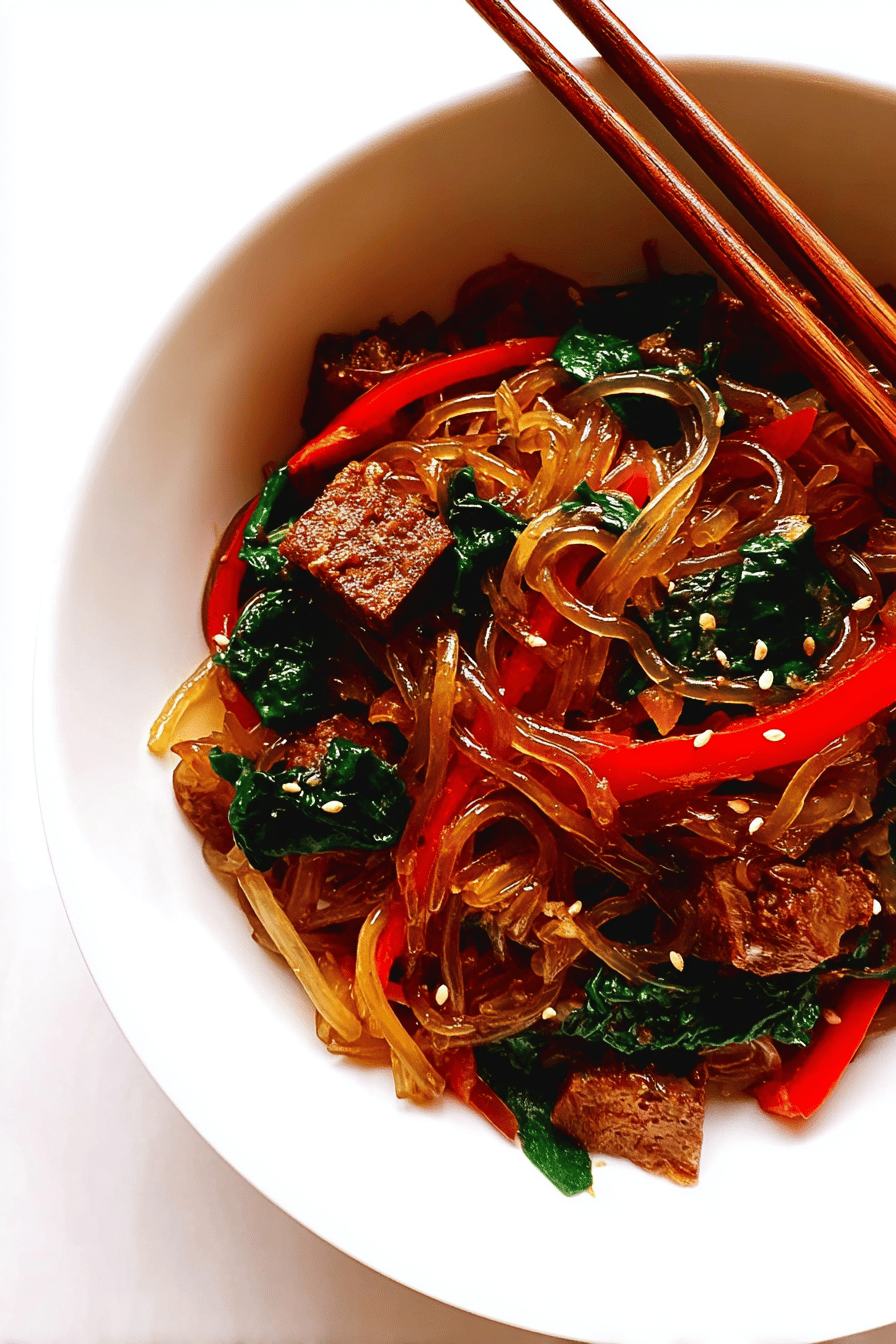
FAQs: Frequently Asked Questions About Japchae Korean Noodle Stir Fry
What ingredients do I need to make traditional Japchae Korean noodle stir fry?
To make traditional Japchae, you’ll need sweet potato starch noodles (dangmyeon), a variety of vegetables like spinach, carrots, and mushrooms, thinly sliced beef or another protein, soy sauce, sesame oil, garlic, sugar, and sesame seeds. The noodles are cooked separately, then stir-fried with seasoned vegetables and beef. Using sweet potato noodles is essential for the authentic chewy texture that Japchae is known for.
How do I prevent sweet potato noodles from sticking or becoming mushy in Japchae?
After boiling the noodles until tender but still firm (about 6-7 minutes), immediately rinse them under cold water to stop cooking. Drain well and toss with a small amount of sesame oil to keep the strands separated. Stir-fry the noodles gently over medium heat without overcrowding the pan. This method helps maintain the pleasant chewy texture and prevents the noodles from clumping or becoming mushy.
Can Japchae be made vegetarian or vegan, and how?
Yes, Japchae can be made vegetarian or vegan by omitting beef and replacing it with tofu, mushrooms, or other plant-based proteins. Use soy sauce or tamari (gluten-free option) and skip any animal-based seasoning like fish sauce. Add plenty of vegetables and season with garlic, sesame oil, and a small amount of sugar to keep the traditional sweet-salty flavor balance.
How long does Japchae keep in the refrigerator, and how should I reheat it?
Japchae can be stored in an airtight container in the refrigerator for up to 3 days. For best results, reheat it gently in a pan with a splash of water or a little sesame oil over medium heat, stirring occasionally until heated through. Avoid microwaving as it can make the noodles gummy. Stir-frying helps preserve texture and flavor.
What occasions or meals is Japchae commonly served at in Korean culture?
Japchae is popular for special occasions such as Korean holidays (Seollal and Chuseok), birthday parties, and weddings, but it also works well as a side dish or a light main meal. Its colorful presentation and balanced flavors make it a favorite for gatherings and festive meals, symbolizing good fortune and happiness in Korean culture.
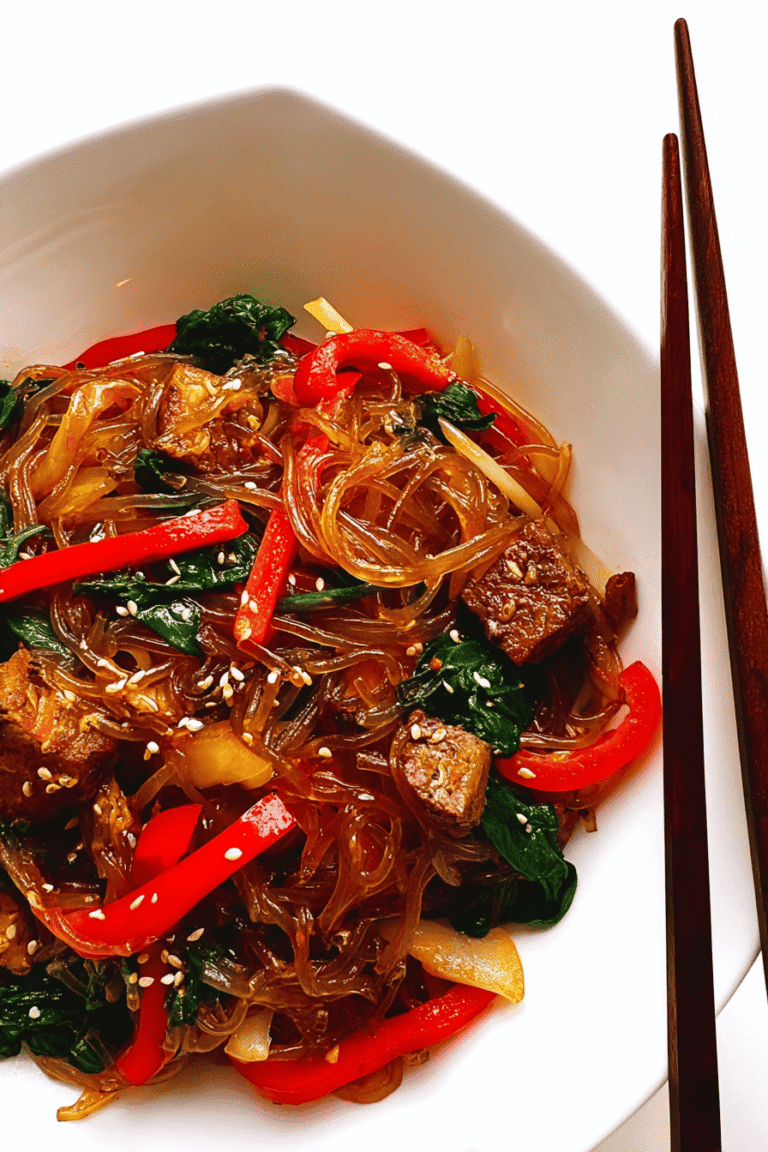
Japchae Korean Noodle Stir Fry
🍜 Authentic Korean dish that combines savory beef and fresh vegetables with chewy sweet potato noodles for a complete meal
🥢 Versatile and nutritious stir fry that can be served warm or at room temperature, perfect for gatherings or meal prep
- Total Time: 35-55 minutes
- Yield: 5 to 8 servings
Ingredients
– 250g Korean sweet potato starch noodles (dangmyeon)
– 100g rib eye fillet, cut into strips
– 120g carrot (1 medium), rinsed, peeled, julienned
– 110g baby spinach, rinsed
– 50g red capsicum (1/4 medium), rinsed, julienned
– 105g yellow onion (1/2 medium), peeled, rinsed, thinly sliced
– 100g fresh shiitake mushrooms, cleaned, stems removed, thinly sliced
– 300g boneless beef short ribs, thinly sliced
– 300g scotch fillet, thinly sliced
– 1/4 tsp fine sea salt
– 1/2 tsp minced garlic
– 1 tsp toasted sesame oil
– 1 Tbsp (1 tbsp) soy sauce (all-purpose or light recommended)
– 1 tsp mirin
– 1 tsp white sugar
– 1/4 tsp ground black pepper
– 4 Tbsp (4 tbsp) soy sauce (all-purpose or light recommended)
– 1 Tbsp (1 tbsp) honey
– 1 Tbsp (1 tbsp) brown sugar
– 1 Tbsp (1 tbsp) toasted sesame oil
– 1/8 tsp ground black pepper
– 1/2 tsp fine sea salt (optional)
– 1 Tbsp (1 tbsp) toasted sesame seeds (white)
– 1 extra large egg, separated (white and yolk) (optional)
– Cooking oil (e.g., rice bran, vegetable – total ~4 Tbsp needed)
– Fine sea salt (for cooking vegetables)
– Water for boiling
Instructions
1-First Step: Begin by preparing the marinades for this authentic Japchae recipe. In a medium bowl, combine the beef marinade ingredients: 1 tablespoon soy sauce, 1 teaspoon mirin (or white sugar), 1/2 teaspoon minced garlic, 1/4 teaspoon ground black pepper, and 1 teaspoon toasted sesame oil. Add the beef strips and toss to coat evenly. Set aside to marinate for 15-20 minutes.
2-Second Step: Prepare the Korean glass noodles according to package directions. Fill a large pot with water and bring to a boil. Add the 250g of sweet potato noodles and cook for 6-7 minutes until tender but still slightly firm to the bite (al dente). The moment those sweet potato noodles turn translucent and springy in the boiling water, you’ll know they’re perfectly cooked. Once cooked, immediately drain the noodles and rinse thoroughly under cold running water to stop the cooking process. This prevents the noodles from becoming mushy and helps maintain their pleasant chewy texture. Drain well and cut the noodles to 15-20 cm lengths if needed for easier eating. Add the cooked noodles to the large bowl with the noodle and vegetable dressing, but don’t mix them yet.
3-Third Step: Prepare all vegetables as instructed: julienne the carrots and red capsicum, thinly slice the yellow onion, and clean and slice the shiitake mushrooms. For the Alternative Method (Batch Cooking – Faster): Heat 2 tablespoons of cooking oil in a large pan or wok over high heat. Add the sliced mushrooms and optionally the white parts of 3 green onions (sliced) with 1/2 teaspoon salt. Cook for 2.5-3 minutes until starting to soften, then transfer to the noodle bowl. Heat 1 tablespoon more oil in the same pan. Add carrots and cook for 1.5 minutes, then add capsicum and cook for 1.5 minutes more. Finally, add spinach, the remaining 1/2 teaspoon salt, and the green onion tops; cook until spinach wilts, about 1.5 minutes. Transfer all cooked vegetables to the noodle bowl. For the Individual Cooking (Original) Method: Blanch spinach in boiling water for just 5-10 seconds, then drain, cool under cold water, and squeeze out excess water. Season with the spinach seasoning (1/4 teaspoon sea salt, 1/2 teaspoon minced garlic, and 1 teaspoon toasted sesame oil), then place in the large bowl. Heat oil and cook onion with a pinch of salt until soft, then transfer to the bowl. Cook carrots with salt until soft, transfer to bowl. Cook capsicum with salt until soft, transfer to bowl. Finally, cook mushrooms until softened and transfer to the bowl.
4-Fourth Step: Heat 1 tablespoon of oil in your pan over medium-high heat. Add the marinated beef and stir-fry until lightly browned and cooked through, approximately 1.5 minutes. Be careful not to overcook the beef, as it can become tough. Transfer the cooked beef to the large bowl with the noodles and vegetables. If using the optional egg garnish, heat a small amount of oil in the pan. Pour in the egg white and cook until set into a thin sheet. Remove, slice thinly into matchsticks, and repeat the process with the egg yolk. Add both egg white and yolk strips to the noodle bowl.
5-Final Step: Add most of the toasted sesame seeds (reserve a little for garnish) and the 1 tablespoon of finishing sesame oil to the large bowl. Gently toss all ingredients together using chopsticks or tongs until the noodles and vegetables are evenly coated in the deliciously savory-sweet dressing. Be careful not to break the noodles while tossing. Transfer the finished Japchae to a serving platter and sprinkle with the remaining sesame seeds for a beautiful presentation. Serve warm (but not piping hot) or at room temperature, as it’s traditionally enjoyed with Korean rice and other side dishes. This Korean special occasion food is now ready to be enjoyed! The authentic Japchae recipe typically serves 5-8 people, making it perfect for gatherings or as a make-ahead meal for the week.
Last Step:
Please leave a rating and comment letting us know how you liked this recipe! This helps our business to thrive and continue providing free, high-quality recipes for you.Notes
🥩 Use beef short ribs thinly sliced for best results, or tenderize other steak cuts with baking soda before marinating
🍜 Save time by boiling noodles while prepping vegetables and use a very large bowl for easier tossing
💾 Store leftovers in airtight container in fridge for 2-3 days, reheat gently or enjoy cold (not suitable for freezing)
- Prep Time: 20-35 minutes
- Cook Time: 15-20 minutes
- Category: Main Dish
- Method: Stir Fry
- Cuisine: Korean
- Diet: Gluten-free adaptable
Nutrition
- Serving Size: 1 serving
- Calories: 400
- Sugar: 7.5
- Sodium: 1300
- Fat: 18
- Saturated Fat: 3
- Unsaturated Fat: 14
- Carbohydrates: 50
- Fiber: 4
- Protein: 12
- Cholesterol: 35




This recipe brought back memories of my study abroad in Seoul! Your tips for soaking the sweet potato noodles were spot on and made all the difference. Thank you for sharing such an authentic version of japchae – it’s now a regular in our meal rotation! 🙌