

Why You’ll Love This Gochujang Rice Salad
Hey there, fellow food lovers! If you’re always on the hunt for meals that pack a punch of flavor without taking forever to make, this Gochujang Rice Salad is about to become your new go-to. Picture this: a crispy rice base mixed with spicy mushrooms and a creamy peanut sauce that makes every bite feel like a party in your mouth. It’s not just tasty; it’s quick, healthy, and super adaptable, which is why home cooks and busy parents alike will find it irresistible.
This Gochujang Rice Salad offers a breeze of preparation, coming together in just about 50 minutes total, with only 15 minutes of hands-on time. You’ll love how it delivers a burst of nutrients from fresh veggies and protein-packed ingredients, making it a fantastic choice for diet-conscious individuals. Plus, its unique blend of spicy, sweet, and savory notes from the gochujang paste creates a memorable taste that keeps you coming back for more. For more inspiration on fresh salads, check out our vibrant cucumber pepper salad recipe on Juicy Cooking.
You can tweak this recipe to fit various dietary needs, such as vegan or gluten-free options, without losing that wow factor. Imagine serving it up for a quick lunch or as a side at dinner, bringing joy to your table every time. Health Benefits of Gochujang can add even more depth to why this ingredient shines, as explored on this reliable source. It’s all about creating those memorable moments with simple, delicious food that everyone can enjoy.
Jump To
- 1. Why You’ll Love This Gochujang Rice Salad
- 2. Essential Ingredients for Gochujang Rice Salad
- 3. How to Prepare the Perfect Gochujang Rice Salad: Step-by-Step Guide
- 4. Dietary Substitutions to Customize Your Gochujang Rice Salad
- 5. Mastering Gochujang Rice Salad: Advanced Tips and Variations
- 6. How to Store Gochujang Rice Salad: Best Practices
- 7. FAQs: Frequently Asked Questions About Gochujang Rice Salad
- 8. Gochujang Rice Salad
Essential Ingredients for Gochujang Rice Salad
Let’s dive into what makes this Gochujang Rice Salad so special the ingredients! I’ve gathered everything you need to whip up this tasty dish, focusing on fresh, flavorful items that bring the recipe to life. This section highlights the key components, ensuring your Gochujang Rice Salad turns out perfectly every time.
Crispy Rice Ingredients
- 1 cup cooked sushi rice
- 1 tbsp chili oil
Gochujang Mushrooms Ingredients
- 255 g king oyster mushrooms
- 170 g shimeji mushrooms
- ½ tbsp gochujang paste
- 2 tsp tamari (low sodium)
- ½ tbsp maple syrup
- 1 tsp rice vinegar
- 1 tsp sesame oil
Peanut Sauce Ingredients
- 1½ tbsp peanut butter (or tahini for a nut-free option)
- 1 tbsp freshly grated ginger
- 1 clove garlic
- 2 tbsp lime juice
- 2 tsp tamari (low sodium)
- 2 tsp maple syrup
- ¼ cup dairy-free milk (soy milk recommended)
- 1 tsp gochujang paste
Salad Ingredients
- 1½ cups shelled frozen edamame (thawed)
- 1 medium cucumber (diced)
- 2 spring onions (finely chopped)
- 1 avocado (diced)
- ¼ cup fresh mint (finely chopped)
This list covers everything for two servings, making it easy to shop and prepare. For special dietary options, you can swap tamari for soy sauce if needed, or use tahini to keep things nut-free. Isn’t it great how these ingredients come together to create something so yummy and versatile?
How to Prepare the Perfect Gochujang Rice Salad: Step-by-Step Guide
Ready to get cooking? This Gochujang Rice Salad is a fun and straightforward recipe that anyone can master. Start by preheating your oven to 200°C (400°F), which sets the stage for that crispy rice we all love. Follow these steps to turn simple ingredients into a delicious meal that bursts with flavor.
First, mix 1 cup of cooked sushi rice with 1 tbsp chili oil and spread it thinly on a lined baking tray. Bake for 30 minutes, stirring halfway through, then let it cool and crush it into small crispy bits this adds the perfect crunch! Next, prepare the mushrooms by slicing the king oyster caps and shredding the stems, then chopping the shimeji mushrooms.
Marinate the mushrooms in a mix of ½ tbsp gochujang paste, 2 tsp tamari, ½ tbsp maple syrup, and 1 tsp rice vinegar; shake to coat and cook in a pan over medium heat for about 10 minutes until browned and tender. Add 1 tsp sesame oil near the end and let them brown without stirring for extra flavor. For the peanut sauce, blend 1½ tbsp peanut butter, 1 tbsp grated ginger, 1 clove garlic, 2 tbsp lime juice, 2 tsp tamari, 2 tsp maple syrup, ¼ cup dairy-free milk, and 1 tsp gochujang paste until smooth it’s that easy!
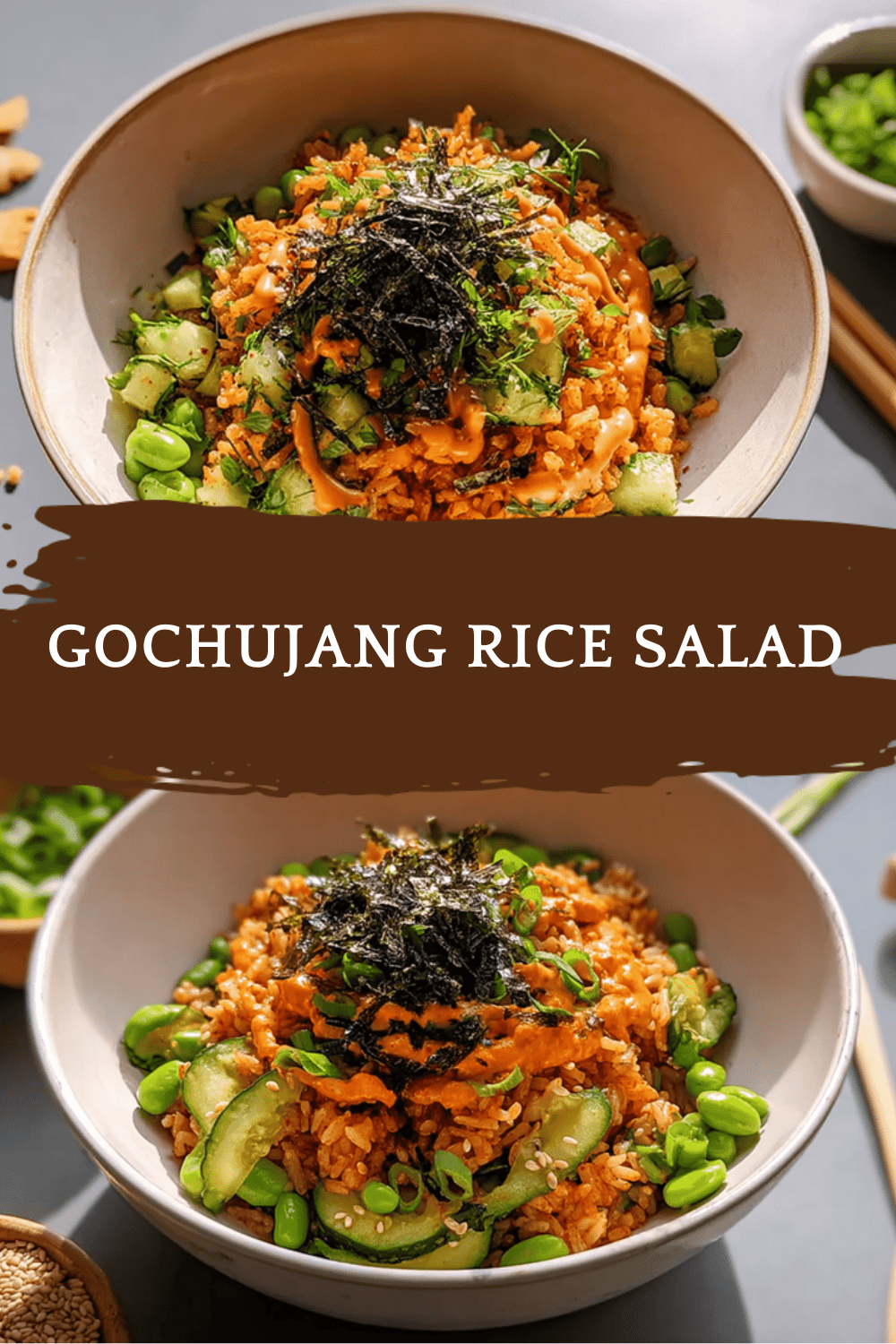
Finally, assemble by portioning out 1½ cups thawed edamame, 1 diced cucumber, 2 finely chopped spring onions, 1 diced avocado, ¼ cup chopped fresh mint, the crispy rice, and cooked mushrooms into bowls. Drizzle with the peanut sauce and serve right away for the best taste. This whole process takes about 50 minutes, and it’s a hit for busy parents or anyone craving a healthy meal. If you’re looking for more salad ideas, our refreshing cherry salad might be just what you need!
Dietary Substitutions to Customize Your Gochujang Rice Salad
One of the best things about this Gochujang Rice Salad is how easy it is to make it your own! Whether you’re vegan, gluten-free, or just watching your calories, you can tweak the ingredients to fit your needs. Let’s break down some simple swaps that keep the flavor front and center.
For protein and main components, swap in firm tofu or tempeh instead of animal products to keep it vegan. If you want more protein, grilled salmon works great for a gluten-free twist. You could also use quinoa or cauliflower rice in place of regular rice for a low-calorie option that still feels hearty.
When it comes to veggies and sauces, try zucchini or bell peppers in place of cucumber for a fresh variation. Add spinach or kale to boost nutrients, and if you prefer less spice, mix gochujang with a milder sauce. Don’t forget, tamari is a fantastic gluten-free alternative to soy sauce, and fresh herbs like cilantro can amp up the aroma. With these changes, your Gochujang Rice Salad stays delicious and adaptable for everyone from students to seniors.
Mastering Gochujang Rice Salad: Advanced Tips and Variations
Once you’ve nailed the basics, it’s time to level up your Gochujang Rice Salad with some pro tips! Toasting the rice lightly before cooking adds a nutty depth that makes every bite even better. You can also experiment with flavors by mixing in pickled veggies or crushed peanuts for extra texture and fun.
Presentation and Make-Ahead Ideas
Serving in individual bowls with a sprinkle of scallions and sesame seeds creates a visually appealing dish that wows your guests. If you’re prepping ahead, keep the components separate and combine them just before eating to maintain that fresh crunch. For a protein boost, top it with a fried egg it’s a game-changer!
Flavor variations are endless; try adding kimchi for a tangy kick or different greens for more nutrients. These tweaks make the salad perfect for food enthusiasts and travelers looking for quick, exciting meals. As you get comfortable, you’ll see how versatile this Gochujang Rice Salad can be in your everyday cooking.
How to Store Gochujang Rice Salad: Best Practices
Keeping your Gochujang Rice Salad fresh is key to enjoying it later, so let’s talk storage! Pop it in an airtight container in the fridge for up to 3 days to lock in those flavors. If you’ve got fresh veggies involved, add them right before serving to keep everything crisp and tasty.
Avoid freezing the mixed salad since it can make textures go soft, but you can freeze the rice and sauce separately for up to a month. When reheating, go gentle in the microwave or on the stovetop, and stir occasionally. For meal prep, storing parts separately helps maintain that perfect balance, making it ideal for working professionals on the go.
FAQs: Frequently Asked Questions About Gochujang Rice Salad
Is Gochujang Rice Salad gluten-free?
Yes, Gochujang Rice Salad can be gluten-free if you use tamari sauce labeled gluten-free. Gochujang itself is traditionally made from fermented soybeans, red chili, and glutinous rice but many brands now offer gluten-free options. To keep the salad gluten-free, check labels on all sauces and condiments, especially the tamari or soy sauce substitute, and avoid any added ingredients containing wheat.
Can I make Gochujang Rice Salad without nuts?
Absolutely! To make Gochujang Rice Salad nut-free, you can substitute peanut butter in the sauce with tahini (sesame seed paste) or sunflower seed butter. These alternatives maintain a creamy texture and rich flavor without triggering nut allergies. Ensure all other ingredients, like dressings or garnishes, are free of nuts to keep the dish safe for nut-sensitive diets.
How long does Gochujang Rice Salad stay fresh in the fridge?
Gochujang Rice Salad is best eaten fresh to enjoy its vibrant flavors and crisp textures. However, you can store leftovers in an airtight container in the refrigerator for up to 2 days. To prevent the salad from becoming soggy, keep the dressing or sauce separate and mix it in just before serving to maintain freshness.
Can I use brown rice instead of white rice in this salad?
Yes, brown rice is a great substitute for white rice in this recipe and adds a nuttier flavor and chewier texture. Brown rice also provides additional fiber and nutrients, making the salad more wholesome. Just be sure to cook the brown rice fully and allow it to cool before combining it with the other salad ingredients for the best result.
What makes gochujang different from other chili pastes?
Gochujang is a Korean chili paste known for its unique balance of spicy, sweet, and savory flavors. It is made by fermenting chili powder, glutinous rice, fermented soybeans, and salt over time, which develops its complex, deep taste and mild heat. Unlike other chili pastes, gochujang has a thicker texture and a subtle sweetness that enhances dishes like rice salads, soups, and marinades.
Gochujang Rice Salad
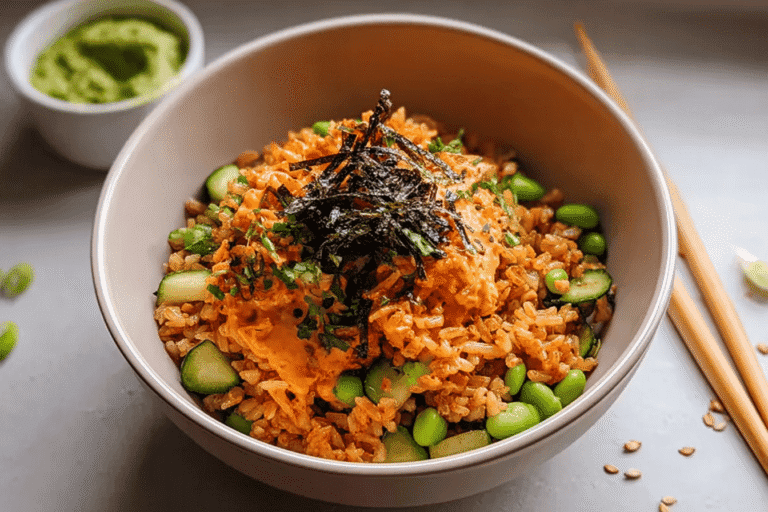
🍚 Enjoy the satisfying crunch and rich flavors of Crispy Rice Salad with Spicy Gochujang Mushrooms for a unique and nutritious meal.
🌶️ This vibrant dish combines bold Korean-inspired spice with fresh ingredients and creamy peanut sauce for a flavorful balance.
- Total Time: 50 minutes
- Yield: 2 servings 1x
Ingredients
1 cup cooked sushi rice
1 tbsp chili oil
255 g king oyster mushrooms
170 g shimeji mushrooms
½ tbsp gochujang paste
2 tsp tamari (low sodium)
½ tbsp maple syrup
1 tsp rice vinegar
1 tsp sesame oil
1½ tbsp peanut butter (or tahini for a nut-free option)
1 tbsp freshly grated ginger
1 clove garlic
2 tbsp lime juice
2 tsp tamari (low sodium)
2 tsp maple syrup
¼ cup dairy-free milk (soy milk recommended)
1 tsp gochujang paste
1½ cups shelled frozen edamame (thawed)
1 medium cucumber (diced)
2 spring onions (finely chopped)
1 avocado (diced)
¼ cup fresh mint (finely chopped)
Instructions
1-Ready to get cooking? This Gochujang Rice Salad is a fun and straightforward recipe that anyone can master. Start by preheating your oven to 200°C (400°F), which sets the stage for that crispy rice we all love. Follow these steps to turn simple ingredients into a delicious meal that bursts with flavor.
2-First, mix 1 cup of cooked sushi rice with 1 tbsp chili oil and spread it thinly on a lined baking tray. Bake for 30 minutes, stirring halfway through, then let it cool and crush it into small crispy bits this adds the perfect crunch! Next, prepare the mushrooms by slicing the king oyster caps and shredding the stems, then chopping the shimeji mushrooms.
3-Marinate the mushrooms in a mix of ½ tbsp gochujang paste, 2 tsp tamari, ½ tbsp maple syrup, and 1 tsp rice vinegar; shake to coat and cook in a pan over medium heat for about 10 minutes until browned and tender. Add 1 tsp sesame oil near the end and let them brown without stirring for extra flavor. For the peanut sauce, blend 1½ tbsp peanut butter, 1 tbsp grated ginger, 1 clove garlic, 2 tbsp lime juice, 2 tsp tamari, 2 tsp maple syrup, ¼ cup dairy-free milk, and 1 tsp gochujang paste until smooth it’s that easy!
4-Finally, assemble by portioning out 1½ cups thawed edamame, 1 diced cucumber, 2 finely chopped spring onions, 1 diced avocado, ¼ cup chopped fresh mint, the crispy rice, and cooked mushrooms into bowls. Drizzle with the peanut sauce and serve right away for the best taste. This whole process takes about 50 minutes, and it’s a hit for busy parents or anyone craving a healthy meal. If you’re looking for more salad ideas, our refreshing cherry salad might be just what you need!
Last Step:
Please leave a rating and comment letting us know how you liked this recipe! This helps our business to thrive and continue providing free, high-quality recipes for you.Notes
🔥 Bake rice thinly and stir halfway for even crispiness.
🍄 Use a gentle touch when cooking mushrooms to allow them to brown nicely without stirring too often.
🥜 Substitute tahini for peanut butter to make the peanut sauce nut-free while maintaining creaminess.
- Prep Time: 15 minutes
- Cooking time: 35 minutes
- Cook Time: 35 minutes
- Category: Salad
- Method: Baking, sautéing, blending
- Cuisine: Korean-inspired
- Diet: Vegan, Gluten-Free
Nutrition
- Serving Size: 1 bowl
- Calories: 698 kcal
- Sugar: 20 g
- Sodium: 595 mg
- Fat: 34 g
- Saturated Fat: 5 g
- Unsaturated Fat: 25 g
- Trans Fat: 0 g
- Carbohydrates: 56 g
- Fiber: 19 g
- Protein: 30 g
- Cholesterol: 0 mg


