

Benefits and Advantages of Fruit Smoothie
This fruit smoothie recipe is perfect for beginners due to its easy preparation and minimal ingredients. It provides a quick and delicious option for busy individuals seeking a nutritious boost. Loaded with vitamins, antioxidants, and dietary fiber, the smoothie promotes overall wellness, natural energy, and hydration. It supports digestion and strengthens the immune system, thanks to fresh fruits like kiwi, banana, and berries. Its versatility allows customization for vegan, gluten-free, and low-calorie diets, making it suitable for a wide range of nutritional needs. The natural sweetness from fresh fruits means less added sugar is needed, creating a wholesome and refreshing snack or meal that fits seamlessly into healthy lifestyles.
Jump To
- 1. Benefits and Advantages of Fruit Smoothie
- 2. Essential Ingredients for Fruit Smoothie
- 3. Dietary Substitutions to Customize Your Fruit Smoothie
- 4. How to Prepare the Perfect Fruit Smoothie: Step-by-Step Guide
- 5. Advanced Tips and Variations
- 6. How to Store Fruit Smoothie: Best Practices
- 7. Nutritional Value of Fruit Smoothie
- 8. FAQs: Frequently Asked Questions About Fruit Smoothie
- 9. Simple and Delicious Fruit Smoothie Recipe for Beginners
Essential Ingredients for Fruit Smoothie
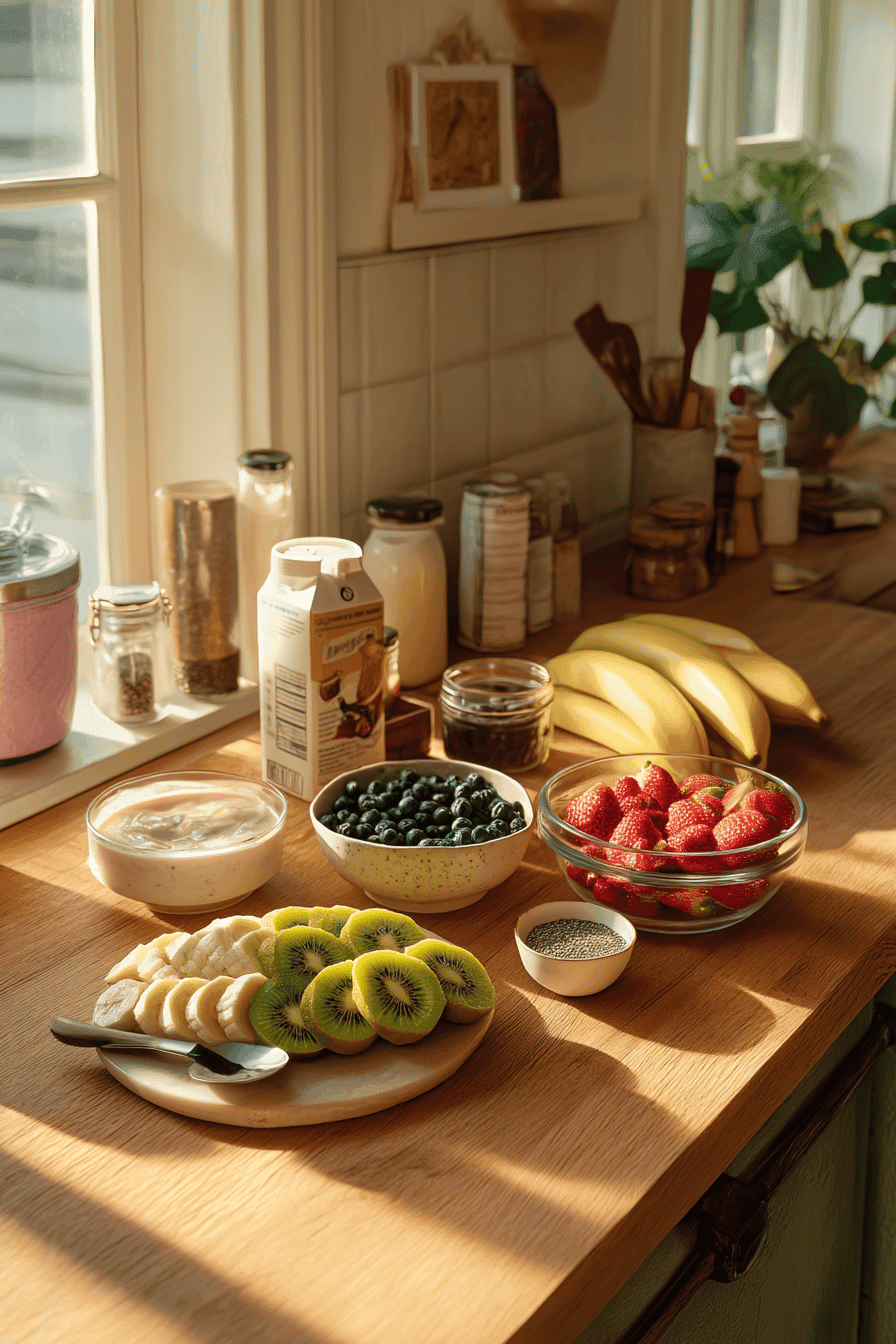
- 1 kiwi, peeled and sliced
- 1 banana, peeled and sliced
- 1 cup hulled strawberries (fresh or frozen)
- ½ cup blueberries (fresh or frozen)
- 1 cup plain or vanilla Greek yogurt (or plant-based alternative)
- 1 cup ice cubes (plus more as needed)
- ½ cup pineapple juice or unsweetened almond milk
- Optional natural sweeteners: honey, stevia, vanilla extract
This balance of ingredients offers creaminess, antioxidants, protein, and hydration. Alternates like oat or coconut milk can accommodate various dietary preferences and keep the smoothie light yet satisfying.
Dietary Substitutions to Customize Your Fruit Smoothie
You can easily adapt this fruit smoothie to meet dietary needs and preferences. For vegan diets, swap Greek yogurt for coconut or almond yogurt. Use plant-based milk alternatives such as oat milk, soy milk, or coconut milk instead of almond milk for different flavors or allergen considerations. Sweeteners like stevia or maple syrup offer natural alternatives to honey, or omit sweeteners entirely if your fruit is ripe and naturally sweet. If avoiding dairy, replace yogurt with silken tofu or extra frozen fruit for creaminess. For nut allergies, use rice or oat milk instead of almond milk. Boost protein by adding plant-based protein powder or nut butters, and add fiber or omega-3s with chia or flax seeds. These substitutions maintain flavor and nutrition while catering to diverse dietary needs.
How to Prepare the Perfect Fruit Smoothie: Step-by-Step Guide
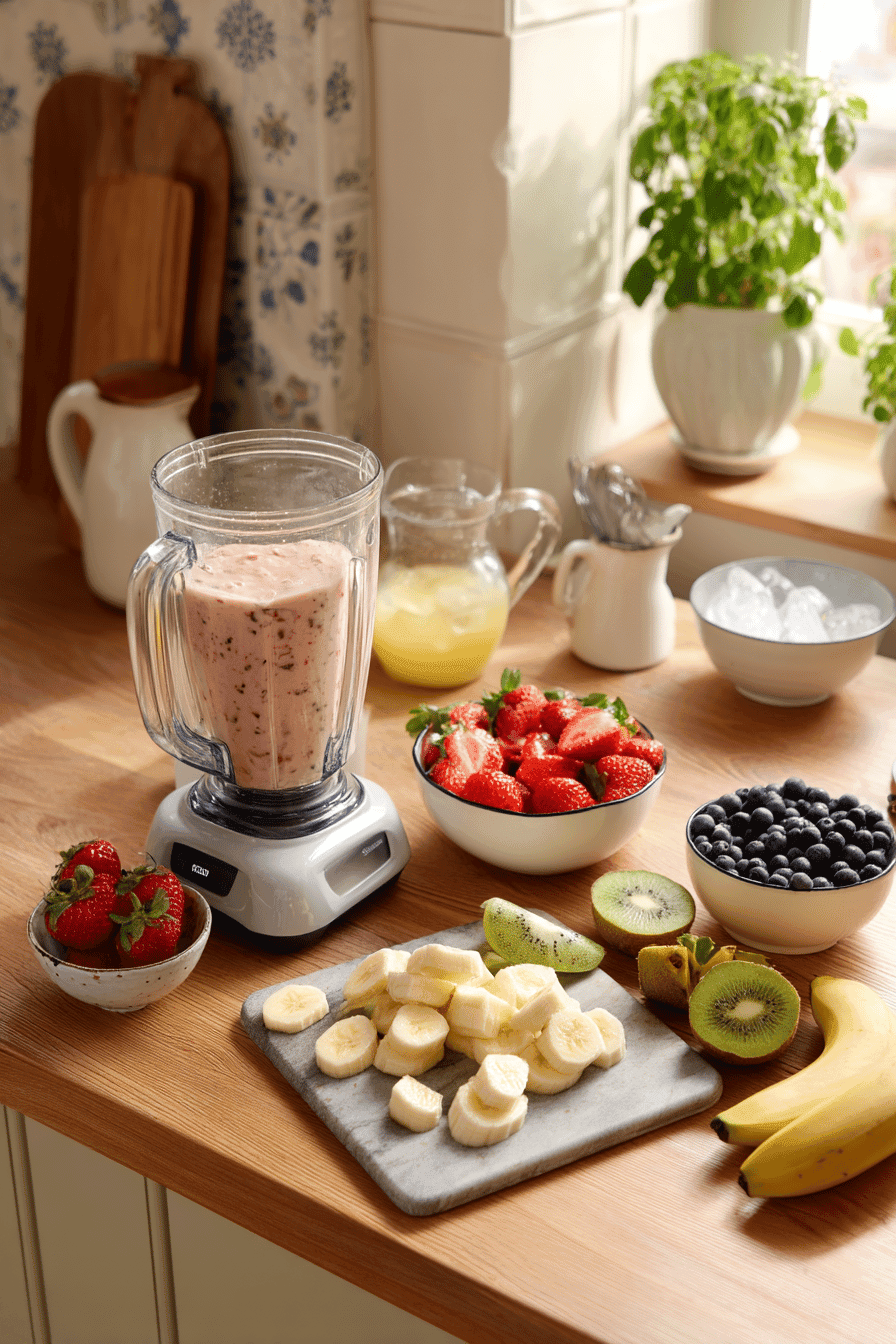
- Prepare Ingredients: Peel and slice kiwi and banana; wash berries thoroughly.
- Add Fruits to Blender: Start with the banana for creaminess, then add kiwi, strawberries, and blueberries.
- Incorporate Yogurt: Add Greek or plant-based yogurt for protein and texture.
- Pour Liquid Base: Add pineapple juice or your preferred milk alternative, adjusting amounts for desired thickness.
- Add Ice and Sweetener: Include ice cubes and optional sweeteners according to taste.
- Blend Thoroughly: Blend on high speed until smooth and creamy. Pause to scrape down the sides if necessary.
- Taste and Adjust: Check sweetness and consistency; add more liquid or sweetener and blend again if needed.
- Serve Promptly: Pour into glasses and enjoy immediately to maximize freshness and nutrient retention.
This step-by-step approach yields a fresh, well-balanced fruit smoothie perfect for any occasion or dietary need.
Advanced Tips and Variations
Enhance your fruit smoothie by substituting tropical fruits like mango or pineapple for a bright, refreshing flavor. Incorporate leafy greens such as spinach or kale for extra antioxidants and fiber without overpowering the fruit taste. For creaminess and healthy fats, add a tablespoon of chia seeds or flaxseeds. Boost protein content by blending in plant-based protein powders or nut butters, tailored as per dietary restrictions. Adding a dash of cinnamon or a splash of vanilla extract can subtly enrich the flavor profile. For thicker textures, use frozen fruit or add more ice cubes. Remember to balance additions to preserve the smoothie’s natural sweetness and smooth consistency, keeping it versatile, nutritious, and enjoyable for all palates.
Explore more wholesome recipes like the Egg and Avocado Salad to complement your healthy smoothie lifestyle.
How to Store Fruit Smoothie: Best Practices
To keep your fruit smoothie fresh and delicious, refrigeration is best if you plan to consume it within 24 hours. Store the smoothie in an airtight container to prevent oxidation and nutrient loss. For longer storage, freezing is recommended. Portion your smoothie into freezer-safe containers or ice cube trays, leaving room for expansion. When ready to enjoy, thaw the smoothie overnight in the refrigerator or at room temperature for a few hours. Avoid reheating, as heat can degrade vitamins and alter texture.
Before drinking, shake or stir the smoothie to re-incorporate any separated ingredients. By following these steps, you maintain the vibrant flavor, smooth texture, and nutritional value, making your fruit smoothie convenient for busy days or meal prep.
Nutritional Value of Fruit Smoothie
This fruit smoothie recipe delivers a balanced array of nutrients, ideal for a refreshing and wholesome snack or meal replacement. Here’s an overview of its nutritional content per serving:
| Nutrient | Amount | Benefit |
|---|---|---|
| Calories | 215 kcal | Provides energy for daily activities |
| Carbohydrates | 42 g | Natural sugars and fiber support sustained energy and digestion |
| Protein | 12 g | Supports muscle repair and satiety |
| Fat | 1 g | Low in fat for a light option; includes healthy fats from yogurt |
| Fiber | 5 g | Enhances digestive health and fullness |
| Vitamin C | 91 mg | Boosts immune function and skin health |
| Calcium | 155 mg | Strengthens bones and teeth |
FAQs: Frequently Asked Questions About Fruit Smoothie
What fruits are best for making a delicious fruit smoothie?
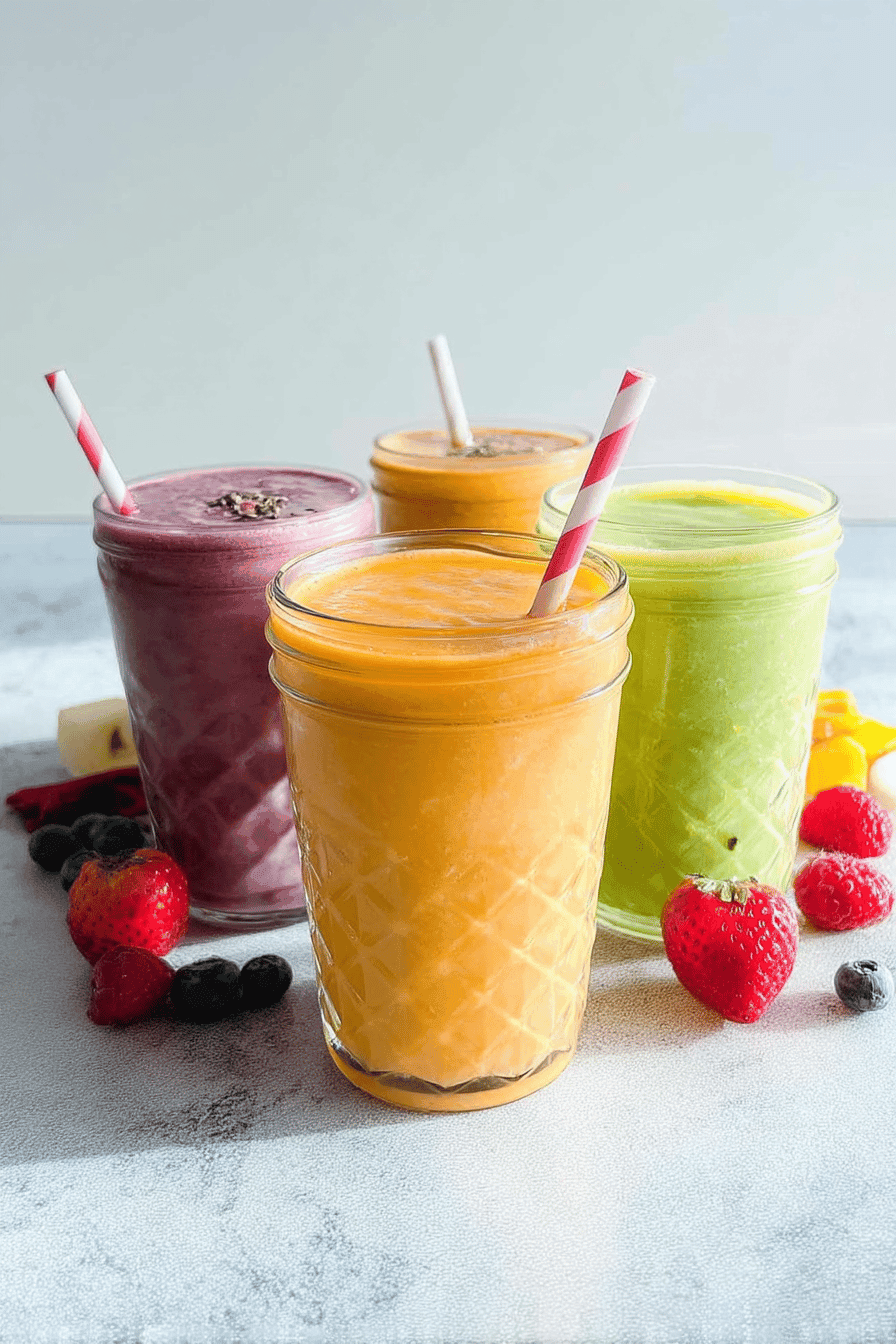
You can use nearly any fruit to make a smoothie, but popular choices include berries like strawberries, blueberries, and raspberries, as well as tropical fruits such as mango, pineapple, and banana. Aim for about 3 cups of fruit total, excluding banana, which adds natural sweetness and creaminess. Mixing different fruits balances flavors and nutrients.
How can I prepare fruit smoothies ahead of time to save effort in the morning?
Prep fruit by slicing and portioning it, then freeze in single-use bags for up to 3 months. For example, cut bananas and strawberries, freeze them separately, and portion into freezer bags along with yogurt cubes. When ready, just blend the frozen contents with your choice of liquid. This method streamlines making smoothies on busy days.
What liquids work best in fruit smoothies for smooth texture and flavor?
Popular smoothie liquids include unsweetened almond milk for a light, nutty taste and coconut milk for tropical flavors. You can also use whole milk, soy milk, or fruit juices. Use about 1 to 1¼ cups of liquid per smoothie to achieve the right consistency. Adjust the amount to make your smoothie thicker or thinner as desired.
How should I store leftover smoothies and keep them fresh?
Smoothies are best fresh but can be stored in an airtight container in the fridge for up to 12 hours. To reduce browning, add a small amount of lemon juice before storing. For longer storage, freeze smoothies in sealed containers for up to 3 months. Thaw in the fridge and reblend before drinking to restore texture.
What extra ingredients can I add to boost the nutrition of my fruit smoothies?
You can add leafy greens like spinach or kale for vitamins and minerals without changing the taste much. Seeds such as chia or flax add fiber and omega-3 fatty acids. Flavor options like cinnamon, vanilla extract, or a small amount of honey can enhance taste naturally. Nut butters also add protein and creaminess.

Simple and Delicious Fruit Smoothie Recipe for Beginners
🍌 Treat yourself to a Simple and Delicious Fruit Smoothie that’s perfect for beginners and packed with fresh fruit flavors!
🥝 Enjoy a nutritious blend of vitamins and natural sweetness that fuels your day with every sip.
- Total Time: 10 minutes
- Yield: 2 servings
Ingredients
– 1 kiwi, peeled and sliced
– 1 banana, peeled and sliced
– 1 cup hulled strawberries (fresh or frozen)
– ½ cup blueberries (fresh or frozen)
– 1 cup plain or vanilla Greek yogurt (or plant-based alternative)
– 1 cup ice cubes (plus more as needed)
– ½ cup pineapple juice or unsweetened almond milk
– Optional natural sweeteners: honey, stevia, vanilla extract
Instructions
Prepare Ingredients: Peel and slice kiwi and banana; wash berries thoroughly.
Add Fruits to Blender: Start with the banana for creaminess, then add kiwi, strawberries, and blueberries.
Incorporate Yogurt: Add Greek or plant-based yogurt for protein and texture.
Pour Liquid Base: Add pineapple juice or your preferred milk alternative, adjusting amounts for desired thickness.
Add Ice and Sweetener: Include ice cubes and optional sweeteners according to taste.
Blend Thoroughly: Blend on high speed until smooth and creamy. Pause to scrape down the sides if necessary.
Taste and Adjust: Check sweetness and consistency; add more liquid or sweetener and blend again if needed.
Serve Promptly: Pour into glasses and enjoy immediately to maximize freshness and nutrient retention.
Last Step:
Please leave a rating and comment letting us know how you liked this recipe! This helps our business to thrive and continue providing free, high-quality recipes for you.Notes
🧊 Using frozen fruits or ice cubes gives your smoothie a thicker texture without diluting the taste.
🥛 Substitute dairy yogurt with plant-based alternatives to accommodate dietary preferences.
🍯 Sweeten naturally using honey, stevia, or ripe fruits to maintain a healthy balance.
- Prep Time: 5 minutes
- Blend Time: 5 minutes
- Cook Time: 0 minutes
- Category: Smoothie
- Method: Blending
- Cuisine: International
- Diet: Vegetarian
Nutrition
- Serving Size: 1 glass
- Calories: 215 kcal
- Sugar: 28g
- Sodium: 47mg
- Fat: 1g
- Saturated Fat: 0.2g
- Unsaturated Fat: Varies
- Trans Fat: 0.01g
- Carbohydrates: 42g
- Fiber: 5g
- Protein: 12g
- Cholesterol: 5mg





This fruit smoothie is a perfect start to my mornings! 🥝🍌 I’ve been adding a handful of spinach for an extra boost of greens. Any suggestions for replacing the banana, though? My kid avoids it at all costs!