

Why You’ll Love This Fried Pickles
If you’re looking for a snack that hits all the right spots crispy, tangy, and utterly addictive then fried pickles are about to become your new favorite indulgence. These golden-brown treats take the classic dill pickle to a whole new level, creating a perfect balance of textures and flavors that will have your taste buds dancing with joy. Whether you’re serving them as an appetizer at your next gathering or enjoying them as a comforting snack, there’s something incredibly satisfying about biting through that crunchy coating to reach the sour, refreshing pickle inside.
- Ease of Preparation: One of the best things about fried pickles is how simple they are to make. With just 15 minutes of prep time and 5 minutes of cooking, you can have this delicious snack ready to serve in under 20 minutes. The straightforward process involves creating a simple seasoned flour coating, dipping the pickle slices, and frying them to perfection. Even if you’re new to frying foods at home, you’ll find this recipe approachable and rewarding.
- Health Benefits: While fried foods are typically thought of as indulgent, pickles themselves offer several surprising health benefits. They are low in calories and rich in vitamins, minerals, and antioxidants. As cucumber nutritional value is largely preserved during the pickling process, you’ll also enjoy benefits like hydration and essential minerals. Pickles also contain probiotics that support digestive health, especially if they are fermented naturally. Each serving of these fried pickles contains only 139 calories, making them a relatively guilt-free treat compared to many other fried appetizers.
- Versatility: This recipe is incredibly adaptable to different dietary preferences and taste variations. You can easily make them gluten-free by substituting the all-purpose flour with your favorite gluten-free alternative. For those avoiding dairy, the buttermilk can be replaced with a simple mixture of milk and vinegar. You can also experiment with different pickle varieties from dill to bread and butter to create flavor profiles that suit your personal preferences. These adaptions make fried pickles a crowd-pleasing option for gatherings with diverse dietary needs.
- Distinctive Flavor: What sets these fried pickles apart is the perfect harmony between the tangy sourness of the pickles and the savory, slightly spicy breading. The combination of paprika, cayenne pepper, and garlic powder creates a well-seasoned coating that complements rather than overwhelms the natural flavor of the pickles. When you take that first bite, you’ll experience the satisfying crunch of the exterior followed by the burst of vinegar and dill truly a taste sensation that keeps you coming back for more.
Jump To
- 1. Why You’ll Love This Fried Pickles
- 2. Essential Ingredients for Fried Pickles
- 3. How to Prepare the Perfect Fried Pickles: Step-by-Step Guide
- 4. Dietary Substitutions to Customize Your Fried Pickles
- 5. Mastering Fried Pickles: Advanced Tips and Variations
- 6. How to Store Fried Pickles: Best Practices
- 7. FAQs: Frequently Asked Questions About Fried Pickles
- 8. Fried Pickles
Essential Ingredients for Fried Pickles
The beauty of this fried pickles recipe lies in its simplicity. With just a handful of pantry staples and fresh pickles, you can create a restaurant-quality appetizer right in your own kitchen. Each ingredient plays a specific role in ensuring the perfect texture and flavor balance.
Main Ingredients
- Vegetable oil for frying – A neutral oil with a high smoke point is essential for achieving that perfect golden crust without overpowering the pickle’s flavor.
- 1 cup all-purpose flour – Forms the base of the crispy coating, providing structure and that satisfying crunch we all love in fried pickles.
- ½ teaspoon salt – Enhances the overall flavor profile, bringing out the natural tanginess of the pickles while balancing the breading.
- 1 teaspoon ground black pepper – Adds a subtle heat that cuts through the richness of the fried coating.
- ¼ teaspoon paprika – Imparts a warm, slightly smoky flavor and contributes to the appetizing golden color of the fried pickles.
- ¼ teaspoon cayenne pepper – Provides a gentle kick of heat that builds on the palate without overwhelming the pickle’s natural flavor.
- ¼ teaspoon garlic powder – Adds depth and savory notes to complement the dill flavor of the pickles.
- ½ cup buttermilk – Creates a tangy liquid binder that helps the flour adhere to the pickles while contributing to the tender texture inside the coating.
- 1 large egg – Works with the buttermilk to create a binding mixture that ensures the breading sticks perfectly to each pickle slice.
- 3 kosher dill pickles cut into slices just shy of ¼ inch thick and lightly patted dry – The star ingredient! Their firm texture and robust dill flavor stand up beautifully to the frying process.
- 2 tablespoons ranch dressing (optional dipping sauce) – Creamy and cool, this classic dip provides the perfect contrast to the hot, crispy fried pickles.
- 1 tablespoon BBQ sauce (optional dipping sauce) – Adds a sweet and smoky dimension that pairs wonderfully with the tangy pickles.
- 1 teaspoon ketchup (optional dipping sauce) – Contributes a touch of sweetness and umami to balance the acidity of the pickles.
- 1 teaspoon mayonnaise (optional dipping sauce) – Adds richness and creaminess to the dipping sauce, helping to mellow out the sharper flavors.
- dash of hot sauce (optional dipping sauce) – Provides an extra kick for those who enjoy a bit more heat with their fried pickles.
- dash of ground black pepper (optional dipping sauce) – Enhances the overall flavor profile of the sauce with just a hint of spice.
Special Dietary Options
| Dietary Need | Substitutions |
|---|---|
| Vegan | Replace buttermilk and egg mixture with a plant-based milk (like almond or soy) mixed with 1 tablespoon of vinegar or lemon juice and 1 tablespoon of cornstarch or arrowroot powder to create the binding effect. |
| Gluten-free | Substitute all-purpose flour with a 1:1 gluten-free flour blend that includes xanthan gum for better structure. Alternatively, use a mix of rice flour and cornstarch for extra crunchiness. |
| Low-calorie | Consider baking or air-frying instead of deep-frying. Use whole wheat flour for more fiber and nutrients, and reduce the amount of coating by shaking off excess flour more vigorously. |
How to Prepare the Perfect Fried Pickles: Step-by-Step Guide
Creating the perfect batch of fried pickles is easier than you might think. By following these detailed steps, you’ll achieve restaurant-quality results right in your own kitchen. The key is preparation and attention to detail, especially when it comes to oil temperature and coating technique.
Preparation and Oil Heating
Before you begin, gather all your ingredients and equipment. Fill a heavy-bottomed pot or Dutch oven with 2-3 inches of vegetable oil. A heavy-bottomed pot helps maintain a consistent temperature throughout the frying process, which is crucial for achieving evenly cooked fried pickles.
Attach a frying thermometer to the side of the pot, making sure the tip is positioned in the oil without touching the bottom. Heat the oil to 375 degrees Fahrenheit. This precise temperature is essential too low, and your pickles will absorb excess oil and become soggy; too high, and they’ll burn on the outside while remaining undercooked inside.
Pro Tip: While the oil heats, use this time to prepare your coating and pickle slices. This efficiency ensures your oil won’t sit at temperature for too long, which can degrade its quality over time.
Creating the Seasoned Flour Mixture
While the oil is heating, prepare your breading station. In a medium bowl, combine 1 cup all-purpose flour with ½ teaspoon salt, 1 teaspoon ground black pepper, ¼ teaspoon paprika, ¼ teaspoon cayenne pepper, and ¼ teaspoon garlic powder. Whisk these dry ingredients together until they are thoroughly combined. This seasoned flour mixture is what gives your fried pickles their delicious flavor and golden color.
The combination of spices creates a balanced profile that enhances without overpowering the natural dill flavor of the pickles. Feel free to adjust these seasonings to your taste if you prefer more heat, increase the cayenne slightly; for a more savory profile, add a bit more garlic powder.
Preparing the Liquid Binder
In a separate bowl, whisk together ½ cup buttermilk and 1 large egg until well combined. This liquid mixture serves as the glue that helps the flour coating adhere to the pickle slices. The buttermilk adds a subtle tanginess that complements the pickles, while the protein in the egg creates a stronger bond between the pickle and the coating.
If you don’t have buttermilk on hand, don’t worry! You can easily create a substitute by mixing ½ cup of regular milk with 1 tablespoon of lemon juice or vinegar. Let this mixture sit for about 5 minutes before using it in your recipe.
Prepping the Pickle Slices
Cut 3 kosher dill pickles into slices just shy of ¼ inch thick. This specific thickness is important slices that are too thin may become overly soft during frying, while slices that are too thick will overwhelm the delicate coating with their texture and flavor.
After slicing, lightly pat the pickle slices dry with paper towels. Removing excess moisture is a crucial step that many home cooks skip, but it makes a significant difference in the final result. Excess moisture on the pickle surface can prevent the coating from adhering properly and can cause dangerous splattering when the pickles hit the hot oil.
The Dredging Process
Set up your assembly line with the pickle slices, seasoned flour mixture, buttermilk-egg mixture, and a clean plate for the coated pickles. Working in small batches of 3-4 pickle slices at a time prevents the coating from becoming too wet and gummy, which can affect the final texture.
For each pickle slice, first coat it thoroughly in the flour mixture, pressing gently to help the flour adhere. Shake off any excess flour you want a light, even coating, not a thick, doughy layer. Next, dip the floured pickle into the buttermilk-egg mixture, allowing any excess to drip off. Finally, return the pickle to the flour mixture for a second coating, again pressing gently and shaking off excess.
This double-dredging technique creates that characteristic thick, crispy exterior that makes fried pickles so satisfying. The first layer of flour helps the liquid mixture adhere, while the second layer creates the final crunchy texture.
Frying to Golden Perfection
Once your oil has reached 375°F, carefully place 3-4 coated pickle slices into the hot oil using a slotted spoon or frying spider. Avoid overcrowding the pot, as this can cause the oil temperature to drop dramatically and result in soggy, greasy pickles.
Fry the pickles for approximately 90 seconds on each side, or until they achieve a beautiful golden brown color. You’ll notice that the pickles may float to the surface as they cook this is normal! Simply flip them gently with your slotted spoon to ensure even browning on both sides.
Remove the fried pickles from the oil using the slotted spoon and transfer them to paper towels to drain. The paper towels will absorb excess oil, leaving you with crispy, not greasy, pickles. Continue frying in small batches, being careful to maintain the oil temperature at 375°F between batches. You may need to adjust the heat slightly as you go to keep the temperature steady.
Serving Your Creation
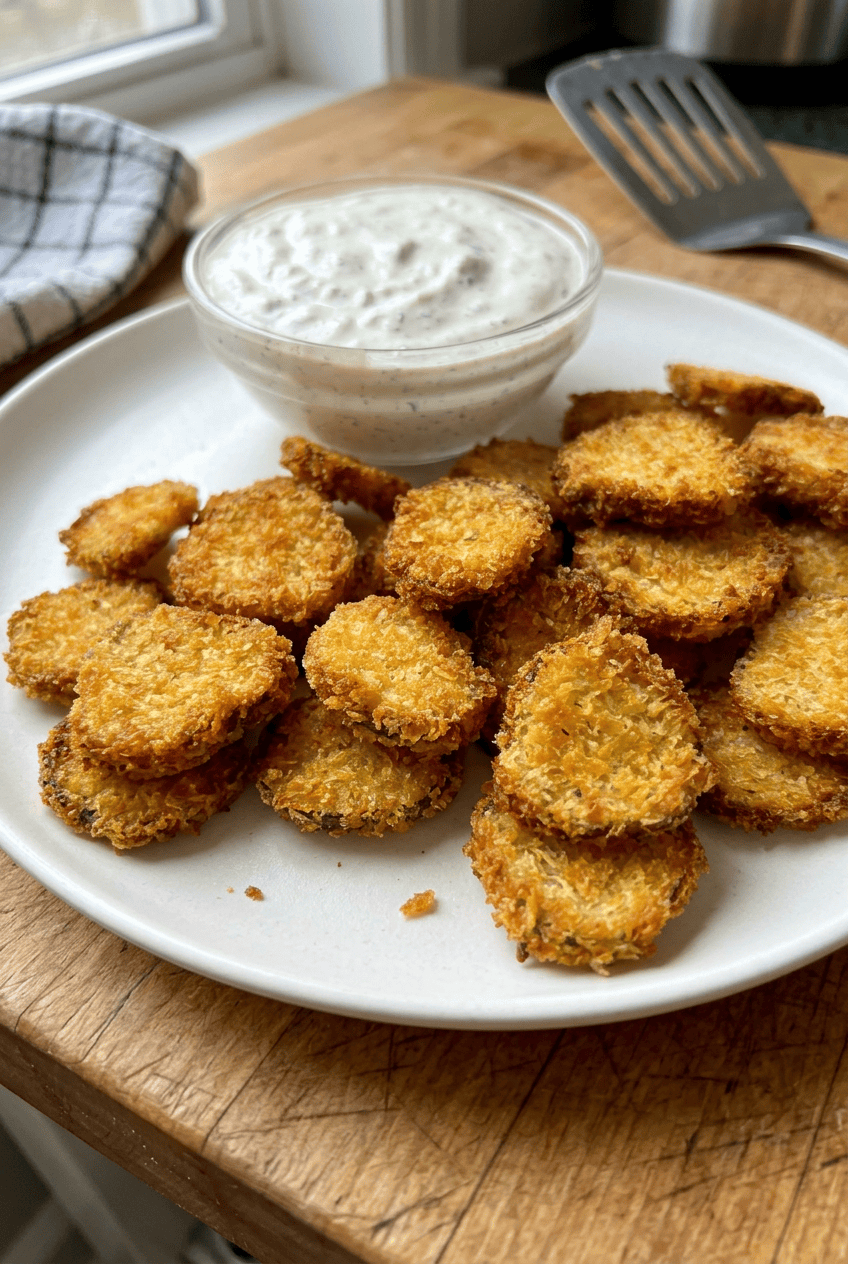
Fried pickles are best enjoyed warm, so plan to serve them as soon as they’re all cooked. For the optional dipping sauce, simply combine 2 tablespoons ranch dressing, 1 tablespoon BBQ sauce, 1 teaspoon ketchup, 1 teaspoon mayonnaise, a dash of hot sauce, and a dash of ground black pepper in a small bowl. This zesty sauce provides the perfect creamy, tangy complement to the crispy, salty pickles.
Arrange the fried pickles on a serving platter alongside the dipping sauce and watch them disappear! The contrast between the hot, crunchy exterior and the cool, smooth sauce is what makes this dish so irresistible.
Dietary Substitutions to Customize Your Fried Pickles
One of the wonderful things about fried pickles is their adaptability. Whether you’re following specific dietary guidelines or simply want to experiment with new flavors, there are numerous substitutions and modifications you can make to suit your needs and preferences.
Protein and Main Component Alternatives
While dill pickles are the traditional choice for this recipe, there are several alternatives you can explore. Bread and butter pickles offer a sweeter profile that pairs beautifully with the savory coating. Their natural sweetness creates an interesting contrast with the spices in the breading. For a more complex flavor, consider using pickled jalapeño slices they’ll add a significant kick of heat that spice lovers will adore.
If you’re looking to add more protein to your appetizer, try coating other vegetables using the same technique. Zucchini rounds, green bean bundles, and even thin slices of eggplant work wonderfully with this breading. For a heartier option, create small bites of cheese by cutting cheddar or mozzarella into cubes before coating and frying. Just be mindful that cheese melts faster than pickles, so you’ll need to adjust your frying time accordingly.
Vegetable, Sauce, and Seasoning Modifications
The seasoning blend in this recipe is perfectly balanced as written, but don’t hesitate to customize it to your taste. For those who enjoy a smokier flavor, increase the paprika and consider adding a pinch of smoked paprika. If heat is your preference, bump up the cayenne pepper or add some crushed red pepper flakes to the flour mixture. For an herbier note, incorporate dried dill weed or parsley into the coating to reinforce the pickle’s natural flavors.
The dipping sauce is another area ripe for experimentation. Instead of the suggested sauce, try serving your fried pickles with a homemade rémoulade, which adds a delightful zesty element. A simple garlic aioli makes for an elegant pairing, while a spicy chipotle mayo adds a Southwestern flair. For those avoiding dairy, a mixture of hot sauce and melted butter creates a simple yet delicious dip.
Seasonal variations can also keep this recipe exciting year-round. In summer, consider adding fresh herbs like chopped dill or parsley to the coating. During fall, a touch of cinnamon mixed with the savory spices creates an intriguing flavor profile. Winter calls for heartier seasonings try adding onion powder or a touch of mustard powder to the flour mixture for extra depth.
Mastering Fried Pickles: Advanced Tips and Variations
Once you’ve mastered the basic fried pickles recipe, you might want to take your skills to the next level. These advanced tips and creative variations will help you create restaurant-quality results that will impress even the most discerning pickle enthusiasts.
Pro Cooking Techniques
Temperature control is the secret to consistently perfect fried pickles. Invest in a quality deep-fry thermometer and trust it over your instincts. The visual appearance of bubbling oil can be deceiving, but a thermometer doesn’t lie. Keep the oil at a steady 375°F throughout the cooking process for the crispest results.
Another professional technique is to rest your coated pickles for about 10 minutes before frying. This allows the flour to absorb moisture from the pickle, creating a stronger bond that’s less likely to separate during frying. Simply place the coated pickles on a wire rack while waiting for the oil to heat.
For ultimate crispiness, consider using a combination of flours. Replacing half of the all-purpose flour with cornmeal adds a delightful crunch and slight sweetness. Alternatively, a touch of rice flour can make the coating lighter and crispier. These small adjustments can transform the texture of your fried pickles from good to exceptional.
Flavor Variations
Once you’re comfortable with the classic recipe, try these exciting variations to keep your taste buds intrigued:
- Beer-Battered Pickles: Replace the buttermilk and egg mixture with your favorite beer. The carbonation in the beer creates an exceptionally light and airy batter. Choose a lager for a neutral flavor or an IPA for a more pronounced hoppy taste.
- Cajun Fried Pickles: Boost the spice level by adding Cajun seasoning to the flour mixture. This variation pairs beautifully with a remoulade sauce and adds a Southern flair to your appetizer.
- Buffalo Pickles: Toss the freshly fried pickles in buffalo sauce immediately after removing them from the oil. The hot sauce clings to the crispy coating, creating a fiery appetizer that’s perfect for game day.
- Ranch-Seasoned Pickles: Incorporate a packet of dry ranch seasoning into your flour mixture for extra flavor. Serve with additional ranch dressing for a double-dose of that beloved herb and buttermilk taste.
Presentation Tips
Presentation can make even simple foods special. Serve your fried pickles in a small basket lined with checkered paper for a classic diner feel. Arrange them in a circle on a platter with the dipping sauce in a small bowl at the center for an elegant appetizer presentation.
Garnish your pickles with fresh herbs like dill sprigs or chopped parsley to add a pop of color. A light dusting of additional seasoning just before serving can also enhance both appearance and flavor. For party settings, consider threading smaller pickle bites onto skewers for easy, mess-free eating.
Make-Ahead Options
While fried pickles are best enjoyed fresh from the fryer, you can do some preparation in advance to save time. Pickle slices can be cut and patted dry up to a day ahead and stored in an airtight container in the refrigerator. The flour mixture can also be prepared in advance and stored in a sealed container.
For the most convenient option, you can bread the pickles completely and then freeze them before frying. Place the breaded pickles in a single layer on a baking sheet and freeze until solid, then transfer to a freezer bag. When ready to enjoy, fry them directly from the freezer, adding about 1-2 minutes to the cooking time. This method yields results nearly as good as fresh, making it perfect for busy hosts.
How to Store Fried Pickles: Best Practices
While fried pickles are undoubtedly best enjoyed fresh from the fryer, sometimes you may find yourself with leftovers. Proper storage is essential to maintain as much of their delightful crunch as possible. Here’s how to handle storing your fried pickles to ensure they remain as delicious as possible.
Refrigeration
For short-term storage, allow your fried pickles to cool completely on a wire rack. This step is crucial as it prevents condensation from forming, which would make the coating soggy. Once cooled, place them in an airtight container with layers of paper towels between the pickles to absorb any excess moisture.
Stored this way in the refrigerator, fried pickles will maintain their quality for up to 3 days. While they won’t be as crispy as when freshly made, proper refrigeration helps preserve as much texture as possible. Keep in mind that the longer they sit, the softer the coating will become, so it’s best to consume them as soon as possible.
Freezing
For longer storage, freezing is an excellent option. First, cool the fried pickles completely on a wire rack. Arrange them in a single layer on a baking sheet lined with parchment paper and place in the freezer for about 2 hours, or until completely frozen solid.
Once frozen, transfer the pickles to a freezer-safe bag, removing as much air as possible before sealing. This method prevents freezer burn and keeps the pickles from sticking together. Properly frozen, fried pickles can be stored for up to 2 months without significant loss of quality.
Reheating
The method you use to reheat fried pickles can make or break their texture. The microwave might seem convenient, but it will leave you with soggy, disappointing results. Instead, opt for methods that restore crispiness:
- Air Fryer: Preheat to 375°F and reheat for 3-5 minutes, flipping halfway through. This method produces the crispest results.
- Oven: Preheat to 400°F and place pickles on a wire rack over a baking sheet. Lightly spray with oil and heat for 5-8 minutes, turning once.
- Deep Fryer: If you still have oil set up, a quick 1-2 minute fry at 350°F will restore most of the original crunch.
Meal Prep Considerations
For efficient meal preparation, consider breading your pickles in advance and freezing them before the initial cooking. This approach yields much better results than freezing already-fried pickles. Simply follow the dredging process up to the point of frying, then freeze the breaded pickles as described above.
When you’re ready to enjoy them, fry them directly from the frozen state, adding approximately 1-2 minutes to the cooking time. This method preserves the integrity of the coating much better than freezing already-cooked pickles, giving you results nearly indistinguishable from freshly made ones.
Label your freezer bags with the date and contents to keep track of freshness. For the best results, consume your frozen breaded pickles within 3 months of freezing. This make-ahead approach is perfect for busy weeknights or unexpected guests when you want to serve something special without last-minute preparation stress.
FAQs: Frequently Asked Questions About Fried Pickles
How do you make fried pickles crispy?
For crispy fried pickles every time, maintain oil at exactly 375°F using a deep-fry thermometer—this prevents sogginess from temperature drops. Pat pickle slices dry with paper towels to remove excess moisture, then dredge in seasoned flour, dip in beaten egg, and coat thickly in panko breadcrumbs mixed with cornmeal for extra crunch. Fry in small batches of 4-6 slices for 2-3 minutes per side, avoiding overcrowding. Let oil return to 375°F between batches. Drain on a wire rack over paper towels instead of plain towels to stay crisp. Pro tip: Double-bread for ultimate texture. This method yields golden, shatteringly crisp results that hold up during serving. (87 words)
Can you make fried pickles in an air fryer?
Yes, air fryer fried pickles work well and cut down on oil mess. Pat dry dill pickle chips, dredge in flour, egg, then panko seasoned with garlic powder, paprika, and salt. Place in a single layer in the preheated air fryer basket (375°F), lightly spray with cooking oil. Air fry 8-10 minutes, flipping halfway and spraying again for even browning. Shake basket midway if needed. They won’t be as ultra-crispy as deep-fried but offer 70% less oil. Great for 4 servings. Reheat leftovers the same way at 370°F for 3-4 minutes. Serve with ranch dip. Avoid stacking to prevent steaming. (92 words)
Can you freeze fried pickles?
Freeze fried pickles for up to 2 months by first cooling completely on a wire rack. Arrange in a single layer on a parchment-lined baking sheet and freeze solid for 2 hours, then transfer to a freezer bag, removing air to prevent sticking. Thaw slightly before reheating in a 375°F air fryer or oven for 5-7 minutes—no microwave, as it makes them soggy. For best results, freeze uncooked breaded pickles instead: bread, freeze flat, then fry straight from frozen, adding 1-2 minutes cook time. Label bags with date. This keeps texture close to fresh-fried. Yields great make-ahead appetizers. (98 words)
What’s the best way to reheat fried pickles?
Reheat fried pickles in an air fryer at 375°F for 3-5 minutes, flipping halfway—restores crispiness without oil splatter. Oven method: 400°F on a wire rack-lined baking sheet for 5-8 minutes, lightly sprayed with oil. Avoid microwave; it steams and softens breading. For deep fryer, 350°F for 1-2 minutes until hot. Pro tip: Place on paper towels briefly post-reheat to absorb any moisture. Leftovers stay good in the fridge up to 3 days in an airtight container. Perfect for batch cooking game days. This keeps that fresh-out-of-fryer crunch. (89 words)
What should I serve with fried pickles?
Pair fried pickles with creamy dips like homemade ranch (mix sour cream, mayo, dill, garlic), spicy remoulade, or comeback sauce for contrast. Classic sides: burgers, pulled pork sandwiches, or fish tacos—they add tangy crunch. For apps, serve with cheese fries or sliders at parties. Nutrition note: A 1-cup serving has about 250 calories, 15g fat, mostly from frying oil—balance with veggies. Try variations like spicy with jalapeño slices or beer-battered. Links: Check our ranch dip recipe or air fryer fries for full menus. Elevates any Southern meal. (92 words)

Fried Pickles
🥒 Crunch into golden, spicy fried pickles with tangy dill crunch and crispy batter—irresistible Southern bar snack in 20 minutes.
🍟 Party-perfect appetizer loaded with flavor, easy to make at home, way better than takeout with custom zesty dipping sauce.
- Total Time: 20 minutes
- Yield: 4 servings
Ingredients
– Vegetable oil for frying
– 1 cup all-purpose flour
– ½ teaspoon salt
– 1 teaspoon ground black pepper
– ¼ teaspoon paprika
– ¼ teaspoon cayenne pepper
– ¼ teaspoon garlic powder
– ½ cup buttermilk
– 1 large egg
– 3 kosher dill pickles cut into slices just shy of ¼ inch thick and lightly patted dry
– 2 tablespoons ranch dressing (optional dipping sauce)
– 1 tablespoon BBQ sauce (optional dipping sauce)
– 1 teaspoon ketchup (optional dipping sauce)
– 1 teaspoon mayonnaise (optional dipping sauce)
– dash of hot sauce (optional dipping sauce)
– dash of ground black pepper (optional dipping sauce)
Instructions
1-Preparation and Oil Heating: Before you begin, gather all your ingredients and equipment. Fill a heavy-bottomed pot or Dutch oven with 2-3 inches of vegetable oil. A heavy-bottomed pot helps maintain a consistent temperature throughout the frying process, which is crucial for achieving evenly cooked fried pickles. Attach a frying thermometer to the side of the pot, making sure the tip is positioned in the oil without touching the bottom. Heat the oil to 375 degrees Fahrenheit. This precise temperature is essential too low, and your pickles will absorb excess oil and become soggy; too high, and they’ll burn on the outside while remaining undercooked inside.
2-Creating the Seasoned Flour Mixture: While the oil is heating, prepare your breading station. In a medium bowl, combine 1 cup all-purpose flour with ½ teaspoon salt, 1 teaspoon ground black pepper, ¼ teaspoon paprika, ¼ teaspoon cayenne pepper, and ¼ teaspoon garlic powder. Whisk these dry ingredients together until they are thoroughly combined. This seasoned flour mixture is what gives your fried pickles their delicious flavor and golden color. The combination of spices creates a balanced profile that enhances without overpowering the natural dill flavor of the pickles. Feel free to adjust these seasonings to your taste if you prefer more heat, increase the cayenne slightly; for a more savory profile, add a bit more garlic powder.
3-Preparing the Liquid Binder: In a separate bowl, whisk together ½ cup buttermilk and 1 large egg until well combined. This liquid mixture serves as the glue that helps the flour coating adhere to the pickle slices. The buttermilk adds a subtle tanginess that complements the pickles, while the protein in the egg creates a stronger bond between the pickle and the coating. If you don’t have buttermilk on hand, don’t worry! You can easily create a substitute by mixing ½ cup of regular milk with 1 tablespoon of lemon juice or vinegar. Let this mixture sit for about 5 minutes before using it in your recipe.
4-Prepping the Pickle Slices: Cut 3 kosher dill pickles into slices just shy of ¼ inch thick. This specific thickness is important slices that are too thin may become overly soft during frying, while slices that are too thick will overwhelm the delicate coating with their texture and flavor. After slicing, lightly pat the pickle slices dry with paper towels. Removing excess moisture is a crucial step that many home cooks skip, but it makes a significant difference in the final result. Excess moisture on the pickle surface can prevent the coating from adhering properly and can cause dangerous splattering when the pickles hit the hot oil.
5-The Dredging Process: Set up your assembly line with the pickle slices, seasoned flour mixture, buttermilk-egg mixture, and a clean plate for the coated pickles. Working in small batches of 3-4 pickle slices at a time prevents the coating from becoming too wet and gummy, which can affect the final texture. For each pickle slice, first coat it thoroughly in the flour mixture, pressing gently to help the flour adhere. Shake off any excess flour you want a light, even coating, not a thick, doughy layer. Next, dip the floured pickle into the buttermilk-egg mixture, allowing any excess to drip off. Finally, return the pickle to the flour mixture for a second coating, again pressing gently and shaking off excess. This double-dredging technique creates that characteristic thick, crispy exterior that makes fried pickles so satisfying. The first layer of flour helps the liquid mixture adhere, while the second layer creates the final crunchy texture.
6-Frying to Golden Perfection: Once your oil has reached 375°F, carefully place 3-4 coated pickle slices into the hot oil using a slotted spoon or frying spider. Avoid overcrowding the pot, as this can cause the oil temperature to drop dramatically and result in soggy, greasy pickles. Fry the pickles for approximately 90 seconds on each side, or until they achieve a beautiful golden brown color. You’ll notice that the pickles may float to the surface as they cook this is normal! Simply flip them gently with your slotted spoon to ensure even browning on both sides. Remove the fried pickles from the oil using the slotted spoon and transfer them to paper towels to drain. The paper towels will absorb excess oil, leaving you with crispy, not greasy, pickles. Continue frying in small batches, being careful to maintain the oil temperature at 375°F between batches. You may need to adjust the heat slightly as you go to keep the temperature steady.
7-Serving Your Creation: Fried pickles are best enjoyed warm, so plan to serve them as soon as they’re all cooked. For the optional dipping sauce, simply combine 2 tablespoons ranch dressing, 1 tablespoon BBQ sauce, 1 teaspoon ketchup, 1 teaspoon mayonnaise, a dash of hot sauce, and a dash of ground black pepper in a small bowl. This zesty sauce provides the perfect creamy, tangy complement to the crispy, salty pickles. Arrange the fried pickles on a serving platter alongside the dipping sauce and watch them disappear! The contrast between the hot, crunchy exterior and the cool, smooth sauce is what makes this dish so irresistible.
Last Step:
Please leave a rating and comment letting us know how you liked this recipe! This helps our business to thrive and continue providing free, high-quality recipes for you.Notes
🌡️ Use a thermometer to keep oil exactly at 375°F for shatteringly crisp results without sogginess.
🥒 Slice pickles uniformly just under 1/4-inch thick to balance crunch and batter coverage.
🔥 Fry in small batches to maintain heat—overcrowding steams instead of crisps.
- Prep Time: 15 minutes
- Cook Time: 5 minutes
- Category: Appetizer
- Method: Deep Fried
- Cuisine: American
- Diet: Vegetarian
Nutrition
- Serving Size: 8 pickle slices
- Calories: 139 kcal
- Sugar: 3g
- Sodium: 607mg
- Fat: 5g
- Saturated Fat: 1g
- Unsaturated Fat: 3g
- Trans Fat: 1g
- Carbohydrates: 20g
- Fiber: 1g
- Protein: 4g
- Cholesterol: 31mg


