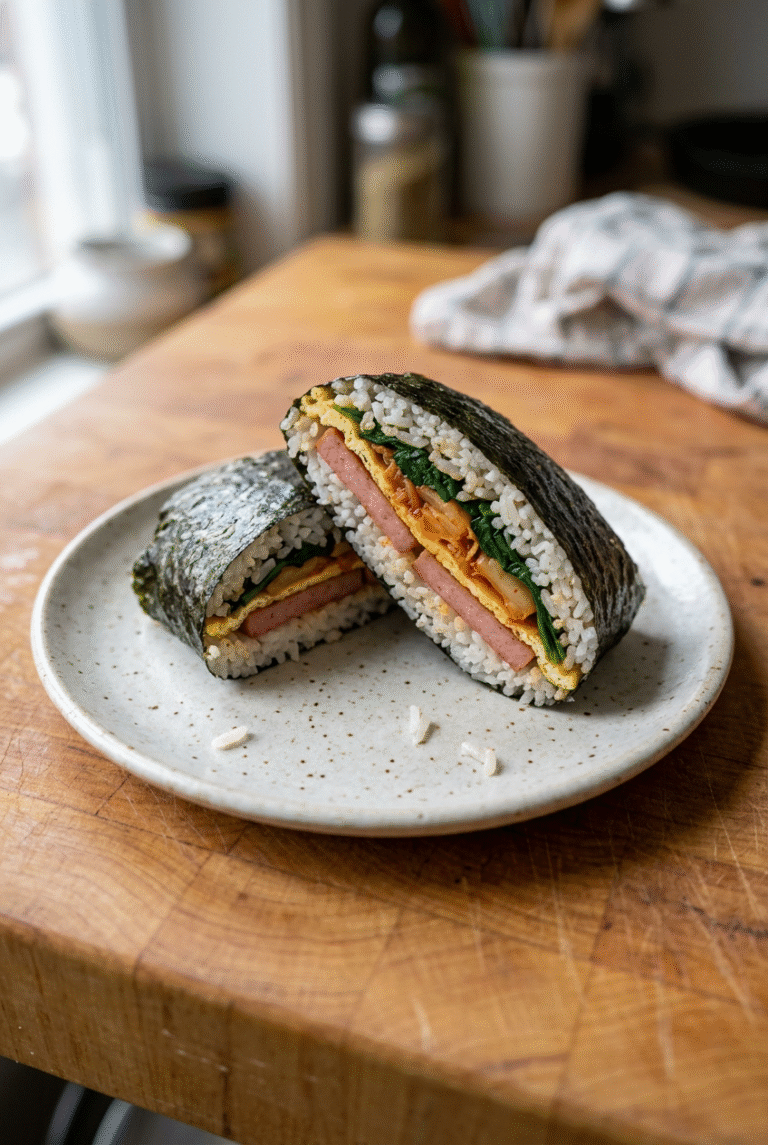
Ingredients
– 1/4 cup cooked rice
– 1/4 teaspoon sesame oil
– Salt to taste
– 1/4 teaspoon sesame seeds (optional)
– 1 seaweed sheet (gim or nori)
– 2 thin slices of canned luncheon meat
– 2 tablespoons canned tuna (liquid pressed out)
– 1 fried egg (no runny yolk)
– cheese
– fish cake
– fried tofu
– 1 lettuce leaf
– 2 perilla leaves
– 1/2 small cucumber, thinly sliced or julienned
– 1/2 small carrot, thinly sliced or julienned
– gochujang
– ssamjang
– sriracha
– ketchup
– mayonnaise
Instructions
1-First Step: Prepare your rice base. Take 1/4 cup of warm cooked rice and mix it thoroughly with 1/4 teaspoon of sesame oil and salt to taste. If you like a bit of crunch, add 1/4 teaspoon of sesame seeds. If you are using leftover rice, soften it in the microwave with a splash of water. If you are cooking fresh rice, make it slightly drier by using less water to prevent the seaweed from becoming soggy.
2-Second Step: Cook or warm up your proteins. If you are using canned luncheon meat, pan fry thin slices for 1 to 2 minutes on each side until they are golden and crispy. If you prefer canned tuna, press out all the liquid to keep the final dish dry. For other cooked or processed meats, simply warm them up. If you are making an egg, fry it until the yolk is fully set, as a runny yolk can make the seaweed wet.
3-Third Step: Get your vegetables ready. Clean and dry your lettuce or perilla leaves with a paper towel. Slice, shave, or julienne your cucumber or carrot. It is crucial to squeeze out liquid from any wet ingredients to prevent sogginess and pat dry vegetables before using. If you want more salad ideas to accompany your kimbap, try our cucumber pepper salad for a refreshing side.
4-Fourth Step: Set up your station. Place 1 seaweed sheet (gim or nori) shiny side down on a clean cutting board. Using scissors or a knife, cut a slit halfway through the sheet from the short side towards the center. This divides the sheet visually into four quarters.
5-Fifth Step: Start filling. Spread your seasoned rice evenly over the bottom left quarter of the sheet. Leave a small border around the edges to help the seal hold. This rice quadrant acts as the anchor for your fold.
6-Sixth Step: Arrange the fillings. Place your proteins, vegetables, and sauces on the remaining quarters. You can be creative here. Put the meat on the top left, veggies on the top right, and a drizzle of sauce on the bottom right. Remember to avoid overloading fillings to make folding and eating easier. You can double up ingredients on each quarter if they are not bulky.
7-Final Step: Fold it up. Start by folding the bottom left quarter (the one with rice) onto the top left quarter. Press lightly. Then, fold that combined section over to the top right. Finally, fold the entire stack down onto the bottom right quarter. Press lightly and tuck in fillings after each fold. The result should be a neat, compact square. You can eat folded kimbap like a sandwich, so there is no need to cut it.
Last Step:
Please leave a rating and comment letting us know how you liked this recipe! This helps our business to thrive and continue providing free, high-quality recipes for you.Notes
💧 Always squeeze out liquid from canned tuna or wet ingredients to prevent soggy seaweed.
🧹 Pat all vegetables dry and slice thinly for smooth folding and crisp texture.
⚖️ Avoid overloading quarters—balance fillings so they stay tucked during folds.
- Prep Time: 10 minutes
- Cook Time: 5 minutes
- Category: Snack
- Method: Folding
- Cuisine: Korean
- Diet: Customizable
Nutrition
- Serving Size: 1 folded kimbap
- Calories: 350 kcal
- Sugar: 1g
- Sodium: 700mg
- Fat: 18g
- Saturated Fat: 5g
- Unsaturated Fat: 10g
- Trans Fat: 0g
- Carbohydrates: 35g
- Fiber: 2g
- Protein: 15g
- Cholesterol: 200mg