

Why Filipino Pork Tocino Is Sweet, Red and Sticky
If you have ever ordered a Filipino breakfast and wondered why the pork looked like candy and tasted even better, that is tocino.
It is sweet cured pork, a breakfast staple in the Philippines, and the version most people know comes from Pampanga, the province famous for its cooking.
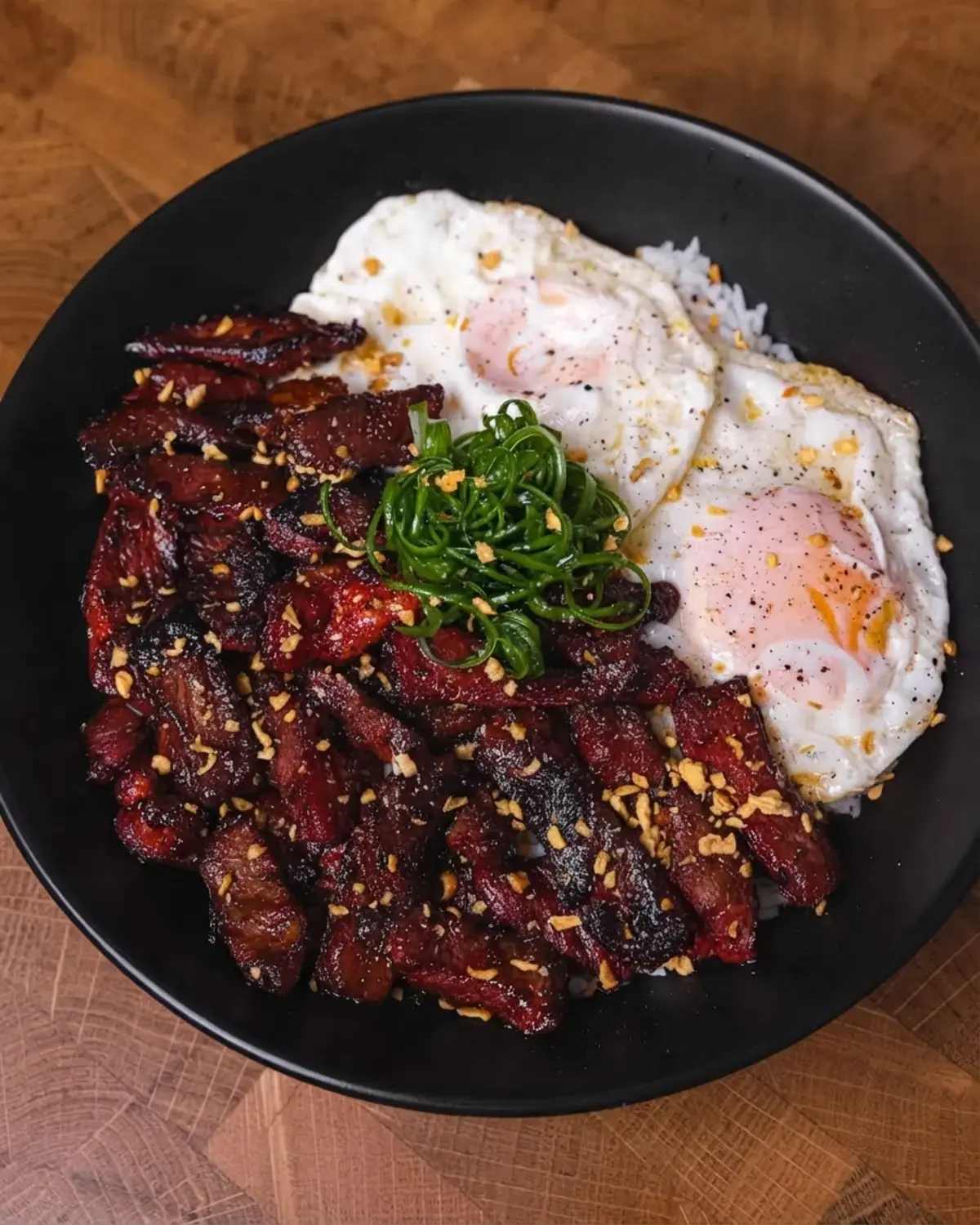
Thin slices of pork shoulder soak in a cure of brown sugar, pineapple juice, soy sauce and garlic, then hit a pan until the sugar turns into sticky, caramelized edges.
What makes tocino so good is that every ingredient in the cure has a job.
- Brown sugar provides the signature sweetness and that caramelized crust.
- Pineapple juice is a natural tenderizer. It softens the pork and adds a light tang.
- Soy sauce adds savory, salty depth to balance the sugar. Low sodium soy sauce works fine if you are watching your salt.
- Vinegar adds a little acidity so the pork never tastes heavy.
- Minced garlic is a must in Filipino cooking, sharp and aromatic against all that sweetness.
- Salt and black pepper season the meat all the way through and add a little warmth.
- Red food coloring is optional. It only gives tocino its classic red look and does not change the taste.
- Oil is for frying and for getting a crispy, caramelized outside.
The cut of pork matters just as much as the cure. Pork shoulder has enough fat to stay tender after curing and frying. Pork belly works too if you want a fattier, juicier result. Lean cuts like pork loin dry out fast in the pan, so save those for another recipe.
The finished bite should taste sweet, salty and tangy all at once, with a little chew and a sticky finish. That balance is the whole point of tocino, and it is why the dish shows up on breakfast tables across the Philippines, usually next to rice and eggs.
Every part of the cure does a job: sugar for sweetness, pineapple for tenderness, soy for depth, vinegar for balance.
Jump To
How to Make Pork Tocino, Step by Step
This version is adapted from the original Filipino pork tocino recipe, and it keeps the cure simple. It makes 3 servings, takes about 5 minutes of prep, and the pork itself cooks in roughly 15 minutes. The only part that asks for patience is the marinade, which needs a full day in the fridge.
| Ingredient | Amount |
|---|---|
| Pork shoulder, sliced | 450 g, about 1 pound |
| Brown sugar | 1/4 cup |
| Pineapple juice | 1/4 cup |
| Soy sauce | 2 tbsp |
| Vinegar | 1 tbsp |
| Garlic, minced | 6 cloves |
| Salt | 1 tsp |
| Pepper | 1/4 tsp |
| Red food coloring | 6 drops, optional |
| Oil | 2 tbsp, for frying |
Here is the method, step by step.
- Slice the pork shoulder into pieces about 1/4 inch thick.
- In a bowl, combine the brown sugar, pineapple juice, soy sauce, vinegar, minced garlic, salt, pepper and red food coloring.
- Add the pork to the mixture and marinate for 24 hours in the fridge.
- In a pan, heat the oil over medium low heat.
- Add the pork and cook for 10 to 12 minutes, flipping every minute to prevent burning, until it is caramelized on both sides.
- Serve with sinangag (garlic fried rice) or white rice and fried eggs, and enjoy.
One note before you start. Do not crowd the pan. If your slices overlap, they steam instead of caramelize, and you lose the sticky edges that make tocino worth the wait. Cook in batches if you have to.

How Long to Cure the Pork
The recipe calls for 24 hours in the marinade, and that is the sweet spot. It sounds like a long time for a weeknight dinner, but it is mostly hands off. You mix, you refrigerate, and you go live your life.
If you are in a rush, 4 hours still gives you tasty tocino. Overnight is where it really starts to taste like the real thing, because the brown sugar and pineapple juice need time to work their way into the meat.


That is the difference between pork with a sauce sitting on top and pork that tastes seasoned all the way through.


You can push the marinade further, up to about 3 days, for even deeper flavor. Past that point, though, do not bother. The pineapple keeps tenderizing the meat, and at roughly 3 days the texture turns mushy instead of firm and juicy. More time is not always better here.
This is also the best place to think about batch cooking. Marinate a big batch, portion the raw marinated pork into freezer bags, and freeze for up to 3 months. Thaw one bag overnight in the fridge and it is ready to fry the next morning. That is a breakfast you can pull off before the coffee finishes brewing.


Frying It Without Burning the Sugar
Sugar burns fast, and that is the whole challenge with tocino. Cook it over medium low heat, flip the slices roughly once a minute, and give it 10 to 12 minutes until both sides are caramelized. High heat scorches the sugar before the pork is cooked through, and burnt sugar tastes bitter no matter how good the marinade was.
If you want to try the classic Filipino trick, add a little water to the pan first and let the pork simmer over medium heat. Once the water cooks off, the pork fries in its own fat and caramelizes without drying out.
It is a small step that makes a big difference in texture, and it helps most when your slices are on the thicker side.
An air fryer also works, and it uses less oil. It is honestly the best way to reheat leftovers too, because a few minutes of hot air brings back the crisp edges instead of the chewiness you get from a microwave.
Watch the pan, not the clock. The slices are done when the edges look glossy and deep reddish brown and the meat feels firm but still gives a little when you press it. If the pan starts smoking or the sugar turns dark black, pull it off the heat for a moment and lower the flame.
Medium low heat, a flip every minute, and a watchful eye. That is how you get caramel instead of carbon.
Chicken, Beef and Natural Color Swaps
The same marinade is not just for pork. Chicken tocino uses the identical cure and comes out lighter, which is nice if you want something less rich in the morning.
The marinade also works on beef or turkey, so you can build a whole rotation around one bowl of cure. For more background on how different regions handle the dish, this guide to traditional Filipino tocino is a helpful read.
Color is the easiest thing to change. Skip the food coloring entirely and the tocino still tastes exactly the same, just paler. If you want that red look without the dye, annatto is a traditional option, and a small amount of beet juice will also give you a natural red.
Flavor is adjustable too, and this is where home cooks start having fun. More brown sugar makes it sweeter. More soy sauce pushes it savory. More pineapple juice adds tang. You can also cut back on the sugar, or swap some of it for honey if you prefer a softer sweetness.

Tocilog, Leftovers and Freezing
The classic way to serve tocino is tocilog: tocino, sinangag (garlic fried rice) and a fried egg. The egg yolk runs into the rice, the sweet pork cuts through it, and suddenly breakfast feels like a small celebration.
Add pickled green papaya, also called atchara, or fresh tomatoes on the side to balance the sweetness. It works at any meal, not just breakfast.
Storage is straightforward.
- Cooked tocino: cool it completely, then refrigerate in an airtight container for up to 3 days.
- Raw marinated pork: up to 3 days in the fridge, or up to 3 months in the freezer.
- Frozen portions: thaw overnight in the fridge before cooking.
To reheat, a quick pan fry works well, and a few minutes in the air fryer is even better. Both keep the edges crisp without drying out the meat, which is exactly what you want the second time around. Label your freezer bags with the date so you always know how long that batch has been waiting.

More All
Tocino is a gateway dish. Once you are comfortable with a sweet and savory cure, the same instincts carry over to other Filipino style plates, and a couple of them sit nicely next to tocino on the table.
If you like pork with a deep garlicky glaze, soy garlic pork chops are a natural next step. And for the rice half of your tocilog, crispy garlic chicken fried rice brings the same garlicky, savory energy with a little crunch.
Either way, keep the cure in your back pocket. It is one of those simple pantry combinations that makes everyday pork taste like something you planned ahead for.
FAQs
What is the best cut of pork for Filipino tocino?
Pork shoulder, often labeled as Boston butt or pork butt in US supermarkets, is the preferred cut for Filipino tocino. Its generous fat content keeps the meat exceptionally tender and juicy during searing. Pork belly is a popular richer alternative, while lean cuts like pork loin should be avoided as they dry out easily.
How long should you marinate pork for Filipino tocino?
The ideal marination time for Filipino pork tocino is 24 hours, allowing the pineapple juice and brown sugar to fully penetrate the meat for optimal flavor. You can marinate it for as little as 4 hours in a pinch, or up to 3 days for a deeper cure. However, going past 3 days will cause the texture to become mushy.
What is the best way to cook Filipino pork tocino without burning the sugar?
Cook the tocino in a pan over medium-low heat with 2 tablespoons of oil for 10 to 12 minutes. Flip the thin slices every minute to prevent the sugar from charring, achieving a perfect sticky caramelization. A classic Kapampangan trick is to add a splash of water to the pan first to steam the pork gently before it fries in its own fat.
Can you freeze marinated Filipino pork tocino?
Yes, you can freeze raw marinated Filipino pork tocino for up to 3 months. This makes it an excellent option for batch meal prep. Simply seal the pork along with its marinade in a freezer bag, then thaw it in the refrigerator overnight before pan-frying.

Filipino Pork Tocino
Why Filipino Pork Tocino Is Sweet, Red and Sticky If you have ever ordered a Filipino breakfast and wondered why the pork looked like candy and tasted even better, that is tocino. It is sweet cured pork, a breakfast staple in the Philippines, and the version most people know comes from Pampanga, the province famous for its cooking.
- Yield: 3 Servings 1x 1x
Ingredients
450 g Pork Shoulder, sliced
¼ cup brown sugar
¼ cup pineapple Juice
2 tbsp soy sauce
1 tbsp vinegar
6 cloves garlic, minced
1 tsp salt
¼ tsp pepper
6 drops red food colouring
2 tbsp oil
Instructions
1-Slice the pork shoulder to ¼ inch: Slice the pork shoulder to ¼ inch pieces.
2-In a bowl, combine brown sugar, pineapple: In a bowl, combine brown sugar, pineapple juice, soy sauce, vinegar, garlic, and red food colouring.
3-Add the pork to the mixture and: Add the pork to the mixture and marinate for 24 hours.
4-In a pan, heat the oil over: In a pan, heat the oil over medium low heat.
5-Add the pork to the pan and: Add the pork to the pan and cook for 10-12 minutes (flip the pork every minute to prevent burning) until it is caramelised on both sides.
6-Serve with sinangag (garlic fried rice) or: Serve with sinangag (garlic fried rice) or white rice, fried eggs and enjoy!
Last Step:
Please leave a rating and comment letting us know how you liked this recipe! This helps our business to thrive and continue providing free, high-quality recipes for you.Notes
Preparation: 5 min. Cooking: 15 min. Allow time for every resting, cooling and chilling step in the instructions.
- Method: stovetop


