

Why You’ll Love This Creamy Cheesecake Recipe
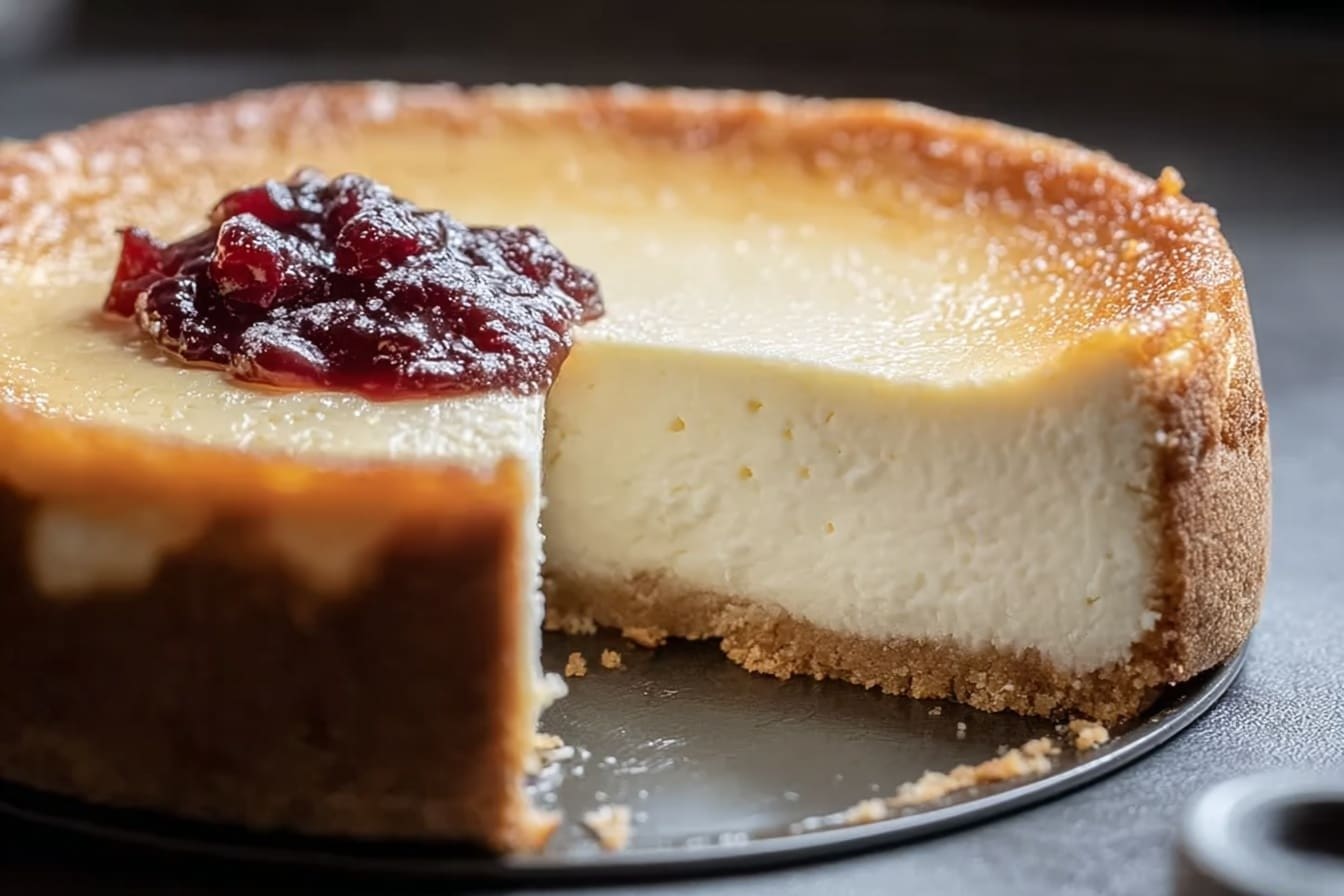
If you’ve ever wanted a cheesecake that tastes like it came from a bakery, this Creamy Cheesecake Recipe is a great match. It’s rich, smooth, and made with simple ingredients you can find in most grocery stores. Plus, it uses a water bath method to help you get that classic creamy texture.
- Ease of preparation: The crust and filling come together with straightforward mixing steps and clear timing.
- Health benefits: Using full-fat brick-style cream cheese and eggs means a dessert with a satisfying, richer mouthfeel and no need for fancy fillers.
- Versatility: You can customize flavors (like adding a touch of lemon) and also adapt portion sizes for events.
- Distinctive flavor: Vanilla-forward, tangy, and creamy with a buttery graham crust that balances the filling.
Pro tip: The water bath is the secret behind that smooth, moist cheesecake texture without the usual cracking drama.
If you love classic desserts, you might also enjoy pairing this cheesecake with fruit toppings. For example, check out Fresh Cherry Pie Recipe for a bright, tart contrast.
External resource for more cheesecake tips.
Jump To
- 1. Why You’ll Love This Creamy Cheesecake Recipe
- 2. Essential Ingredients for Creamy Cheesecake Recipe
- 3. How to Prepare the Perfect Creamy Cheesecake Recipe: Step-by-Step Guide
- 4. Dietary Substitutions to Customize Your Creamy Cheesecake Recipe
- 5. Mastering Creamy Cheesecake Recipe: Advanced Tips and Variations
- 6. How to Store Creamy Cheesecake Recipe: Best Practices
- 7. FAQs: Frequently Asked Questions About Creamy Cheesecake Recipe
- 8. Creamy Cheesecake Recipe
Essential Ingredients for Creamy Cheesecake Recipe
Below is everything you need for the Creamy Cheesecake Recipe, including the graham cracker crust and the rich filling. Keep ingredients at room temperature for the smoothest batter and best results.
Ingredients list
- 2 cups graham cracker crumbs
- 1/3 cup sugar
- 7 tablespoons unsalted butter, melted
- 5 blocks (40 ounces total) full-fat brick-style cream cheese, room temperature
- 1 and 1/2 cups granulated sugar
- 1 tablespoon pure vanilla extract
- 5 large eggs, room temperature
- 3 large egg yolks, room temperature
- 1/2 cup heavy cream, room temperature (optional extra 1/4 cup for creamier texture)
What each main ingredient does
- Graham cracker crumbs + sugar + butter: Creates a sturdy, buttery crust that holds up to the filling.
- Brick-style full-fat cream cheese: Gives you the dense, creamy texture (and the best flavor).
- Eggs and yolks: Provide structure while keeping the center rich and slightly jiggly.
- Vanilla extract: Adds that bakery-style sweetness and warm aroma.
- Heavy cream: Makes the filling extra silky. Add the optional extra 1/4 cup if you want a richer mouthfeel.
Special dietary options (quick notes)
This specific recipe is built for a classic cheesecake texture using full-fat dairy and eggs. If you need substitutions, see the section below for customization ideas.
| Dietary goal | Possible adjustment | What to watch for |
|---|---|---|
| Gluten-free | Use a gluten-free graham cracker crust (or gluten-free cookie crumbs) in the same amount | Crumb texture can change, so press firmly and prebake briefly |
| Lower sugar | Small changes may be possible | Reducing sugar too much can affect texture and set |
| Dairy-free or vegan | Not recommended for this exact method without a tested replacement system | Texture and water content can cause softness or separation |
How to Prepare the Perfect Creamy Cheesecake Recipe: Step-by-Step Guide
Let’s walk through the full Creamy Cheesecake Recipe from crust to chilling. Follow along closely, and don’t rush the cooling steps they’re just as important as baking.
Prep and bake timing at a glance
- Active prep time: 30 minutes
- Bake time: 1 hour and 8 minutes (includes crust bake plus cheesecake bake)
- Chilling time: at least 8 hours
- Total time: approximately 9 hours and 38 minutes
Step-by-step directions
- Preheat oven to 350°F. Lightly spray a 9-inch springform pan with non-stick spray and wrap it with heavy-duty aluminum foil to protect from water bath leaks.
- Make the crust mixture: In a large bowl, combine graham cracker crumbs, sugar, and melted butter.
- Press and prebake the crust: Firmly press the mixture into the bottom of the prepared pan. Bake crust for 8 minutes, then set aside to cool.
- Beat the cream cheese until smooth: In a mixing bowl or food processor, beat the softened cream cheese until completely smooth.
- Add sugar and vanilla: Add sugar and vanilla extract, then beat again until well combined.
- Add eggs and yolks gradually: Add eggs and egg yolks one at a time, mixing well after each addition.
- Add heavy cream: Mix in the heavy cream until just combined.
- Assemble: Pour cheesecake filling over the cooled crust and smooth the top using a spatula.
- Set up the water bath: Place the springform pan inside a larger pan and fill the larger pan with two inches of hot water.
- Bake the cheesecake: Bake for 1 hour and 10 minutes.
- Initial cooling without opening the oven: Turn the oven off and leave the cheesecake inside with the door closed for 45 minutes. This helps the center stay slightly wiggly.
- Loosen and cool: Remove cheesecake from oven and gently run a knife around the edges. Cool on a rack completely at room temperature.
- Chill overnight: Loosely cover with plastic wrap and refrigerate for at least 8 hours before serving.
When you’ve baked cheesecake, patience matters. The fridge time sets the creamy texture and makes slicing clean.
If you’re planning a dessert spread for a family dinner, you may also like a fruit-forward topping idea from Caramel Apple Cheesecake Bars (great inspiration for flavors and serving).
Want a deeper look at why ingredients behave the way they do in baking? Read the science of baking ingredient behavior.
Dietary Substitutions to Customize Your Creamy Cheesecake Recipe
Even though this recipe is designed for classic results, you can still make adjustments based on ingredient availability or personal preferences. The key is to avoid changes that break the cheesecake’s structure.
Protein and main component alternatives
- Cream cheese swaps: For best results, stick with full-fat, plain brick-style cream cheese. Whipped or low-fat cream cheese often includes extra air or moisture, which can lead to watery or lumpy filling.
- Egg alternatives: If you’re trying to avoid eggs, you may need a fully tested egg replacer and bake time adjustments. Egg structure is a big part of cheesecake set.
- Heavy cream substitutions: Use heavy cream for the silkiest texture. If you try a substitute, expect a different richness and possibly a softer center.
Vegetable, sauce, and seasoning modifications
Cheesecake doesn’t rely on vegetables, but it does love complementary flavors. Here are easy ways to customize without changing the core bake method:
- Lemon (optional): Adding lemon juice up to 1 teaspoon can cut richness and brighten the flavor.
- Fruit toppings: Consider cherry, berry, or citrus toppings to balance sweetness. Tart fruit works especially well with vanilla cheesecake.
- Salt and spice: A small pinch of salt can make the vanilla taste even better, while warm spices like cinnamon are optional if you’re using fruit toppings.
If you plan to change more than one major ingredient, consider testing a small portion first to avoid surprises with texture.
Mastering Creamy Cheesecake Recipe: Advanced Tips and Variations
You’re close to bakery-level cheesecake already. These tips are designed to help you avoid common issues like cracking, lumpy filling, and underbaked centers.
Pro cooking techniques for best results
- Use room-temperature everything: Brick-style full-fat cream cheese, eggs, and heavy cream should be soft before mixing.
- Don’t reduce sugar or swap sweeteners: This recipe is balanced for texture and set. Reducing sugar too much can cause a cheesecake that won’t firm properly.
- Wrap the pan thoroughly: Prevent water seepage by sealing the springform pan with heavy-duty aluminum foil.
- Don’t open the oven early: After baking, keep the door closed during the initial 45-minute cooling.
- Par-bake the crust: This keeps the crust crunchy and helps it resist sogginess.
- Use a water bath: Don’t skip it. It supports a moist texture and helps prevent cracks.
Flavor variations you can try
- Lemon cheesecake vibe: Stir in lemon juice up to 1 teaspoon for brightness.
- Vanilla-forward: Use pure vanilla extract as written for a clean, classic flavor.
- Creamier texture: Use the optional extra 1/4 cup heavy cream.
Serving and presentation tips
- Slice cleanly: Use a sharp knife wiped clean between slices.
- Garnish idea: Top each slice with fresh fruit or a simple spoonful of compote.
Make-ahead and schedule-friendly planning
This cheesecake is ideal for busy schedules because it requires chilling time. You can bake it one day and serve it the next, which makes it perfect for working professionals, busy parents, and students.
- Plan for at least 8 hours of refrigeration.
- Store tightly covered so it stays fresh and creamy.
How to Store Creamy Cheesecake Recipe: Best Practices
Proper storage helps keep your Creamy Cheesecake Recipe tasting fresh and creamy. Cheesecake is sensitive to air, so use tight wrapping.
Refrigeration (short-term storage)
- Store leftovers: Wrap tightly in plastic wrap.
- Refrigerate: Keep it in the refrigerator for up to 5 days.
Freezing (long-term storage)
- Freeze up to 2 months: Wrap in plastic wrap, then foil, then place in a freezer bag.
- Thaw correctly: Thaw overnight in the refrigerator before serving.
Reheating (and whether you should)
Cheesecake doesn’t need reheating. For the best texture and flavor, serve chilled or let slices sit at room temperature briefly (just a few minutes) to soften slightly.
Meal prep considerations
- Portion first: Slice before storing if you know you’ll serve individual portions.
- Keep it covered: Air exposure can dry out the surface.
FAQs: Frequently Asked Questions About Creamy Cheesecake Recipe
What type of cream cheese is best for cheesecake?
For the creamiest cheesecake texture, use full-fat, brick-style cream cheese that’s plain and unflavored. Philadelphia is a top choice due to its consistent quality and smooth blending, but any similar brand works. Avoid whipped, low-fat, or spreadable varieties, as they contain too much air or moisture, leading to a watery or lumpy result. Bring the cream cheese to room temperature (about 70°F) for 1-2 hours before mixing. This ensures it whips into a silky batter without lumps. You’ll need 32 ounces (four 8-oz blocks) for a standard 9-inch cheesecake. Pro tip: Check the label for at least 33% milkfat content to achieve that rich, dense filling everyone loves. (78 words)
Why do cheesecake ingredients need to be at room temperature?
Room temperature ingredients (cream cheese, eggs, sour cream) mix evenly into a smooth batter, preventing lumps and overmixing. Cold cream cheese stays clumpy and resists blending, while cold eggs can cause curdling or uneven distribution in the batter. Let cream cheese sit out for 1-2 hours until soft to the touch, eggs for 30 minutes, and sour cream briefly. This simple step creates air pockets for a light yet creamy texture and reduces baking issues like cracks. Test by pressing a finger into the cream cheese—it should dent easily without resistance. Skipping this leads to a dense, uneven cheesecake. Always pat eggs dry if condensation forms. (92 words)
How do you make a graham cracker crust for cheesecake?
For a 9-inch springform pan, mix 1 ½ cups graham cracker crumbs (about 12 full sheets), ⅓ cup granulated sugar, and ½ cup melted unsalted butter until it resembles wet sand. Press firmly into the pan bottom and up the sides using a measuring cup bottom for even edges. Bake at 350°F for 8-10 minutes until golden, then cool completely before adding filling. This prebake sets the crust, preventing sogginess. For easier release, line the pan bottom with parchment paper. Crush crackers in a food processor or zip-top bag with a rolling pin. Yields a buttery, crisp base that holds up to the creamy filling. Store extras airtight for up to a week. (104 words)
How do you know when cheesecake is done baking?
Bake at 325°F for 60-70 minutes in a water bath. The edges should be set and lightly golden, while the center 2-3 inches jiggles slightly like Jell-O when gently shaken—not liquidy waves. A digital thermometer reads 150-155°F in the center. Avoid overbaking, as it causes cracks. Turn off the oven, crack the door, and let it cool inside for 1 hour to prevent sudden temperature drops. The cheesecake will firm up fully in the fridge. If unsure, err on underbaking—the residual heat finishes it. This method yields a creamy, crack-free center every time. (89 words)
Can you make mini cheesecakes with a creamy cheesecake recipe?
Yes, adapt the recipe for 24 mini cheesecakes in a standard muffin tin. Use foil liners for easy release. For crust, mix 1 cup graham crumbs, ¼ cup sugar, and 5 tbsp melted butter; press 1 tbsp per cup. Bake crusts 5 minutes at 350°F. Divide filling (same recipe, yields perfectly) using an ice cream scoop, 2 tbsp per mini. Bake 18-22 minutes at 325°F in a water bath (place tin in a larger pan with hot water halfway up sides). Cool gradually, chill 4 hours. They freeze well up to 1 month. Perfect for parties—each serves one. (98 words)

Creamy Cheesecake Recipe
🍰 Dive into the creamiest, dreamiest cheesecake with a buttery graham cracker crust that melts in your mouth!
🧁 Perfect for celebrations, this foolproof recipe delivers crack-free perfection and endless compliments.
- Total Time: 9 hours 40 minutes
- Yield: 12 servings
Ingredients
– 2 cups graham cracker crumbs
– 1/3 cup sugar
– 7 tablespoons unsalted butter, melted
– 5 blocks (40 ounces total) full-fat brick-style cream cheese
– 1 and 1/2 cups granulated sugar
– 1 tablespoon pure vanilla extract
– 5 large eggs
– 3 large egg yolks
– 1/2 cup heavy cream (optional extra 1/4 cup for creamier texture)
Instructions
1-Preheat oven to 350°F. Lightly spray a 9-inch springform pan with non-stick spray and wrap it with heavy-duty aluminum foil to protect from water bath leaks.
2-Make the crust mixture: In a large bowl, combine graham cracker crumbs, sugar, and melted butter.
3-Press and prebake the crust: Firmly press the mixture into the bottom of the prepared pan. Bake crust for 8 minutes, then set aside to cool.
4-Beat the cream cheese until smooth: In a mixing bowl or food processor, beat the softened cream cheese until completely smooth.
5-Add sugar and vanilla: Add sugar and vanilla extract, then beat again until well combined.
6-Add eggs and yolks gradually: Add eggs and egg yolks one at a time, mixing well after each addition.
7-Add heavy cream: Mix in the heavy cream until just combined.
8-Assemble: Pour cheesecake filling over the cooled crust and smooth the top using a spatula.
9-Set up the water bath: Place the springform pan inside a larger pan and fill the larger pan with two inches of hot water.
10-Bake the cheesecake: Bake for 1 hour and 10 minutes.
11-Initial cooling without opening the oven: Turn the oven off and leave the cheesecake inside with the door closed for 45 minutes. This helps the center stay slightly wiggly.
12-Loosen and cool: Remove cheesecake from oven and gently run a knife around the edges. Cool on a rack completely at room temperature.
13-Chill overnight: Loosely cover with plastic wrap and refrigerate for at least 8 hours before serving.
Last Step:
Please leave a rating and comment letting us know how you liked this recipe! This helps our business to thrive and continue providing free, high-quality recipes for you.Notes
🌡️ Use all ingredients at room temperature to avoid lumps and cracks.
🚫 Don’t skip the water bath – it ensures a creamy, crack-free texture.
🔪 Par-bake the crust for a crunchy base that stays perfect.
- Prep Time: 30 minutes
- Chill: 8 hours
- Cook Time: 1 hour 10 minutes
- Category: Desserts
- Method: Baking
- Cuisine: American
- Diet: Vegetarian
Nutrition
- Serving Size: 1 slice
- Calories: 521 kcal
- Sugar: 32 g
- Sodium: 370 mg
- Fat: 36 g
- Saturated Fat: 20 g
- Unsaturated Fat: 12 g
- Trans Fat: 1 g
- Carbohydrates: 42 g
- Fiber: 0.5 g
- Protein: 9 g
- Cholesterol: 180 mg


