Why You’ll Love This Coney Island Hot Dogs
Coney Island Hot Dogs are a beloved American classic that brings the nostalgic flavors of the Midwest straight to your kitchen. This recipe captures the authentic essence of Detroit-style Coneys, offering a perfect balance of savory meat sauce, tangy mustard, and fresh onions atop a juicy frankfurter.
- Ease of preparation: This recipe comes together in just 15 to 30 minutes, making it perfect for busy weeknight dinners or quick weekend lunches. The straightforward process involves simple techniques like grilling the sausage, steaming the bun, and preparing a flavorful meat sauce that can be made ahead of time.
- Health benefits: While Coney Island Hot Dogs are indulgent, this recipe offers nutritional advantages including high protein content from the beef-based frankfurters and meat sauce. You can boost the nutritional profile by adding fresh vegetables as toppings and using quality ingredients. For those monitoring their intake, portions can be adjusted to meet dietary needs.
- Versatility: This recipe adapts beautifully to various dietary preferences. Whether you need vegetarian options, gluten-free alternatives, or lighter versions, the basic structure of Coney Island Hot Dogs accommodates modifications without losing their distinctive character. It’s a crowd-pleaser that works for casual gatherings, game day parties, or family meals.
- Distinctive flavor: What sets Coney Island Hot Dogs apart is the unique combination of the natural casing snap, the rich and seasoned meat sauce, the bright acidity of yellow mustard, and the crunch of fresh white onions. This flavor profile creates an irresistible eating experience that’s both comforting and exciting, transporting you to classic American diners with every bite.
Jump To
- 1. Why You’ll Love This Coney Island Hot Dogs
- 2. Essential Ingredients for Coney Island Hot Dogs
- 3. How to Prepare the Perfect Coney Island Hot Dogs: Step-by-Step Guide
- 4. Dietary Substitutions to Customize Your Coney Island Hot Dogs
- 5. Mastering Coney Island Hot Dogs: Advanced Tips and Variations
- 6. How to Store Coney Island Hot Dogs: Best Practices
- 7. FAQs: Frequently Asked Questions About Coney Island Hot Dogs
- 8. Coney Island Hot Dogs
Essential Ingredients for Coney Island Hot Dogs
The authentic taste of Coney Island Hot Dogs comes from using quality ingredients with precise measurements. Here’s what you’ll need to recreate this American classic at home:
- 8 Vienna-style beef sausages or small hot dogs with natural casings – Provide the signature snap and authentic texture
- 8 soft hot dog buns – Needed to steam and hold all the toppings
- 1 pound ground beef – Forms the base of the Coney sauce
- 1/2 cup finely ground beef heart – Adds authentic flavor and texture found in traditional Detroit-style recipes
- 1 medium yellow onion, finely diced – Contributes sweetness to the sauce
- 2 cloves garlic, minced – Adds aromatic depth to the sauce
- 1 cup beef broth – Creates the sauce’s liquid base
- 2 tablespoons tomato paste – Provides color and subtle acidity
- 1 tablespoon chili powder – Essential for the classic spice profile
- 1 teaspoon ground cumin – Adds earthy notes characteristic of Coney sauce
- 1/2 teaspoon paprika – Contributes color and mild sweetness
- 1/4 teaspoon cayenne pepper – Adds gentle heat
- Salt and black pepper to taste – Enhances overall flavor
- 1/4 cup yellow mustard – The traditional topping that balances richness
- 1 medium white onion, finely chopped – Adds crunch and sharpness as topping
Special Dietary Options
For those with dietary restrictions, these alternatives can help you enjoy Coney Island Hot Dogs:
- Vegan: Use plant-based sausages, substitute ground beef with plant-based crumbles or textured vegetable protein, and choose vegan-friendly buns.
- Gluten-free: Select certified gluten-free sausages and buns, and verify that all condiments are gluten-free.
- Low-calorie: Opt for turkey or chicken sausages, use leaner beef for the sauce, and reduce sauce portions while maintaining flavor with herbs and spices.
How to Prepare the Perfect Coney Island Hot Dogs: Step-by-Step Guide
Creating authentic Coney Island Hot Dogs requires attention to detail at each stage of preparation. Follow these steps to achieve the perfect balance of flavors and textures that make this dish a beloved American classic.
Preparing the Coney Sauce
The heart of any Coney Island Hot Dog is the distinctive meat sauce. Begin by heating a large skillet or Dutch oven over medium heat. Add the ground beef and beef heart, breaking it apart with a spoon as it cooks. For the most authentic texture, some traditional cooks use a potato masher to ensure the meat becomes finely textured, almost like a paste.
Cook the meat until browned, approximately 8-10 minutes, stirring frequently to prevent sticking. As the meat cooks, the fat will render out, creating a rich base for the sauce. Once browned, carefully drain most of the fat, leaving about 2 tablespoons in the pan to maintain flavor and moisture.
Add the diced yellow onion and minced garlic to the pan with the meat. Cook for 5-7 minutes until the onions become translucent and fragrant. This step builds the aromatic foundation of the sauce. At this point, stir in the tomato paste, chili powder, cumin, paprika, cayenne pepper, salt, and black pepper. Cook for another 2 minutes, allowing the spices to bloom and become fragrant.
Pour in the beef broth, stirring to combine all ingredients. Reduce the heat to low and let the sauce simmer gently for 20-30 minutes. The sauce should thicken considerably during this time. For an even smoother consistency, some traditional recipes call for adding a small amount of water and continuing to simmer until the sauce reaches a perfect texture that clings to the hot dog without being watery.
Preparing the Hot Dogs and Buns
While the sauce simmers, prepare the hot dogs and buns. For the most authentic Coney Island Hot Dogs, you’ll want to grill the sausages. Heat a flattop grill or cast-iron skillet over medium-high heat. Add the hot dogs and cook, turning occasionally, until they develop a nice char on the outside and are heated through, about 5-7 minutes. The natural casing should create a satisfying snap when bitten.
For the buns, traditional preparation involves steaming them to achieve that pillowy soft texture that perfectly complements the crisp sausage and hearty sauce. You can steam the buns by placing them in a steamer basket over boiling water for 1-2 minutes. Alternatively, wrap them in damp paper towels and microwave for 15-20 seconds. If you prefer a slightly toasted bun, you can lightly grill the cut sides after steaming.
Assembling Your Coney Island Hot Dogs
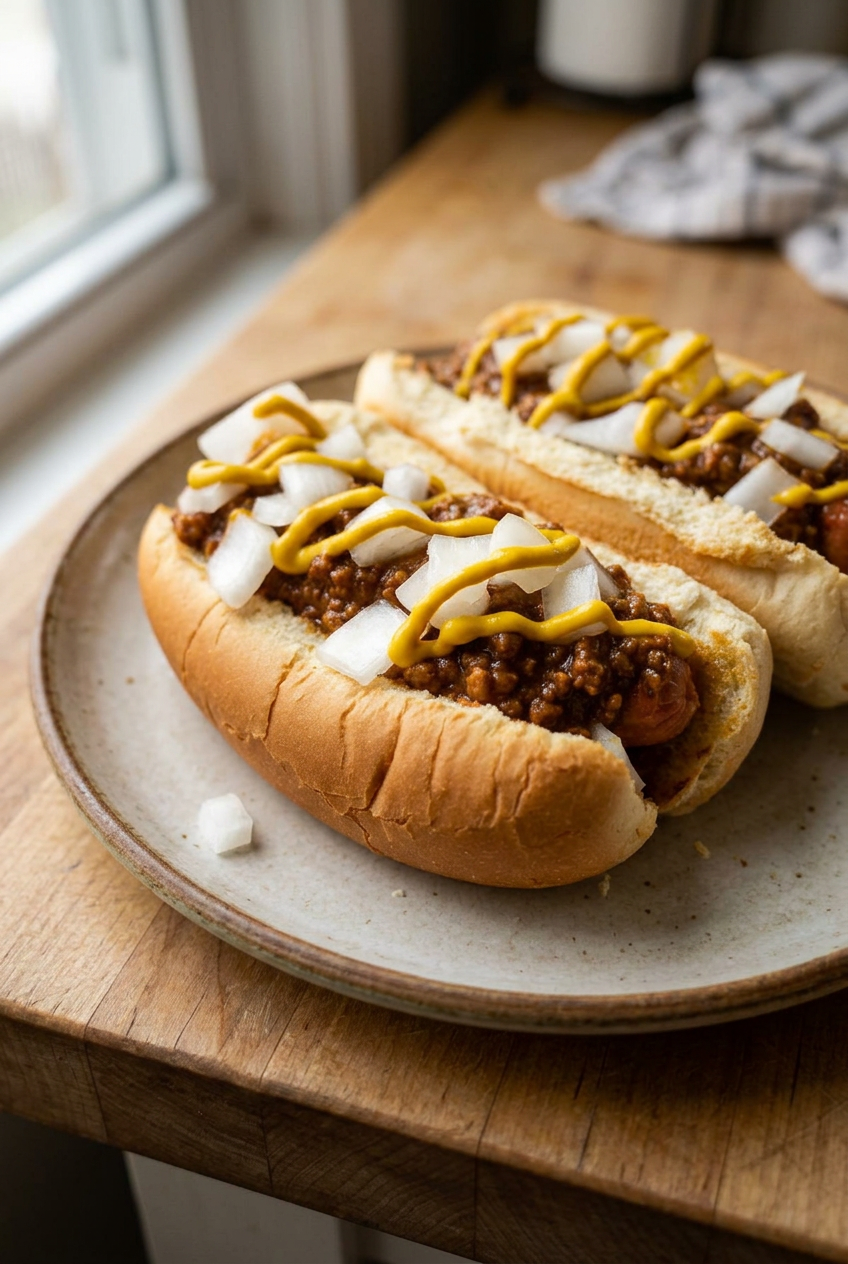
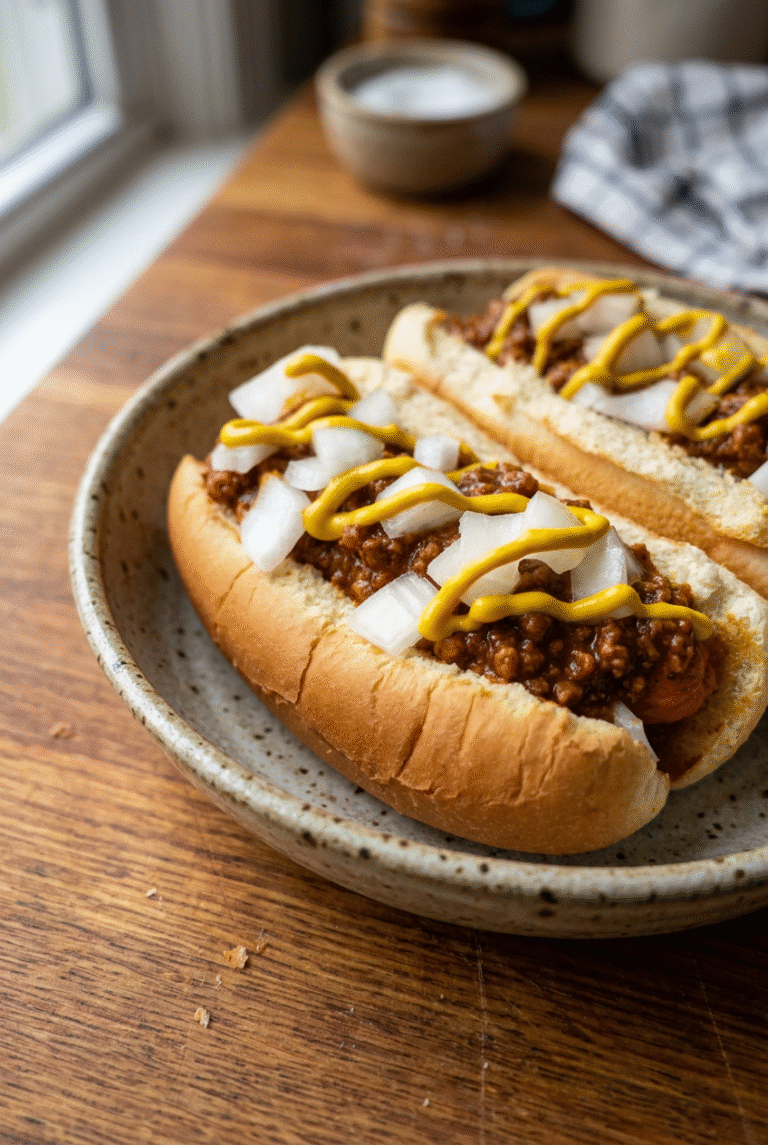
The final assembly is where everything comes together. Place a steamed bun on each plate. Add a grilled hot dog to each bun. Spoon a generous amount of the Coney sauce over the hot dog, ensuring it covers the sausage generously but doesn’t overwhelm the bun. The sauce should be hot and steamy when added.
Drizzle yellow mustard in a zigzag pattern over the sauce. The bright yellow color creates a beautiful contrast against the deep brown sauce. Finish by sprinkling a generous amount of finely chopped white onions over the top. For those who enjoy additional toppings, shredded cheddar cheese or a dash of hot sauce can be added according to personal preference or regional tradition.
Serve immediately while everything is hot. The combination of textures the snap of the sausage, the softness of the steamed bun, the heartiness of the sauce, and the crunch of the onions creates an irresistible eating experience that’s best enjoyed fresh.
Dietary Substitutions to Customize Your Coney Island Hot Dogs
Protein and Main Component Alternatives
For those seeking different protein options, Coney Island Hot Dogs offer excellent flexibility. Turkey or chicken franks can replace traditional beef sausages for a lighter option with less fat. Vegetarian and vegan diners might choose plant-based sausages that closely mimic the texture and snap of natural casing franks. For the sauce, ground turkey or chicken can substitute for beef, though the flavor profile will change slightly. Some regional variations even include finely ground pork or a mixture of meats. If beef heart isn’t available or preferred, additional ground beef with a slightly higher fat content can achieve a similar richness in the sauce.
Vegetable, Sauce, and Seasoning Modifications
The toppings and sauce seasonings offer numerous opportunities for customization. For a fresh twist, consider adding diced tomatoes or a small amount of bell pepper to the meat sauce. Those who prefer more heat might increase the cayenne pepper or add diced jalapeños as an additional topping. For a slightly different flavor profile, smoked paprika can replace regular paprika, adding a subtle smokiness that complements the grilled sausage. If yellow mustard isn’t to your taste, Dijon mustard can offer a more complex flavor. For those looking to add more vegetables, shredded lettuce or sliced pickles can provide additional crunch and freshness to balance the rich meat sauce.
Mastering Coney Island Hot Dogs: Advanced Tips and Variations
Pro Cooking Techniques
For the most authentic Coney Island Hot Dogs, consider investing in a flattop grill, which allows for even cooking of multiple sausages simultaneously. When making the sauce, using a potato masher to break down the meat as it cooks creates that signature smooth texture found in classic Detroit-style establishments. Another professional tip is to prepare the sauce a day ahead, allowing the flavors to meld and intensify overnight. When reheating, add a splash of water or beef broth to restore the perfect consistency.
Flavor Variations
Regional variations offer exciting ways to customize your Coney Island Hot Dogs. The Flint-style sauce focuses heavily on finely ground beef heart for a distinctive texture and flavor. Jackson-style incorporates a slightly sweeter sauce profile. For a Cincinnati-inspired variation, add a layer of shredded cheddar cheese over the sauce before the mustard and onions. Those who enjoy spicier foods might create a Texas-style version by incorporating more robust spices and perhaps a splash of hot sauce directly into the meat sauce mixture.
Presentation Tips
Serving Coney Island Hot Dogs on simple paper plates or in traditional paper boat containers adds to the authentic diner experience. For a more elegant presentation, arrange the assembled hot dogs on a large platter with extra sauce, mustard, and onions served in separate bowls for guests to customize their own. Garnishing with a pickle spear or serving alongside classic sides like potato salad or coleslaw completes the meal.
Make-Ahead Options
The Coney sauce can be prepared in large batches and frozen for up to three months, making it an excellent option for meal prepping. Portion the cooled sauce into freezer-safe containers, thawing in the refrigerator overnight when ready to use. For entertaining, prepare all components except the final assembly ahead of time, keeping the sauce warm in a slow cooker and grilling the hot dogs just before serving to ensure optimal texture and temperature.
How to Store Coney Island Hot Dogs: Best Practices
Refrigeration
For short-term storage, separate components if possible. Store the Coney sauce in an airtight container in the refrigerator for up to 4 days. Cooked hot dogs can be kept refrigerated for 3-4 days, though their texture is best when reheated quickly rather than held for extended periods. Buns should be stored separately at room temperature for 1-2 days or frozen for longer preservation. When storing assembled Coney Island Hot Dogs, place them in airtight containers and consume within 2 days, though the bun may become soggy.
Freezing
The Coney sauce freezes exceptionally well, making it perfect for batch preparation. Cool the sauce completely before transferring to freezer-safe containers or heavy-duty freezer bags. Label with the date and freeze for up to 3 months. Thaw overnight in the refrigerator before reheating. Hot dogs can also be frozen in their original packaging for up to 2 months, though for best quality, consume within 1 month. Avoid freezing assembled Coney Island Hot Dogs as the texture will deteriorate significantly.
Reheating
To re refrigerated Coney sauce, place it in a saucepan over low heat, adding a splash of water or beef broth to restore consistency. Heat gently, stirring occasionally, until steaming hot. For quick reheating, microwave in 30-second intervals, stirring between each. Hot dogs are best reheated by quickly grilling or pan-frying to restore some crispness to the casing. Avoid boiling hot dogs as this can make them rubbery. Reheat buns by steaming briefly or wrapping in foil and warming in a 350°F oven for 5 minutes.
Meal Prep Considerations
For efficient meal planning, prepare a large batch of Coney sauce on the weekend and portion it for use throughout the week. The sauce actually improves in flavor after sitting for a day or two, making it ideal for advance preparation. Consider setting up a Coney Island Hot Dog bar for family meals, allowing everyone to assemble their own with their preferred toppings. This approach works particularly well for gatherings and simplifies serving while maintaining the authentic experience.

FAQs: Frequently Asked Questions About Coney Island Hot Dogs
What is a Coney Island hot dog?
A Coney Island hot dog is a steamed or grilled beef frankfurter, typically in a natural casing, served in a soft bun and topped with a beanless meat sauce (often called chili), yellow mustard, and diced white onions. Sometimes cheese or hot sauce is added based on regional preferences. Originating from early 20th-century Balkan immigrants, it’s distinct from a standard chili dog due to its specific sauce made from ground beef or beef heart, without beans or tomatoes. Popular in Midwest states like Michigan, it’s a quick, affordable street food icon. To enjoy one authentically, look for spots with Vienna-style sausages for that signature snap. This simple combo delivers bold, savory flavors in under 5 minutes of eating time. (92 words)
Where did Coney Island hot dogs originate and where are they most popular?
Coney Island hot dogs trace back to the early 1900s, invented by Greek and Macedonian immigrants in New York and Michigan, inspired by Balkan flavors. Despite the name from New York’s Coney Island amusement area, they’re most popular in the Midwest, especially Michigan—Detroit alone has over 500 Coney Island restaurants serving millions annually. Other hotspots include Flint, Jackson, and Indiana. The style spread via immigrants opening diners. For the best experience, visit historic spots like Lafayette Coney Island or American Coney Island in Detroit, famous for their rivalry since 1917. Check local directories for authentic eateries near you. (98 words)
What’s the difference between a Coney Island hot dog and a chili dog?
The main differences lie in the sauce and toppings. A Coney Island hot dog uses a beanless, finely textured meat sauce made from ground beef or beef heart, seasoned with spices like cumin and chili powder, staying thick and meaty without tomatoes or beans. Chili dogs typically have a bean-filled, tomato-based chili that’s saucier and less dry. Coneys always include yellow mustard and onions, often on a snappy Vienna sausage, while chili dogs vary widely. Regional Coney styles, like Detroit’s beef heart chili, add unique twists. This distinction keeps Coneys lighter yet intensely flavorful—perfect for purists avoiding bean heaviness. (102 words)
What are the main ingredients and common toppings for Coney Island hot dogs?
Core ingredients include a natural-casing beef frankfurter (Vienna or lamb-cased for snap), a steamed bun, and Coney sauce from ground beef or beef heart with onions, garlic, chili powder, and paprika. Essential toppings are yellow mustard, finely chopped white onions, and optional shredded cheddar. Regional adds like sport peppers (Minnesota) or hot sauce appear occasionally. Avoid ketchup—it’s a faux pas in authentic spots. For home prep, steam dogs 5-7 minutes, heat sauce, and assemble fresh. This keeps calories around 300-400 per dog, making it a satisfying snack. Nutrition tip: opt for lean beef heart sauce to cut fat. (108 words)
What are the different regional styles of Coney Island hot dogs?
Coney styles vary by area: Detroit uses beanless beef heart chili on Vienna dogs with mustard and onions, fueling a rivalry between Lafayette and American Coney Islands. Flint-style features dry, ground beef heart topping from local packers. Jackson switched to beef heart during WWII rationing for its signature sauce. Indiana offers small, fatty pink dogs with peppery-sweet sauce. Ohio’s Cincinnati version adds cheese to chili, mustard, and onions. Kalamazoo skips casings, and Oklahoma goes spicy-sweet. To try them, search “Detroit Coney near me” or visit Michigan for the epicenter—over 40 million served yearly in the state. Link to our regional restaurant guide for addresses. (112 words)
Coney Island Hot Dogs
🌭 Relive Detroit’s legendary Coney Island hot dog with authentic beanless chili sauce, snappy beef frank, and fresh toppings for messy, craveable joy.
🥘 Homemade in under 45 minutes, it’s a protein-packed crowd-pleaser perfect for parties, game days, or nostalgic family meals.
- Total Time: 45 minutes
- Yield: 8 hot dogs
Ingredients
– 8 Vienna-style beef sausages or small hot dogs with natural casings for signature snap and authentic texture
– 8 soft hot dog buns for steaming and holding toppings
– 1 pound ground beef for Coney sauce base
– 1/2 cup finely ground beef heart for authentic flavor and texture
– 1 medium yellow onion, finely diced for sweetness to the sauce
– 2 cloves garlic, minced for aromatic depth to the sauce
– 1 cup beef broth for sauce liquid base
– 2 tablespoons tomato paste for color and subtle acidity
– 1 tablespoon chili powder for classic spice profile
– 1 teaspoon ground cumin for earthy notes in Coney sauce
– 1/2 teaspoon paprika for color and mild sweetness
– 1/4 teaspoon cayenne pepper for gentle heat
– Salt and black pepper to taste for enhancing overall flavor
– 1/4 cup yellow mustard for traditional topping balancing richness
– 1 medium white onion, finely chopped for crunch and sharpness as topping
Instructions
1-Preparing the Coney Sauce: The heart of any Coney Island Hot Dog is the distinctive meat sauce. Begin by heating a large skillet or Dutch oven over medium heat. Add the ground beef and beef heart, breaking it apart with a spoon as it cooks. For the most authentic texture, some traditional cooks use a potato masher to ensure the meat becomes finely textured, almost like a paste. Cook the meat until browned, approximately 8-10 minutes, stirring frequently to prevent sticking. As the meat cooks, the fat will render out, creating a rich base for the sauce. Once browned, carefully drain most of the fat, leaving about 2 tablespoons in the pan to maintain flavor and moisture. Add the diced yellow onion and minced garlic to the pan with the meat. Cook for 5-7 minutes until the onions become translucent and fragrant. This step builds the aromatic foundation of the sauce. At this point, stir in the tomato paste, chili powder, cumin, paprika, cayenne pepper, salt, and black pepper. Cook for another 2 minutes, allowing the spices to bloom and become fragrant. Pour in the beef broth, stirring to combine all ingredients. Reduce the heat to low and let the sauce simmer gently for 20-30 minutes. The sauce should thicken considerably during this time. For an even smoother consistency, some traditional recipes call for adding a small amount of water and continuing to simmer until the sauce reaches a perfect texture that clings to the hot dog without being watery.
2-Preparing the Hot Dogs and Buns: While the sauce simmers, prepare the hot dogs and buns. For the most authentic Coney Island Hot Dogs, you’ll want to grill the sausages. Heat a flattop grill or cast-iron skillet over medium-high heat. Add the hot dogs and cook, turning occasionally, until they develop a nice char on the outside and are heated through, about 5-7 minutes. The natural casing should create a satisfying snap when bitten. For the buns, traditional preparation involves steaming them to achieve that pillowy soft texture that perfectly complements the crisp sausage and hearty sauce. You can steam the buns by placing them in a steamer basket over boiling water for 1-2 minutes. Alternatively, wrap them in damp paper towels and microwave for 15-20 seconds. If you prefer a slightly toasted bun, you can lightly grill the cut sides after steaming.
3-Assembling Your Coney Island Hot Dogs: The final assembly is where everything comes together. Place a steamed bun on each plate. Add a grilled hot dog to each bun. Spoon a generous amount of the Coney sauce over the hot dog, ensuring it covers the sausage generously but doesn’t overwhelm the bun. The sauce should be hot and steamy when added. Drizzle yellow mustard in a zigzag pattern over the sauce. The bright yellow color creates a beautiful contrast against the deep brown sauce. Finish by sprinkling a generous amount of finely chopped white onions over the top. For those who enjoy additional toppings, shredded cheddar cheese or a dash of hot sauce can be added according to personal preference or regional tradition. Serve immediately while everything is hot. The combination of textures the snap of the sausage, the softness of the steamed bun, the heartiness of the sauce, and the crunch of the onions creates an irresistible eating experience that’s best enjoyed fresh.
Last Step:
Please leave a rating and comment letting us know how you liked this recipe! This helps our business to thrive and continue providing free, high-quality recipes for you.Notes
🌭 Use natural casing hot dogs (like Koegel or Vienna beef) for that essential snap and authentic flavor.
🔥 Pulse or finely grind beef for the signature smooth, meaty sauce texture—no beans allowed!
💨 Steam buns over the simmering sauce or in a steamer for soft, pillowy perfection.
- Prep Time: 15 minutes
- Cook Time: 30 minutes
- Category: Main Dish
- Method: Stovetop/Grill
- Cuisine: American
Nutrition
- Serving Size: 1 hot dog
- Calories: 450 kcal
- Sugar: 5g
- Sodium: 1200mg
- Fat: 25g
- Saturated Fat: 10g
- Unsaturated Fat: 12g
- Trans Fat: 0g
- Carbohydrates: 35g
- Fiber: 2g
- Protein: 20g
- Cholesterol: 60mg