Why You’ll Love This Chinese Eggplant
If you are looking for a dish that delivers huge flavor without hours of effort, this recipe is a fantastic choice. This vegan dish features Chinese eggplant cooked until crispy and smoky with minimal oil, then coated in a rich savory garlic sauce. It serves as a side or main over rice or noodles and is gluten-free adaptable using tamari or coconut aminos instead of soy sauces. Here is why you need to add this to your weekly rotation:
- Ease of Preparation: You do not need fancy equipment or hard-to-find skills. The process involves simple steps like salting, frying, and tossing in sauce. With a total time of 40 minutes, including 25 minutes of prep and 15 minutes of cooking, it fits perfectly into a busy weeknight schedule.
- Health Benefits: Eggplant is a low-calorie vegetable that is high in fiber and antioxidants. By using minimal oil and avoiding heavy batters, this dish keeps things light while still being satisfying. It is a great way to incorporate more vegetables into your diet without feeling like you are missing out on taste.
- Versatility: This recipe works beautifully as a standalone main course for a vegan lunch or as a flavorful side dish alongside grilled meats. You can easily adjust the spice level or swap ingredients to fit your dietary needs, making it a crowd-pleaser for everyone.
- Distinctive Flavor: The combination of smoky eggplant, aromatic ginger, and a savory garlic sauce creates a taste profile that is truly unforgettable. It hits all the right notes with salty, sweet, and umami flavors that meld together perfectly.
Jump To
- 1. Why You’ll Love This Chinese Eggplant
- 2. Essential Ingredients for Chinese Eggplant
- 3. How to Prepare the Perfect Chinese Eggplant: Step-by-Step Guide
- 4. Dietary Substitutions to Customize Your Chinese Eggplant
- 5. Mastering Chinese Eggplant: Advanced Tips and Variations
- 6. How to Store Chinese Eggplant: Best Practices
- 7. FAQs: Frequently Asked Questions About Chinese Eggplant
- 8. Chinese Eggplant
Essential Ingredients for Chinese Eggplant
To achieve the best results, gathering the right components is key. This recipe relies on fresh produce and pantry staples to create its magic. Below is the comprehensive list of everything you will need to make this delicious dish.
Main Ingredients
- 10 oz (about 2 small) Chinese eggplant, chopped into bite-size pieces
- 1 teaspoon salt
- 1 tablespoon cornstarch
- 2 1/2 tablespoons peanut oil (or vegetable oil)
- 1 teaspoon minced ginger
- 3 cloves garlic, chopped
Sauce Ingredients
- 1 tablespoon light soy sauce (or tamari/coconut aminos for gluten-free)
- 1 tablespoon water
- 1/2 teaspoon dark soy sauce (optional, for color and caramel flavor)
- 2 teaspoons sugar
- 1 teaspoon cornstarch
Special Dietary Options
Vegan
This recipe is naturally plant-based. Just ensure your sugar is vegan-certified, and you are good to go.
Gluten-Free
To make this gluten-free, simply swap the light and dark soy sauces with tamari or coconut aminos. The rest of the ingredients are naturally gluten-free.
Low-Calorie
Using minimal oil and loading up on the eggplant keeps this dish light. You can reduce the sugar slightly if you prefer a less sweet sauce.
How to Prepare the Perfect Chinese Eggplant: Step-by-Step Guide
Making restaurant-style Chinese eggplant at home is easier than you might think. Follow these detailed steps to ensure your eggplant turns out crispy, golden, and full of flavor every time.
First Step: Preparing the Eggplant
The secret to the perfect texture starts with how you handle the raw vegetable. You have two options to remove bitterness and prevent the eggplant from soaking up too much oil. Option 1 involves soaking the pieces in water with 1 teaspoon salt. Cover them with a pot lid and let them sit for 15 minutes. After soaking, drain the water and pat the pieces dry thoroughly with paper towels. Option 2 is to spread the slices on a paper towel and sprinkle kosher salt on both sides. Let them rest for 15 minutes, then rinse the salt off and pat dry. Whichever method you choose, make sure the eggplant is dry before moving to the next step.
Second Step: Coating for Crispiness
Once your eggplant pieces are dry, place them in a large bowl. Add 1 tablespoon of cornstarch and toss well to coat every piece evenly. This light layer of cornstarch is crucial because it creates a smoky char without needing to roast the vegetable. It helps seal in moisture and ensures that the eggplant gets crispy rather than mushy when it hits the heat.
Third Step: Frying the Eggplant
Heat 2 tablespoons of oil in a large nonstick skillet over medium-high heat. When the oil is shimmering, arrange the eggplant in a single layer. It is important not to overlap the pieces so they cook evenly. Let them cook for 8 to 10 minutes until they are golden and tender. You will need to turn the sides one at a time to get that nice sear on all surfaces. Once they are done, transfer them to a plate and set them aside.
Fourth Step: Cooking the Aromatics
Reduce the heat slightly and add the remaining 1/2 tablespoon of oil to the same skillet. Toss in 1 teaspoon of minced ginger and 3 cloves of chopped garlic. Stir-fry these quickly until they become fragrant. This usually takes less than a minute, so keep a close eye on it to avoid burning the garlic. The aroma will tell you when it is time to move on.
Final Step: Combining and Glazing
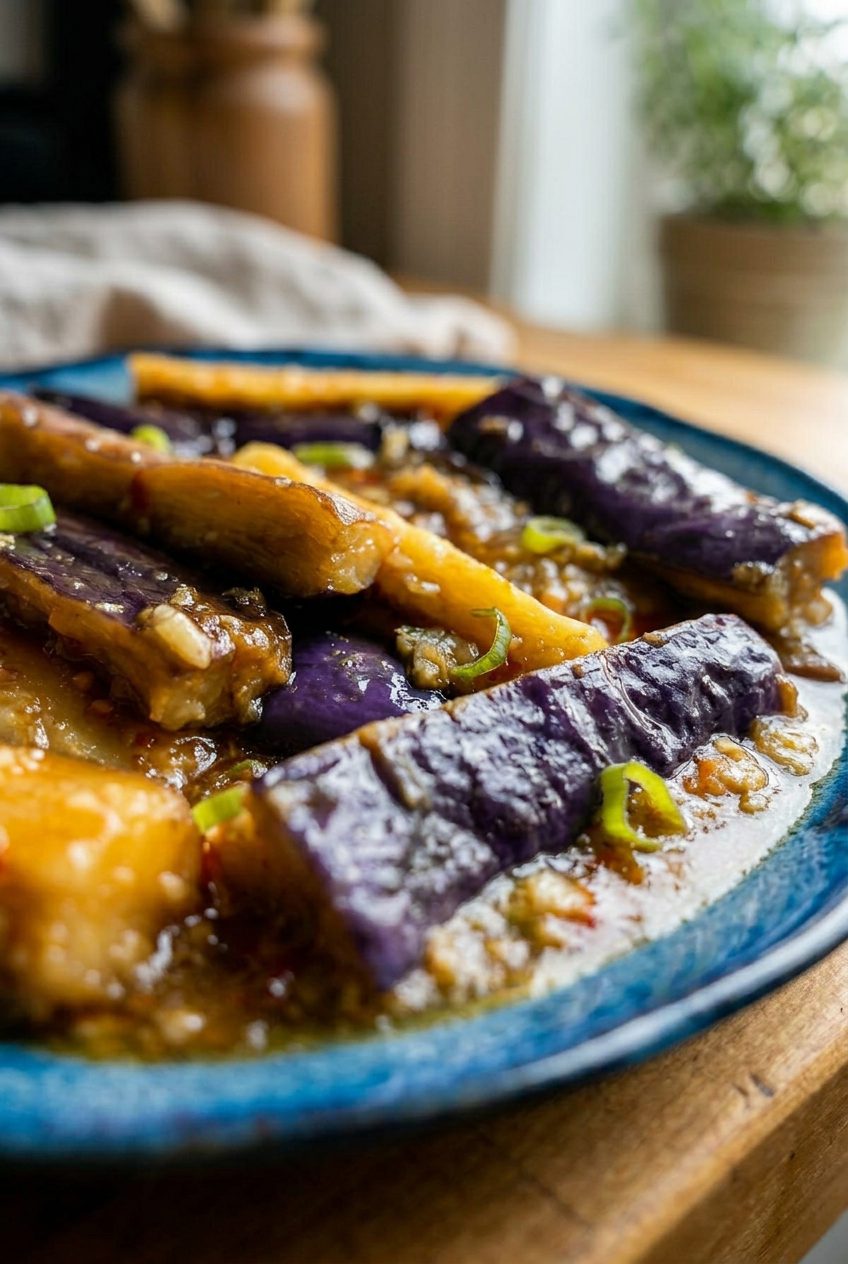
Return the cooked eggplant to the skillet with the garlic and ginger. While the pan is heating up, mix the sauce ingredients in a small bowl: 1 tablespoon light soy sauce, 1 tablespoon water, 1/2 teaspoon dark soy sauce, 2 teaspoons sugar, and 1 teaspoon cornstarch. Stir this mixture until the cornstarch is completely dissolved. Pour the sauce over the eggplant. Stir quickly to coat everything as the sauce thickens. This happens fast, so keep the eggplant moving to ensure it gets evenly glazed. Serve hot for the best experience.
Dietary Substitutions to Customize Your Chinese Eggplant
One of the best things about this recipe is how flexible it is. You can easily tweak it to suit what you have in your fridge or your specific dietary requirements.
Protein and Main Component Alternatives
While this dish focuses on eggplant, you can easily add protein to make it a more hearty meal. If you want to add meat, consider tossing in some shredded chicken or beef strips during the final minutes of cooking. For a plant-based protein boost, cubes of firm tofu work wonderfully. You can pan-fry the tofu separately until golden and then add it back in with the eggplant when you pour the sauce. This keeps the texture distinct and enjoyable.
Vegetable, Sauce, and Seasoning Modifications
Feel free to mix up the vegetables based on what is in season. Bell peppers, onions, or snap peas make excellent additions to the stir-fry. Just add them to the pan right after you cook the garlic and ginger so they get a chance to soften slightly. For the sauce, you can adjust the sweetness by swapping the sugar for honey or maple syrup. If you like heat, a drizzle of chili oil or a sprinkle of red pepper flakes will take this dish to the next level. You can also add a splash of black vinegar for a tangy kick that cuts through the richness of the sauce.
Mastering Chinese Eggplant: Advanced Tips and Variations
Once you have made the recipe a few times, you might want to try some techniques to make it even better. Here are some expert tips to help you master this dish.
Pro Cooking Techniques
To get the perfect texture, cook the eggplant in one layer and turn each piece individually. This might seem tedious, but it ensures an even texture without soggy spots. Another pro tip is to salt the eggplant to reduce bitterness and oil absorption while maintaining its color and crispiness. Prep your aromatics ahead of time so they are ready to go the moment the eggplant is done frying. This prevents the garlic from burning while you are scrambling to measure ingredients.
Flavor Variations
While the classic garlic sauce is delicious, you can experiment with different profiles. Try adding five-spice powder for a deeper, warmer flavor. Sichuan peppercorns can add a unique numbing sensation if you enjoy spicy dishes. You can also incorporate other savory elements like homemade chutney for a sweet and spicy twist. The key is to balance the salty, sweet, and savory elements to suit your personal taste.
Presentation Tips
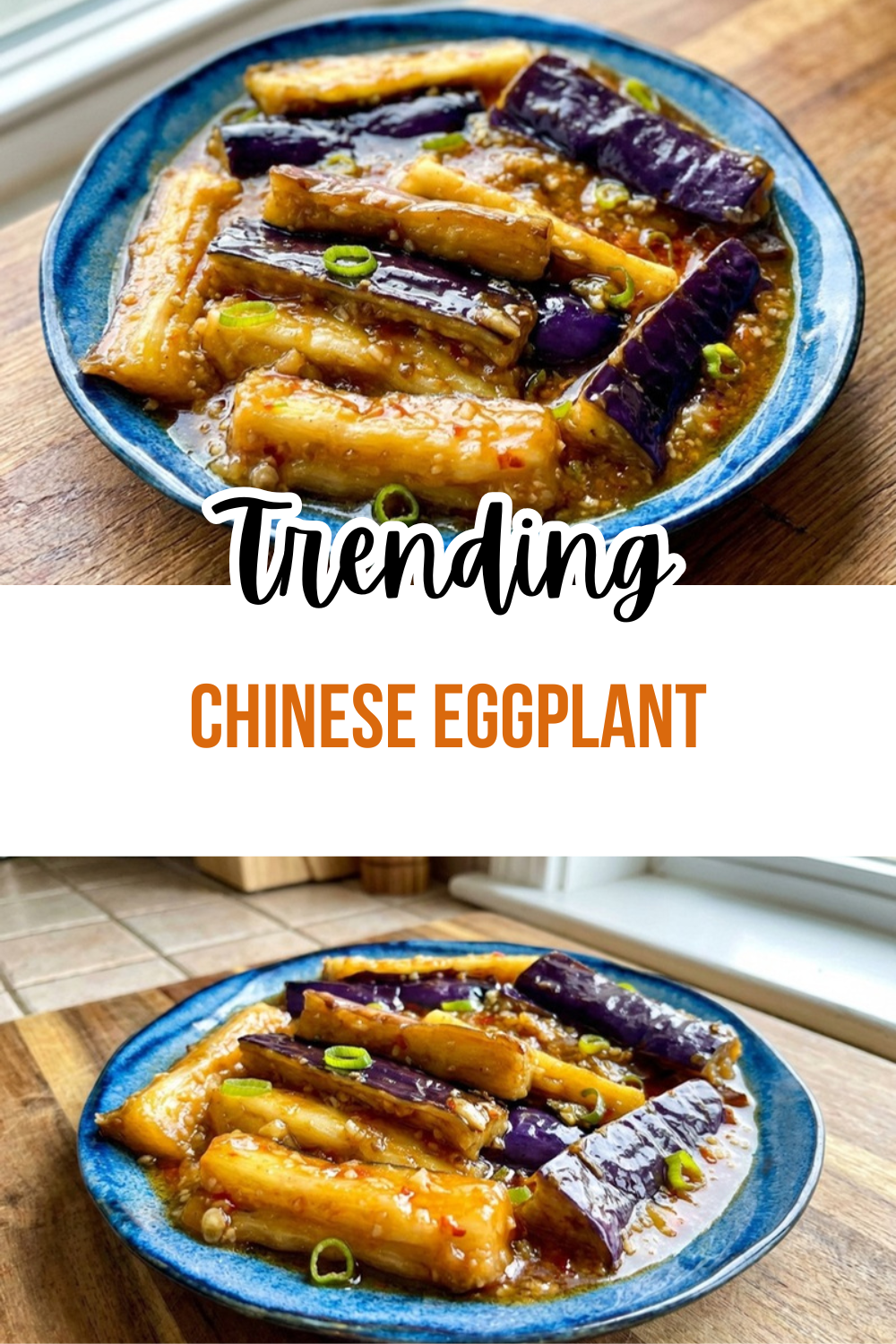
Plating makes a big difference in how a dish is perceived. Serve the Chinese eggplant over a bed of fluffy white rice or noodles to soak up the extra sauce. Garnish with sliced green onions or fresh cilantro to add a pop of color. A sprinkle of toasted sesame seeds on top adds a nice crunch and visual appeal. Serving it in a rustic bowl immediately after cooking keeps it piping hot and appetizing.
Make-Ahead Options
If you are planning for a busy week, you can prep the ingredients ahead of time. Cut and salt the eggplant in the morning and store it in the refrigerator until you are ready to cook. You can also mix the sauce ingredients beforehand and keep them in a jar in the fridge. When it is time to eat, just fry and assemble. This makes the actual cooking process incredibly fast and stress-free.
How to Store Chinese Eggplant: Best Practices
Knowing how to handle leftovers means you can enjoy this delicious meal even on the busiest days. Here is how to keep your Chinese eggplant fresh and tasty.
Refrigeration
Store any leftover eggplant in an airtight container in the refrigerator. It will stay good for about 3 to 4 days. Keep in mind that the eggplant will soften as it sits, so it might not be as crispy as when it was first cooked. However, the flavors will continue to meld together, often tasting even better the next day.
Freezing
Freezing is not generally recommended for this dish because the high water content in the eggplant changes texture significantly when thawed. The vegetable can become mushy and lose its appeal. It is best to enjoy this dish fresh or refrigerated rather than frozen.
Reheating
To reheat, use a skillet over medium heat. Add a small splash of water or oil to help loosen the sauce. Heat gently until the eggplant is warmed through. You can also use the microwave, but the skillet method helps restore some of the texture and avoids making the dish too hot and soggy.
Meal Prep Considerations
For meal prepping, keep the cooked rice and the eggplant separate. Combine them just before eating to prevent the rice from getting soggy. This approach keeps the textures distinct and the meal enjoyable throughout the week.
FAQs: Frequently Asked Questions About Chinese Eggplant
What type of eggplant is best for Chinese eggplant recipes?
Asian long eggplants, also called Chinese eggplants, work best for authentic Chinese eggplant dishes. They have thin skin, few seeds, and a tender texture that absorbs flavors without getting mushy. Each eggplant is typically 8-10 inches long and about 1-2 inches wide. If unavailable, use globe eggplants cut into smaller pieces, but follow the salting step to draw out moisture. Avoid overripe ones with brown spots. Slice lengthwise into quarters or batons for even cooking. This choice ensures the dish stays light and crispy after stir-frying. (72 words)
How do you prepare eggplant to avoid too much oil absorption in Chinese eggplant?
Salt the eggplant slices to remove excess moisture. Spread them on a clean towel, sprinkle kosher salt on both sides, and let rest for 15 minutes. Rinse thoroughly under cold water to remove salt, then pat dry with paper towels. Alternatively, soak slices in salted water (1 tbsp salt per quart) for 15 minutes, drain, and pat dry. This prevents sogginess and oil soaking during cooking. Dust lightly with cornstarch for extra crispiness. Fry in 2½ tbsp peanut or vegetable oil over high heat for 8-10 minutes until golden. (98 words)
What ingredients go into the garlic sauce for Chinese eggplant?
The classic garlic sauce for Chinese eggplant includes 2 tbsp light soy sauce for umami, 1 tsp dark soy sauce for color and depth, 1 tsp sugar to balance flavors, 1 tsp cornstarch slurry (mixed with 2 tbsp water) for thickening, and 4 minced garlic cloves sautéed in oil. Optional additions: 1 tsp black vinegar or chili oil for tang or heat. Combine liquids first, then stir in cornstarch slurry. Pour over cooked eggplant and toss immediately as it thickens in 30 seconds, coating everything evenly without sogginess. Yields sauce for 1 lb eggplant. (102 words)
How long does it take to cook Chinese eggplant on the stovetop?
Cook sliced Chinese eggplant on high heat for 8-10 minutes total. Heat 2½ tbsp oil in a wok until shimmering, add eggplant in a single layer, and fry undisturbed for 4-5 minutes until golden and charred on one side. Flip and cook another 3-4 minutes until tender inside but still firm. Test by piercing with a chopstick—it should slide in easily. Add sauce in the last 30 seconds, stirring constantly to glaze without overcooking. Total active time: 10 minutes, plus 15 minutes prep. Serves 4 as a side. (94 words)
Can you make Chinese eggplant gluten-free?
Yes, substitute soy sauces with gluten-free alternatives. Use tamari instead of light soy sauce (2 tbsp) and coconut aminos or gluten-free dark soy (1 tsp) for color. Ensure cornstarch and other ingredients like sugar and oil are certified gluten-free. The rest of the recipe—salting eggplant, frying, and garlic sauce—remains the same. This keeps the dish crispy, flavorful, and authentic. Prep time stays 30 minutes total. Pair with rice or grilled meats. Note: Always check labels, as some soy sauces contain wheat. (85 words)
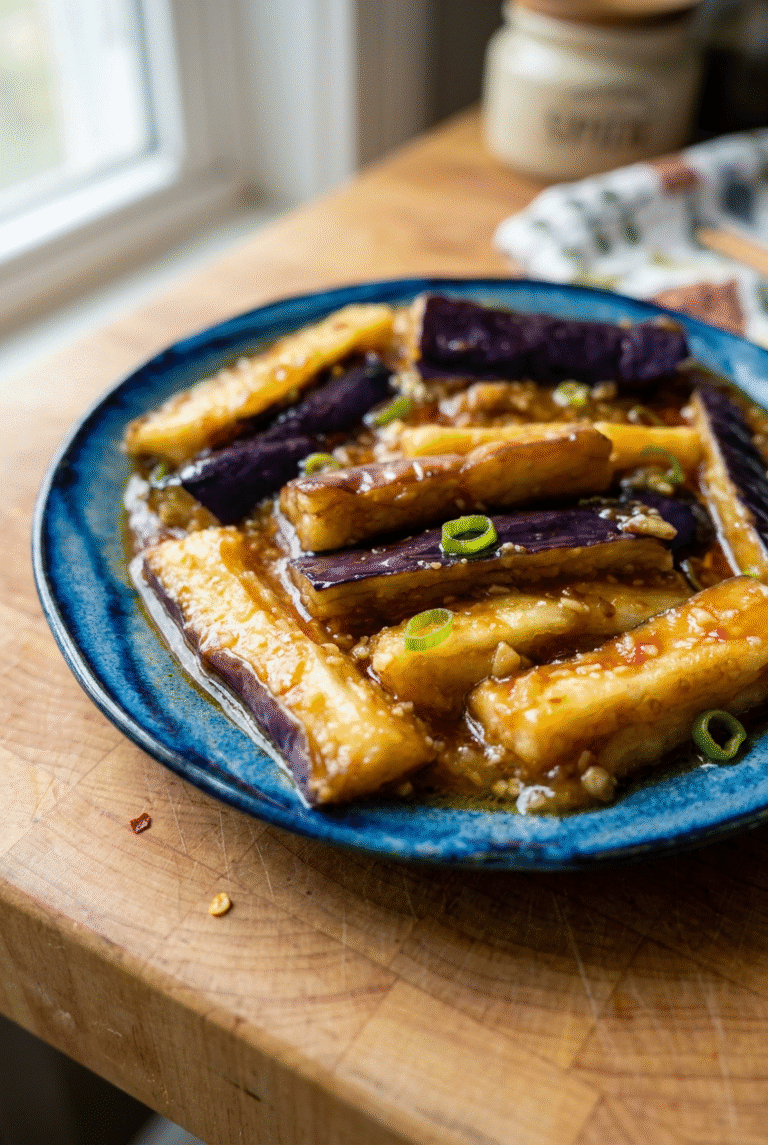
Chinese Eggplant
🍆 Crispy, smoky Chinese eggplant coated in rich garlic sauce – vegan, flavorful side bursting with umami!
🥢 Minimal oil stir-fry ready in 40 minutes, perfect over rice for a healthy weeknight meal!
- Total Time: 40 minutes
- Yield: 2-3 servings
Ingredients
– 10 oz (about 2 small) Chinese eggplant
– 1 teaspoon salt
– 1 tablespoon cornstarch
– 2 1/2 tablespoons peanut oil (or vegetable oil)
– 1 teaspoon minced ginger
– 3 cloves garlic
– 1 tablespoon light soy sauce (or tamari/coconut aminos for gluten-free)
– 1 tablespoon water
– 1/2 teaspoon dark soy sauce (optional, for color and caramel flavor)
– 2 teaspoons sugar
– 1 teaspoon cornstarch
Instructions
1-First Step: Preparing the Eggplant The secret to the perfect texture starts with how you handle the raw vegetable. You have two options to remove bitterness and prevent the eggplant from soaking up too much oil. Option 1 involves soaking the pieces in water with 1 teaspoon salt. Cover them with a pot lid and let them sit for 15 minutes. After soaking, drain the water and pat the pieces dry thoroughly with paper towels. Option 2 is to spread the slices on a paper towel and sprinkle kosher salt on both sides. Let them rest for 15 minutes, then rinse the salt off and pat dry. Whichever method you choose, make sure the eggplant is dry before moving to the next step.
2-Second Step: Coating for Crispiness Once your eggplant pieces are dry, place them in a large bowl. Add 1 tablespoon of cornstarch and toss well to coat every piece evenly. This light layer of cornstarch is crucial because it creates a smoky char without needing to roast the vegetable. It helps seal in moisture and ensures that the eggplant gets crispy rather than mushy when it hits the heat.
3-Third Step: Frying the Eggplant Heat 2 tablespoons of oil in a large nonstick skillet over medium-high heat. When the oil is shimmering, arrange the eggplant in a single layer. It is important not to overlap the pieces so they cook evenly. Let them cook for 8 to 10 minutes until they are golden and tender. You will need to turn the sides one at a time to get that nice sear on all surfaces. Once they are done, transfer them to a plate and set them aside.
4-Fourth Step: Cooking the Aromatics Reduce the heat slightly and add the remaining 1/2 tablespoon of oil to the same skillet. Toss in 1 teaspoon of minced ginger and 3 cloves of chopped garlic. Stir-fry these quickly until they become fragrant. This usually takes less than a minute, so keep a close eye on it to avoid burning the garlic. The aroma will tell you when it is time to move on.
5-Final Step: Combining and Glazing Return the cooked eggplant to the skillet with the garlic and ginger. While the pan is heating up, mix the sauce ingredients in a small bowl: 1 tablespoon light soy sauce, 1 tablespoon water, 1/2 teaspoon dark soy sauce, 2 teaspoons sugar, and 1 teaspoon cornstarch. Stir this mixture until the cornstarch is completely dissolved. Pour the sauce over the eggplant. Stir quickly to coat everything as the sauce thickens. This happens fast, so keep the eggplant moving to ensure it gets evenly glazed. Serve hot for the best experience.
Last Step:
Please leave a rating and comment letting us know how you liked this recipe! This helps our business to thrive and continue providing free, high-quality recipes for you.Notes
🧂 Salt eggplant first to draw out bitterness and excess moisture for crispier results.
🌾 Coat with cornstarch before frying for that smoky char without deep-frying.
🔥 Cook eggplant in a single layer, flipping individually for even browning and texture.
- Prep Time: 25 minutes
- Cook Time: 15 minutes
- Category: Side Dishes
- Method: Stir-Fry
- Cuisine: Chinese
- Diet: Vegan
Nutrition
- Serving Size: 1 serving
- Calories: 122 kcal
- Sugar: 5.1g
- Sodium: 375mg
- Fat: 8.7g
- Saturated Fat: 1.4g
- Unsaturated Fat: 7.3g
- Trans Fat: 0g
- Carbohydrates: 11g
- Fiber: 3.7g
- Protein: 1.4g
- Cholesterol: 0mg