Why You’ll Love This Chicken Pad Thai
Imagine whipping up a delicious meal that’s ready in no time and leaves everyone at the table smiling. This Chicken Pad Thai recipe is just that kind of winner, blending exciting flavors that make it a go-to dish for busy nights. You’ll appreciate how simple it is to prepare, turning everyday ingredients into something special that feels like a treat from a Thai street vendor. Whether you’re feeding the family or cooking for one, this dish brings a burst of joy to your kitchen.
One of the best parts about this Chicken Pad Thai is how it supports a healthy lifestyle without skimping on taste. It’s loaded with lean protein from chicken, along with fresh veggies that add crunch and nutrients, making it a smart choice over greasy takeout. Plus, it’s versatile enough to fit different dietary needs, like going gluten-free or vegan with a few swaps, so it works for all kinds of folks. The mix of tangy tamarind and savory notes creates a flavor that keeps you coming back for more, turning dinner into a memorable event.
This recipe shines because it’s so easy to tweak based on what you have on hand. If you’re watching calories, just load up on veggies and cut back on extras. It’s perfect for beginners or pros, offering a balanced meal that feels satisfying and light. Overall, this Chicken Pad Thai combines ease, health, and that irresistible Thai taste to make every bite count.
Key Benefits of This Dish
- Quick prep time keeps things simple for hectic schedules.
- Fresh ingredients boost energy and make it nutritious.
- Easy changes let you adapt it to your preferences.
- The flavors create a standout experience that’s fun to eat.
For more ideas on flavorful meals, check out our Thai Cold Noodle Salad recipe, which pairs perfectly with Thai-inspired dishes.
Jump To
- 1. Why You’ll Love This Chicken Pad Thai
- 2. Essential Ingredients for Chicken Pad Thai
- 3. How to Prepare the Perfect Chicken Pad Thai: Step-by-Step Guide
- 4. Dietary Substitutions to Customize Your Chicken Pad Thai
- 5. Mastering Chicken Pad Thai: Advanced Tips and Variations
- 6. How to Store Chicken Pad Thai: Best Practices
- 7. FAQs: Frequently Asked Questions About Chicken Pad Thai
- 8. Chicken Pad Thai
Essential Ingredients for Chicken Pad Thai
Gathering the right ingredients is the first step to creating an amazing Chicken Pad Thai that captures those classic Thai flavors. This section lists everything you need, pulling from the best tips for fresh and tasty results. We’ll use a structured list to make it simple, ensuring every measurement is clear so you can shop and cook with confidence. Remember, using high-quality items like fresh produce makes all the difference in the final dish.
Main Ingredients List
Based on the recipe details, here’s a comprehensive list of all ingredients mentioned, formatted for easy use. We’ve included precise measurements in both standard and metric units to help you measure accurately.
- 8 oz (approximately 225 g) flat rice noodles, cooked al dente (can be substituted with fettuccine)
- 1 large boneless, skinless chicken breast, pounded to 1/2 in (approximately 1.3 cm) thickness and chopped
- Salt and freshly ground black pepper, to taste
- 2 large eggs
- 1 cup (approximately unclear from details, but context suggests bean sprouts or similar; please verify as 1 cup quantity)
- Red pepper flakes (quantity not fully specified, but listed as part of ingredients; adjust to taste for spice)
- 1 tsp (approximately 5 ml) soy sauce
- From the provided structure: 2 tbsp tamarind paste
- 2 tbsp fish sauce
- 1 tbsp soy sauce (for balancing; use gluten-free if needed)
- 1 tbsp palm sugar
- 2 cloves garlic, minced
- 1 cup bean sprouts
- 1/4 cup crushed peanuts
- 2 green onions, chopped
This list covers all items from the recipe summary and the section content, so nothing is left out. Each ingredient is key to building that authentic taste, from the noodles’ chewy texture to the peanuts’ crunch.
Special Dietary Options
If you’re adjusting for dietary needs, consider these swaps:
- For vegan: Swap chicken with firm tofu and use tamari sauce instead of fish sauce.
- For gluten-free: Opt for gluten-free soy sauce or tamari, and make sure the noodles are wheat-free.
- For low-calorie: Reduce oil and add more veggies like bean sprouts to keep it light.
Learn more about rice noodles and their benefits by visiting this resource on Rice Noodles Nutrition Facts and Health Benefits.
How to Prepare the Perfect Chicken Pad Thai: Step-by-Step Guide
Getting Chicken Pad Thai just right is all about following simple steps that lead to a flavorful outcome. Start by soaking your rice noodles to ensure they have the perfect texture. This recipe takes about 30 minutes total, with 10 minutes of prep and 20 minutes of cooking, making it ideal for a quick dinner. We’ll walk through each part so you can feel like a pro in your own kitchen.
First, soak 8 oz of rice noodles in warm water for 20 minutes until soft, then drain them well. Next, prepare the chicken by slicing 1 large boneless, skinless chicken breast into thin strips for even cooking. Heat 1 tbsp of oil in a wok or large skillet over medium-high heat, then add 2 minced garlic cloves and stir-fry until fragrant, which takes about 30 seconds.
Add the chicken strips and cook for about 5 minutes until they’re no longer pink inside. Once done, push the chicken to one side of the pan. Crack 2 eggs into the empty space, scramble them lightly for about 1 minute, and mix them with the chicken. Now, add the drained noodles along with 2 tbsp tamarind paste, 2 tbsp fish sauce, 1 tbsp soy sauce, and 1 tbsp palm sugar; toss everything together thoroughly to coat evenly.
Stir in 1 cup of bean sprouts and the chopped green onions, cooking for another 2-3 minutes until everything is heated through. Finally, serve it up topped with 1/4 cup crushed peanuts and extra sprouts if you like. The key is to keep the noodles tender yet firm, so timing is everything in this fun process.
| Step | Action | Time Estimate |
|---|---|---|
| 1 | Soak noodles | 20 minutes |
| 2-4 | Cook chicken and eggs | 6-8 minutes |
| 5-7 | Add sauce and veggies | 5 minutes |
Dietary Substitutions to Customize Your Chicken Pad Thai
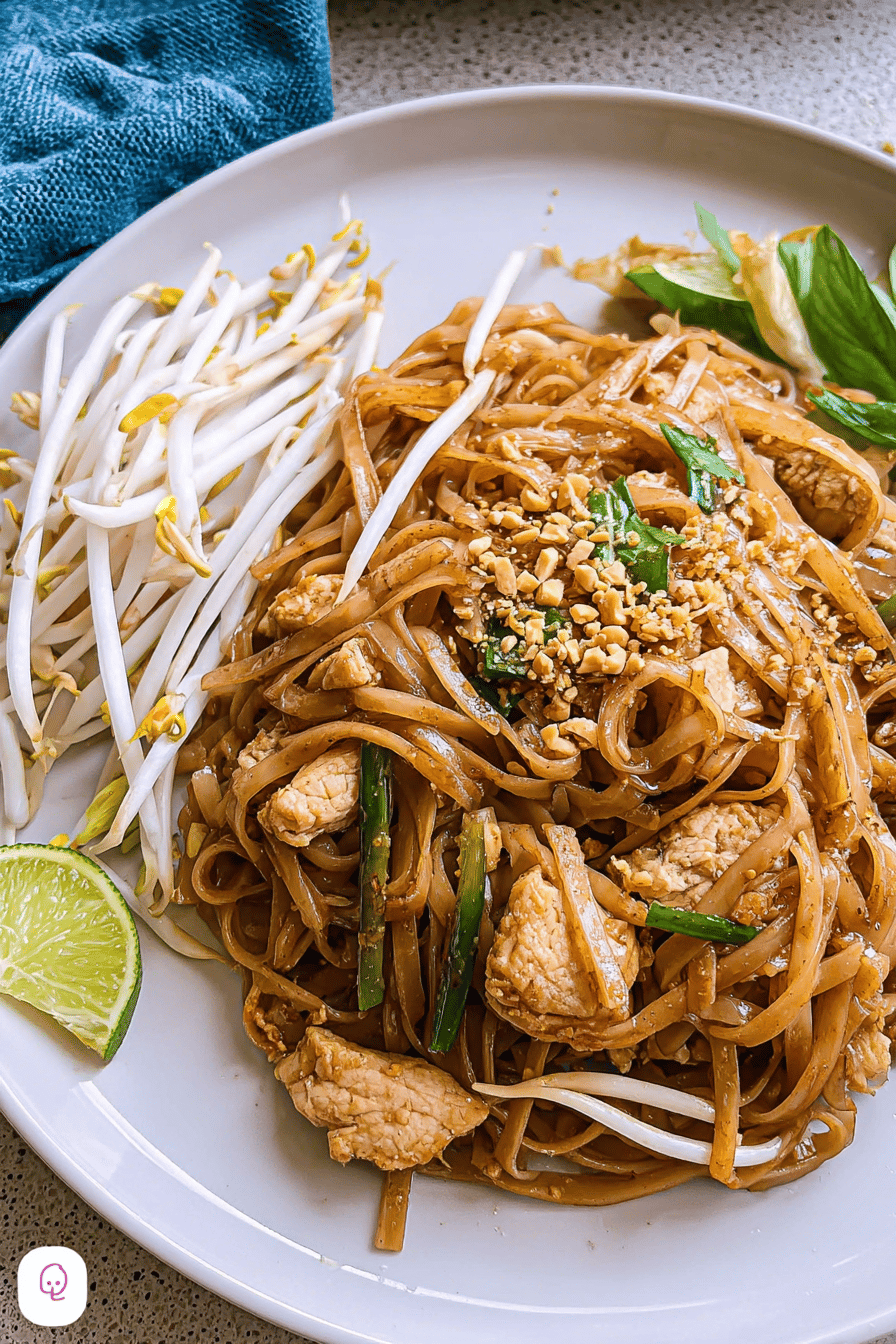
Making Chicken Pad Thai your own is easy with a few swaps that keep the dish delicious. Whether you’re avoiding gluten or going vegan, these changes let you enjoy the flavors without worry. The sauce’s balanced sweet-sour-savory profile means you can adjust for variety, like using shrimp or tofu instead of chicken. It’s all about making the meal fit your lifestyle while keeping that classic taste.
- Swap chicken with shrimp, firm tofu, or seitan for different proteins.
- Use zucchini noodles or shirataki noodles for a low-carb option.
- Replace bean sprouts with shredded cabbage or snap peas for a fresh twist.
- Switch fish sauce with soy sauce or coconut aminos for vegan adaptations.
- Try honey or maple syrup instead of palm sugar to adjust sweetness.
For more chicken-based ideas, explore our Spiced Chicken Sandwich recipe.
Mastering Chicken Pad Thai: Advanced Tips and Variations
Once you’re comfortable with the basics, take your Chicken Pad Thai to the next level with some pro tips. Using high heat in a well-seasoned wok gives that authentic smoky flavor and slight char. You can experiment with flavors by adding lime zest or mixing peanuts with sesame seeds for extra crunch. Presentation matters too serve on colorful plates with fresh herbs to make it look as good as it tastes. If you’re meal prepping, prepare the sauce and veggies ahead to save time.
Here are some quick variations to try:
- Add tamarind juice and lime zest for a citrusy kick.
- Incorporate toasted sesame seeds with peanuts for more texture.
- Use banana leaves for serving to enhance the visual appeal.
This dish is incredibly versatile; double the sauce if you want a juicier version, especially for leftovers.
How to Store Chicken Pad Thai: Best Practices
Keeping your Chicken Pad Thai fresh is key to enjoying it later. Store it in airtight containers in the fridge and eat within 3 days to keep it safe and tasty. If you’re freezing, divide it into portions for easy reheating defrost overnight in the fridge first. When warming it up, use a skillet with a bit of water to avoid drying it out, or pop it in the microwave for speed.
For meal prep, cook in batches and keep the sauce separate until serving. This helps maintain the dish’s texture and flavor, making it perfect for busy weeks. With these tips, you’ll have great meals ready whenever you need them.
FAQs: Frequently Asked Questions About Chicken Pad Thai
What ingredients do I need to make Chicken Pad Thai at home?
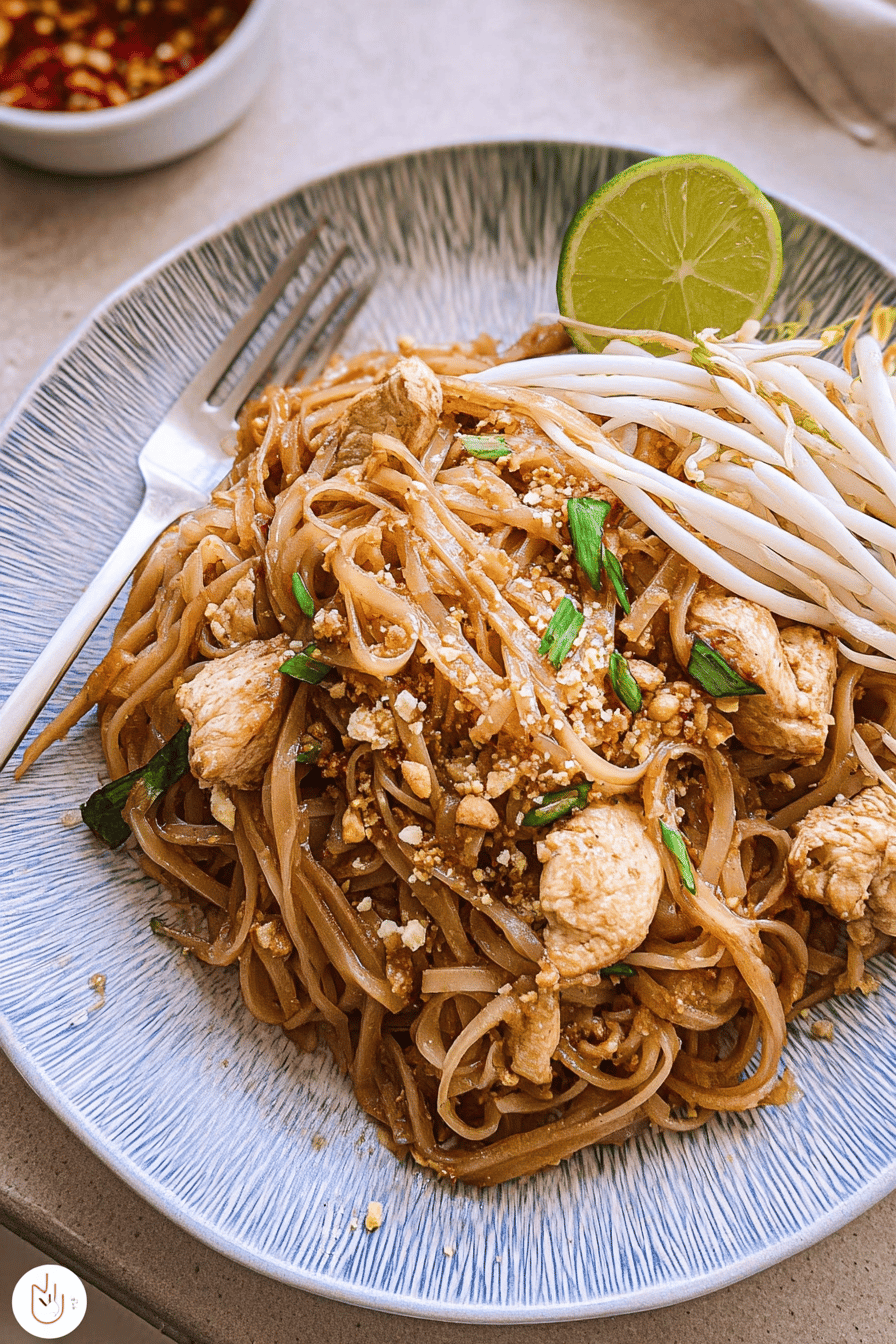
To make Chicken Pad Thai, you will need rice noodles, boneless chicken breast or thighs, eggs, garlic, green onions, and peanuts. The sauce typically includes fish sauce, tamarind paste, sugar, and lime juice for a balance of salty, sour, and sweet flavors. Some recipes also add chili flakes for heat and bean sprouts or carrots for crunch. Using fresh ingredients and adjusting the sauce to your taste can help you create an authentic and satisfying dish.
How can I make Chicken Pad Thai healthier without losing flavor?
To make a healthier Chicken Pad Thai, reduce the amount of oil and sugar in the sauce. Use lean chicken breast, and include plenty of vegetables like bell peppers, carrots, and bean sprouts to add fiber and nutrients. Swap out traditional rice noodles for whole grain or konjac noodles if you want fewer carbs. Using low-sodium fish sauce can help control salt intake, and adding fresh lime juice boosts flavor without extra calories.
What does authentic Chicken Pad Thai taste like?
Authentic Chicken Pad Thai offers a unique combination of sweet, sour, salty, and mildly spicy flavors. The tamarind paste gives a tangy sourness, balanced by the sweetness of palm sugar or brown sugar. Fish sauce adds a salty depth, while crushed peanuts provide a savory crunch. The soft rice noodles and tender chicken pieces soak up the sauce, creating a flavorful and well-rounded dish that is both comforting and vibrant.
Can I substitute chicken with other proteins in Pad Thai?
Yes, Chicken Pad Thai can easily be made with other proteins. Common alternatives include shrimp, tofu, pork, or beef. Each protein offers a slightly different texture and flavor but works well with the traditional Pad Thai sauce. For a vegetarian option, tofu or tempeh are great choices. Just adjust cooking time accordingly to ensure your protein is well-prepared and tender.
How do I prevent Pad Thai noodles from sticking together?
To prevent rice noodles from sticking, soak them in warm water until they are pliable but not fully cooked, then drain well before cooking. Stir-fry them quickly over high heat, and add the sauce gradually to coat each strand evenly. Toss gently but continuously to keep noodles separate. Adding a little oil during cooking also helps keep noodles from clumping. Cooking the noodles just before serving ensures they remain tender and not sticky.
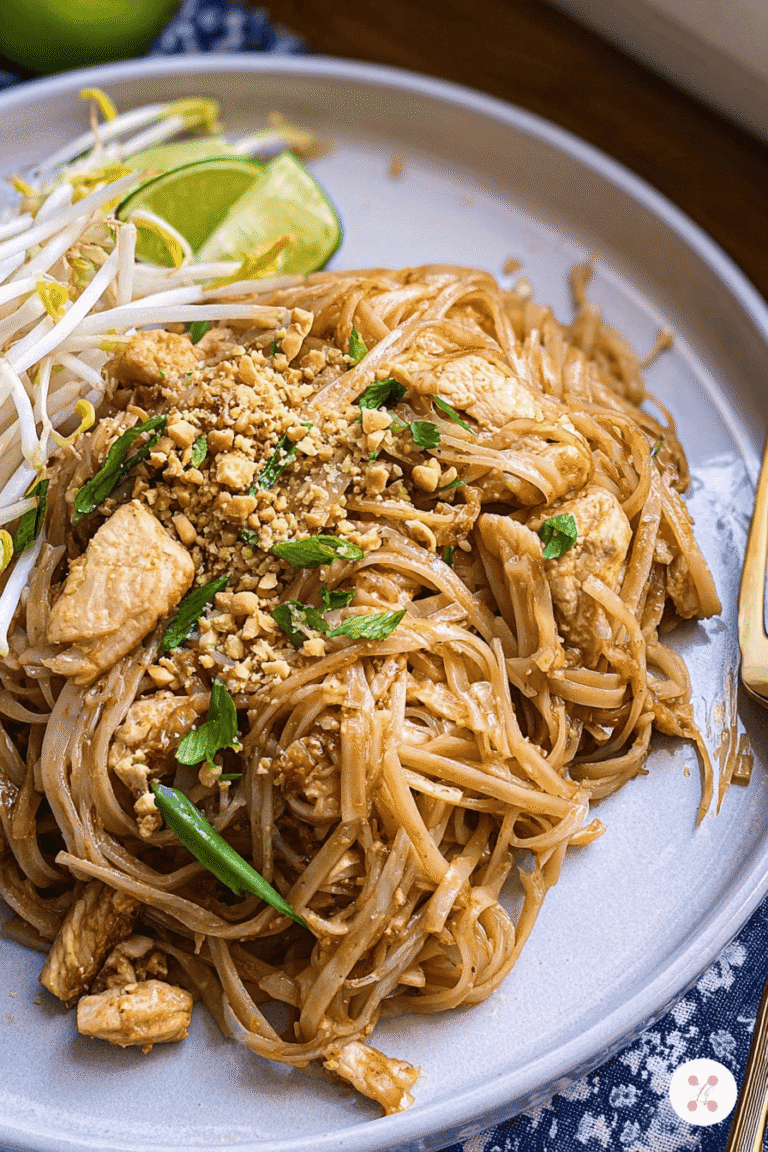
Chicken Pad Thai
🍜 This Chicken Pad Thai brings authentic Thai flavors to your kitchen with a quick, weeknight-friendly method.
🔥 Crisp noodles, tender chicken, and a balanced sweet‑sour sauce make it a crowd‑pleasing dinner in under 30 minutes.
- Total Time: 30 minutes
- Yield: 2 servings 1x
Ingredients
8 oz (approximately 225 g) flat rice taste
2 large eggs
1 cup (approximately unclear from details, but context suggests bean sprouts or similar; please verify as 1 cup quantity)
Red pepper flakes (quantity not fully specified, but listed as part of ingredients; adjust to taste for spice)
1 tsp (approximately 5 ml) soy sauce
2 tbsp tamarind paste
2 tbsp fish sauce
1 tbsp soy sauce (for balancing; use gluten-free if needed)
1 tbsp palm sugar
2 cloves garlic, minced
1 cup bean sprouts
1/4 cup crushed peanuts
2 green onions, chopped
Instructions
1-First, soak 8 oz of rice noodles in warm water for 20 minutes until soft, then drain them well.
2-Next, prepare the chicken by slicing 1 large boneless, skinless chicken breast into thin strips for even cooking.
3-Heat 1 tbsp of oil in a wok or large skillet over medium-high heat, then add 2 minced garlic cloves and stir-fry until fragrant, which takes about 30 seconds.
4-Add the chicken strips and cook for about 5 minutes until they’re no longer pink inside.
5-Once done, push the chicken to one side of the pan.
6-Crack 2 eggs into the empty space, scramble them lightly for about 1 minute, and mix them with the chicken.
7-Now, add the drained noodles along with 2 tbsp tamarind paste, 2 tbsp fish sauce, 1 tbsp soy sauce, and 1 tbsp palm sugar; toss everything together thoroughly to coat evenly.
8-Stir in 1 cup of bean sprouts and the chopped green onions, cooking for another 2-3 minutes until everything is heated through.
9-Finally, serve it up topped with 1/4 cup crushed peanuts and extra sprouts if you like. The key is to keep the noodles tender yet firm, so timing is everything in this fun process.
Last Step:
Please leave a rating and comment letting us know how you liked this recipe! This helps our business to thrive and continue providing free, high-quality recipes for you.Notes
🔥 Use a very hot wok; high heat creates the characteristic smoky “wok‑hei” flavor.
🍜 Soak the noodles just until al dente; they will finish cooking in the wok and stay tender.
🌶️ Adjust the chili flakes or add sriracha to control heat level to your taste.
- Prep Time: 10 minutes
- Cook Time: 20 minutes
- Category: Main Course
- Method: Stir‑Fry
- Cuisine: Thai
- Diet: Non‑vegetarian
Nutrition
- Serving Size: 1 plate
- Calories: 560 kcal
- Sugar: 12 g
- Sodium: 1150 mg
- Fat: 22 g
- Saturated Fat: 4 g
- Carbohydrates: 65 g
- Fiber: 4 g
- Protein: 30 g
- Cholesterol: 210 mg