Why You’ll Love This Buttermilk Fried Chicken Thighs
If you have been searching for the ultimate comfort food, look no further. This recipe strikes the perfect balance between a juicy interior and a crispy, flavorful exterior. It is a crowd-pleaser that brings everyone to the table, and here is why it deserves a spot in your regular meal rotation.
- Ease of preparation: You might think making fried chicken from scratch is complicated, but this method is surprisingly straightforward. With just 10 minutes of prep time and simple pantry ingredients, you can have restaurant-quality chicken ready to fry. The steps are easy to follow, making it accessible even for beginners who want to try their hand at classic frying.
- Health benefits: While fried chicken is often an indulgence, using boneless skinless chicken thighs keeps it leaner than traditional versions. Dark meat is packed with protein and essential nutrients like iron and zinc. By controlling the oil temperature and draining on a wire rack, you avoid excess grease, making this a smarter way to enjoy a beloved dish.
- Versatility: This recipe serves as a fantastic base for countless variations. Whether you want to spice it up with more cayenne, add herbs to the flour, or serve it with different sides like hot water cornbread or candied yams, it adapts beautifully to your taste preferences and pantry staples.
- Distinctive flavor: The secret lies in the marinade. The buttermilk not only tenderizes the meat but also imparts a subtle tang that pairs perfectly with the savory spice mix. The result is a depth of flavor you just cannot get from a frozen bag or a fast-food drive-thru.
Jump To
- 1. Why You’ll Love This Buttermilk Fried Chicken Thighs
- 2. Essential Ingredients for Buttermilk Fried Chicken Thighs
- 3. How to Prepare the Perfect Buttermilk Fried Chicken Thighs: Step-by-Step Guide
- 4. Dietary Substitutions to Customize Your Buttermilk Fried Chicken Thighs
- 5. Mastering Buttermilk Fried Chicken Thighs: Advanced Tips and Variations
- 6. How to Store Buttermilk Fried Chicken Thighs: Best Practices
- 7. FAQs: Frequently Asked Questions About Buttermilk Fried Chicken Thighs
- 8. Buttermilk Fried Chicken Thighs
Essential Ingredients for Buttermilk Fried Chicken Thighs
Creating the perfect batch of crispy chicken starts with gathering the right components. Every ingredient plays a specific role in building texture and taste. Below is the complete list of what you need to make this recipe a success.
Main Ingredients
- Boneless skinless chicken thighs – The star of the dish, providing juicy, flavorful meat.
- Paprika – Adds a beautiful red color and a mild, sweet flavor.
- Black pepper – Provides a sharp, earthy heat to the seasoning.
- Onion powder – Imparts a savory, sweet onion flavor without the texture of fresh onions.
- Garlic powder – Gives a robust garlic flavor that permeates the chicken.
- Cayenne pepper – Adds a kick of heat for those who like a little spice.
- Salt – Essential for seasoning and enhancing all other flavors.
- Buttermilk – The acidity tenderizes the chicken and ensures a juicy result.
- Eggs – Helps the dredge adhere to the chicken for a thick crust.
- All-purpose flour – Creates the crispy coating when fried.
- Oil for frying – Necessary for cooking the chicken to golden perfection.
Special Dietary Options
- Gluten-free: Swap the all-purpose flour for a 1:1 gluten-free flour blend or almond flour. Ensure your other spices are certified gluten-free.
- Dairy-free: Substitute the buttermilk with a mixture of milk and vinegar or lemon juice, or use a dairy-free yogurt alternative.
How to Prepare the Perfect Buttermilk Fried Chicken Thighs: Step-by-Step Guide
Making this dish is all about timing and temperature. Follow these detailed steps to ensure your chicken comes out safe, cooked through, and incredibly crispy every single time.
First Step: Create the Spice Blend
Start by gathering your spices. In a small bowl, combine the paprika, black pepper, onion powder, garlic powder, cayenne pepper, and salt. Mixing these beforehand ensures that the flavor is evenly distributed throughout the chicken, from the marinade all the way to the crust. This homemade spice mix is far superior to pre-mixed blends because you can control the heat level.
Second Step: Prepare the Marinade
In a large bowl, whisk together the buttermilk, one egg, a pinch of salt, and a portion of your seasoning mix. Whisking the egg into the buttermilk helps the coating stick better later. Once combined, add your boneless skinless chicken thighs to the bowl. Turn the pieces to ensure they are completely coated in the liquid. This is the most critical step for tenderness. Cover the bowl and place it in the refrigerator to marinate for at least one hour, though overnight is even better for maximum flavor absorption.
Third Step: Mix the Dredge
While the chicken marinates, get your coating ready. In a separate large bowl or shallow dish, mix the all-purpose flour, additional salt, and the remainder of your spice blend. Now, here is a pro tip: take a small amount of the marinade liquid and drizzle it into the flour mixture. Use your fingers to work it in until you see small clumps forming. These clumps will adhere to the chicken during frying, creating those irresistible crunchy ridges that define great fried chicken.
Fourth Step: Dredge the Chicken
Remove the chicken from the marinade, letting the excess liquid drip off. You do not need to pat it completely dry; you want the flour to stick. Take each thigh and press it firmly into the flour mixture. Really press it in to ensure a thick, even coating. Shake off any loose flour and set the coated chicken aside on a rack or plate. Letting it sit for about 10 minutes after dredging helps the crust set, which prevents it from falling off in the oil.
Final Step: Fry to Perfection
Pour oil into a heavy-bottomed pot or Dutch oven. You want enough oil so the chicken floats freely without touching the bottom. Preheat the oil to 350°F. It is important to maintain a temperature around 325°F once the chicken goes in to ensure it cooks through without burning the crust before the meat is done. Carefully place the chicken thighs into the hot oil. Do not overcrowd the pan; cooking in batches prevents the oil temperature from dropping too drastically.
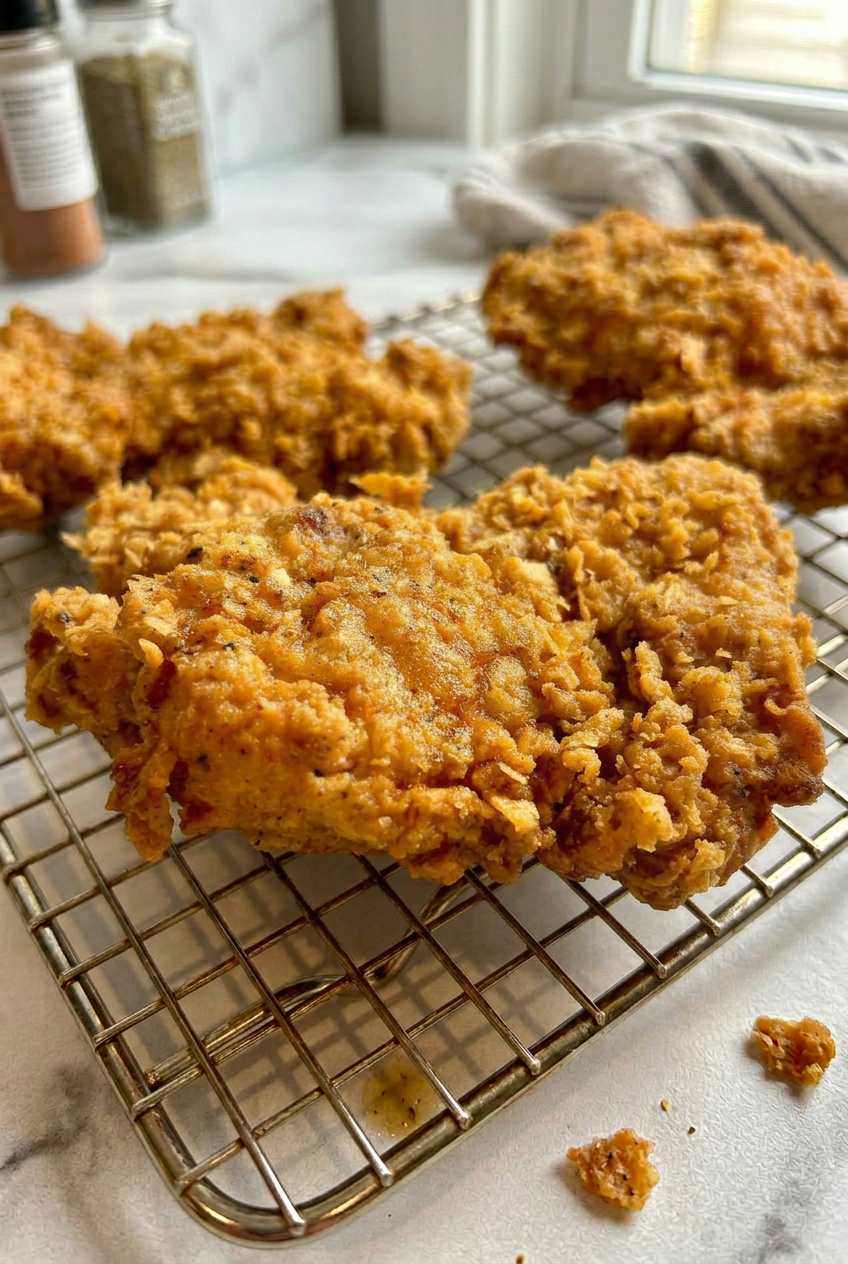
Fry the chicken for 4 to 6 minutes per side. You are looking for a deep golden brown color. To be safe, use a meat thermometer to check that the internal temperature reaches 160°F. Once cooked, use tongs to transfer the chicken to a wire rack set over a baking sheet to drain. Avoid using paper towels if possible, as they can trap steam and make the crust soggy. Let the chicken rest for a few minutes before serving to let the juices settle.
Dietary Substitutions to Customize Your Buttermilk Fried Chicken Thighs
One of the best things about home cooking is making a recipe work for you. Whether you have dietary restrictions or just want to try something new, these substitutions will keep your dish delicious.
Protein and Main Component Alternatives
While boneless skinless thighs are the standard for this recipe, you can easily swap them out. If you prefer white meat, chicken breasts work well, though you should pound them to an even thickness so they cook at the same rate as the coating. For those who enjoy bone-in cuts, thighs and drumsticks offer excellent flavor and juiciness, just remember to add a few extra minutes to the cooking time to ensure the meat near the bone reaches the safe temperature.
Vegetable, Sauce, and Seasoning Modifications
Get creative with your sides and dips. This fried chicken pairs wonderfully with a variety of sauces. You might enjoy a classic gravy, a spicy honey mustard, or even a sweet fresh cherry BBQ sauce for a unique twist. If you want to adjust the seasoning profile, try adding smoked paprika for a smoky taste or dried herbs like thyme and rosemary to the flour for a savory, herbal crust. You can also serve this alongside red beans and rice for a complete Southern-style meal.
Mastering Buttermilk Fried Chicken Thighs: Advanced Tips and Variations
Once you have mastered the basic recipe, there are a few techniques and variations that can take your fried chicken to the next level. These tips are designed to help you achieve professional results in your home kitchen.
Pro cooking techniques
For the absolute crispiest skin, consider the double-fry method. After your first fry, let the chicken cool and refrigerate it for at least 15 minutes, or up to 2 days. When you are ready to serve, heat your oil to 400°F and fry the chicken again for just 1 minute per side. This second high-heat fry drives out any remaining moisture and hardens the crust, creating a shatteringly crunchy texture. Always use a thermometer to monitor your oil; guessing the temperature often leads to greasy or burnt chicken.
Flavor variations
Do not be afraid to experiment with the spice mix. For a Nashville-style hot chicken, increase the amount of cayenne pepper in the dredge and brush the finished fried chicken with a spicy oil made of cayenne, brown sugar, and lard. If you prefer a savory, garlic-forward profile, add extra garlic powder and some grated Parmesan cheese to the flour mixture.
Presentation tips
Serving the chicken correctly makes the meal even better. Instead of stacking the pieces on a plate, serve them on a wire rack over a platter. This keeps air circulating around the crust so it stays crunchy. Garnish with fresh parsley or green onions for a pop of color.
Make-ahead options
You can marinate the chicken up to 24 hours in advance. The dredging, however, should be done right before frying to prevent the coating from becoming gummy. If you are serving a crowd, you can fry the chicken in batches and keep them warm in a 200°F oven while you finish the rest.
How to Store Buttermilk Fried Chicken Thighs: Best Practices
Leftovers are rare with this recipe, but if you do have extra chicken, storing it correctly is key to maintaining its quality. Proper storage ensures you can enjoy your meal later without sacrificing texture or safety.
| Method | Instructions |
|---|---|
| Refrigeration | Place cooled chicken in an airtight container. It will stay fresh in the fridge for up to 3 to 4 days. Avoid stacking pieces directly on top of each other to prevent the crust from getting soggy. |
| Freezing | For longer storage, freeze the chicken. Wrap individual pieces tightly in plastic wrap, then place them in a freezer-safe bag. Label with the date. They can be frozen for up to 2 months. |
| Reheating | Avoid the microwave if you want to keep the crust crisp. Instead, reheat in a 375°F oven for 10 to 15 minutes, or until heated through. An air fryer also works great for reviving the crunch. |
| Meal prep | You can bread the chicken and freeze it raw on a baking sheet before transferring to a bag. When ready to eat, fry straight from the freezer, adding a few extra minutes to the cook time. |
FAQs: Frequently Asked Questions About Buttermilk Fried Chicken Thighs
How long should I marinate chicken thighs in buttermilk for fried chicken?
Marinate boneless, skinless chicken thighs in a buttermilk brine for at least 1 hour, but ideally 4-24 hours in the fridge for best results. The buttermilk’s acidity tenderizes the meat by breaking down proteins, while salt and spices infuse deep flavor. This step keeps the chicken juicy during frying, preventing dryness. To prepare, mix 2 cups buttermilk, 1 tablespoon salt, 1 teaspoon each garlic powder, onion powder, paprika, and black pepper, then submerge thighs fully. Pat dry before breading. Overnight marination yields restaurant-quality tenderness without over-tenderizing. Always discard used marinade to avoid cross-contamination. This simple process makes your buttermilk fried chicken thighs extra flavorful and moist—perfect for crispy results every time. (92 words)
What temperature should the oil be to fry buttermilk chicken thighs?
Start frying buttermilk chicken thighs at 325°F (163°C) for the first fry, then increase to 350°F (177°C) for the second. Use a thermometer for accuracy—a clip-on candy thermometer works well. At 325°F, the chicken cooks evenly to 165°F internal temperature without burning the crust. This lower initial temp allows heat to penetrate the thickest parts safely. After 8-10 minutes per side, rest briefly, then double-fry at 350°F for 2-3 minutes to crisp the coating. Peanut or vegetable oil is ideal for high smoke points. Test doneness with a meat thermometer inserted into the thickest part. Fry in batches to maintain oil temp, avoiding overcrowding. This method delivers golden, juicy thighs safe to eat. (118 words)
Why double-fry chicken thighs in a buttermilk fried chicken recipe?
Double-frying buttermilk fried chicken thighs crisps the crust perfectly by evaporating moisture that seeps out after the first fry. Fry first at 325°F for 8-10 minutes until golden and internal temp hits 165°F, rest 5-10 minutes on a wire rack, then fry again at 350°F for 2-3 minutes. The second fry tightens the breading without overcooking the meat, resulting in shatteringly crisp skin that stays crunchy longer. This technique, common in Korean and Southern styles, prevents sogginess from steam. Drain on paper towels or a rack. Pro tip: Let rest 5 minutes post-fry for juices to redistribute. Your thighs will rival fast-food crunch while staying juicy inside. (104 words)
Can I use bone-in chicken thighs for buttermilk fried chicken?
Yes, bone-in chicken thighs work great for buttermilk fried chicken—just adjust cooking time. Marinate as usual, then fry 3-6 minutes longer per side during the first fry at 325°F, until internal temp reaches 165°F at the bone (check thickest meaty part). Bones conduct heat slower, so use a thermometer to avoid undercooking. Pat dry thoroughly before dredging in seasoned flour (with cornstarch for extra crunch). Double-fry as directed. Bone-in adds flavor and moisture but increases splatter—use a splatter screen. They’re cheaper and more flavorful than boneless. For even cooking, thighs should be similar size. Store leftovers in fridge up to 3 days; reheat in 350°F oven for crispiness. (112 words)
What’s a good substitute for buttermilk in fried chicken thighs recipe?
If you lack buttermilk, mix 1 tablespoon white vinegar or lemon juice with 1 cup milk; let sit 5-10 minutes to curdle for a perfect DIY substitute. Plain Greek yogurt thinned with a splash of water (1:1 ratio) mimics the tang and thickness. Kefir works too for probiotics and acidity. Avoid sweetened versions. These alternatives tenderize and flavor chicken thighs just like buttermilk during 1-24 hour marinate. For 2 cups needed in most recipes, scale up. The acid breaks down proteins for juiciness, while fat coats for moisture retention. Test small batch first. Pair with classic flour dredge: 2 cups flour, 1 tablespoon each salt, pepper, paprika. Yields crispy, tangy fried chicken thighs without store-bought buttermilk. (116 words)
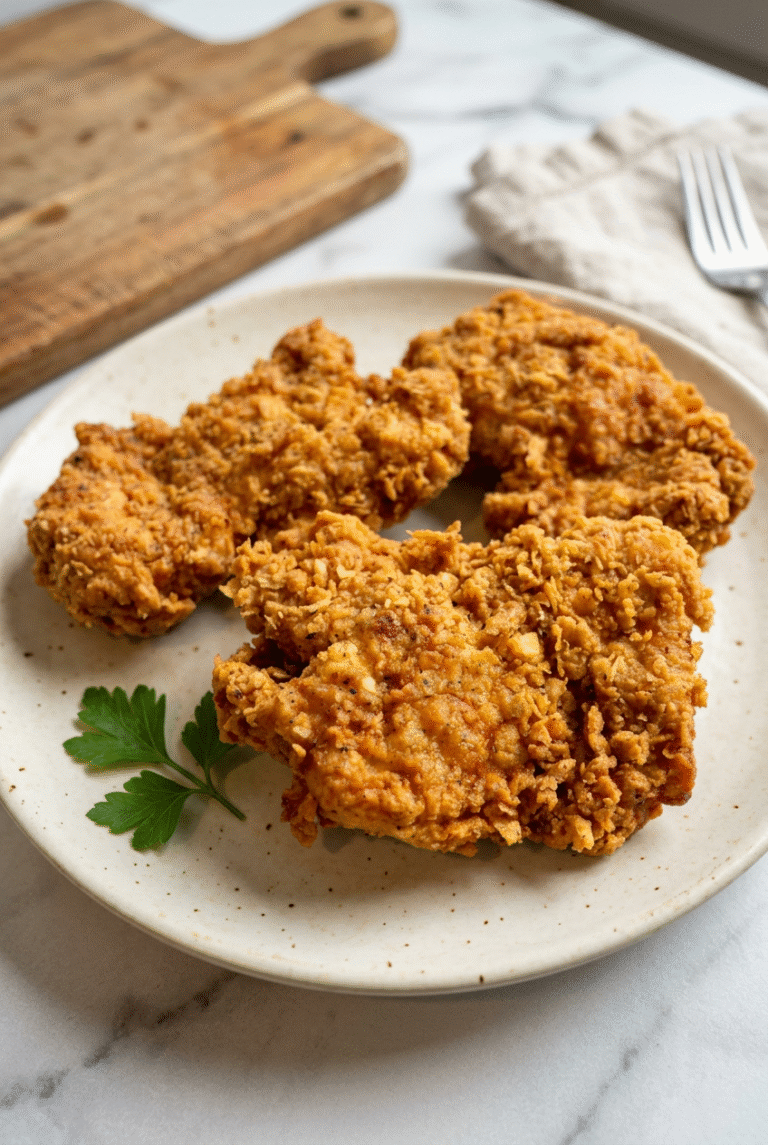
Buttermilk Fried Chicken Thighs
🍗🥛 Savor ultra-juicy, tender chicken thighs marinated in tangy buttermilk for unbeatable flavor and moisture in every crispy bite.
🥛🍗 Double-dredged and fried to golden perfection, this Southern classic is ready in 1 hour 20 minutes – comfort food at its best!
- Total Time: 1 hour 30 minutes
- Yield: 4 servings
Ingredients
– Boneless skinless chicken thighs
– Paprika
– Black pepper
– Onion powder
– Garlic powder
– Cayenne pepper
– Salt
– Buttermilk
– Eggs
– All-purpose flour
– Oil for frying
Instructions
1-First Step: Create the Spice Blend Start by gathering your spices. In a small bowl, combine the paprika, black pepper, onion powder, garlic powder, cayenne pepper, and salt. Mixing these beforehand ensures that the flavor is evenly distributed throughout the chicken, from the marinade all the way to the crust. This homemade spice mix is far superior to pre-mixed blends because you can control the heat level.
2-Second Step: Prepare the Marinade In a large bowl, whisk together the buttermilk, one egg, a pinch of salt, and a portion of your seasoning mix. Whisking the egg into the buttermilk helps the coating stick better later. Once combined, add your boneless skinless chicken thighs to the bowl. Turn the pieces to ensure they are completely coated in the liquid. This is the most critical step for tenderness. Cover the bowl and place it in the refrigerator to marinate for at least one hour, though overnight is even better for maximum flavor absorption.
3-Third Step: Mix the Dredge While the chicken marinates, get your coating ready. In a separate large bowl or shallow dish, mix the all-purpose flour, additional salt, and the remainder of your spice blend. Now, here is a pro tip: take a small amount of the marinade liquid and drizzle it into the flour mixture. Use your fingers to work it in until you see small clumps forming. These clumps will adhere to the chicken during frying, creating those irresistible crunchy ridges that define great fried chicken.
4-Fourth Step: Dredge the Chicken Remove the chicken from the marinade, letting the excess liquid drip off. You do not need to pat it completely dry; you want the flour to stick. Take each thigh and press it firmly into the flour mixture. Really press it in to ensure a thick, even coating. Shake off any loose flour and set the coated chicken aside on a rack or plate. Letting it sit for about 10 minutes after dredging helps the crust set, which prevents it from falling off in the oil.
5-Final Step: Fry to Perfection Pour oil into a heavy-bottomed pot or Dutch oven. You want enough oil so the chicken floats freely without touching the bottom. Preheat the oil to 350°F. It is important to maintain a temperature around 325°F once the chicken goes in to ensure it cooks through without burning the crust before the meat is done. Carefully place the chicken thighs into the hot oil. Do not overcrowd the pan; cooking in batches prevents the oil temperature from dropping too drastically. Fry the chicken for 4 to 6 minutes per side. You are looking for a deep golden brown color. To be safe, use a meat thermometer to check that the internal temperature reaches 160°F. Once cooked, use tongs to transfer the chicken to a wire rack set over a baking sheet to drain. Avoid using paper towels if possible, as they can trap steam and make the crust soggy. Let the chicken rest for a few minutes before serving to let the juices settle.
Last Step:
Please leave a rating and comment letting us know how you liked this recipe! This helps our business to thrive and continue providing free, high-quality recipes for you.Notes
🥛 Marinate the chicken in buttermilk for at least 1 hour (overnight best) to ensure maximum tenderness and flavor infusion.
🔥 Start frying at 350°F but let it drop to 325°F to cook through without burning the crispy crust.
🍳 Double-fry after a short chill for the crunchiest texture that rivals any restaurant.
- Prep Time: 10 minutes + 1 hour marinate
- Storage: Up to 3 days in refrigerator
- Cook Time: 20 minutes
- Category: Main Course
- Method: Deep-Frying
- Cuisine: American
Nutrition
- Serving Size: 2 thighs
- Calories: 718 kcal
- Sugar: 3g
- Sodium: 2134mg
- Fat: 18g
- Saturated Fat: 5g
- Unsaturated Fat: 10g
- Trans Fat: 0g
- Carbohydrates: 58g
- Fiber: 2g
- Protein: 77g
- Cholesterol: 376mg