

Why You’ll Love This Bruschetta Pasta
- Ease of preparation: This Bruschetta Pasta comes together in just 25-30 minutes, making it perfect for busy weeknights. With minimal prep work and simple cooking steps, you can have a restaurant-quality meal on the table without breaking a sweat!
- Health benefits: Loaded with fresh tomatoes rich in antioxidants and vitamins, this dish packs a nutritional punch. The olive oil provides healthy fats, while the fresh basil adds vitamins and minerals. With approximately 390 calories per serving, it’s a satisfying yet health-conscious meal.
- Versatility: This Bruschetta Pasta recipe is incredibly adaptable. You can easily customize it with different proteins for more substance, adjust vegetable selections based on what’s in season, or modify certain ingredients to accommodate dietary restrictions like gluten-free or vegan preferences.
- Distinctive flavor: What sets this Bruschetta Pasta apart is the perfect marriage of fresh, bright ingredients with comforting pasta. The combination of ripe tomatoes, aromatic basil, sharp garlic, and rich Parmesan creates a flavor profile that’s both vibrant and deeply satisfying, making every bite memorable.
Nutritional Informationh3>
| Nutrient | Amountth> |
|---|---|
| Calories | ~390 per serving |
| Carbohydrates | ~47g |
| Protein | ~13g |
| Fat | ~18g |
| Saturated Fat | ~4.5g |
| Cholesterol | ~11mg |
| Sodium | ~400mg |
| Fiber | ~3g |
| Sugar | ~5g |
Note: Adding the optional crispy topping will increase calories, fat, and sodium. Values are estimates based on provided data.
Jump To
- 1. Why You’ll Love This Bruschetta Pasta
- 2. Essential Ingredients for Bruschetta Pasta
- 3. How to Prepare the Perfect Bruschetta Pasta: Step-by-Step Guide
- 4. Dietary Substitutions to Customize Your Bruschetta Pasta
- 5. Mastering Bruschetta Pasta: Advanced Tips and Variations
- 6. How to Store Bruschetta Pasta: Best Practices
- 7. FAQs: Frequently Asked Questions About Bruschetta Pasta
- 8. Bruschetta Pasta
Essential Ingredients for Bruschetta Pasta
Main Ingredients
- 8 oz (227g) pasta (such as spaghetti)
- 2 cups chopped tomatoes (preferably ripe, fresh; finely diced cherry tomatoes or Roma tomatoes work best; blot watery ones dry)
- 2 cloves garlic, minced
- 1/4 cup (60ml) extra-virgin olive oil, plus extra for serving (if desired)
- 1 tablespoon (15ml) balsamic vinegar
- 1/2 cup (about 20g) fresh basil leaves, cut into small ribbons
- 1/2 cup (about 50g) shredded or grated Parmesan cheese, plus extra for serving (if desired)
- Kosher salt and freshly ground black pepper
Optional Crispy Topping
- 1 tablespoon (14g) unsalted butter
- 1/8 teaspoon garlic powder
- 1/3 cup (about 30g) Panko breadcrumbs
- Pinch of salt
Special Dietary Options
Vegan: Substitute Parmesan cheese with nutritional yeast or vegan parmesan alternative, and ensure the pasta is egg-free (most dried pastas are).
Gluten-free: Use your favorite gluten-free pasta instead of traditional wheat pasta.
Low-calorie: Reduce the olive oil to 2 tablespoons, use less Parmesan (1/4 cup), and skip the optional crispy topping.
How to Prepare the Perfect Bruschetta Pasta: Step-by-Step Guide
First Step: Cook the Pasta
Bring a large pot of water (about 10 cups / 2.4 liters) to a rolling boil. This might seem like a lot of water, but using plenty of water helps prevent the pasta from sticking together. Once boiling, generously salt the water (aim for 1 teaspoon salt per 4 cups / 1 liter water). This is your chance to flavor the pasta from the inside out, so don’t be shy with the salt! Add the 8 oz (227g) of pasta (such as spaghetti) and cook according to package directions until al dente. This usually takes about 8-10 minutes for most pasta varieties, but check your package for specific guidance.
While the pasta cooks, you can prepare the other components of your Bruschetta Pasta, making this a very efficient cooking process.
Second Step: Prepare the Tomato Mixture
While the pasta cooks, combine in a large bowl: 2 cups of chopped tomatoes (preferably ripe, fresh; finely diced cherry tomatoes or Roma tomatoes work best; blot watery ones dry), 2 cloves of minced garlic, 1/4 cup (60ml) of extra-virgin olive oil, 1 tablespoon (15ml) of balsamic vinegar, 1/2 cup (about 50g) of shredded or grated Parmesan cheese, 1/2 teaspoon of kosher salt, and 1/4 teaspoon of black pepper. Stir gently to combine all the flavors without bruising the tomatoes.
Here’s a pro tip: This mixture can be prepared up to 2 hours ahead if you’re planning for a meal later in the day. The extra time actually allows the flavors to meld together beautifully, enhancing the overall taste of your Bruschetta Pasta.
Third Step: Prepare the Optional Crispy Topping
If you’re using the optional crispy topping (and I highly recommend you do!), this is the perfect time to prepare it. In a small skillet, melt 1 tablespoon (14g) of unsalted butter over medium heat. Once melted, add 1/3 cup (about 30g) of Panko breadcrumbs, 1/8 teaspoon of garlic powder, and a pinch of salt. Cook, stirring frequently, until the breadcrumbs are light golden brown and crisp, which should take about 2-3 minutes. Be careful not to walk away from the skillet, as breadcrumbs can go from perfectly toasted to burnt very quickly! Remove from heat and set aside.
Fourth Step: Combine Pasta and Tomato Mixture
Once your pasta is cooked to al dente perfection, it’s time to bring all the elements together. Using tongs, lift the cooked pasta directly from the pot into the tomato mixture bowl, shaking off some excess water as you transfer it. Don’t worry about being too thorough here reserving a little pasta water is actually beneficial as it helps the sauce cling to the pasta better.
This method of transferring pasta directly to the sauce bowl, rather than draining it completely in a colander, is a simple restaurant trick that makes a noticeable difference in the final texture of your Bruschetta Pasta.
Final Step: Finish and Serve Your Bruschetta Pasta
Add the 1/2 cup (about 20g) of fresh basil leaves, cut into small ribbons, to the bowl with the pasta and tomato mixture. Toss everything together vigorously until well combined. As you toss, you’ll notice the cheese starting to melt slightly and a light sauce beginning to form that clings beautifully to the pasta.
Let the mixture sit for about 5 minutes to allow the flavors to meld and the sauce to thicken slightly. This resting period might feel unnecessary when you’re hungry, but it really does make a difference in the final taste and texture of your Bruschetta Pasta.
Finally, taste and adjust seasoning with additional salt and pepper if needed. Divide the pasta among plates. If desired, top each serving with extra Parmesan cheese, a drizzle of olive oil, extra basil, and a generous sprinkle of the crispy breadcrumb topping (if you prepared it).
The key to exceptional Bruschetta Pasta is simplicity letting the quality of each ingredient shine while bringing them together in perfect harmony.
Dietary Substitutions to Customize Your Bruschetta Pasta
Protein and Main Component Alternatives
While Bruschetta Pasta is delicious in its classic form, you can easily customize it with different proteins to make it more substantial or to suit your dietary preferences. For a vegetarian protein boost, consider adding 1 cup of cooked chickpeas or white beans. These legumes not only add protein and fiber but also complement the Mediterranean flavors beautifully.
For seafood lovers, cooked shrimp or scallops make an elegant addition to this dish. Simply sauté 8-10 shrimp per serving in a little olive oil with garlic until pink, then add them to the pasta along with the tomato mixture. If you prefer meat, grilled chicken strips work wonderfully about 1 cup of diced, cooked chicken breast per serving transforms this into a heartier meal.
Vegetable, Sauce, and Seasoning Modifications
Seasonal vegetables can add color, nutrition, and variety to your Bruschetta Pasta. In summer, try adding roasted zucchini or eggplant. For a fall version, incorporate roasted butternut squash or bell peppers. Simply dice your chosen vegetables, toss with olive oil, salt, and pepper, roast at 400°F (200°C) until tender, and stir them in with the tomato mixture.
If you prefer a different sauce profile, consider replacing the balsamic vinegar with lemon juice for a brighter flavor or adding a pinch of red pepper flakes for some heat. For those who enjoy creamy pasta dishes, a tablespoon of cream cheese or ricotta stirred into the hot pasta with the tomato mixture adds a lovely richness. This creates a delightful contrast between the fresh tomatoes and creamy sauce while keeping the dish relatively light.
Mastering Bruschetta Pasta: Advanced Tips and Variations
Pro Cooking Techniques
To take your Bruschetta Pasta to the next level, consider these professional techniques. First, toast your garlic cloves lightly in the olive oil before mincing them. This mellows the sharp raw garlic flavor and adds a subtle sweetness. Simply warm the olive oil in a small pan with whole garlic cloves for a minute or two, then remove the cloves, let them cool, and mince as usual.
Another technique is to score your tomatoes with a small X on the bottom, blanch them in boiling water for 30 seconds, then transfer to an ice bath. This makes peeling them a breeze and removes the skin, which can sometimes toughen during cooking. The resulting sauce will have a smoother, more refined texture.
For the pasta itself, consider undercooking it by 1-2 minutes below the package directions. When you add it to the bowl with the tomato mixture, the residual heat will continue to cook the pasta, while it absorbs some of the sauce flavors, resulting in a more cohesive dish.
Flavor Variations
Mediterranean Bruschetta Pasta: Add 1/4 cup of Kalamata olives and 2 tablespoons of capers to the tomato mixture. Finish with crumbled feta cheese instead of Parmesan.
Southwest Bruschetta Pasta: Replace the basil with cilantro, add 1 cup of black beans and 1 cup of corn kernels to the mixture, and include a teaspoon of cumin and half a teaspoon of chili powder. Top with avocado slices just before serving.
Asian-Inspired Bruschetta Pasta: Substitute the balsamic vinegar with rice vinegar and the Parmesan with crumbled goat cheese. Add 1 tablespoon of fresh ginger, minced, and finish with a sprinkle of toasted sesame seeds.
Presentation Tips
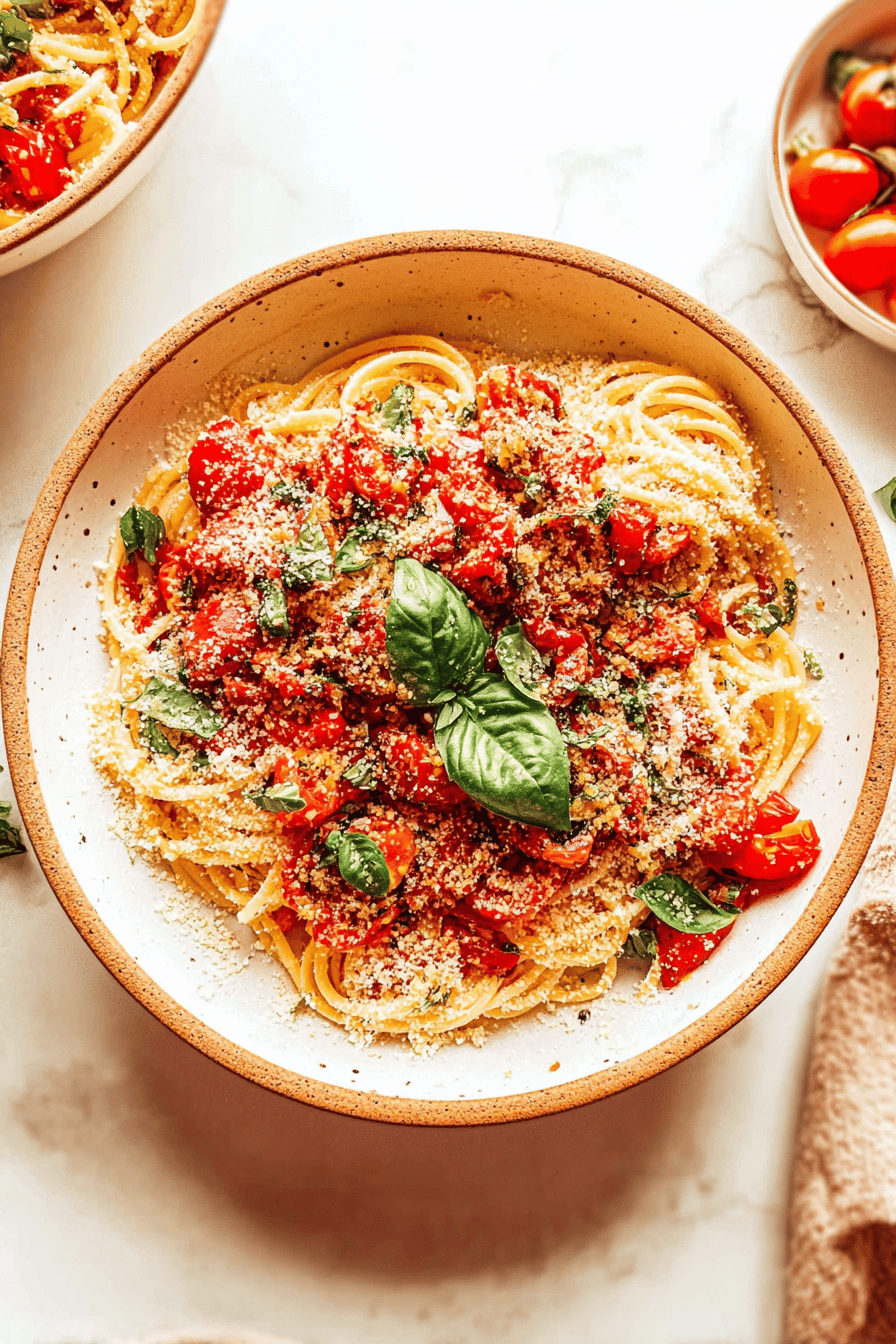
Visual appeal is key to an enjoyable dining experience. For plating, twirl the pasta using tongs and a fork to create a neat mound in the center of the plate. Drizzle a small amount of high-quality olive oil around the plate for artistic effect.
Consider using a mix of different colored cherry tomatoes red, yellow, and orange for a visually stunning presentation. The variety of colors not only looks beautiful but also provides a slightly different flavor profile.
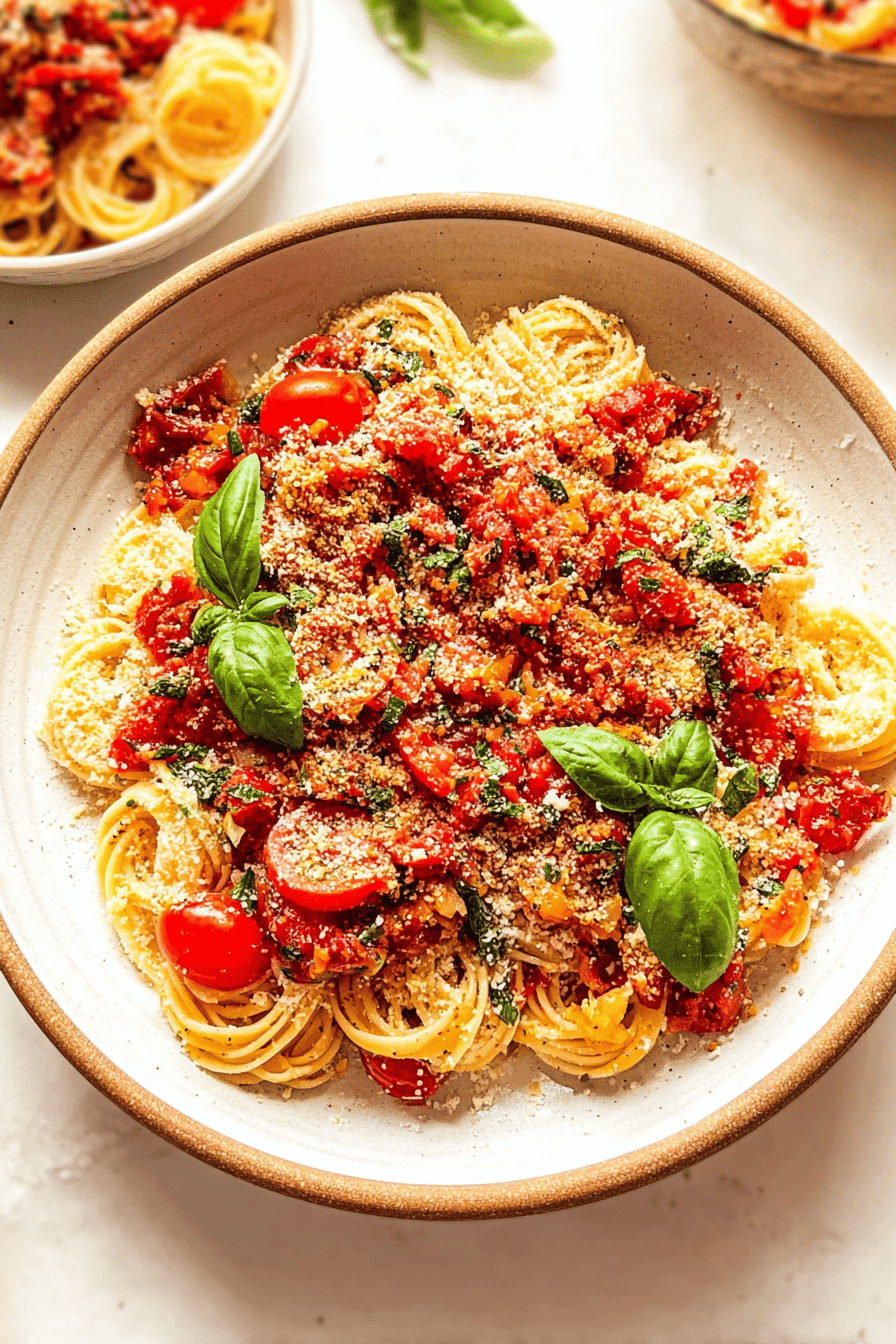
Fresh herbs make a beautiful garnish. Reserve some whole basil leaves to place on top of each serving rather than cutting all of them into ribbons. The bright green color will pop against the red of the tomatoes and the pale pasta.
Make-Ahead Options
For busy weeknights, you can prepare components of this Bruschetta Pasta ahead of time. The tomato mixture can be made up to 2 hours in advance and stored at room temperature. The crispy breadcrumb topping can also be prepared ahead and kept in an airtight container for up to 3 days.
If you want to meal prep this dish for lunches, store the pasta and tomato mixture separately in the refrigerator. The pasta will last up to 3 days, and the tomato mixture will stay fresh for 2 days. When ready to eat, simply warm the pasta briefly, combine with the tomato mixture, and add the fresh basil and crispy topping just before serving.
How to Store Bruschetta Pasta: Best Practices
Refrigeration
Bruschetta Pasta is best enjoyed fresh, but leftovers can be stored successfully. To refrigerate, transfer the pasta to an airtight container and place it in the refrigerator within 2 hours of cooking. It will keep well for up to 3 days. Note that the pasta may absorb more of the sauce over time, which can result in a slightly softer texture upon reheating.
For optimal storage, consider keeping the crispy breadcrumb topping separate from the pasta to maintain its crunch. Store the topping in a small airtight container at room temperature and add it to the pasta just before serving leftovers.
Freezing
While not ideal, Bruschetta Pasta can be frozen for longer storage. Portion the pasta into freezer-safe containers or bags, removing as much air as possible. It can be frozen for up to 1 month. However, be aware that the texture of both the pasta and tomatoes may change slightly upon thawing, with the pasta becoming softer and the tomatoes more watery.
Do not freeze the crispy breadcrumb topping, as freezeing will significantly affect its texture. Prepare a fresh batch when serving the thawed pasta.
Reheating
To reheat refrigerated Bruschetta Pasta, place it in a skillet over medium-low heat with a small splash of olive oil or pasta water. Gently warm, stirring occasionally, until heated through. This method helps restore some moisture and prevents the pasta from drying out.
Alternatively, you can place the pasta in a microwave-safe container, add a tablespoon of water, cover loosely, and microwave on 50% power in 30-second intervals, stirring between each, until warmed through.
Meal Prep Considerations
If you’re preparing Bruschetta Pasta for meal prep, consider storing the components separately: the cooked pasta, the tomato mixture (without basil), and the crispy topping (if using). Add fresh basil just before eating, and combine the pasta and tomato mixture in desired portions. This approach maintains the best texture and flavor of each component.
FAQs: Frequently Asked Questions About Bruschetta Pasta
Can I prepare Bruschetta Pasta ahead of time and how should I store it?
Bruschetta Pasta is best served fresh to enjoy its vibrant flavors and texture. However, you can prepare it a few hours in advance and store it in an airtight container in the refrigerator. When ready to serve, gently reheat it on the stove or microwave, or enjoy it cold for a pasta salad variation. For optimal taste and texture, consume leftovers within 24 hours as the pasta may absorb the sauce and become soggy over time.
What ingredients can I add to Bruschetta Pasta to make it more filling?
To add protein and bulk up Bruschetta Pasta, consider mixing in cooked chickpeas, white beans, or grilled chicken. Fresh mozzarella or burrata cheese also adds creaminess and richness. For seafood options, cooked shrimp or scallops pair well with the tomato and basil base. Adding these ingredients turns a light dish into a satisfying main course without overwhelming the fresh flavors.
What side dishes go well with Bruschetta Pasta?
Bruschetta Pasta pairs nicely with light and fresh sides. A crisp garden salad or steamed vegetables complement the dish without overpowering it. Garlic bread or a simple baguette is an excellent choice to soak up any leftover sauce. For a heartier meal, consider serving grilled fish, salmon, or shrimp alongside the pasta to balance textures and flavors.
How can I keep the tomatoes fresh and flavorful in Bruschetta Pasta?
To maintain fresh tomato flavor, use ripe, firm tomatoes and add them to the pasta just before serving. Toss tomatoes with olive oil, chopped basil, salt, and a splash of balsamic vinegar to enhance brightness. Avoid cooking the tomatoes extensively as this diminishes their fresh taste. Keeping the tomatoes raw or lightly marinated preserves the classic bruschetta freshness in the pasta.
Is Bruschetta Pasta suitable for a vegetarian diet?
Yes, Bruschetta Pasta is naturally vegetarian when made with tomatoes, basil, garlic, olive oil, and pasta. To keep it vegetarian, simply omit any meat or seafood additions. You can add vegetarian protein sources like beans, lentils, or cheese such as mozzarella or parmesan to enrich the dish while preserving its meat-free status. This makes Bruschetta Pasta a flavorful and healthy vegetarian option.
Bruschetta Pasta
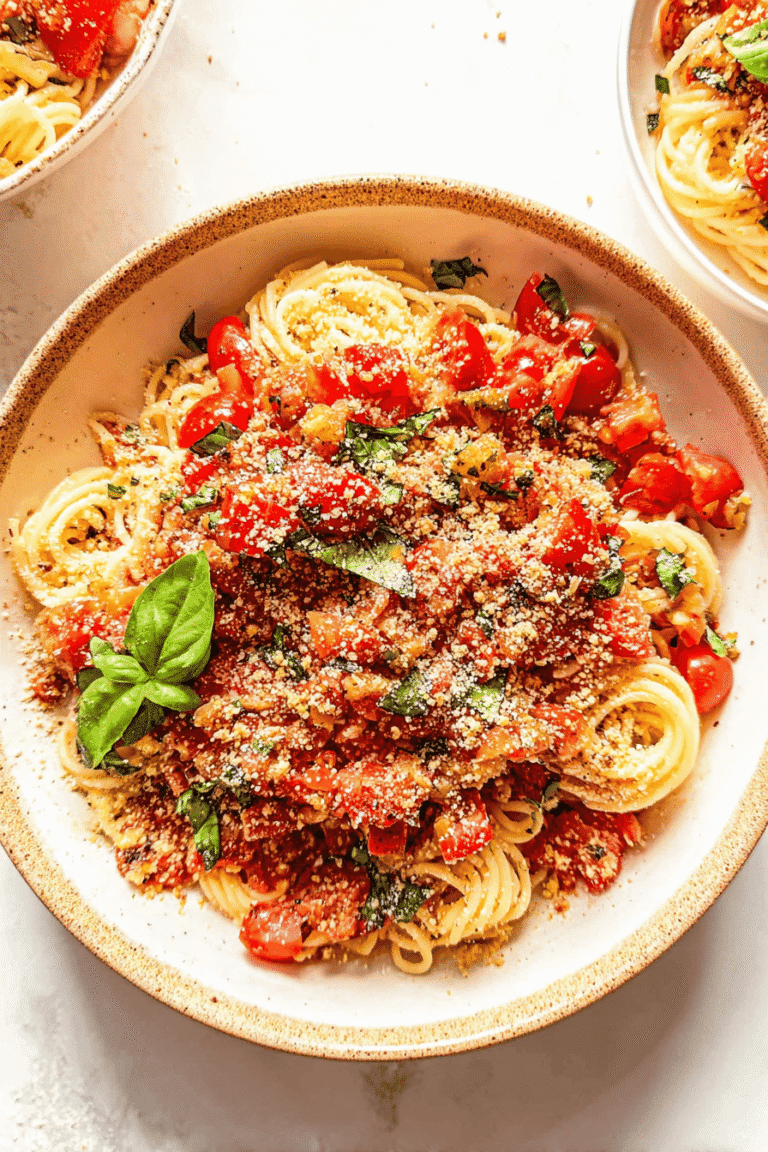
🍅 Fresh and vibrant pasta that brings the classic flavors of Italian bruschetta to a satisfying main dish
🌿 Quick and easy weeknight meal that celebrates the perfect combination of ripe tomatoes, fresh basil, and al dente pasta
- Total Time: 25-30 minutes
- Yield: 3 generous servings 1x
Ingredients
8 oz (227g) pasta
2 cups chopped tomatoes
2 cloves garlic, minced
1/4 cup (60ml) extra-virgin olive oil for serving
1 tablespoon (15ml) balsamic vinegar
1/2 cup (about 20g) fresh basil leaves
1/2 cup (about 50g) shredded or grated Parmesan cheese for serving
Kosher salt and freshly ground black pepper
1 tablespoon (14g) unsalted butter
1/8 teaspoon garlic powder
1/3 cup (about 30g) Panko breadcrumbs
pinch of salt
Instructions
1-First Step: Cook the Pasta
Bring a large pot of water (about 10 cups / 2.4 liters) to a rolling boil. This might seem like a lot of water, but using plenty of water helps prevent the pasta from sticking together. Once boiling, generously salt the water (aim for 1 teaspoon salt per 4 cups / 1 liter water). This is your chance to flavor the pasta from the inside out, so don’t be shy with the salt! Add the 8 oz (227g) of pasta (such as spaghetti) and cook according to package directions until al dente. This usually takes about 8-10 minutes for most pasta varieties, but check your package for specific guidance.
While the pasta cooks, you can prepare the other components of your Bruschetta Pasta, making this a very efficient cooking process.
2-Second Step: Prepare the Tomato Mixture
While the pasta cooks, combine in a large bowl: 2 cups of chopped tomatoes (preferably ripe, fresh; finely diced cherry tomatoes or Roma tomatoes work best; blot watery ones dry), 2 cloves of minced garlic, 1/4 cup (60ml) of extra-virgin olive oil, 1 tablespoon (15ml) of balsamic vinegar, 1/2 cup (about 50g) of shredded or grated Parmesan cheese, 1/2 teaspoon of kosher salt, and 1/4 teaspoon of black pepper. Stir gently to combine all the flavors without bruising the tomatoes.
Here’s a pro tip: This mixture can be prepared up to 2 hours ahead if you’re planning for a meal later in the day. The extra time actually allows the flavors to meld together beautifully, enhancing the overall taste of your Bruschetta Pasta.
3-Third Step: Prepare the Optional Crispy Topping
If you’re using the optional crispy topping (and I highly recommend you do!), this is the perfect time to prepare it. In a small skillet, melt 1 tablespoon (14g) of unsalted butter over medium heat. Once melted, add 1/3 cup (about 30g) of Panko breadcrumbs, 1/8 teaspoon of garlic powder, and a pinch of salt. Cook, stirring frequently, until the breadcrumbs are light golden brown and crisp, which should take about 2-3 minutes. Be careful not to walk away from the skillet, as breadcrumbs can go from perfectly toasted to burnt very quickly! Remove from heat and set aside.
4-Fourth Step: Combine Pasta and Tomato Mixture
Once your pasta is cooked to al dente perfection, it’s time to bring all the elements together. Using tongs, lift the cooked pasta directly from the pot into the tomato mixture bowl, shaking off some excess water as you transfer it. Don’t worry about being too thorough here reserving a little pasta water is actually beneficial as it helps the sauce cling to the pasta better.
This method of transferring pasta directly to the sauce bowl, rather than draining it completely in a colander, is a simple restaurant trick that makes a noticeable difference in the final texture of your Bruschetta Pasta.
5-Final Step: Finish and Serve Your Bruschetta Pasta
Add the 1/2 cup (about 20g) of fresh basil leaves, cut into small ribbons, to the bowl with the pasta and tomato mixture. Toss everything together vigorously until well combined. As you toss, you’ll notice the cheese starting to melt slightly and a light sauce beginning to form that clings beautifully to the pasta.
Let the mixture sit for about 5 minutes to allow the flavors to meld and the sauce to thicken slightly. This resting period might feel unnecessary when you’re hungry, but it really does make a difference in the final taste and texture of your Bruschetta Pasta.
Finally, taste and adjust seasoning with additional salt and pepper if needed. Divide the pasta among plates. If desired, top each serving with extra Parmesan cheese, a drizzle of olive oil, extra basil, and a generous sprinkle of the crispy breadcrumb topping (if you prepared it).
Last Step:
Please leave a rating and comment letting us know how you liked this recipe! This helps our business to thrive and continue providing free, high-quality recipes for you.Notes
🍅 Use ripe, flavorful tomatoes and finely dice them for best results; Roma tomatoes are less watery, but blot excess moisture from other types if needed
🌿 Add basil just before serving to retain its fresh color and prevent wilting in the dish
🧂 Salting the pasta water generously is crucial for flavoring the pasta itself and helping the sauce cling better
- Prep Time: 15-20 minutes
- Rest Time: 5 minutes
- Cook Time: 13 minutes
- Category: Pasta
- Method: Stovetop
- Cuisine: Italian
- Diet: Vegetarian
Nutrition
- Serving Size: 1 serving
- Calories: 390
- Sugar: 5
- Sodium: 400
- Fat: 18
- Saturated Fat: 4.5
- Carbohydrates: 47
- Fiber: 3
- Protein: 13
- Cholesterol: 11

This looks absolutely delicious! I’m always looking for new pasta recipes to try with my family.
Could I substitute the cherry tomatoes with regular diced tomatoes? I think my kids would love this dish! 😍