

Why You’ll Love This Breakfast Casserole
There’s nothing quite like starting your morning with a hearty, satisfying meal that the whole family will enjoy. This breakfast casserole recipe has become a staple in my kitchen because it combines simplicity with incredible flavor. Whether you’re feeding a crowd on a Sunday morning or preparing for a busy week ahead, this dish delivers on every front.
Ease of Preparation
One of the biggest advantages of this breakfast casserole is how incredibly easy it is to make. With just 10 minutes of prep time, you can have this dish assembled and ready to pop in the oven. The recipe requires basic cooking skills and uses common ingredients that you likely already have in your refrigerator. There’s no need for fancy techniques or complicated steps just simple, straightforward cooking that yields impressive results. Even on your busiest mornings, you can have a homemade breakfast on the table without the stress. The hands-off cooking time means you can get other things done while your breakfast bakes to perfection.
Health Benefits
While indulgent and delicious, this breakfast casserole also offers some nutritional benefits. Each serving provides 23 grams of protein, which helps keep you feeling full and energized throughout the morning. Eggs are a nutritional powerhouse, providing essential vitamins and minerals. According to research on egg consumption, they can support eye health, brain function, and muscle maintenance. The vegetables in this recipe add vitamins A and C, while the cheese contributes calcium for strong bones. While this dish is certainly rich, it can be modified to suit various dietary preferences while maintaining its nutritional value. The combination of protein and healthy fats provides sustained energy that can help prevent mid-morning crashes.
Versatility
This breakfast casserole recipe is wonderfully adaptable to suit different tastes and dietary needs. You can easily swap out ingredients based on what you have on hand or your family’s preferences. Not a fan of sausage? Try turkey sausage, bacon, or ham instead. Want to add more vegetables? Spinach, zucchini, or mushrooms work beautifully in this dish. Those with dairy sensitivities can use lactose-free cheese and sour cream. The recipe can even be modified to be gluten-free by ensuring all ingredients meet those standards. This flexibility makes the breakfast casserole perfect for households with varying dietary requirements or simply for those nights when you need to use up what’s in your fridge.
Distinctive Flavor
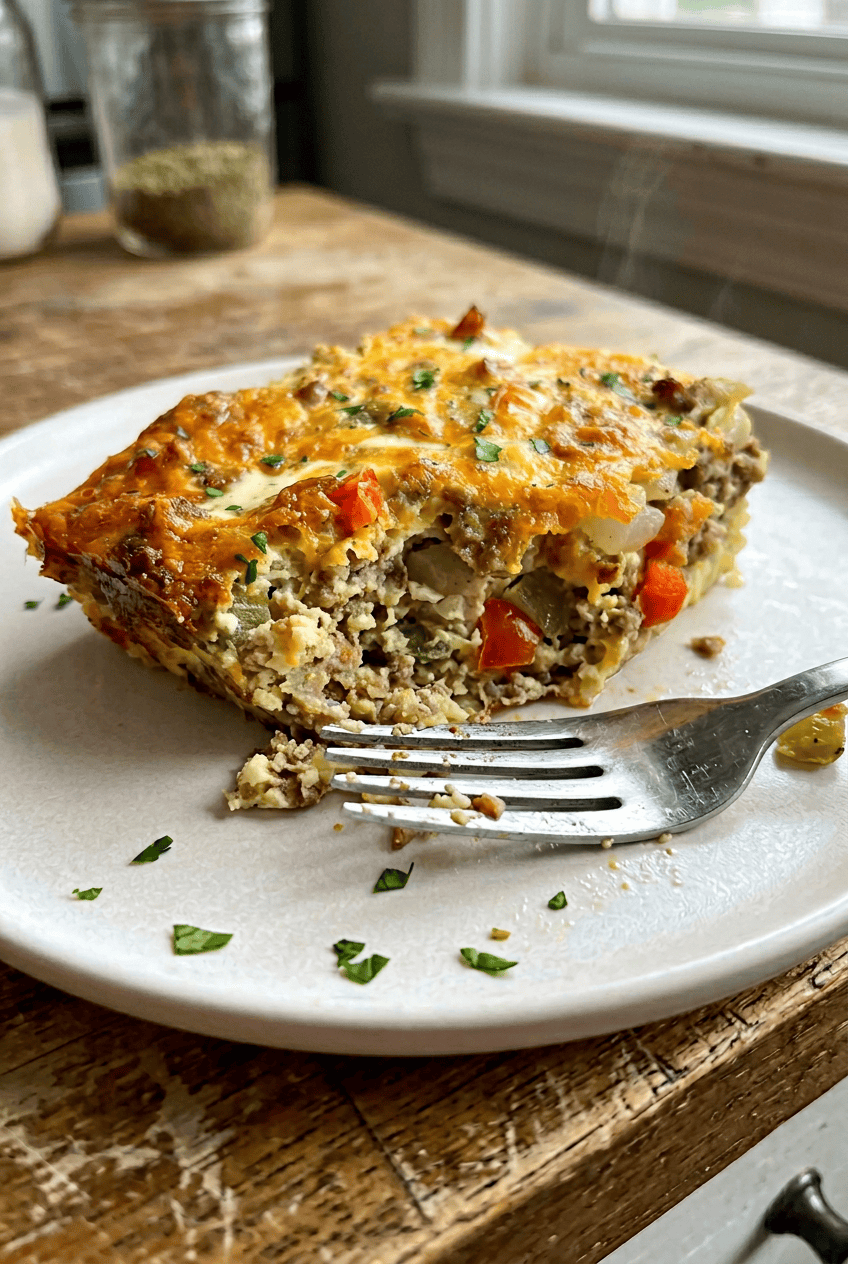
What sets this breakfast casserole apart is its perfect balance of flavors and textures. The savory sausage pairs beautifully with the creamy egg mixture, while the sharp cheddar adds depth and richness. The bell peppers and green onions provide a subtle crunch and fresh flavor that brightens the entire dish. The addition of sour cream creates an exceptionally creamy texture that sets this recipe apart from others. When baked to golden perfection, the edges become slightly crisp while the center remains fluffy and moist. It’s a combination that feels comforting yet special enough for serving to guests. The harmonious blend of ingredients creates a satisfying bite in every portion.
Jump To
- 1. Why You’ll Love This Breakfast Casserole
- 2. Essential Ingredients for Breakfast Casserole
- 3. How to Prepare the Perfect Breakfast Casserole: Step-by-Step Guide
- 4. Dietary Substitutions to Customize Your Breakfast Casserole
- 5. Mastering Breakfast Casserole: Advanced Tips and Variations
- 6. How to Store Breakfast Casserole: Best Practices
- 7. FAQs: Frequently Asked Questions About Breakfast Casserole
- 8. Breakfast Casserole
Essential Ingredients for Breakfast Casserole
Creating a delicious breakfast casserole starts with gathering the right ingredients. Here’s what you’ll need for this crowd-pleasing recipe:
Main Ingredients
- 2 pounds sausage – The protein base that adds savory flavor and heartiness
- 12 eggs – The binding agent that gives the casserole its structure and fluffiness
- 1 cup sour cream (light or regular) – Adds creaminess and richness to the egg mixture
- 1/4 cup milk – Lightens the egg mixture for a perfect texture
- 1 teaspoon salt – Enhances all the flavors in the dish
- 1/2 teaspoon ground black pepper – Adds a subtle kick and depth of flavor
- 4 green onions – Provide mild onion flavor and a pop of color
- 1/2 green bell pepper, diced – Adds crunch and fresh vegetable flavor
- 1/2 red bell pepper, diced – Provides sweetness and vibrant color
- 2 cups shredded cheddar cheese – Creates a cheesy, delicious topping and interior
Special Dietary Options
This breakfast casserole can easily be adapted to meet various dietary needs:
Vegan
- Replace eggs with a plant-based egg alternative or tofu scramble
- Use vegan sour cream and cheese substitutes
- Swap sausage for plant-based sausage or crumbled tempeh
Gluten-free
- This recipe is naturally gluten-free as written
- Ensure all processed ingredients (sausage, cheese) are certified gluten-free
- Serve with gluten-free toast or potatoes if desired
Low-calorie
- Use light sour cream and reduced-fat cheese
- Opt for turkey sausage or chicken sausage instead of pork
- Increase the ratio of vegetables to meat for added volume with fewer calories
How to Prepare the Perfect Breakfast Casserole: Step-by-Step Guide
Now that you have all your ingredients ready, let’s walk through the process of creating this delicious breakfast casserole. Follow these simple steps for a perfectly cooked dish every time.
First Step: Preheat and Prepare Your Pan
Begin by preheating your oven to 350 degrees Fahrenheit. While the oven heats up, prepare your baking dish. Grease a 9×13 inch pan thoroughly with cooking spray, making sure to coat the bottom and sides completely. This ensures that your casserole won’t stick and will release easily after baking. For an extra layer of insurance, you can also line the pan with parchment paper with overhanging edges, which creates handles for easy removal later. Taking time to properly prepare your pan will make serving much easier and ensure your beautiful casserole comes out in one piece.
Second Step: Prepare the Egg Mixture
In a large mixing bowl, crack all 12 eggs. Add the sour cream, milk, salt, and pepper. Using an electric mixer on low speed, combine these ingredients until they’re well mixed and slightly frothy. This should only take about 1-2 minutes be careful not to overmix as this can make the texture too dense. Once combined, stir in the shredded cheddar cheese until it’s evenly distributed throughout the egg mixture. The cheese will melt and create beautiful pockets of gooey goodness as the casserole bakes. For those who prefer a lighter texture, separate your eggs and beat the whites separately before folding them in at the end this creates an even fluffier result.
Third Step: Cook the Sausage
In a large skillet over medium heat, cook the sausage. Use a spatula or wooden spoon to break the meat into small, bite-sized pieces as it cooks. Continue cooking until the sausage is browned and cooked through, about 7-10 minutes. Once done, carefully drain most of the grease from the skillet, leaving just a small amount behind for flavor. Adding the sausage to your egg mixture while it’s still warm will help melt some of the cheese and create an even more cohesive mixture. Be sure to drain well though excess grease can make the casserole heavy and oily rather than fluffy and light.
Fourth Step: Prepare the Vegetables
In the same skillet you used for the sausage (no need to wash it first), add the diced green and red bell peppers along with the sliced green onions. Sauté these vegetables over medium heat for 2-3 minutes until they’re slightly softened but still have a bit of crunch. This quick cooking process brings out their natural sweetness and mellows the sharp onion flavor. Once done, add the vegetables to your egg and sausage mixture, stirring everything together until well combined. The colors of the peppers will make the casserole visually appealing with specks of red and green throughout.
Final Step: Bake and Serve
Pour the entire mixture into your prepared 9×13 inch pan, spreading it evenly with a spatula. If desired, top with an extra sprinkle of cheese for a beautiful golden crust. Place the pan in the preheated oven and bake for 35-50 minutes. You’ll know the casserole is done when the edges are set and slightly golden, while the center is still slightly jiggly. This residual jiggle is important it means the eggs are perfectly cooked and will continue to set as the dish cools. Remove from the oven and let the casserole rest for about 10 minutes before serving. This resting period allows the flavors to meld together and makes for cleaner cuts when serving.
For serving, cut into squares and enjoy while warm. This breakfast casserole pairs beautifully with fresh fruit, toast, or a simple salad. Leftovers can be stored in the refrigerator for 3-4 days and reheated easily in the microwave for a quick breakfast throughout the week.
Pro Tip: For extra flavor, try adding a dash of dry mustard or some diced bread cubes to the mixture before baking. These additions can enhance both the taste and texture of your breakfast casserole.
Dietary Substitutions to Customize Your Breakfast Casserole
One of the beautiful things about breakfast casseroles is their versatility. Let’s explore some creative ways to customize this recipe to suit your dietary needs or simply to try something new.
Protein and Main Component Alternatives
While this recipe calls for sausage, there are numerous alternatives that work just as well. If you’re looking to reduce the fat content, try using turkey sausage or chicken sausage instead of pork. These options still provide plenty of protein and flavor but with less saturated fat. For a different taste profile, bacon or ham can be excellent substitutes. If you prefer a meatless version, consider using plant-based sausage alternatives or simply increasing the amount of cheese and vegetables for a vegetarian option that’s still protein-rich thanks to the eggs.
For those following specific dietary protocols, you might consider using egg whites instead of whole eggs, though this will affect the richness of the final dish. Alternatively, you could create a seafood version by substituting the sausage with cooked, flaked salmon or crab meat for a more upscale brunch option. Smoked salmon pairs particularly well with the eggs and creates a sophisticated flavor profile that’s perfect for special occasions.
Vegetable, Sauce, and Seasoning Modifications
The vegetable components of this breakfast casserole can be easily adapted based on seasonal availability or personal preference. While the recipe calls for bell peppers and green onions, feel free to experiment with other vegetables. Spinach works wonderfully in casseroles simply wilt it slightly before adding to the mixture. Other great options include diced tomatoes, mushrooms, zucchini, or even roasted butternut squash for a fall-inspired variation. Fresh herbs like basil, thyme, or rosemary can elevate the dish with their aromatic qualities.
If you want to add more depth of flavor, consider incorporating different seasonings. A pinch of cayenne pepper or red pepper flakes can add a nice kick. Fresh herbs like parsley, chives, or dill can brighten the dish significantly. For those who enjoy international flavors, try adding curry powder for an Indian-inspired version or salsa and cilantro for a Southwest twist. A sprinkle of everything bagel seasoning on top before baking can add a delightful crunch and savory finish that takes this dish to the next level.
If you’d like to check out other breakfast ideas, our French toast recipe makes for another delicious morning option. And if you’re planning ahead for busy weeks, these breakfast meal prep ideas can help streamline your routine.
Mastering Breakfast Casserole: Advanced Tips and Variations
Once you’ve mastered the basic breakfast casserole recipe, you might want to explore some advanced techniques and creative variations. Here are some professional tips to take your dish to the next level.
Pro Cooking Techniques
For a truly exceptional breakfast casserole, consider these expert techniques. First, when cooking your sausage, resist the urge to rush allow it to develop a nice brown color as this creates deeper flavor through the Maillard reaction. When preparing the egg mixture, room temperature eggs will incorporate more air when beaten, resulting in a lighter texture. Set your eggs out about 20 minutes before you begin cooking to bring them to room temperature.
Another professional tip is to layer your ingredients rather than mixing everything together. Start by placing the sausage and vegetables in the bottom of the pan, then pour the egg mixture over the top. This creates distinct layers that look impressive when sliced. For an extra crispy top, broil the casserole for 1-2 minutes at the very end of cooking, watching carefully to prevent burning. This technique creates a beautiful golden-brown crust that adds both visual appeal and textural contrast.
Flavor Variations
The basic breakfast casserole recipe serves as an excellent canvas for flavor experimentation. Try incorporating different cheeses such as pepper jack for a spicy kick, Swiss for a nutty flavor, or gruyère for a sophisticated taste. For a Southwest variation, add black beans, corn, and cilantro along with Monterey Jack cheese. A Mediterranean version could include feta cheese, sun-dried tomatoes, spinach, and olives.
Those who enjoy breakfast with a bit of heat might consider adding diced jalapeños or a splash of hot sauce. For a smoky flavor profile, try incorporating smoked paprika or using smoked sausage instead of regular. A spinach and artichoke version, complete with parmesan and mozzarella, transforms this dish into something reminiscent of the popular dip. The possibilities are truly endless this is a recipe that welcomes creativity and personalization.
Presentation Tips
While breakfast casseroles are inherently rustic, there are ways to make them visually appealing for serving. Let the casserole rest for at least 10 minutes before cutting this ensures cleaner slices that hold their shape. For a beautiful presentation, garnish with fresh herbs such as chopped parsley, chives, or basil right before serving. A sprinkle of paprika or everything bagel seasoning can add color and visual interest to the top.
If serving for a special occasion, consider baking individual portions in ramekins or muffin tins. This not only looks elegant but also ensures even cooking and portion control. Another attractive option is to serve the casserole alongside colorful accompaniments like fresh fruit salad, roasted tomatoes, or avocado slices to create a visually striking breakfast spread. Plating individual servings with a small side salad or fresh fruit can transform a simple casserole into a restaurant-quality meal.
Make-Ahead Options
The beauty of breakfast casseroles lies in their make-ahead potential. You can assemble the entire dish the night before, cover it tightly, and store it in the refrigerator overnight. In the morning, simply remove it from the fridge about 30 minutes before baking to take the chill off, then proceed with the cooking instructions. This overnight rest actually allows the flavors to meld together even more beautifully.
For longer-term planning, this breakfast casserole freezes exceptionally well. Assemble the dish as directed, then wrap it tightly in plastic wrap followed by aluminum foil. Label the package with the date and contents it’s easy to forget what’s in your freezer after a few weeks! The casserole can be frozen for up to 2-3 months. When ready to enjoy, thaw overnight in the refrigerator, bring to room temperature for about 30 minutes, and then bake according to the recipe instructions. This makes it perfect for meal prep or for having a homemade breakfast option on hand for busy mornings.
How to Store Breakfast Casserole: Best Practices
Proper storage ensures your breakfast casserole remains delicious and safe to eat. Here’s how to store this dish for maximum freshness and flavor retention.
Refrigeration
For short-term storage, place any leftover breakfast casserole in an airtight container or wrap the baking dish tightly with plastic wrap or aluminum foil. It will keep well in the refrigerator for 3-4 days. When storing, make sure the casserole has cooled completely to room temperature first placing hot food directly in the refrigerator can raise the appliance’s temperature and potentially affect other items.
If you anticipate needing to reheat individual portions throughout the week, consider cutting the casserole into servings before refrigerating. Store each portion in its own container for easy grab-and-go breakfasts. This is especially helpful for busy weekday mornings when time is at a premium. For added convenience, you can reheat individual portions in the microwave in about 1-2 minutes, making for a quick breakfast before work or school.
Freezing
Breakfast casserole freezes beautifully, making it an excellent option for long-term storage. For best results, wrap the cooled casserole tightly in plastic wrap, followed by a layer of aluminum foil. Label the package with the date and contents it’s easy to forget what’s in your freezer after a few weeks! The casserole can be frozen for up to 2-3 months without significant quality loss.
Alternatively, freeze individual portions by cutting the casserole into servings, wrapping each piece tightly, and placing them in freezer bags. This allows you to thaw only what you need rather than the entire dish. Whether freezing whole or in portions, removing as much air as possible from the packaging will help prevent freezer burn. Consider using a vacuum sealer if you have one this extends freezer life even further and prevents ice crystals from forming on the food.
Reheating
When it’s time to enjoy your stored breakfast casserole, proper reheating ensures it tastes as good as when freshly baked. For the best results, reheat in the oven at 350°F until warmed through, about 15-20 minutes for a whole casserole or 10-15 minutes for individual portions. This method helps maintain the texture and prevents the eggs from becoming rubbery. Cover with foil during reheating to prevent the top from drying out.
If you’re short on time, the microwave offers a quicker reheating option. Place portions on a microwave-safe plate, cover with a damp paper towel to retain moisture, and heat in 30-second intervals until warmed through. Be careful not to overheat, as this can cause the eggs to become tough. For the best texture, avoid microwaving for more than 1-2 minutes total. Let the reheated portions stand for a minute before eating to allow the heat to distribute evenly.
Meal Prep Considerations
This breakfast casserole is ideal for batch cooking and meal prep. Consider dedicating Sunday afternoon to preparing one or two casseroles for the week ahead. Having a nutritious, homemade breakfast ready to go can save precious time during busy weekday mornings and help you avoid less healthy convenience options. The recipe makes 12 generous servings, so it’s perfect for feeding a family throughout the week.
When planning your meal prep, factor in that this recipe serves 12 generously, making it perfect for larger households or for those who want leftovers. You might also consider preparing a second casserole with different variations perhaps one with spinach and feta for a Mediterranean twist to provide variety throughout the week. Labeling your containers with the date and contents helps you stay organized and ensures nothing gets forgotten in the back of the refrigerator.

FAQs: Frequently Asked Questions About Breakfast Casserole
Can I make breakfast casserole the night before?
Yes, preparing breakfast casserole ahead saves time on busy mornings. Assemble all ingredients in your baking dish up to the point of baking, then cover tightly with plastic wrap or foil and refrigerate overnight. In the morning, remove it from the fridge 30 minutes before baking to take the chill off. Bake at 350°F for 45-55 minutes, or until the center is set and the top is golden. This method keeps flavors blended and texture perfect. For longer storage, you can freeze the unbaked casserole for up to 2-3 months. Thaw it in the fridge overnight, let it sit at room temperature for 30 minutes, then bake as directed. Always check internal temperature reaches 165°F for safety. This works great for holidays or brunch crowds. (92 words)
Do I need a mixer to make breakfast casserole?
No, you don’t need a mixer—whisking by hand works just as well for a smooth batter. In a large bowl, crack your eggs and whisk vigorously for 1-2 minutes until frothy. Add milk, salt, pepper, and any seasonings, then whisk to combine. Stir in cheese, cooked sausage or ham, veggies, and hash browns or bread cubes until evenly distributed. A fork or wire whisk is sufficient; no fancy equipment required. This simple approach takes about 5 minutes and ensures a fluffy, well-mixed casserole. If you prefer, a blender can be used for the egg mixture alone for extra airiness, but it’s optional. Hand-mixing keeps cleanup easy and results consistent every time. (108 words)
Can I make breakfast casserole in muffin tins?
Yes, turning breakfast casserole into individual muffin portions is simple and portable. Grease a standard 12-cup muffin tin or line with paper liners. Prepare your batter as usual, then fill each cup about three-quarters full to allow for rising. Bake at 350°F for 18-25 minutes, until centers are set and a toothpick inserted comes out clean. Let them cool in the tin for 5 minutes before removing. This yields grab-and-go servings perfect for meal prep, kids’ lunches, or parties—makes about 12 muffins. Store in an airtight container in the fridge for up to 4 days or freeze for 1 month. Reheat in microwave for 30-60 seconds. Customize with add-ins like bacon bits or spinach. (112 words)
Can kids eat breakfast casserole without onions or peppers?
Absolutely, breakfast casserole turns out delicious without onions or peppers, making it kid-approved and picky-eater friendly. Simply skip those veggies during assembly—the eggs, cheese, meat, and potatoes provide plenty of flavor and structure. Use mild sausage or ham, and add a bit more cheese if desired for creaminess. Follow the same baking instructions: 350°F for 45-55 minutes until set. This version bakes evenly without sogginess from veggies. For extra appeal, top with mild salsa post-bake. It still serves 8-10 people and reheats well. Test with a small batch if concerned, but most families love this simpler take. Nutrition stays hearty with about 300 calories per serving. Pairs great with fruit. (104 words)
How do you store and reheat leftover breakfast casserole?
Store leftover breakfast casserole in an airtight container in the fridge for up to 4 days or freeze slices for 2-3 months. For fridge storage, cool completely first to avoid condensation, then cover tightly. To freeze, wrap individual portions in plastic wrap and foil, or use freezer bags. Thaw frozen leftovers overnight in the fridge. Reheat in a 350°F oven for 15-20 minutes until hot (internal temp 165°F), or microwave covered portions for 1-2 minutes per serving, stirring halfway. Oven reheating keeps the top crispy. Avoid room temperature storage over 2 hours for food safety. This makes it ideal for weekly meal prep—enjoy hot any time. (98 words)

Breakfast Casserole
🥚 Start your day right with this easy make-ahead breakfast casserole, packed with protein-rich sausage, eggs, and cheese for sustained energy and satisfaction.
🍳 Ideal for crowds or meal prep, assemble ahead, bake fresh, and enjoy hearty, flavorful mornings with zero morning rush.
- Total Time: 1 hour 5 minutes
- Yield: 12 servings
Ingredients
– 2 pounds sausage – The protein base that adds savory flavor and heartiness
– 12 eggs – The binding agent that gives the casserole its structure and fluffiness
– 1 cup sour cream (light or regular) – Adds creaminess and richness to the egg mixture
– 1/4 cup milk – Lightens the egg mixture for a perfect texture
– 1 teaspoon salt – Enhances all the flavors in the dish
– 1/2 teaspoon ground black pepper – Adds a subtle kick and depth of flavor
– 4 green onions – Provide mild onion flavor and a pop of color
– 1/2 green bell pepper, diced – Adds crunch and fresh vegetable flavor
– 1/2 red bell pepper, diced – Provides sweetness and vibrant color
– 2 cups shredded cheddar cheese – Creates a cheesy, delicious topping and interior
Instructions
1-First Step: Preheat and Prepare Your PanBegin by preheating your oven to 350 degrees Fahrenheit. While the oven heats up, prepare your baking dish. Grease a 9×13 inch pan thoroughly with cooking spray, making sure to coat the bottom and sides completely. This ensures that your casserole won’t stick and will release easily after baking. For an extra layer of insurance, you can also line the pan with parchment paper with overhanging edges, which creates handles for easy removal later. Taking time to properly prepare your pan will make serving much easier and ensure your beautiful casserole comes out in one piece.
2-Second Step: Prepare the Egg MixtureIn a large mixing bowl, crack all 12 eggs. Add the sour cream, milk, salt, and pepper. Using an electric mixer on low speed, combine these ingredients until they’re well mixed and slightly frothy. This should only take about 1-2 minutes be careful not to overmix as this can make the texture too dense. Once combined, stir in the shredded cheddar cheese until it’s evenly distributed throughout the egg mixture. The cheese will melt and create beautiful pockets of gooey goodness as the casserole bakes. For those who prefer a lighter texture, separate your eggs and beat the whites separately before folding them in at the end this creates an even fluffier result.
3-Third Step: Cook the SausageIn a large skillet over medium heat, cook the sausage. Use a spatula or wooden spoon to break the meat into small, bite-sized pieces as it cooks. Continue cooking until the sausage is browned and cooked through, about 7-10 minutes. Once done, carefully drain most of the grease from the skillet, leaving just a small amount behind for flavor. Adding the sausage to your egg mixture while it’s still warm will help melt some of the cheese and create an even more cohesive mixture. Be sure to drain well though excess grease can make the casserole heavy and oily rather than fluffy and light.
4-Fourth Step: Prepare the VegetablesIn the same skillet you used for the sausage (no need to wash it first), add the diced green and red bell peppers along with the sliced green onions. Sauté these vegetables over medium heat for 2-3 minutes until they’re slightly softened but still have a bit of crunch. This quick cooking process brings out their natural sweetness and mellows the sharp onion flavor. Once done, add the vegetables to your egg and sausage mixture, stirring everything together until well combined. The colors of the peppers will make the casserole visually appealing with specks of red and green throughout.
5-Final Step: Bake and ServePour the entire mixture into your prepared 9×13 inch pan, spreading it evenly with a spatula. If desired, top with an extra sprinkle of cheese for a beautiful golden crust. Place the pan in the preheated oven and bake for 35-50 minutes. You’ll know the casserole is done when the edges are set and slightly golden, while the center is still slightly jiggly. This residual jiggle is important it means the eggs are perfectly cooked and will continue to set as the dish cools. Remove from the oven and let the casserole rest for about 10 minutes before serving. This resting period allows the flavors to meld together and makes for cleaner cuts when serving.
Last Step:
Please leave a rating and comment letting us know how you liked this recipe! This helps our business to thrive and continue providing free, high-quality recipes for you.Notes
⏰ Make ahead: Assemble the night before, cover, and refrigerate; bake fresh in the morning.
🧊 Freeze unbaked casserole for 2-3 months; thaw overnight, bring to room temp, then bake.
🔄 Customize with pepper jack cheese, spinach, or zucchini for variety.
- Prep Time: 10 minutes
- Cook Time: 55 minutes
- Category: Breakfast
- Method: Baking
- Cuisine: American
- Diet: High-Protein, Gluten-Free
Nutrition
- Serving Size: 1 serving
- Calories: 385 kcal
- Sugar: 1g
- Sodium: 669mg
- Fat: 30g
- Saturated Fat: 12g
- Unsaturated Fat: 18g
- Trans Fat: 0g
- Carbohydrates: 2g
- Fiber: 1g
- Protein: 23g
- Cholesterol: 239mg


