

Why You’ll Love This Beef Tenderloin
Beef Tenderloin is one of those “special occasion” meals that can still feel stress-free at home, especially with a two-temperature oven method. This Beef Tenderloin Roast Recipe is built for reliable doneness, a crisp herb crust, and tender slices every time. Whether you’re cooking for family, planning a dinner party, or feeding a hungry crowd after a long day, this one delivers.
- Ease of preparation: Minimal hands-on work, with mostly oven time. After a quick overnight prep, the roast cooks at 225°F until the center hits 115 to 120°F, then finishes hot at 450°F for color and texture.
- Health benefits: Beef Tenderloin is naturally lean compared to many other cuts. It’s also a great option for diet-conscious home cooks who want a satisfying protein without relying on heavy sauces.
- Versatility: The herb-forward seasoning profile works for a range of preferences. Pair it with a creamy sauce, roasted vegetables, or even a lighter side for a balanced plate.
- Distinctive flavor: Rosemary and thyme bring a classic, savory aroma that complements the mild richness of Beef Tenderloin. A quick final blast of heat helps the crust turn browned and crispy while keeping the center juicy.
Tip: For more sauce ideas that taste great with tender roast beef, try this cherry balsamic glaze as a sweet-tart option.
Jump To
- 1. Why You’ll Love This Beef Tenderloin
- 2. Essential Ingredients for Beef Tenderloin
- 3. How to Prepare the Perfect Beef Tenderloin: Step-by-Step Guide
- 4. Dietary Substitutions to Customize Your Beef Tenderloin
- 5. Mastering Beef Tenderloin: Advanced Tips and Variations
- 6. How to Store Beef Tenderloin: Best Practices
- 7. FAQs: Frequently Asked Questions About Beef Tenderloin
- 8. Beef Tenderloin
Essential Ingredients for Beef Tenderloin
Before you start, gather everything so you can move through this Beef Tenderloin Roast Recipe smoothly. Below is the exact ingredient list and what each one does for flavor, texture, and even cooking.
- One 3 to 3 ½ pound whole beef tenderloin, trimmed and tied – The main protein; trimming helps prevent uneven cooking and chewy bits.
- 1 tablespoon olive oil – Helps the seasoning stick and supports a beautifully browned surface.
- 1 tablespoon finely chopped fresh rosemary (or 1 teaspoon dried rosemary) – Adds aromatic, piney herbal flavor that pairs perfectly with beef.
- 1 tablespoon finely chopped fresh thyme leaves (or 1 teaspoon dried thyme) – Brings a warm, earthy herb note and a “roast dinner” feel.
- 2 tablespoons cold unsalted butter, diced into small cubes – Helps build richness and creates a more luxurious, golden crust.
- Kosher salt and ground black pepper for seasoning – The foundation for flavor; salt also improves the crust when the meat is dried in the fridge.
Ingredient Notes for Best Results
Fresh herbs deliver a brighter flavor, but dried rosemary and thyme work beautifully. The key is using the right amount for the fresh-to-dried swap and letting the tenderloin dry out overnight uncovered. That uncovered chill helps form a surface that crisps instead of steaming.
| Ingredient | What it does | Why it matters |
|---|---|---|
| Olive oil | Binder for seasoning | Helps herbs and pepper cling |
| Rosemary | Herb aroma | Classic beef flavor |
| Thyme | Earthy backbone | Balances rosemary |
| Cold butter | Rich browning | Boosts crust and tenderness |
| Kosher salt and pepper | Seasoning | Moisture control and flavor depth |
How to Prepare the Perfect Beef Tenderloin: Step-by-Step Guide
This Beef Tenderloin Roast Recipe uses a two-stage oven approach so you get an evenly cooked center and a crisp, browned exterior. It’s especially helpful for busy parents and working professionals because you can plan ahead with overnight chilling. And if you’re new to roasting, the thermometer steps make it feel much more forgiving.
Step-by-Step Instructions (with timing and temperatures)
First Step: One day before roasting, pat the Beef Tenderloin dry with paper towels. Tie it with butcher’s twine every 2 to 3 inches for even cooking. Coat the tenderloin with 1 tablespoon olive oil, then season generously with kosher salt and ground black pepper. Sprinkle 1 tablespoon finely chopped fresh rosemary (or 1 teaspoon dried rosemary) and 1 tablespoon finely chopped fresh thyme leaves (or 1 teaspoon dried thyme) over the meat.
Second Step: Place the tenderloin on a foil-lined baking sheet. Refrigerate uncovered overnight so the surface dries for better crust formation.
Third Step: On roasting day, remove the Beef Tenderloin from the fridge two hours before cooking so it reaches room temperature. Preheat the oven to 225°F with a rack in the center of the oven.
Fourth Step: Dot the tenderloin with 2 tablespoons cold unsalted butter, diced into small cubes. Roast at 225°F for 60 to 70 minutes, or until the internal temperature reaches 115 to 120°F. Use a meat thermometer for accuracy, and avoid opening the oven during this time.
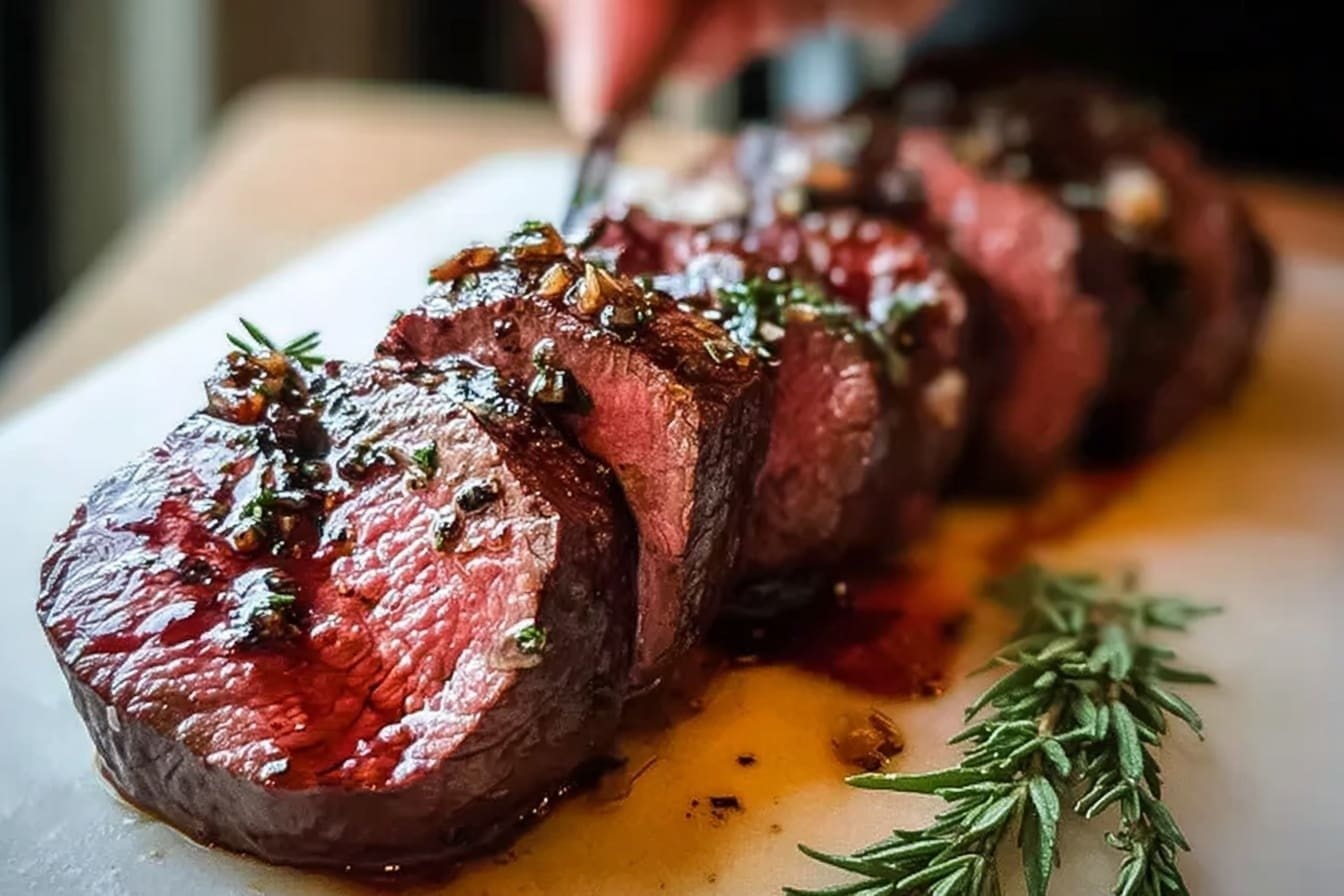
Final Step: Increase the oven temperature to 450°F. Roast again for 10 to 15 minutes, until the internal temperature reaches 130°F for medium-rare and the crust is browned and crispy. Remove from the oven and tent lightly with foil. Let it rest for 10 minutes before slicing into 1 ½-inch thick steaks. Serve with creamy horseradish sauce or your preferred accompaniments.
Thermometer pep talk: Beef Tenderloin cooks fast once the oven is hot, so relying on temperature is the easiest way to avoid overcooking. If you’re trying to time a dinner for family, this approach makes the schedule feel realistic.
Why the Two-Temperature Method Works
Roasting at 225°F gently warms the center without drying out the lean meat. Then the jump to 450°F builds that browned, crispy exterior so the outside tastes as good as the inside feels. This is a great method for home cooks who want reliable results without constant babysitting.
Quick Serving Ideas for a Full Meal
For a classic roast dinner, serve Beef Tenderloin with mashed potatoes, green beans, or a simple salad. If you want a tangy sauce, consider pairing it with something like savory rhubarb sauce for a bright, restaurant-style contrast.
Dietary Substitutions to Customize Your Beef Tenderloin
This Beef Tenderloin Roast Recipe is flexible because it centers on roasting technique and herb seasoning. While the main protein is beef, you can still make adjustments for different preferences and ingredient availability.
Protein and Main Component Alternatives
- Different cut of beef: If you can’t find tenderloin, try a center-cut beef roast with similar thickness. Roasting time may change, so follow internal temperatures closely.
- Trim-friendly option: For whole tenderloins with extra fat or silver skin, remove excess and tie to create even thickness. Even cooking matters more than the exact brand or shape.
- Less beef-friendly diet: If you avoid beef entirely, you can’t directly substitute without changing the flavor and cooking behavior. In that case, consider a different roast recipe rather than swapping midstream.
Vegetable, Sauce, and Seasoning Modifications
- Herb swaps: No fresh rosemary or thyme? Use dried versions at the same ratio listed in the recipe. You can also swap in other dried herbs you like, but keep salt and pepper consistent for flavor.
- Butter swaps: If you need a dairy-free approach, use a plant-based butter substitute. Butter helps browning, so the crust may be slightly different.
- Sauce flexibility: Creamy horseradish is classic, but you can serve with pan juices, a peppercorn sauce, or a fruit-forward glaze for contrast.
- Low-sodium style: If you’re watching salt, reduce the kosher salt and season with herbs plus pepper. The crust may be less intense, but it will still taste good.
Reminder: Beef Tenderloin is lean, so keep changes simple. The two-stage roasting method and thermometer guidance are what keep the result juicy.
Mastering Beef Tenderloin: Advanced Tips and Variations
If you want your Beef Tenderloin to look and taste like it came from a high-end kitchen, focus on small details. These tricks help with even cooking, better browning, and easier slicing. Plus, a few flavor variations let you personalize the roast for holidays, date nights, or everyday special meals.
Pro cooking techniques
- Use a probe thermometer: It’s the easiest way to track doneness without guessing. Insert into the thickest part and avoid bone or heavy fat.
- Trim for uniform slices: If you’re using tail ends or an untrimmed whole tenderloin, remove excess fat and silver skin, then tie for even thickness.
- Dry surface for crust: Patting dry and refrigerating uncovered after seasoning helps the exterior roast instead of steam.
- Rest before slicing: Let the meat rest so juices redistribute. Cutting early often leads to a drier result.
Flavor variations
- Herb variation: Add a small amount of chopped sage or parsley along with rosemary and thyme for a familiar, fragrant twist.
- Garlic-forward version: If your family loves garlic, finely mince a clove and mix it lightly with the herbs before seasoning. Keep it subtle so it doesn’t overpower the classic herb profile.
- Spice-friendly: Add a pinch of smoked paprika to your herb blend for a gentle warmth.
Presentation tips and make-ahead ideas
Slice Beef Tenderloin into 1 ½-inch thick steaks for a restaurant-style plate. Arrange slices slightly fanned on a warm platter so the browned crust stays visible. If you’re hosting, you can prep seasoning and tie the roast the day before; that overnight drying is the real time-saver.
How to Store Beef Tenderloin: Best Practices
Knowing how to store your Beef Tenderloin helps you keep it safe and tasty for the next meal. Since this cut is lean, proper storage and gentle reheating make a big difference in texture. Follow these best practices whether you cooked for a holiday crowd or just made an extra-tender Sunday dinner.
Refrigeration
Refrigerate leftover roasted Beef Tenderloin in an airtight container for 3 to 4 days. For best quality, cool the meat quickly after slicing or cutting portions you plan to eat soon. Keep it sealed to reduce drying and protect flavor.
Freezing
For longer storage, freeze leftover slices in a freezer bag for up to 3 months. Thaw in the refrigerator overnight for the most even texture when reheating. Avoid repeated thaw-and-freeze cycles since lean beef can dry out.
Reheating
Reheat gently in a 250°F oven, wrapped in foil with a splash of broth to retain moisture. You can also serve cold in sandwiches or chopped into salads. If the meat smells off or feels slimy, discard it.
Leftover win: A roast like this often leaves enough for 2 to 3 meals, which makes it worth planning ahead.
FAQs: Frequently Asked Questions About Beef Tenderloin
How do you cook beef tenderloin in the oven?
For a foolproof oven-roasted beef tenderloin, start by patting the meat dry, tying it with butcher’s twine every 2-3 inches, and seasoning with kosher salt, black pepper, fresh rosemary, and thyme. Let it sit uncovered in the fridge overnight, then bring to room temperature for 1-2 hours. Preheat oven to 225°F. Roast until the internal temperature hits 115-120°F (about 60-70 minutes for a 3-3.5 lb roast). Crank heat to 450°F for 10-15 minutes to form a golden crust, pulling at 125-130°F for medium-rare. Rest 20-30 minutes tented with foil. This two-temperature method ensures even cooking and a perfect crust. Use an instant-read thermometer in the thickest part. Serves 6-8; slice into 1.5-inch steaks. (98 words)
How much beef tenderloin do I need per person?
Plan for 6-8 ounces of raw beef tenderloin per person to account for trimming and cooking shrinkage. A 3-3.5 pound center-cut tenderloin, after removing silverskin and side muscles, yields about 2.5-3 pounds of meat and serves 6-8 guests comfortably. This cut is lean and tender, so smaller portions satisfy. For 10 people, buy a 5-pound whole tenderloin. Buy from a butcher for best quality—look for deep red color with minimal fat and marbling. Trim excess silver skin before prepping. Pro tip: Calculate based on bone-in sides if pairing with dishes like mashed potatoes or green beans. Leftovers freeze well up to 3 months. (112 words)
What internal temperature is beef tenderloin done?
Aim for 125-130°F internal temperature for medium-rare beef tenderloin, the most popular doneness for its juicy tenderness. Insert a probe thermometer into the thickest part without touching bone or fat. Remove from oven at this point, as it rises 5-10°F during a 20-30 minute rest under foil. Medium hits 135-140°F, medium-well 145-150°F, but avoid past that to prevent dryness. Factors like roast size and starting temp affect time: a 3 lb tenderloin takes 60-70 minutes at 225°F initially. Always rest to redistribute juices—cutting too soon releases them. Track with a reliable thermometer like ThermoWorks for precision. (104 words)
How do you prepare beef tenderloin before roasting?
Prep beef tenderloin the day before for best results. Pat dry with paper towels to remove moisture. Fold thinner tail end under and tie every 2-3 inches with butcher’s twine for even shape. Season generously with 2-3 tbsp kosher salt, fresh rosemary, thyme, and black pepper. Place uncovered on a rack in fridge overnight to dry brine, enhancing flavor and crust. Next day, remove 1-2 hours before cooking to reach room temp for even roasting. Skip overnight if short on time, but season at least 1 hour ahead. This method tenderizes the lean cut naturally. Avoid heavy marinades that mask its mild beefiness. (109 words)
How do you store leftover beef tenderloin?
Refrigerate leftover roasted beef tenderloin in an airtight container for 3-4 days. For longer storage, freeze slices in a freezer bag up to 3 months—thaw overnight in fridge or under cool water. Reheat gently in 250°F oven wrapped in foil with broth to retain moisture, or serve cold in sandwiches. Creamy horseradish sauce keeps 5 days in fridge; whisk before use. Common uses: beef salads, stir-fries, or hash. Watch for sliminess or off odors signaling spoilage. USDA notes beef is safe at 40°F fridge temp. A 3 lb roast often leaves extras for 2-3 meals, saving money on premium cuts. (102 words)

Beef Tenderloin
🥩🌿 Indulge in succulent, juicy beef tenderloin with a fragrant rosemary-thyme crust for a foolproof holiday centerpiece or special dinner!
⏲️ Low-and-slow roasting guarantees perfect medium-rare doneness with crispy exterior every time, no guesswork needed.
- Total Time: 2 hours (plus overnight)
- Yield: 6-8 servings
Ingredients
– One 3 to 3 ½ pound whole beef tenderloin, trimmed and tied for main protein
– 1 tablespoon olive oil for helping the seasoning stick and browned surface
– 1 tablespoon finely chopped fresh rosemary (or 1 teaspoon dried rosemary) for aromatic piney herbal flavor
– 1 tablespoon finely chopped fresh thyme leaves (or 1 teaspoon dried thyme) for warm earthy herb note
– 2 tablespoons cold unsalted butter, diced into small cubes for richness and golden crust
– Kosher salt and ground black pepper for seasoning
Instructions
1-First Step: One day before roasting, pat the Beef Tenderloin dry with paper towels. Tie it with butcher’s twine every 2 to 3 inches for even cooking. Coat the tenderloin with 1 tablespoon olive oil, then season generously with kosher salt and ground black pepper. Sprinkle 1 tablespoon finely chopped fresh rosemary (or 1 teaspoon dried rosemary) and 1 tablespoon finely chopped fresh thyme leaves (or 1 teaspoon dried thyme) over the meat.
2-Second Step: Place the tenderloin on a foil-lined baking sheet. Refrigerate uncovered overnight so the surface dries for better crust formation.
3-Third Step: On roasting day, remove the Beef Tenderloin from the fridge two hours before cooking so it reaches room temperature. Preheat the oven to 225°F with a rack in the center of the oven.
4-Fourth Step: Dot the tenderloin with 2 tablespoons cold unsalted butter, diced into small cubes. Roast at 225°F for 60 to 70 minutes, or until the internal temperature reaches 115 to 120°F. Use a meat thermometer for accuracy, and avoid opening the oven during this time.
5-Final Step: Increase the oven temperature to 450°F. Roast again for 10 to 15 minutes, until the internal temperature reaches 130°F for medium-rare and the crust is browned and crispy. Remove from the oven and tent lightly with foil. Let it rest for 10 minutes before slicing into 1 ½-inch thick steaks. Serve with creamy horseradish sauce or your preferred accompaniments.
Last Step:
Please leave a rating and comment letting us know how you liked this recipe! This helps our business to thrive and continue providing free, high-quality recipes for you.Notes
🥩 Opt for center-cut tenderloin for uniform thickness and even cooking.
❄️ Dry brine overnight uncovered to develop a flavorful, crispy crust.
🌡️ Always rest the roast tented with foil to redistribute juices for maximum tenderness.
- Prep Time: 25 minutes
- Dry Brine + Rest: Overnight + 10 minutes
- Cook Time: 1 hour 30 minutes
- Category: Dinner
- Method: Roasting
- Cuisine: American
- Diet: Gluten-Free
Nutrition
- Serving Size: 6 oz
- Calories: 375
- Sugar: 0g
- Sodium: 150mg
- Fat: 24g
- Saturated Fat: 10g
- Unsaturated Fat: 14g
- Trans Fat: 1g
- Carbohydrates: 0g
- Fiber: 0g
- Protein: 35g
- Cholesterol: 120mg


